Latin America · Chile

Indoor mapping & RFID tracking in Chile

Spatial Map is browser-based software for indoor mapping & RFID tracking in Chile: a store, plant or cold-store floor plan becomes a live 3D map, coloured by the data your ERP, RFID readers and sensors already produce. Chile’s economy leans on a few things — copper, fruit, wine and salmon — and on the ports that ship them. The app’s interface is available in Spanish, so a team in Santiago, Antofagasta or Concepción can work in its own language from day one.

No credit card. Runs in the browser. Pro is $60/month for up to 4 facilities. Book a demo

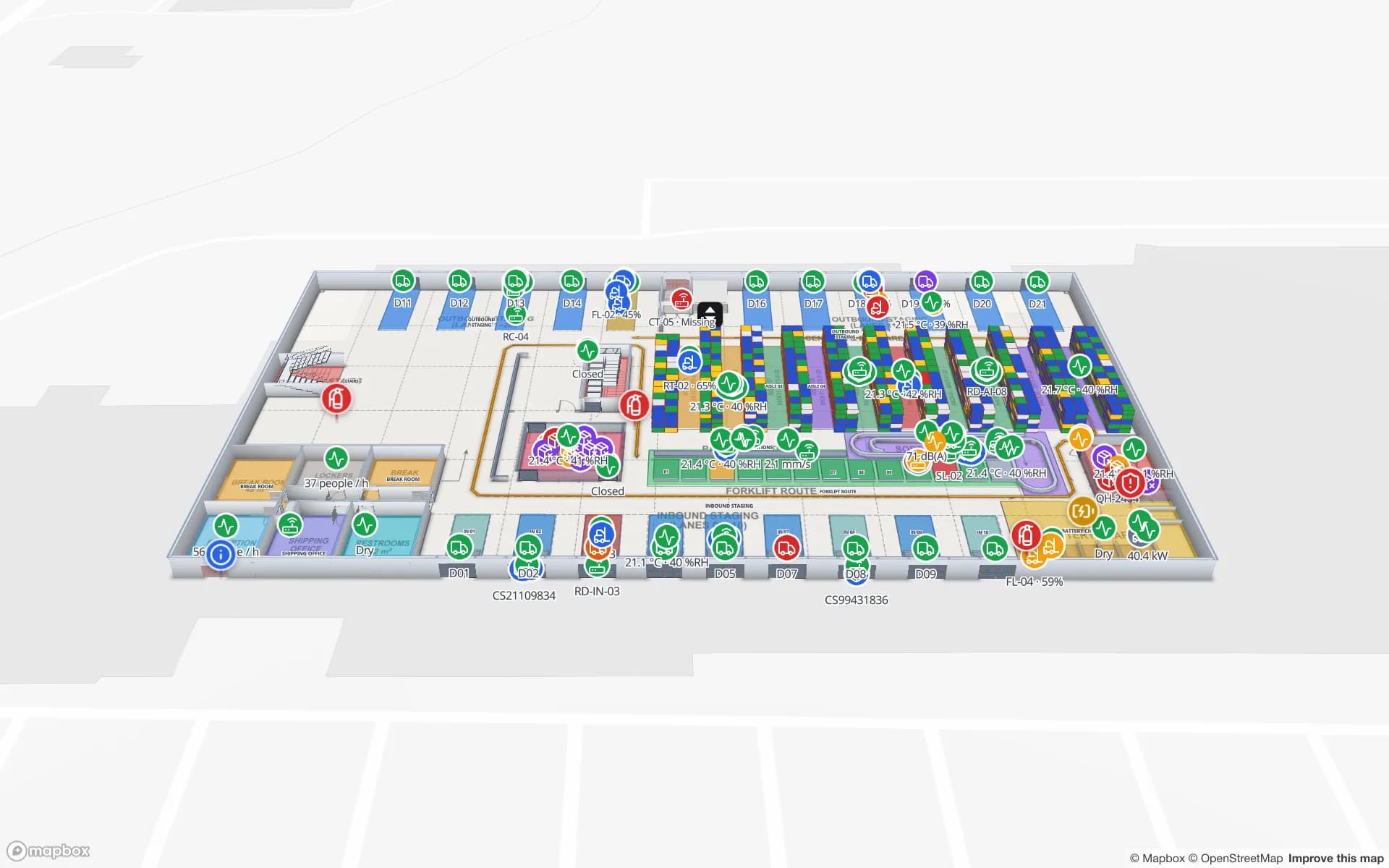
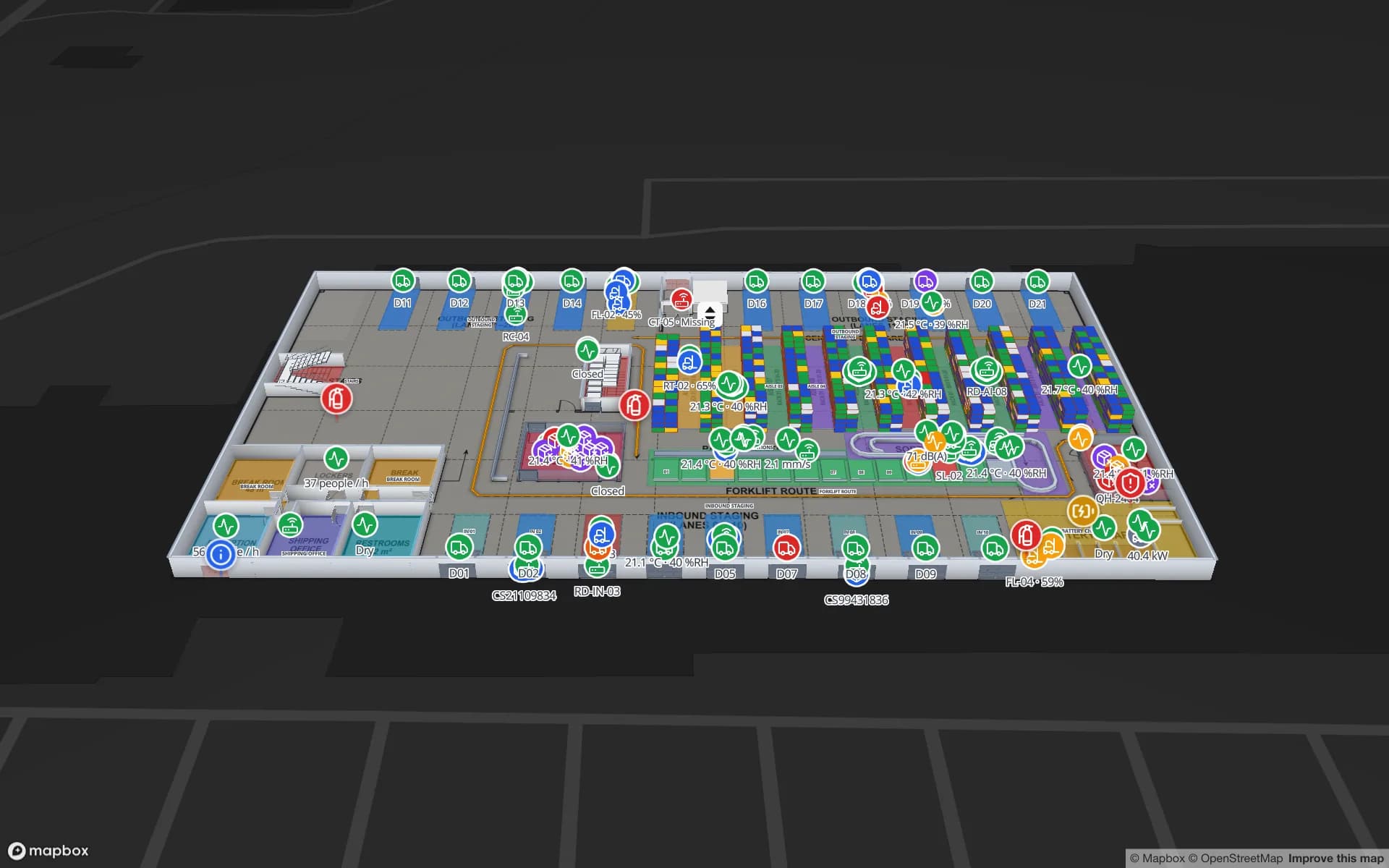
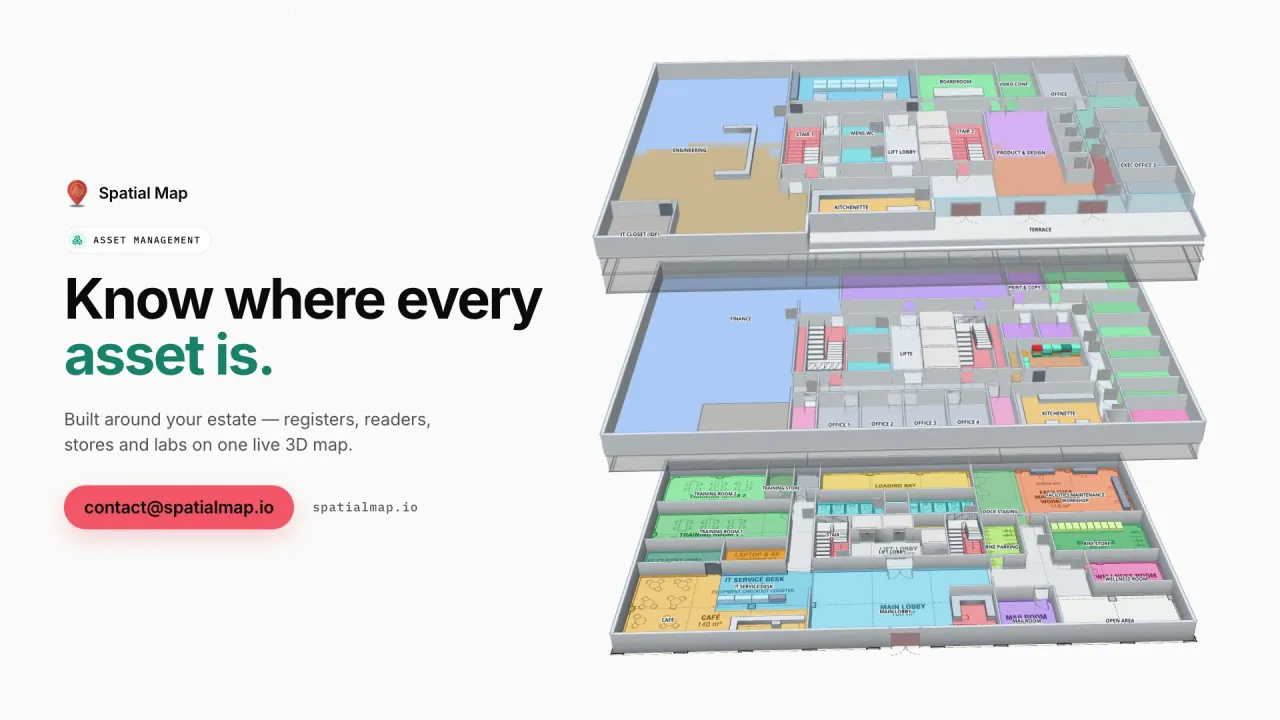
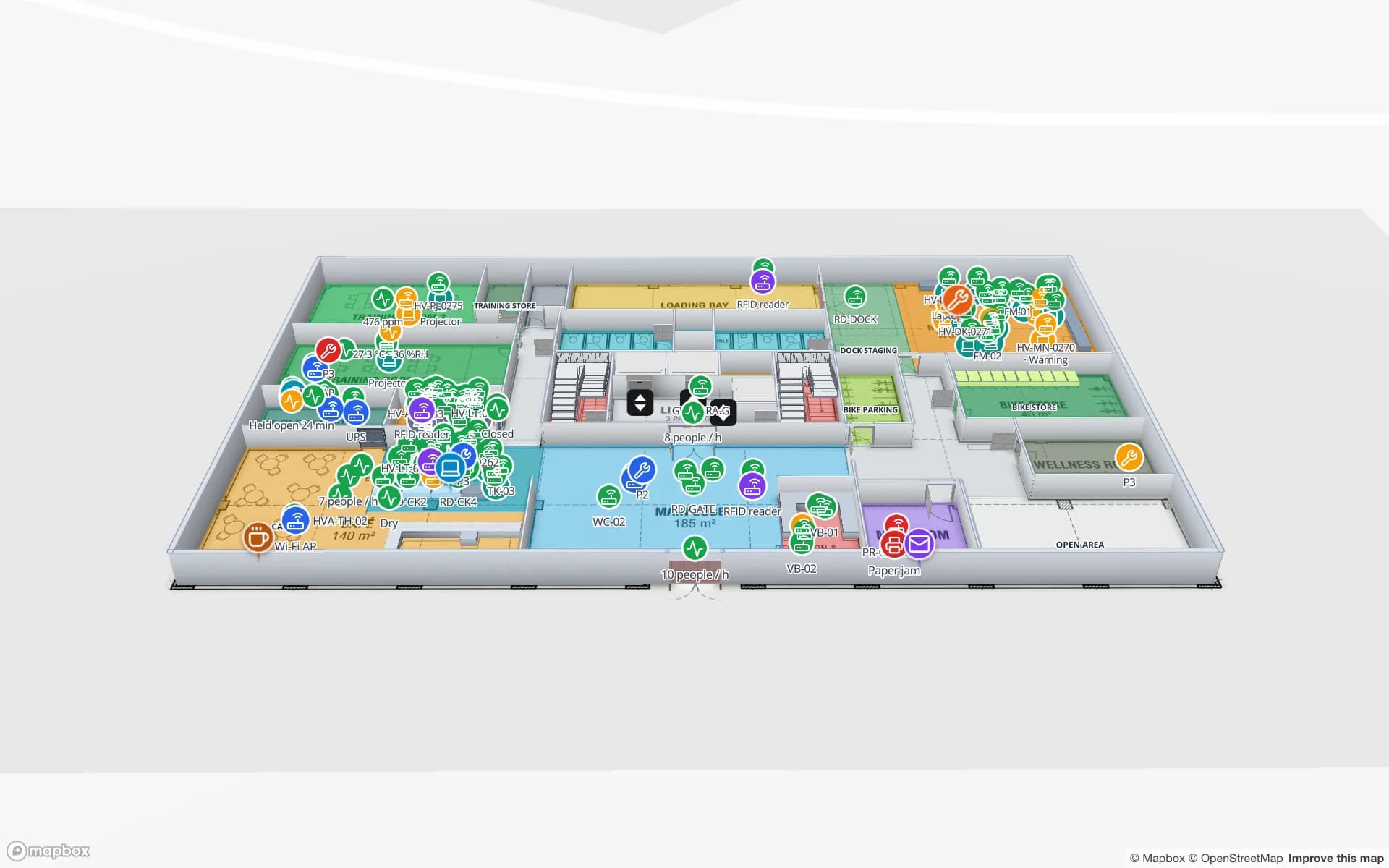
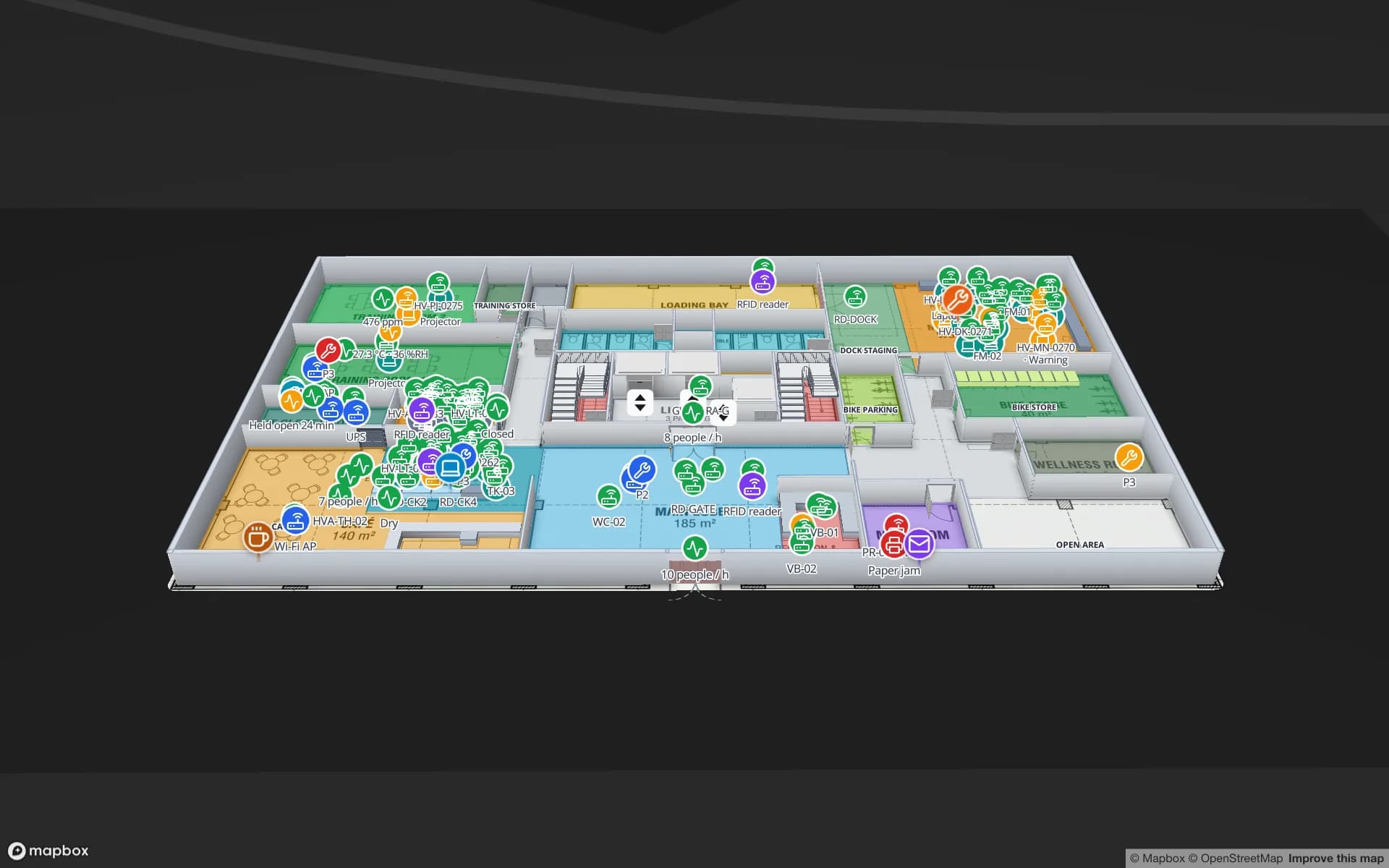
Harborview Corporate Campus — Building A, a corporate office building demo, in the Spatial Map 3D viewer with live device markers
Harborview Corporate Campus — Building A
Harborview Corporate Campus — Building A, a demo building: three floors with an asset register, equipment checkout, stores and spares, work orders and the print fleet on one map.
Spanish interface, one of six languages
Español
Floors in the Harborview demo, with stores and spares on the map
3
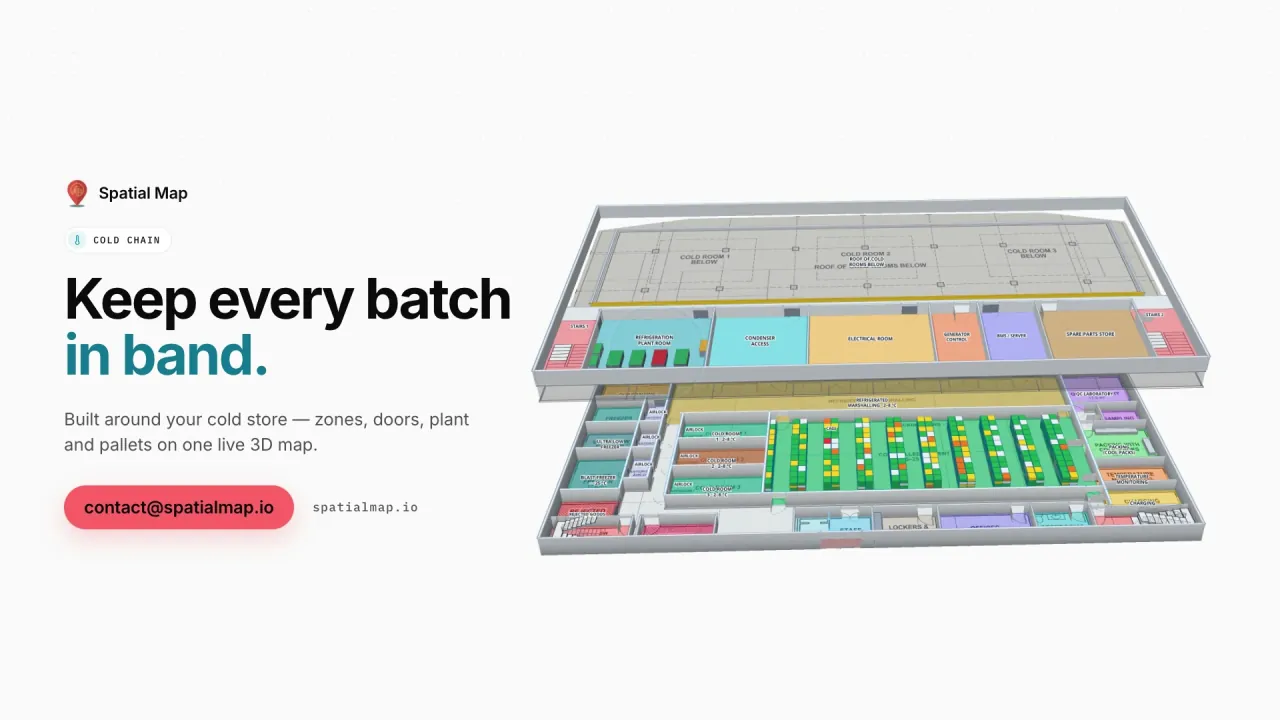
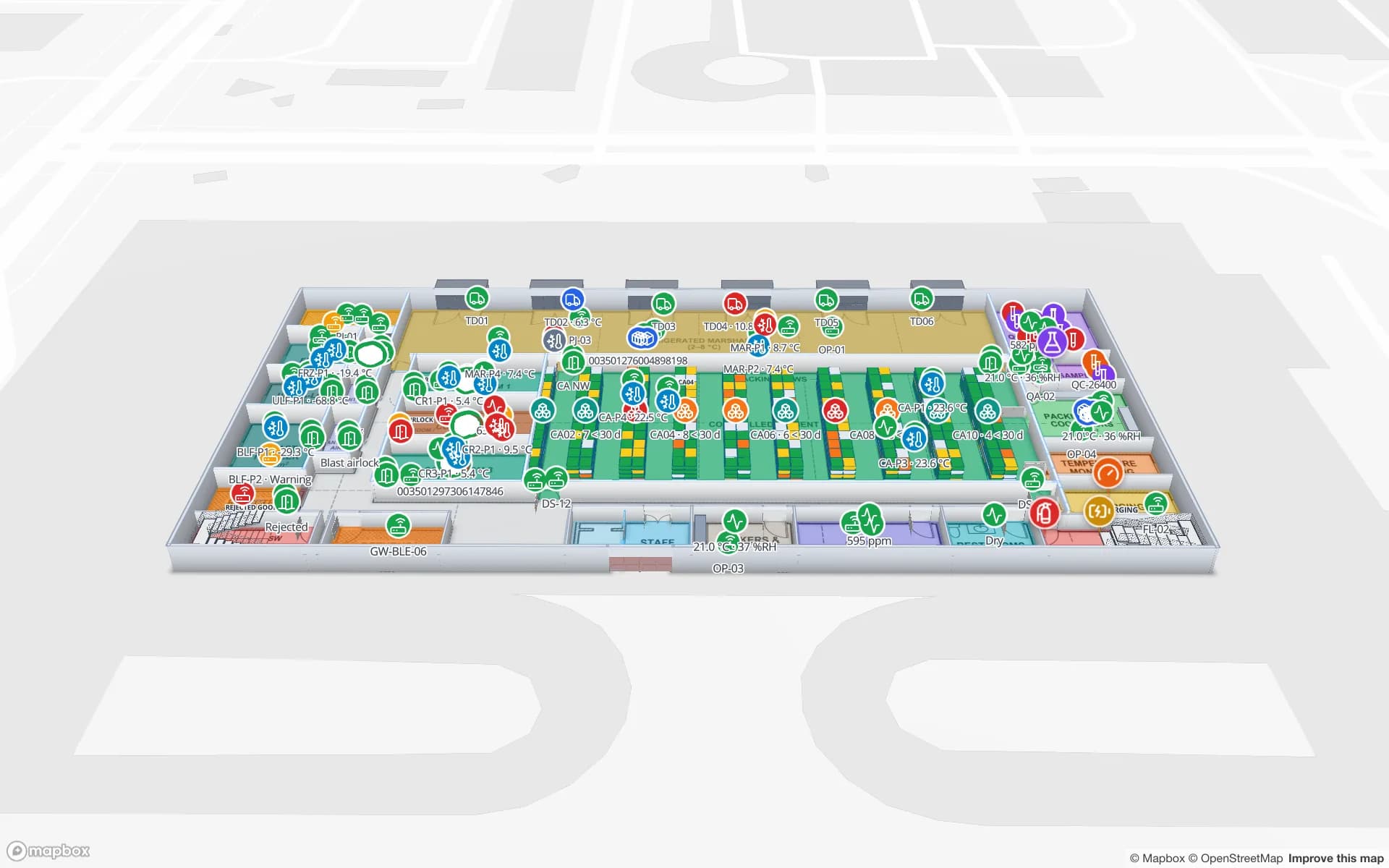
Rack locations in the Polar Pharma cold-store demo
1,140
Free trial, up to 5 facilities, no credit card
7 days

Copper and the stores that keep mines running

Mining accounted for almost 60 % of Chile’s export earnings in 2024, and Chile produces more than a third of the world’s copper, according to the standard economic reference. Every operation depends on supply warehouses, tool cribs and workshops holding spares that are costly to replace and hours or days from the nearest supplier. Many of those stores are managed by contract teams, often from an office far from the site.

Tag tools, spares and calibrated equipment with RFID or BLE, let your reader software or RTLS report where they are, and Spatial Map shows each item on the store or workshop plan with its check-out history in the detail drawer. The Harborview demo shows stores and spares, equipment checkout and work orders on a three-floor plan, and tool tracking with RFID explains the pattern. Ask AI (beta) can answer plain questions such as how many items are overdue in one store, with links that show them on the map.
Fruit, wine and salmon: the export chain

Chile is one of the five largest producers of cherries, one of the ten largest of grapes, apples, kiwifruit, peaches and plums, the world’s fifth-largest wine exporter and its second-largest salmon producer. Its harvest season differs from the Northern Hemisphere’s, which is what makes its fruit valuable abroad. Each of these products spends part of its life in a packhouse, a pre-cooling tunnel or a cold room.

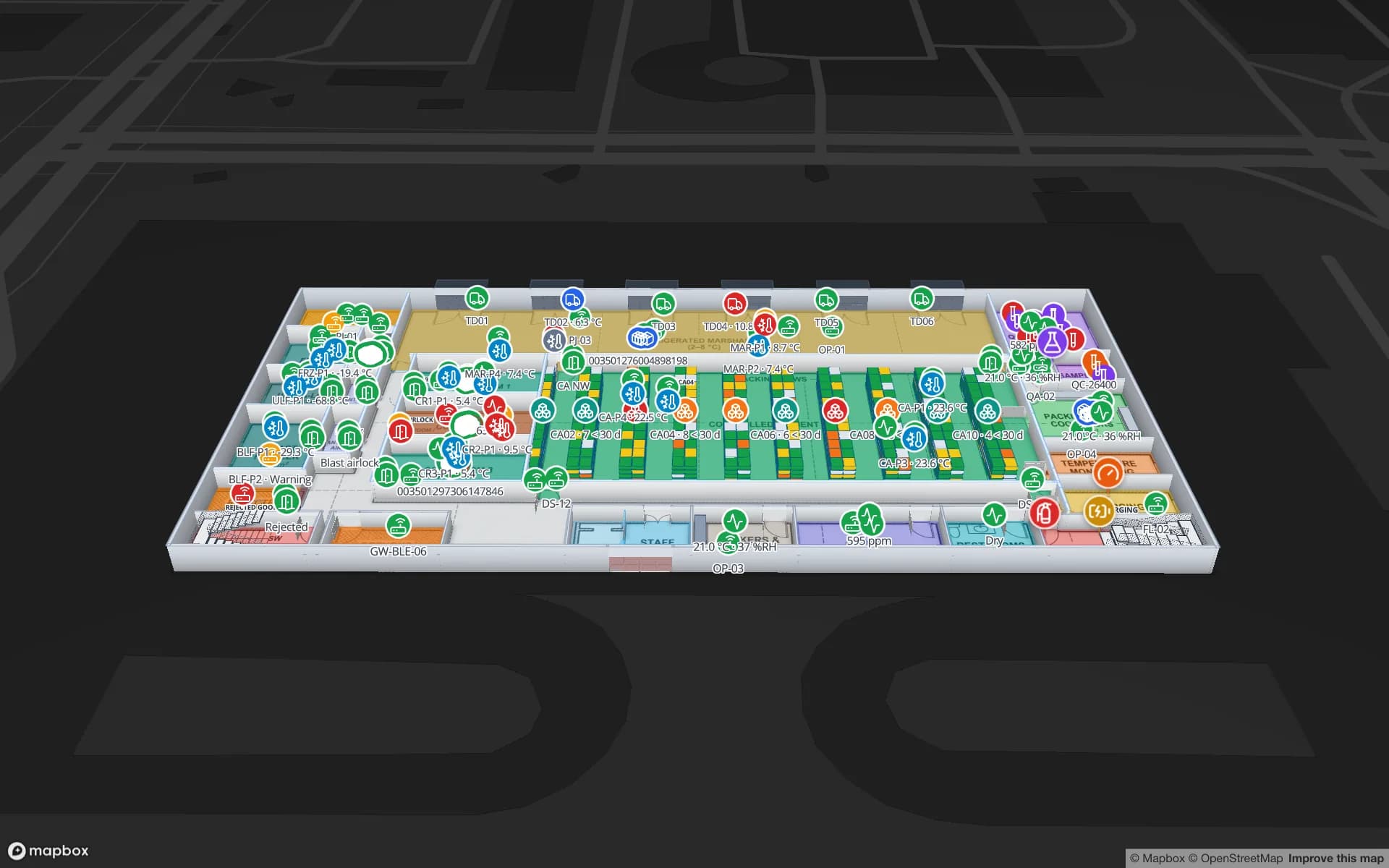
Spatial Map colours each cold room, tunnel and dock from its latest reading, keeps every reading in row history, and raises in-app alerts when a room stays out of range or a probe stops reporting. The Polar Pharma demo shows the pattern in a pharmaceutical cold store, with 1,140 rack locations; your quality system and export documents stay the record. For the cold chain around Santiago, see cold chain monitoring in Santiago.

Two ports west of Santiago

Most of central Chile’s trade leaves through two ports on the coast: Puerto San Antonio and Valparaíso. San Antonio’s two concessioned container terminals moved 1,474,958 TEU in January–September 2025, up 12 % on a year earlier, and a Puerto Exterior breakwater project published its final list of pre-qualified international bidders in November 2025. The Terminal Pacífico Sur at Valparaíso describes itself as 113 km from Santiago.

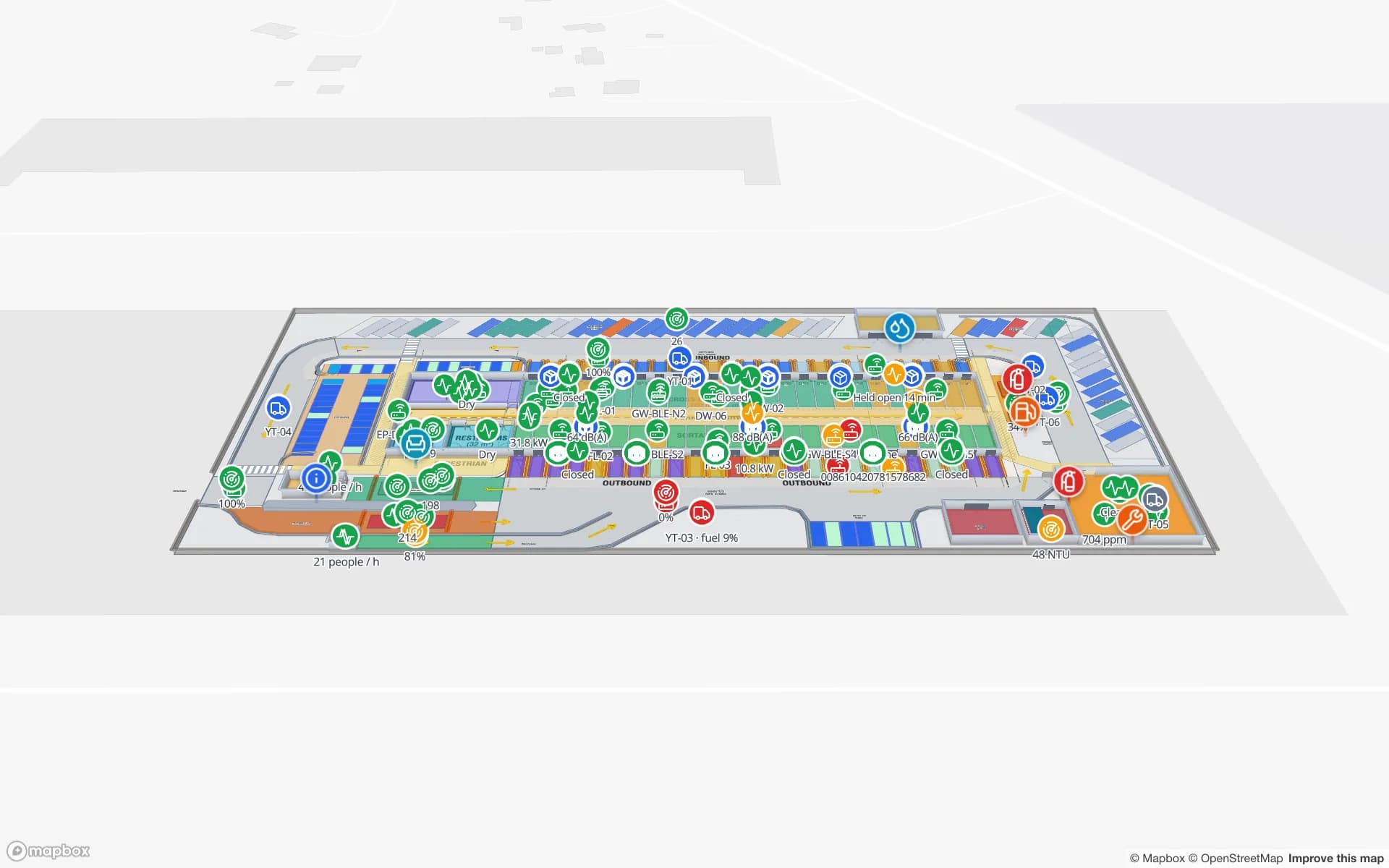
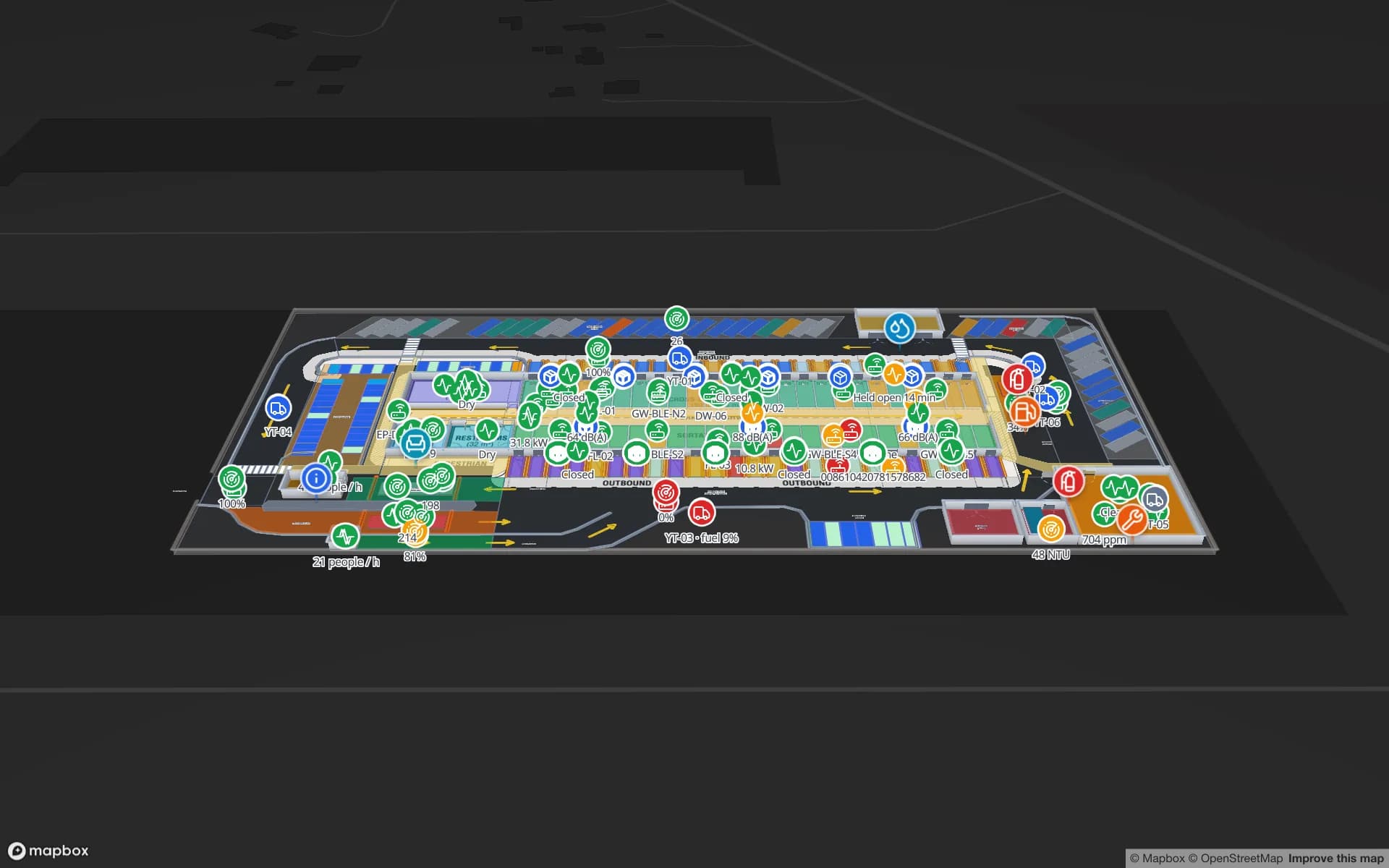
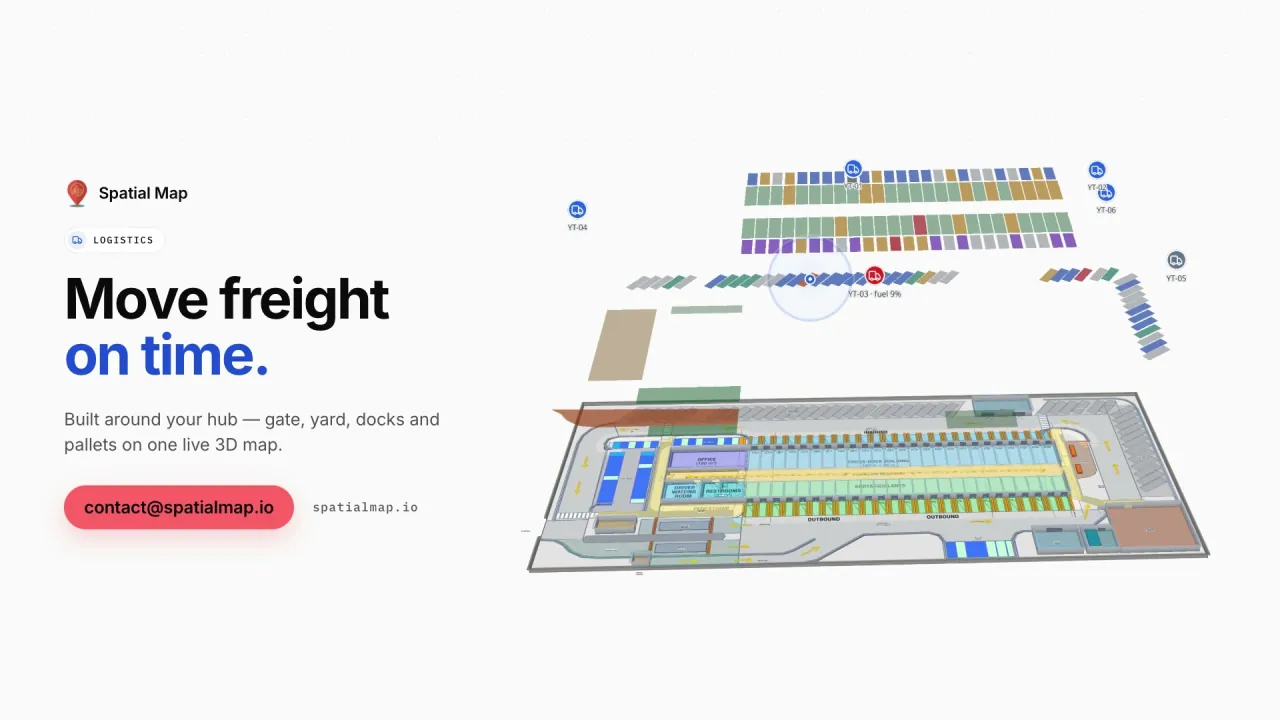
Behind both ports, depots and cross-docks stage containers and trucks. Dock doors, yard slots and RFID pallets show on one plan, as in the Eastport Cross-Dock demo with 50 dock doors and 1,180 RFID pallets. Spatial Map does not connect to port, customs or terminal systems; it shows what your own reads and records say.

Spanish, and the new data law

Spanish is the official language of Chile, and the Spatial Map interface is available in Spanish alongside English, French, German, Arabic and Chinese; each user picks their own. Custom setup and quotes are available en español. Names you type yourself — rack codes, rooms, report titles — appear exactly as written, accents and ñ included.

Where location data relates to people, Chile’s Law 21.719 on personal data protection, published on 13 December 2024, is the context: it creates a data protection agency, and its start date, 1 December 2026, has been the subject of a postponement bill, so check the current status. Your legal advisers decide what applies; most projects tag pallets, tools and equipment rather than staff. A data processing agreement is available.

Services for teams in Chile

Where Chilean teams usually start:

  • Mine and plant supply stores usually begin with asset tracking for tools and spares, then add inventory tracking for consumables.
  • Packhouses and exporters begin with temperature monitoring on cold rooms and tunnels, because an excursion found late costs a whole pallet.
  • RTLS and UWB matters for big yards and plants where vehicles and people must be located continuously; most buildings will not need it first.
  • If you have no readers, probes or tags yet, our team can source them on request, quoted per project, with warranty and device support from the manufacturer; UHF bands and approvals differ by country, so ask your supplier. See hardware and demo kits on request.
  • Our team builds Android RFID handheld apps, ERP integrations and other custom software as client projects; the product runs as cloud or on-premises.

Also served

The same approach covers Antofagasta, Calama, Iquique and Arica in the north, Valparaíso and Viña del Mar, Rancagua, Talca, Concepción, Temuco and Puerto Montt. Nothing needs to be installed on site: the map opens in a browser.

How Spatial Map does it

From floor plan to live map in Chile

  1. 01

    Import the layout

    A PDF, a DWG from AutoCAD R2004–R2018 (placed as a picture) or an image of the store, packhouse or plant, placed at scale.

  2. 02

    Draw or draft the floor

    Racks, cold rooms, dock doors, tool cribs and stairs — or let AI Map draft them for a person to review.

  3. 03

    Connect probes, readers and ERP

    Middleware posts rows to a table with the write API, or Spatial Map polls a REST endpoint; CSV and Excel uploads work too.

  4. 04

    Add rules and share

    In-app alerts for rooms out of range and overdue tools, plus read-only links and reports for buyers and head office.

What Chilean teams map first

Mine supply stores and tool cribs

Tools and spares with their check-out history, and overdue items marked on the plan.

Fruit and wine cold stores

Cold rooms and pre-cooling tunnels tinted by live temperature, with in-app alerts.

Port-side depots

Dock doors, yard slots and RFID pallets staged for the next truck.

Retail distribution centres

Rack locations coloured from WMS stock, staging lanes and packing output.

See it on real demo facilities

Fictional names, real floor plans, live sensors, RFID, BLE tags and gateways — open any of them in the browser.

All 13 demo facilities

Indoor mapping & RFID tracking in Chile — questions we get

Yes. Spanish is one of six interface languages, alongside English, French, German, Arabic and Chinese, and each user picks their own. Names you type yourself — rooms, racks, report titles — appear exactly as written. Custom services are also described en español.

Viewing the map needs a connection. Data is usually buffered by your middleware or a local relay and posted in batches when the link returns, so the row history fills in. An alert rule of the type “not updated for N minutes” shows in the app which reader or probe has gone quiet.

No. It shows what happens inside your own building, from your ERP, RFID reads and sensors. Customs documents and export records stay in the systems that own them.

Any fixed readers, portals or handhelds approved for use in Chile — ask your supplier to confirm the UHF band. Spatial Map has no reader drivers: your middleware posts reads to a table with the write API (HTTPS, bearer API key, bulk upsert, 60 requests per minute per key), or exposes a REST endpoint it polls.

Law 21.719 on personal data protection is the context when location data relates to people, and your legal advisers decide what applies; its start date has been the subject of a postponement bill. Many projects tag pallets, tools and equipment instead of staff.

No. Spatial Map is sold online and our team works with customers in Chile remotely, by video call and through the contact form, in Spanish or English. There are no local resellers or partners.

In US dollars, the same worldwide: a 7-day free trial for up to 5 facilities with no credit card, then Pro at $60 a month or $600 a year for up to 4 facilities. Larger estates are quoted as custom services.

Put your first Chilean site on a live map.

Start the free trial in Spanish or English, or send us the plan of a store or cold room and a sample of your ERP or probe data through the contact form.