Phnom Penh · Garment factories, National Road 4 and the new airport

RFID tracking in Phnom Penh, from the sewing line to the container

Spatial Map puts RFID reads on a live 3D map of the building where they happen, so a tag at a packing table becomes a carton in a lane, a pallet at a dock door or a bundle at the end of a sewing line. RFID tracking in Phnom Penh is mostly about garments, travel goods and footwear for export: the factories sit on the roads out of the city and in the zones, and what they ship now leaves through an airport and a river port that have changed their working pattern. Your readers and middleware do the reading; Spatial Map shows each read in place.

No credit card. Runs in the browser. Pro is $60/month for up to 4 facilities. Book a demo

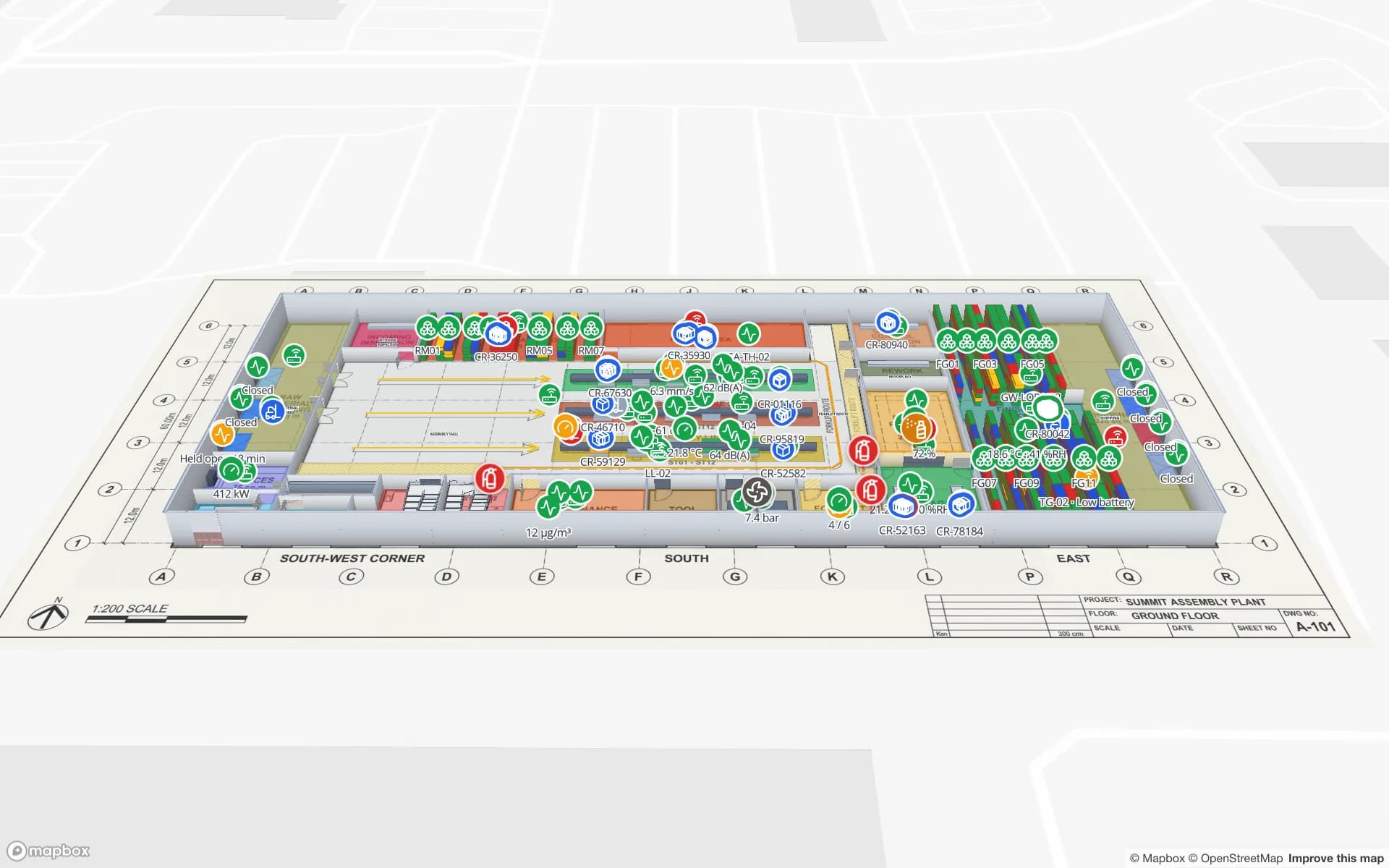
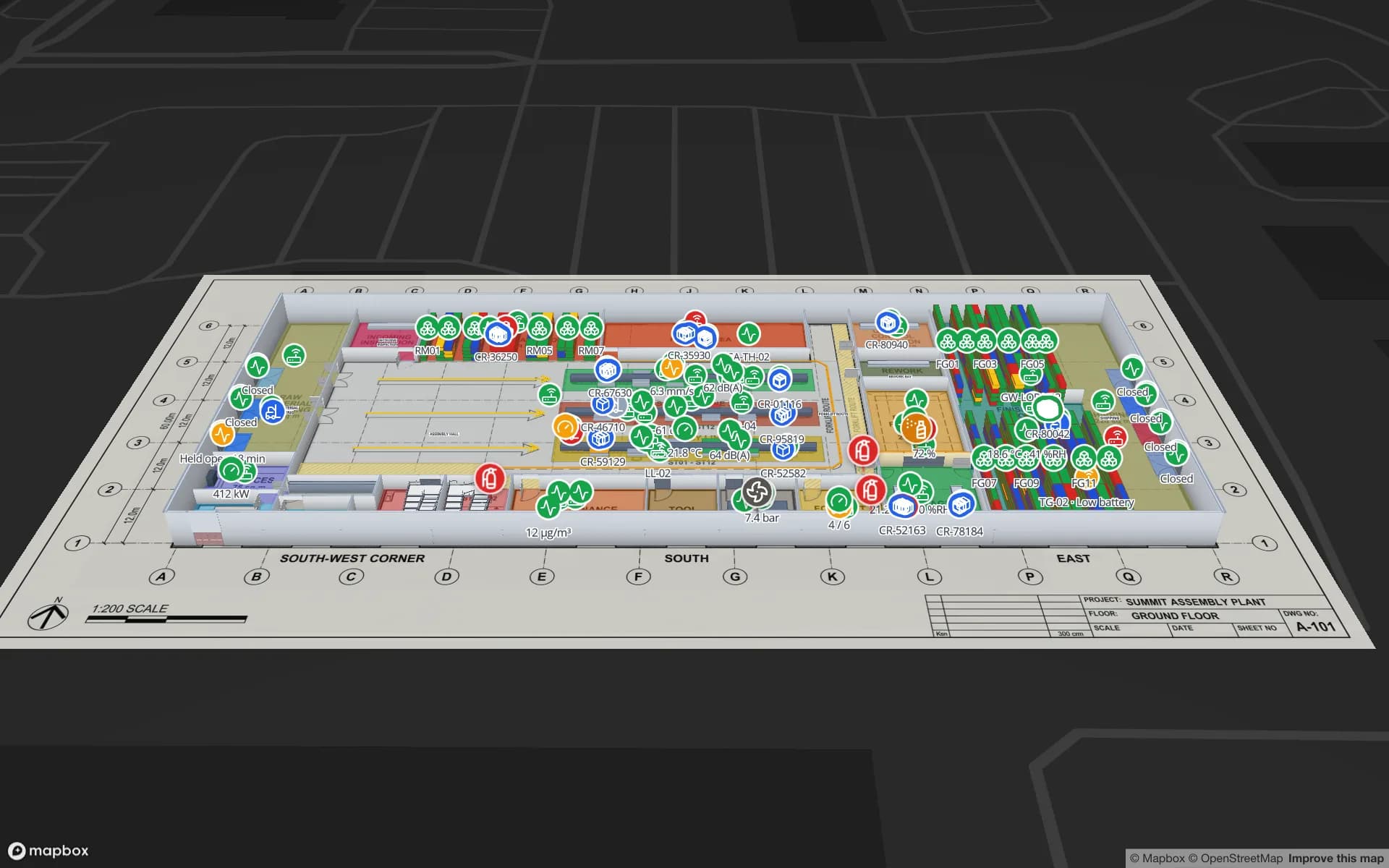
Summit Assembly Plant, a assembly plant demo, in the Spatial Map 3D viewer with live device markers
Summit Assembly Plant
Summit Assembly Plant, a demo factory: production lines, 351 RFID work-in-progress carriers between stations and 867 raw-material and finished-goods locations.
RFID work-in-progress carriers at Summit
351
Raw-material and finished-goods locations at Summit
867
How often alert rules are checked, with alerts shown in the app
15 s
Free trial, up to 5 facilities, no card
7 days

The bundle, the carton and the order

The garment, travel goods and footwear sector is the backbone of formal employment, the World Bank says, with more than one million direct workers in 2025, and the US government’s country commercial guide puts the United States at about 38 percent of Cambodia’s exports, mainly these goods. In a Phnom Penh factory that means thousands of small decisions a day about which bundle goes to which line, which carton goes to which order and which order is ready to ship.

RFID suits the end of the chain best. A UHF tag on each export carton, read at the packing table and again at the despatch door, shows which cartons of an order are staged, which are still on the floor and which have left; a short carton is usually found at the loading dock, and an RFID gate finds it earlier. A row of readers at a door is a gate, and the RFID gates page explains how to place them. Tags on apparel and metal fittings behave differently, so test them in your own packing area first; the post on RFID tags for metal, liquids and apparel lists what to check.


The zone on National Road 4

The Phnom Penh Special Economic Zone, on National Road 4 in Khan Kambol, has operated since 2006 according to its developer’s own site. Across the country, the Council for the Development of Cambodia counted 26 operating zones, 745 investment projects and more than 180,000 employees in the first half of 2024. Each tenant in a zone is a separate building with its own stock, gate and shipping door.

Each factory becomes its own facility in a workspace, and the zone’s shared warehouse can be another. If your buildings came from an architect’s DWG, import it (AutoCAD R2004–R2018, placed as a picture) and let AI Map draft walls, doors and racks for review. Then add RFID where it pays back first: finished-goods racks, returnable trolleys and totes, and the staging lanes in front of the dock. The Crestline demo shows 2,204 rack locations and the staging lanes in front of the docks.

Cargo now leaves through Techo

Techo International Airport, on the outskirts of Phnom Penh in Kandal province, began operating on 9 September 2025. VnExpress reported that all passenger and cargo flights moved there from Phnom Penh International Airport, which closed that day, and that the first phase is designed for about 13 million passengers a year. The airport’s own site lists a cargo section with a tracking service. Air freight now leaves from a different site on the edge of the city, so truck routes and cut-off times have to be re-planned.

A new departure point makes the last hours before a flight the risky part: a short carton found at the gate costs the whole shipment. Staging by flight, with an RFID portal at the lane exit and a count rule on the staged-carton table, raises an in-app alert while there is still time to fetch the missing carton; Show on map takes the supervisor to the lane. The Eastport demo shows the same logic with 50 dock doors, 44 yard slots and 1,180 RFID pallets. Spatial Map does not connect to the airport’s cargo systems.

Between the rivers: humidity and the wet season

Phnom Penh stands where the Tonlé Sap meets the Mekong and the Bassac begins, and its wet season runs roughly from May to November. Cardboard cartons absorb moisture, labels peel and readers in open-sided docks get splashed. Heat and humidity are reasons to choose enclosures, cable runs and mounting carefully and to test tags in your own shed, which is a decision for your hardware vendor and integrator, not something Spatial Map can verify.

What the map can do is notice. An alert rule set to “not updated for N minutes” on the reader table raises an in-app alert when a portal goes quiet, a humidity sensor on the same plan colours the dampest bay, and a heatmap of readings shows which side of the shed is worst by afternoon; see warehouse temperature mapping.

Services for teams in Phnom Penh

Where Phnom Penh teams usually start:

  • Garment and footwear factories begin with RFID inventory management on finished-goods cartons, or with barcodes first and RFID at the despatch door.
  • Freight forwarders and zone warehouses begin with inventory tracking at the dock door.
  • Factories add asset tracking for sewing machines, cutting tables and forklifts that move between lines.
  • If you have no readers or tags yet, our team can source RFID readers, antennas and tags on request, quoted per project, with warranty and device support from the manufacturer: see hardware and demo kits on request.
  • Where there is no in-house IT, our team builds Android RFID handheld apps, ERP and WMS integrations as client projects. The product runs as cloud or on-premises.

Also served nearby

The same page covers Ta Khmau and the rest of Kandal, Kampong Speu and Takeo, and the industrial areas on National Roads 3, 4 and 5. Nothing needs to be installed at any of them: the map opens in a browser.

How Spatial Map does it

From the packing table to the despatch door

  1. 01

    Pick one building

    A factory packing hall, a zone warehouse or a forwarder’s shed, wherever a missing carton costs most.

  2. 02

    Map doors, lanes and racks

    Upload the plan, photo or sketch, let AI Map draft the floor, and name read points the way your middleware names them.

  3. 03

    Connect reads and orders

    RFID middleware and your ERP post rows through the table write API, a polled REST endpoint or CSV and Excel uploads.

  4. 04

    Add lane and silence rules

    In-app alerts for lanes that are short before the cut-off and readers that stopped reporting.

What Phnom Penh teams track

Export cartons by order

Cartons read at packing and the despatch door, with each order’s status by lane.

Sewing lines and bundles

Work-in-progress carriers by line, with starved lines flagged.

Freight sheds and zone warehouses

Dock doors, yard slots and pallets staged for the right container or flight.

Machines and equipment

Tagged machines by line and by workshop, with idle ones flagged.

See it on real demo facilities

Fictional names, real floor plans, live sensors, RFID, BLE tags and gateways — open any of them in the browser.

All 13 demo facilities

RFID tracking in Phnom Penh: questions we get

That depends on the hardware you choose and how you mount it, so ask the vendor for its operating range and test tags in your own shed. Spatial Map does not make hardware; what it adds is visibility, an in-app alert when a reader stops reporting and humidity readings coloured on the plan.

No. It has no link to airport cargo, customs or port systems. It shows what happens inside your own building, from your own RFID reads, ERP and sensors.

Yes. Upload a scan or photo and align it at real size, or sketch the outer walls and racks and photograph the sketch. AI Map can draft from the picture, and you correct what it gets wrong. Our services team can also do the mapping remotely for a fixed price.

Often both: barcodes at the packing table and RFID at the despatch door. RFID reads many cartons at once as a pallet passes, which barcodes cannot, but tags on apparel and metal behave differently and should be tested in your own packing area. Spatial Map shows either, as long as your system posts a carton ID with a location.

No. Spatial Map is sold online and our team works with customers in Cambodia remotely, by video call and through the contact form. The app has no Khmer interface; names and labels you write can be in Khmer.

In US dollars, the same worldwide: a 7-day free trial for up to 5 facilities with no card, then Pro at $60 a month or $600 a year for up to 4 facilities. RFID hardware, if you ask us to source it, is quoted per project and is not part of the subscription.

Map one Phnom Penh packing hall before the next shipment.

Start the free trial and open the Summit demo, or send us the plan of a factory, zone warehouse or freight shed and a sample of your reads through the contact form.