Dhaka · Savar, Siddhirganj, the airport and Kamalapur

RFID tracking in Dhaka, from the packing table to the cargo shed

Spatial Map shows RFID reads on a live 3D map of the building where they happen, so a carton tag at a packing table becomes a carton staged at a dispatch door or a pallet in a cargo shed. RFID tracking in Dhaka is mostly a carton problem: garment units in and around the export zones pack thousands of cartons a day against buyer packing lists, and a short or misrouted carton is found at the last door. Your readers and middleware do the reading; Spatial Map puts each read in its place.

No credit card. Runs in the browser. Pro is $60/month for up to 4 facilities. Book a demo

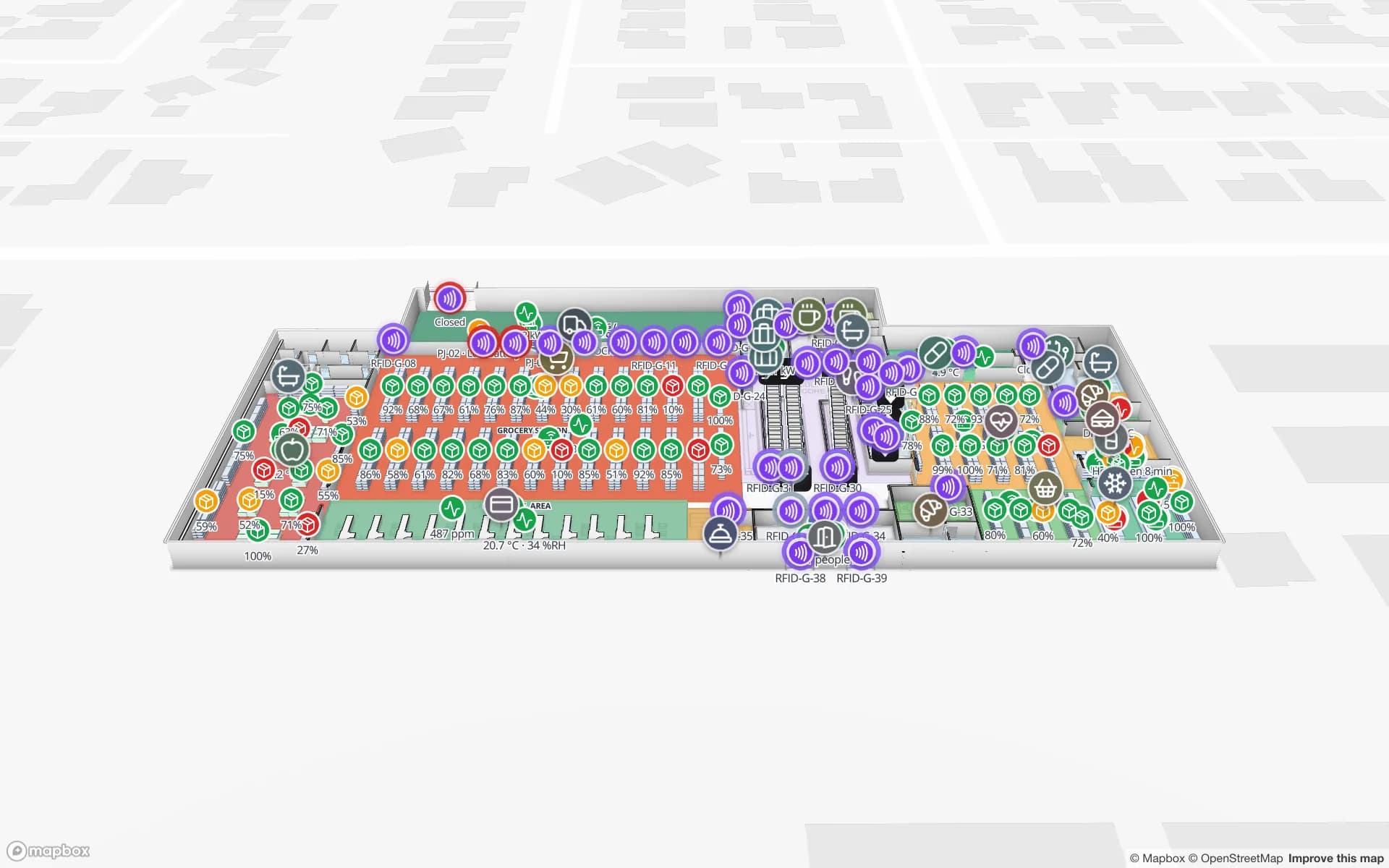
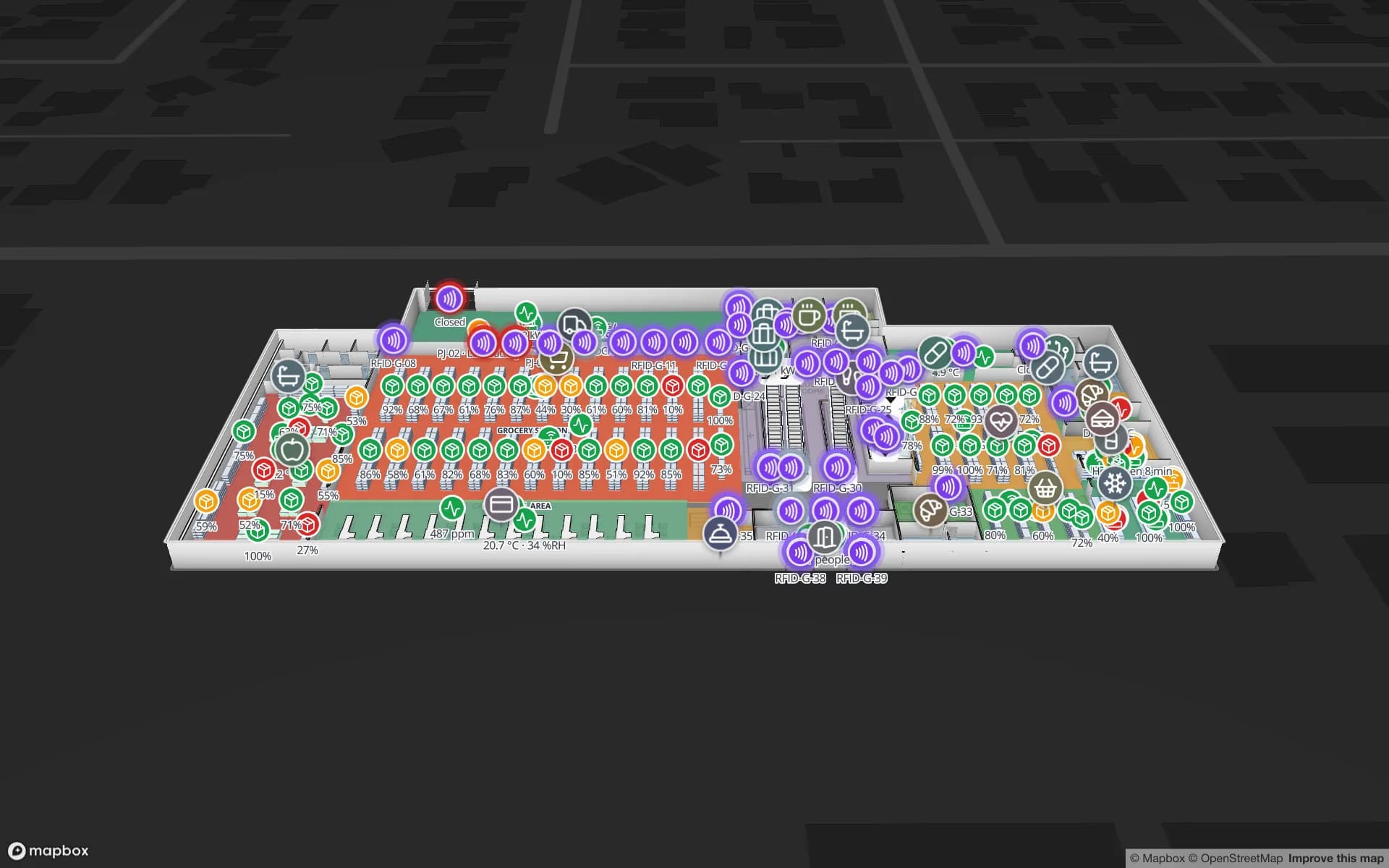
Crestline Fulfillment Center, a fulfillment center demo, in the Spatial Map 3D viewer with live device markers
Crestline Fulfillment Center
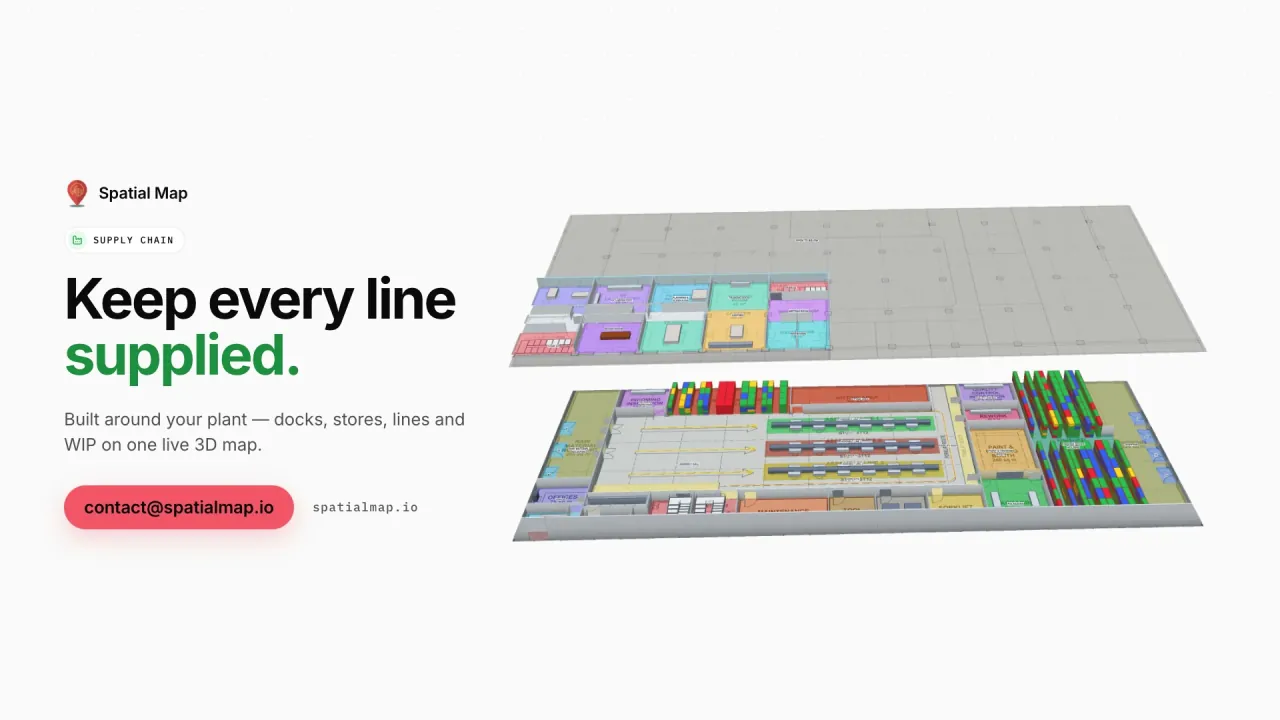
Crestline Fulfillment Center, a demo distribution building: 2,204 rack locations, carton tags read at docks, lanes and packing, and staging lanes in front of the dock doors.
Rack locations in the Crestline fulfilment demo
2,204
Export processing zones BEPZA lists as operating
8
How often alert rules are checked, with alerts shown in the app
15 s
Free trial, up to 5 facilities, no card
7 days

Inside the zones: Dhaka EPZ at Savar and Adamjee EPZ at Siddhirganj

BEPZA’s website lists eight operating export processing zones, and two of them sit on the edge of Dhaka. Dhaka EPZ at Savar was established in 1993 and BEPZA calls it the second EPZ in Bangladesh: 356.22 acres and 451 industrial plots, about 35 km from the capital. BEPZA’s product list for it runs from high-end garments, military uniforms and suits to lenses, chemicals, automobile parts, caps, shoes, textiles, yarn and plastic and rubber products, and the authority says the zone helped turn Savar–Ashulia into an industrial hub.

Adamjee EPZ is at Siddhirganj in Narayanganj, on the site of the former Adamjee Jute Mills and, in BEPZA’s words, between Dhaka and Chattogram. Its units make garments, garment accessories, safety jackets, blazers and safety shoes, textiles, electronics and electrical products, and car seat covers. The mix matters for tracking. A plot that packs jackets on one line and accessories on another has several kinds of carton, destinations and cut-offs under one roof, so one map of the packing hall per unit is more useful than one of the whole zone. BEPZA’s own pages give different acreage for Adamjee in different places, so we quote none. Spatial Map has no link to BEPZA, customs or buyer systems; it shows what your own reads say.


Carton level: where a missing carton is found

A buyer’s order is split into cartons by size, colour and destination, and the packing list is the document everyone compares against. RFID at carton level turns that comparison into a map. Tag each carton with a UHF label at the packing table, tie its ID to the packing-list row in a table (order, style, size, colour, destination), and read it at the carton-audit station and again at the dispatch door. The map then shows which cartons of an order are staged, which are still on the floor and which have gone.

Item-level labels that a buyer requires are a separate matter: they are encoded to the buyer’s specification by your label supplier, and Spatial Map does not encode. Carton tags are your own tool, so you can place them and test them as you like. Put the first portal at the dispatch door, and check read rates with the real cartons — apparel and metal trims behave differently, and the post on RFID tags for metal, liquids and apparel lists what to test. The RFID gates page explains how a row of readers becomes a door, and the Crestline demo shows carton tags read at docks, lanes and packing.

Hazrat Shahjalal airport: when the shipment goes by air

When a style is late, it often leaves by air. The Business Standard reported in September 2021 that freight forwarders put readymade garments at 85 % of the goods handled at Dhaka’s airport, that the airport was handling about 1.5 times its capacity (its executive director gave 600–700 tonnes a day), that explosive scanning is required for EU-bound exports, and that trucks waited three to five days outside the cargo village. That is one dated report, and conditions have moved since, but the shape of the problem has not: cartons that have left the factory wait somewhere, and somebody has to know where.

Your dispatch dock and your forwarder’s consolidation shed are buildings you can map. Draw one lane per flight or per forwarder, read the cartons into it, and the map shows which cartons for a booking are in the lane and which are still at the factory. Spatial Map does not connect to the airport, its cargo systems or customs, and it does not decide what is cleared; it shows your own reads, in the order they arrived. The Eastport demo shows lanes, dock doors and 1,180 RFID pallets in one cross-dock.

Kamalapur and the rail line to the port

Imported fabric and trims for Dhaka factories often arrive through Chattogram and travel on to the inland container depot at Kamalapur. Bangladesh Railway runs the container trains. The Daily Star reported on 25 August 2025 that container trains on the Chattogram–Kamalapur route fell from 125 in May to 68 in the first 24 days of August, that the port’s secretary said the route needs six to seven a day, and that at least 1,259 TEUs for Kamalapur were waiting at the port on 24 August. A factory cannot fix a locomotive shortage.

What it can do is know what has actually arrived. A receiving shed on the map has its bays, its staging area and its racks, each coloured by what your system says is inside: fabric rolls received, trims waiting for a quality check, cartons for an order that still lacks a component. A count rule can raise an in-app alert when an order’s cartons or rolls are not all in the shed an hour before cutting is due. It is a small thing, and it is the one that tells planning to call the forwarder early.

Services for teams in Dhaka

Where Dhaka teams usually start:

  • Garment units and their packing halls usually begin with inventory tracking at carton level, because a short carton costs a shipment or an air-freight bill.
  • Larger plants and shared stores add asset tracking for sewing machines, cutting tables and returnable trolleys once cartons are under control.
  • RTLS and UWB is for big, busy sites where trolleys, forklifts or people must be located continuously; a BlueIOT server connects directly and other engines through the write API.
  • If you have no readers or tags yet, our team can source RFID readers, antennas and tags on request, quoted per project, with warranty and device support from the manufacturer: see hardware and demo kits on request.
  • Where a handheld app or ERP link is missing, our team builds Android RFID handheld apps, ERP integrations and other custom software such as POS or booking systems as client projects. The product runs as cloud or on-premises.

Also served nearby

The same approach covers Ashulia, Gazipur and Tongi, Narayanganj and Keraniganj, and the warehouse belts on the roads out of the capital. Nothing is installed at any of them; the map opens in a browser. For Chattogram and its depots, see warehouse tracking in Chittagong.

How Spatial Map does it

From a packing table to a dispatch door

  1. 01

    Pick one packing hall

    The unit or shed where a short carton hurts most — a zone unit’s packing hall or a forwarder’s consolidation shed.

  2. 02

    Map lanes and doors

    Upload the plan or a photographed sketch, let AI Map draft the floor, and name lanes and read points the way your middleware does.

  3. 03

    Connect reads and packing lists

    RFID middleware and your ERP post rows through the table write API, a polled REST endpoint or CSV and Excel uploads.

  4. 04

    Add cut-off and silence rules

    In-app alerts for cartons short against a packing list and for readers that stopped reporting.

What Dhaka teams track

Export cartons by order

Cartons read at the packing table, audit station and dispatch door, with each order’s status by lane.

Air-freight consolidation lanes

Cartons staged per flight or forwarder, with the lane that is short flagged.

Fabric and trims stores

Rolls and trims by bin, coloured from the ERP, with received-but-not-checked stock visible.

Lines and WIP carts

Which cart is at which station and which line is starved of cut pieces.

See it on real demo facilities

Fictional names, real floor plans, live sensors, RFID, BLE tags and gateways — open any of them in the browser.

All 13 demo facilities

RFID tracking in Dhaka — questions we get

Start with cartons. A carton tag is under your control and gives the biggest return, because a short carton is found at the dispatch door. Item-level tags that a buyer requires are encoded to the buyer’s specification by your label supplier; Spatial Map shows where they were read but does not encode them.

No. It has no link to authority, customs or airport systems. It shows your own building and your own reads, so it complements the paperwork those systems handle rather than replacing it.

Yes. Upload a PDF, a DWG (AutoCAD R2004–R2018, placed as a picture) or a photo and align it at real size, then let AI Map draft walls, doors, racks and areas for a person to review. AI Map is on paid plans and the trial, with a monthly limit. Our services team can also do the mapping remotely for a fixed price.

Yes. They can push rows to a table through the write API (HTTPS, bearer API key, bulk upsert, 60 requests per minute per key) or expose a REST endpoint that Spatial Map polls. If you would rather not build it, our team builds integrations as client projects.

No. The app is in English, Arabic, Chinese, French, German and Spanish. Your own line names, lane names and report titles can be written in Bengali script and appear as typed.

No. Spatial Map is sold online and our team works with customers in Bangladesh remotely, by video call and through the contact form. There are no local resellers or partners, and prices are in US dollars: a 7-day free trial for up to 5 facilities with no card, then Pro at $60 a month or $600 a year for up to 4 facilities. Hardware, if you ask us to source it, is quoted per project.

Map one Dhaka packing hall before the next shipment.

Start the free trial and open the Crestline demo, or send us the plan of a packing hall or consolidation shed and a sample of your carton scans through the contact form.