Montevideo · The free port, Route 8 and Zona Franca Libertad

Inventory tracking in Montevideo, from the free port to the Route 8 free zone

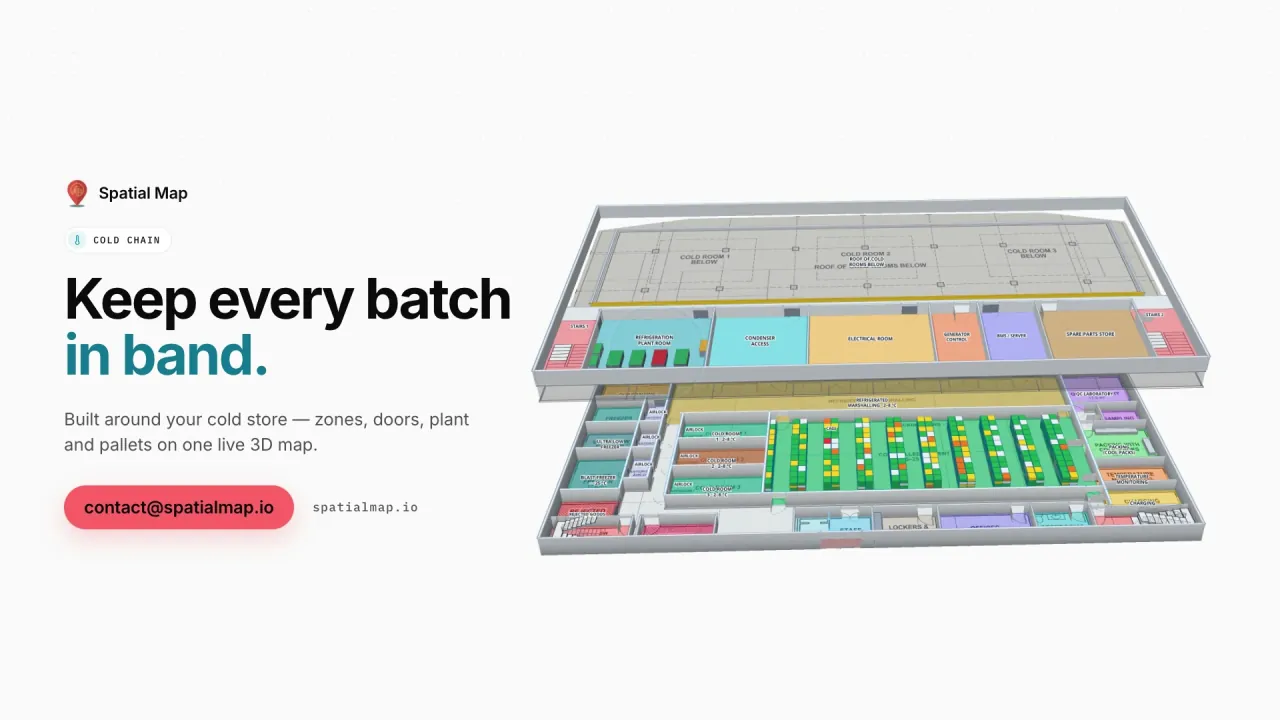
Spatial Map does inventory tracking in Montevideo on a live 3D map of each warehouse: every rack location coloured from your WMS stock, RFID-tagged pallets shown at the dock door that last read them, cold rooms by their sensors. Montevideo is a regional hub for stock that belongs to someone else: a free port in the old city, free zones along the roads out of town, and distribution centres that serve Uruguay, Argentina and Brazil from one floor. One workspace can hold all of them, and the app is available in Spanish.

No credit card. Runs in the browser. Pro is $60/month for up to 4 facilities. Book a demo

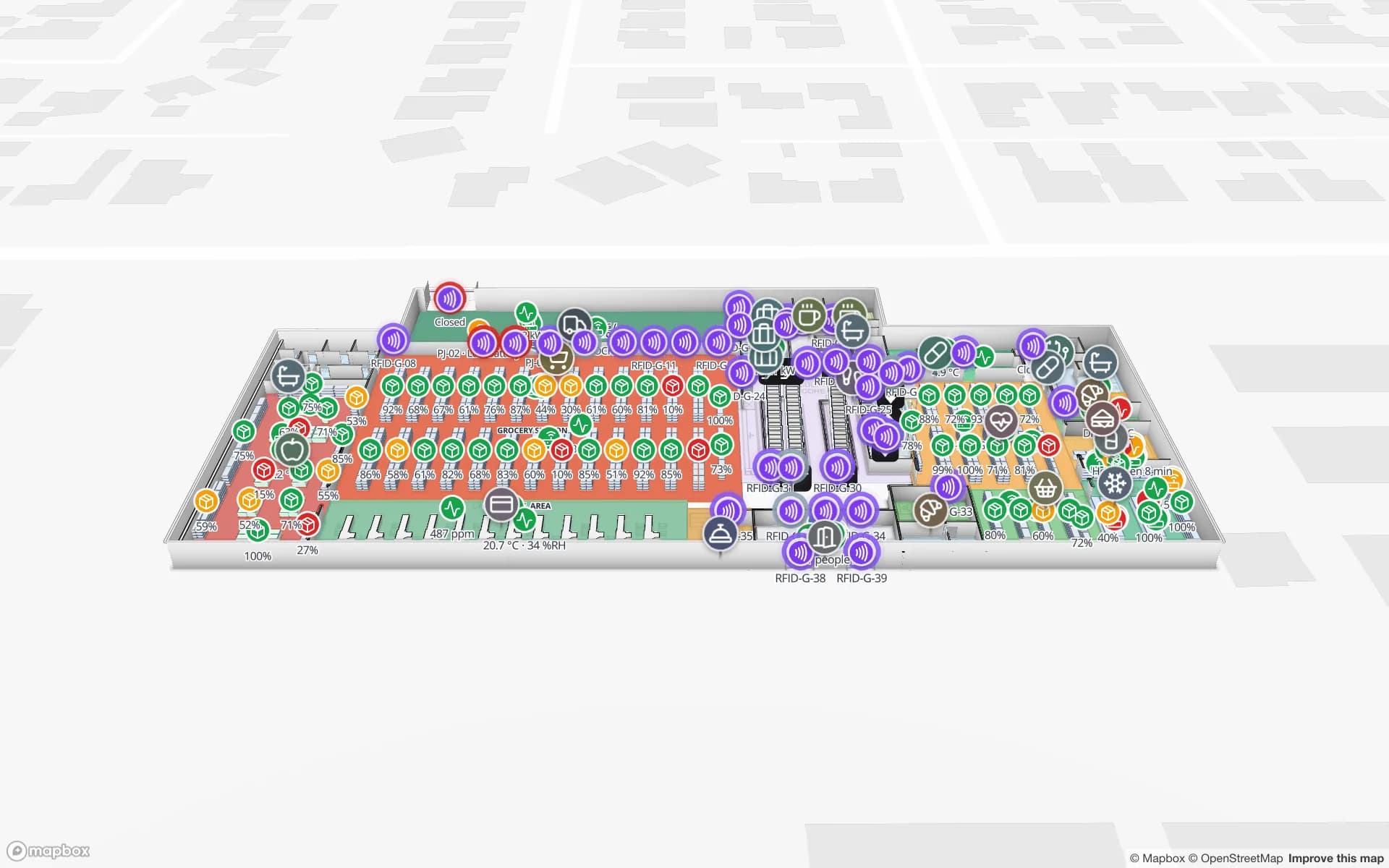
Eastport Cross-Dock Freight Hub, a cross-dock & trailer yard demo, in the Spatial Map 3D viewer with live device markers
Eastport Cross-Dock Freight Hub
Eastport Cross-Dock, a demo freight hub: 50 dock doors, 44 yard slots and 1,180 RFID pallets, with the gate and weighbridge.
Dock doors in the Eastport cross-dock demo
50
RFID pallets moving through Eastport
1,180
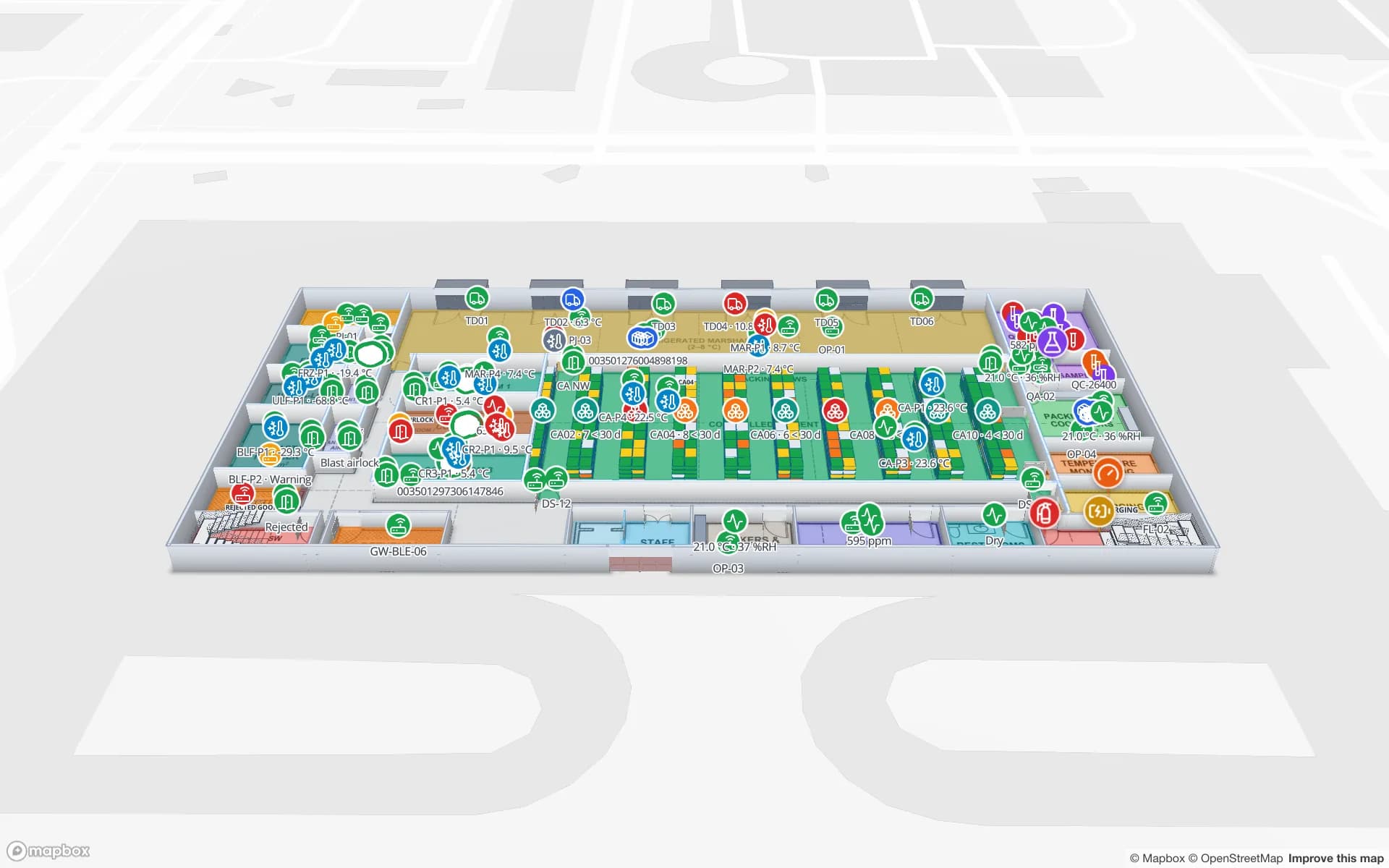
Rack locations coloured by stock in the Crestline demo
2,204
Free trial, up to 5 facilities, no card
7 days

The free port and the stock that passes through

The national port administration says Montevideo is the first terminal on the Atlantic coast of South America to operate under the free-port regime it calls “Puerto Libre”. The port itself is in the northern part of the old city, with natural shelter from the bay and two jetties guarding the entrance, so the quays are in the middle of the city and the depots that serve them are not.

Goods that arrive at a free port often wait, are split, repacked and leave under another consignment, so the stock in a depot is a moving mix of owners, lots and destinations. The legal side of the regime belongs to the law and your customs broker; the physical side is what the map shows: which pallet is in which lane, which lot is on hold, which dock door is free. The Eastport Cross-Dock demo shows 50 dock doors, 44 yard slots and 1,180 RFID pallets. Spatial Map does not connect to port or customs systems.


Route 8: a free zone of 92 hectares

On the edge of the city, on Route 8 at Km 17.5, sits the first private free zone in Uruguay. It was created in 1990 under the 1987 free-zone law, covers 92 hectares and has more than 350 companies and about 10,000 people; its activities include global services, regional headquarters, shared-service centres, software development, call centres and regional logistics and distribution. A distribution centre in a zone like that holds goods for a region, not just for Uruguay, and its customers often sit in another country and want to see their own stock.

Give each customer a read-only share link with the layers you choose, an expiry date and a view cap, with no account, and let them watch their bays on the same live map the warehouse team uses. The Crestline Fulfillment demo shows the pattern: 20 racks with 2,204 locations coloured by stock status, staging lanes and the trailer yard. The CSV bin inventory guide shows how a stock export becomes a coloured rack map in an afternoon.

Route 1 and Libertad: logistics along the road west

Route 1 begins at the port of Montevideo and runs west to Zona Franca Libertad, in San José department, at Km 49. Uruguay XXI says the zone is authorised for logistics, manufacturing and service companies, and counted 12 free zones operating nationally in 2023. For a business with a depot in town and a warehouse on that road, the real question is stock in transit between the two.

Draw both buildings as facilities in one workspace, hold the stock as rows with a “where” column, and a pallet moving between them appears at the door that last read it. A count rule raises an in-app alert when a lane holds more pallets than its plan, or when a reader stops reporting. For a rollout that starts with one aisle and one dock, the RFID warehouse rollout plan sets out the order.

Three markets from one floor

Montevideo sits between Argentina and Brazil, so a warehouse here can serve customers in all three countries, and a single rack may hold stock with different labels and documents for each. The practical problem is mixing: a lot picked for the wrong destination is found at the loading door, not at the rack. Tag cartons or pallets with UHF RFID at packing, read them at the door, and the map shows which lanes are staged for which truck and which pallets are still on the floor.

Test tags on your own packaging first: wet, waxed or foil-wrapped cartons read differently, and RFID tags for metal, liquids and apparel lists what to check. Where there is no WMS yet, a spreadsheet of locations and lots is enough to start.

Services for teams in Montevideo

Where Montevideo teams usually start:

  • Free-port depots and free-zone warehouses begin with inventory tracking: stock by bin from the WMS, then RFID at the dock doors.
  • Operators that handle goods for several owners often add asset tracking for trolleys, roll cages and forklifts.
  • Food and pharmaceutical stores get temperature monitoring alongside the stock map; RTLS and UWB is for large yards only.
  • If you have no readers or tags yet, our team can source RFID readers, antennas and tags on request, quoted per project, with warranty and device support from the manufacturer: see hardware and demo kits on request.
  • Where a team has no developers, our team builds an RFID inventory system, handheld apps and ERP or WMS integrations as client projects. The product runs as cloud or on-premises.

Also served nearby

The same approach covers Canelones, Las Piedras, Pando, Ciudad de la Costa and Libertad, the town beside the free zone. Nothing needs to be installed at any of them: the map opens in a browser.

How Spatial Map does it

From the free port to the Route 8 warehouse

  1. 01

    Pick one building

    A depot near the port or a free-zone bay, wherever a mixed-owner lot is hardest to find.

  2. 02

    Map racks and doors

    Upload the plan or a photo, let AI Map draft the floor, and name locations the way your WMS names them.

  3. 03

    Load the stock

    The WMS or middleware posts rows through the table write API, or you start from a CSV or Excel export.

  4. 04

    Share with each owner

    A read-only link per owner shows only their bays, with in-app alerts for the team on late lanes and silent readers.

What Montevideo teams track

Free-port and cross-dock depots

Dock doors, yard slots and RFID pallets between the quay and the racks.

Free-zone and shared warehouses

Every rack location coloured from the WMS, with each owner’s bays on a share link.

Retail and e-commerce stock

Item-level stock by bin and by floor for stores and online orders.

Food and pharmaceutical cold rooms

Rooms by live temperature, with reefer docks and in-app excursion alerts.

See it on real demo facilities

Fictional names, real floor plans, live sensors, RFID, BLE tags and gateways — open any of them in the browser.

All 13 demo facilities

Inventory tracking in Montevideo: questions we get

No. It has no link to port, customs or free-zone systems. It shows what happens inside your own building from your own WMS, RFID reads and sensors, so the regime’s records stay where they are.

Yes. Use a read-only share link per owner with the layers you choose, an expiry date and a view cap, and no account is needed. Inside the workspace, Owner, Admin, Editor and Viewer roles and custom roles control who can change what.

Yes, as far as your reads say so. Draw both buildings as facilities in one workspace and hold the pallet as a row with a location column that your RFID middleware or WMS updates when a door reads it. Spatial Map does not track the truck between the two.

Yes. Export stock to CSV or Excel and upload it to a table; racks colour by status the same day. Later, your developers or ours can push rows through the write API (HTTPS, bearer key, bulk upsert, 60 requests per minute per key).

Yes, in Spanish and five other languages, with each user choosing their own; Portuguese is not available, which matters for Brazilian customers, who can use English or Spanish. Rack codes, room names and report titles appear exactly as you type them. See the services page in Spanish.

No. Spatial Map is sold online and our team works with customers in Uruguay remotely, by video call and through the contact form. There are no local resellers or partners.

In US dollars, the same worldwide: a 7-day free trial for up to 5 facilities with no card, then Pro at $60 a month or $600 a year for up to 4 facilities. RFID hardware, if you ask us to source it, is quoted per project and is not part of the subscription.

Map one Montevideo warehouse before the next consignment.

Start the free trial and open the Crestline demo, or send us the plan of a port depot or free-zone bay and a stock export through the contact form.