Johor Bahru · Iskandar Malaysia, Tanjung Pelepas and the Singapore link

Warehouse tracking in Johor Bahru, next door to Singapore

Spatial Map puts a warehouse on a live 3D map in the browser, with docks, lanes, racks and the pallets in them coloured from your WMS or RFID reads. Warehouse tracking in Johor Bahru has a feature that few cities share: the buildings sit within sight of Singapore, so the same company often keeps stock on both sides of the Strait of Johor, and a pallet’s story includes a road or rail crossing. This page is about those sheds, in Iskandar Malaysia and around the port.

No credit card. Runs in the browser. Pro is $60/month for up to 4 facilities. Book a demo

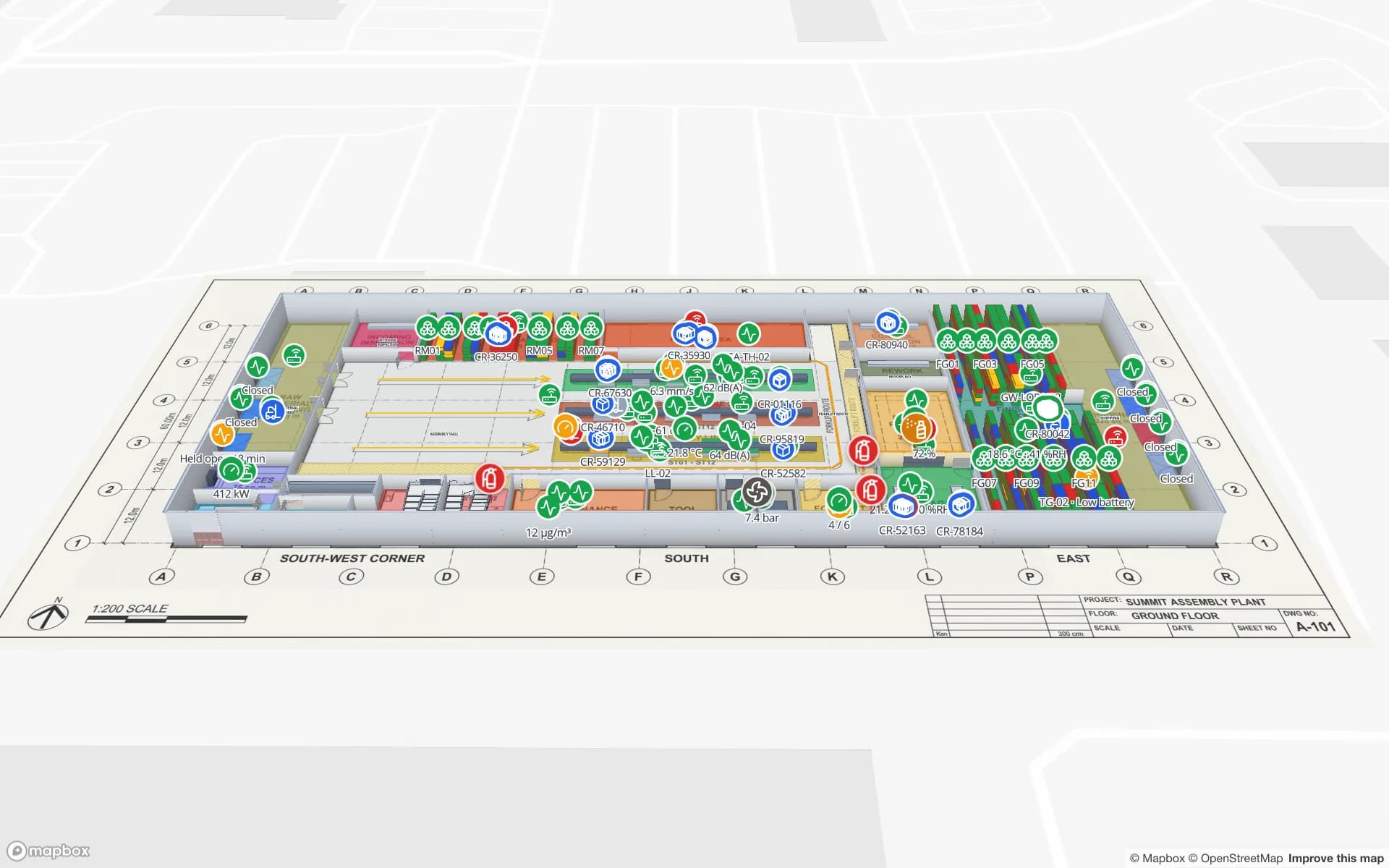
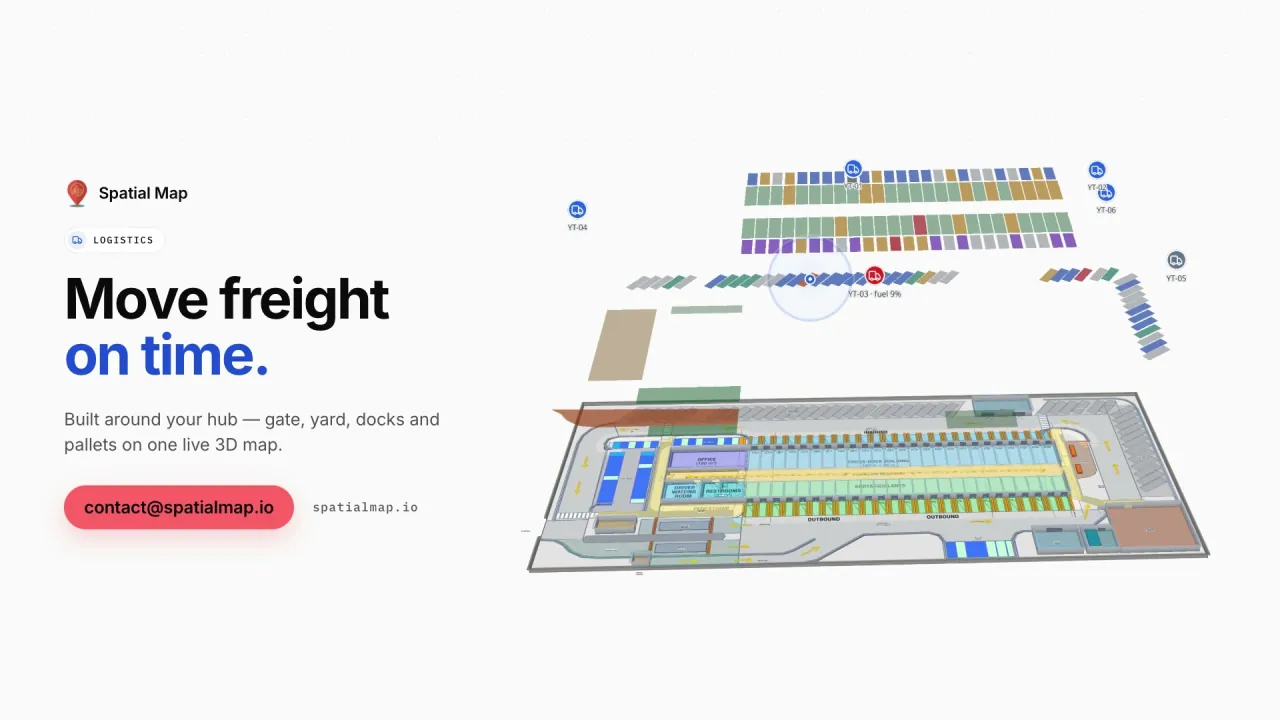
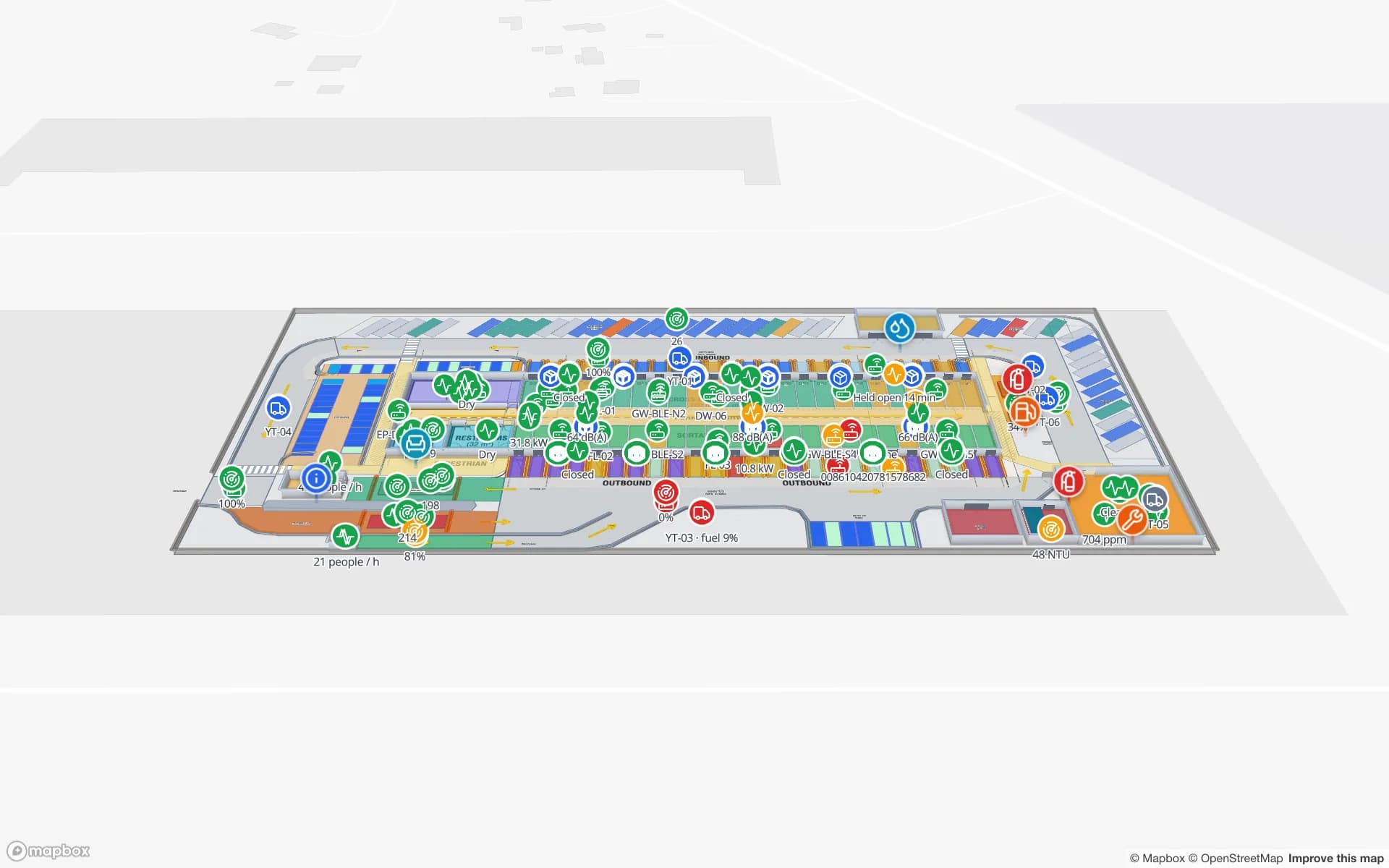
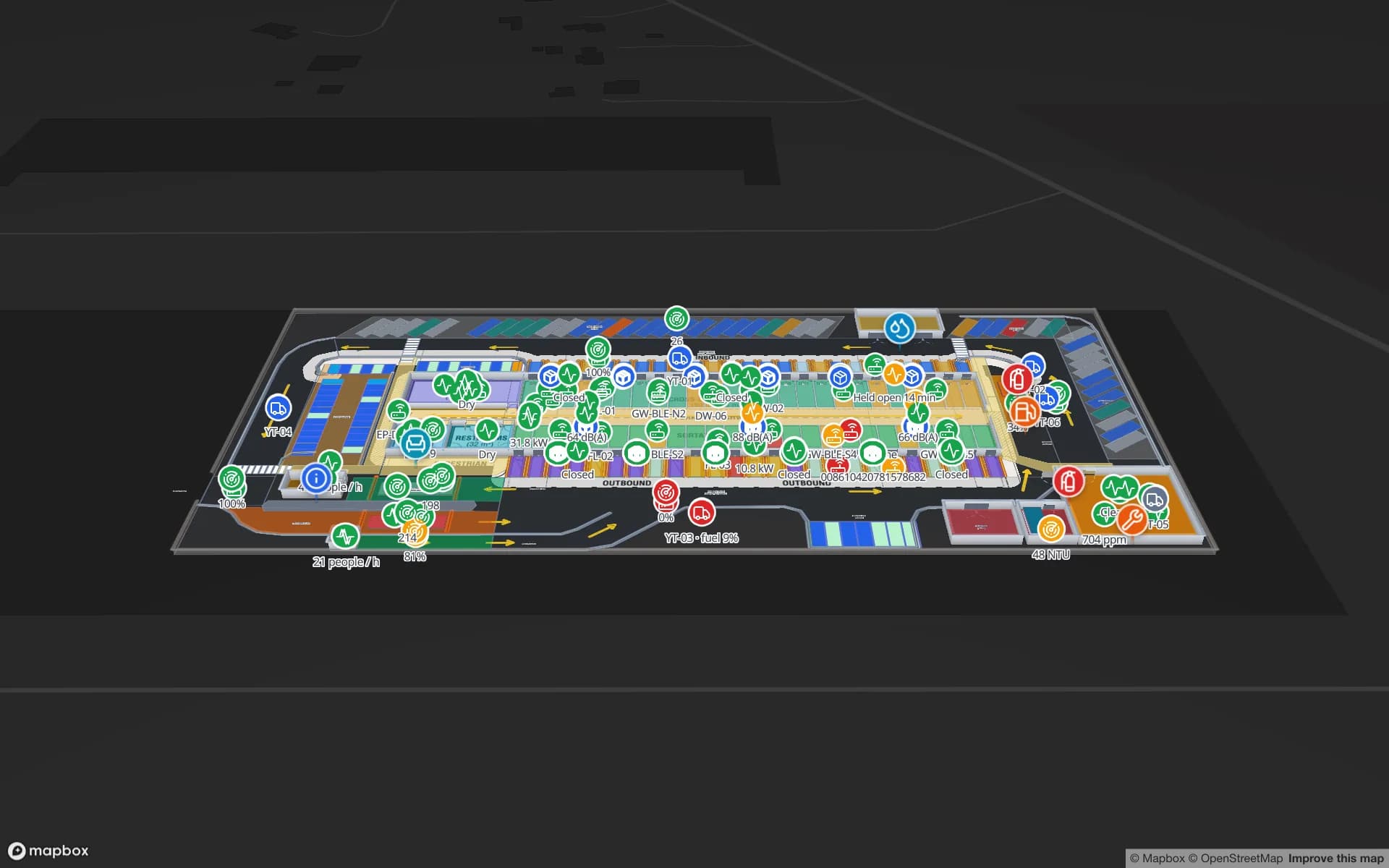
Eastport Cross-Dock Freight Hub, a cross-dock & trailer yard demo, in the Spatial Map 3D viewer with live device markers
Eastport Cross-Dock Freight Hub
Eastport Cross-Dock, a demo freight hub: 50 dock doors, 44 yard slots and 1,180 RFID pallets, with the gate, weighbridge and trailer yard.
Dock doors in the Eastport cross-dock demo
50
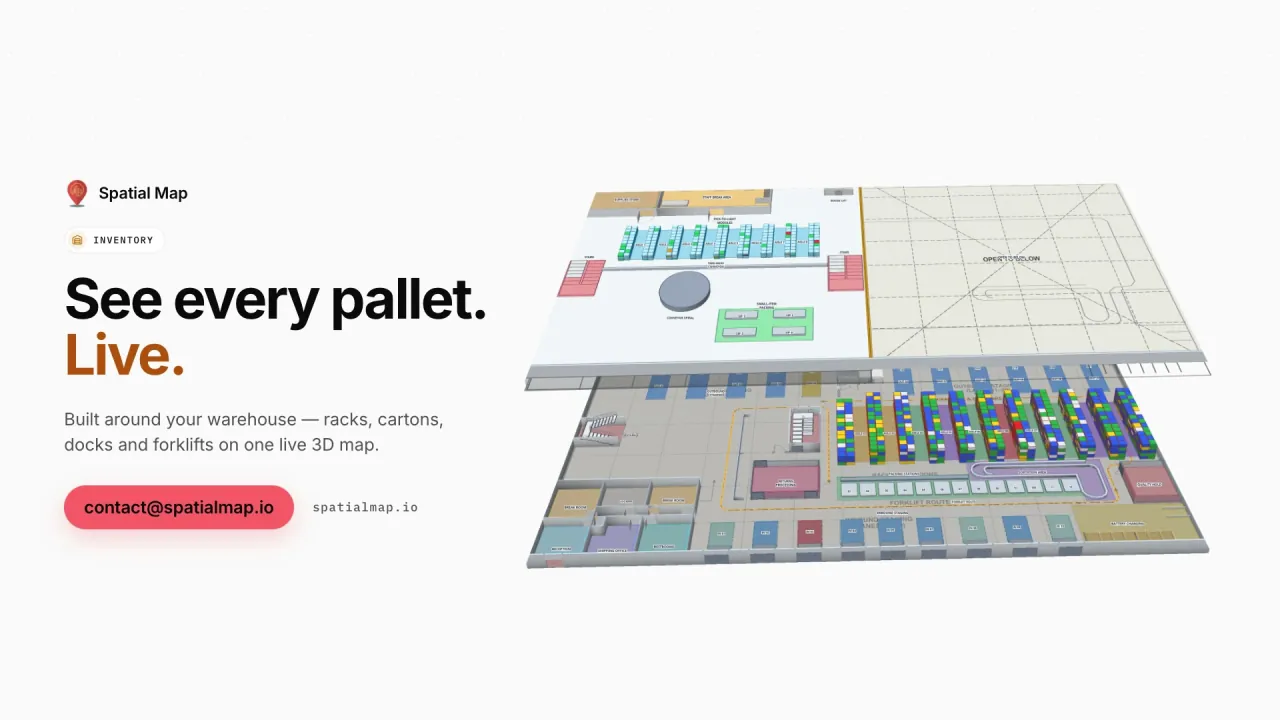
Rack locations in the Crestline fulfilment demo
2,204
How often alert rules are checked, with alerts shown in the app
15 s
Free trial, up to 5 facilities, no card
7 days

Iskandar Malaysia: five zones, 2,300 square kilometres

Iskandar Malaysia was established on 8 November 2006 and covers 2,300 km² across Johor Bahru District, Kulai District and part of Pontian District. It is organised in five zones: the Johor Bahru city centre, Iskandar Puteri, the Western Gate around the Port of Tanjung Pelepas, the Eastern Gate at Pasir Gudang, and Senai-Skudai, where Senai International Airport lies.

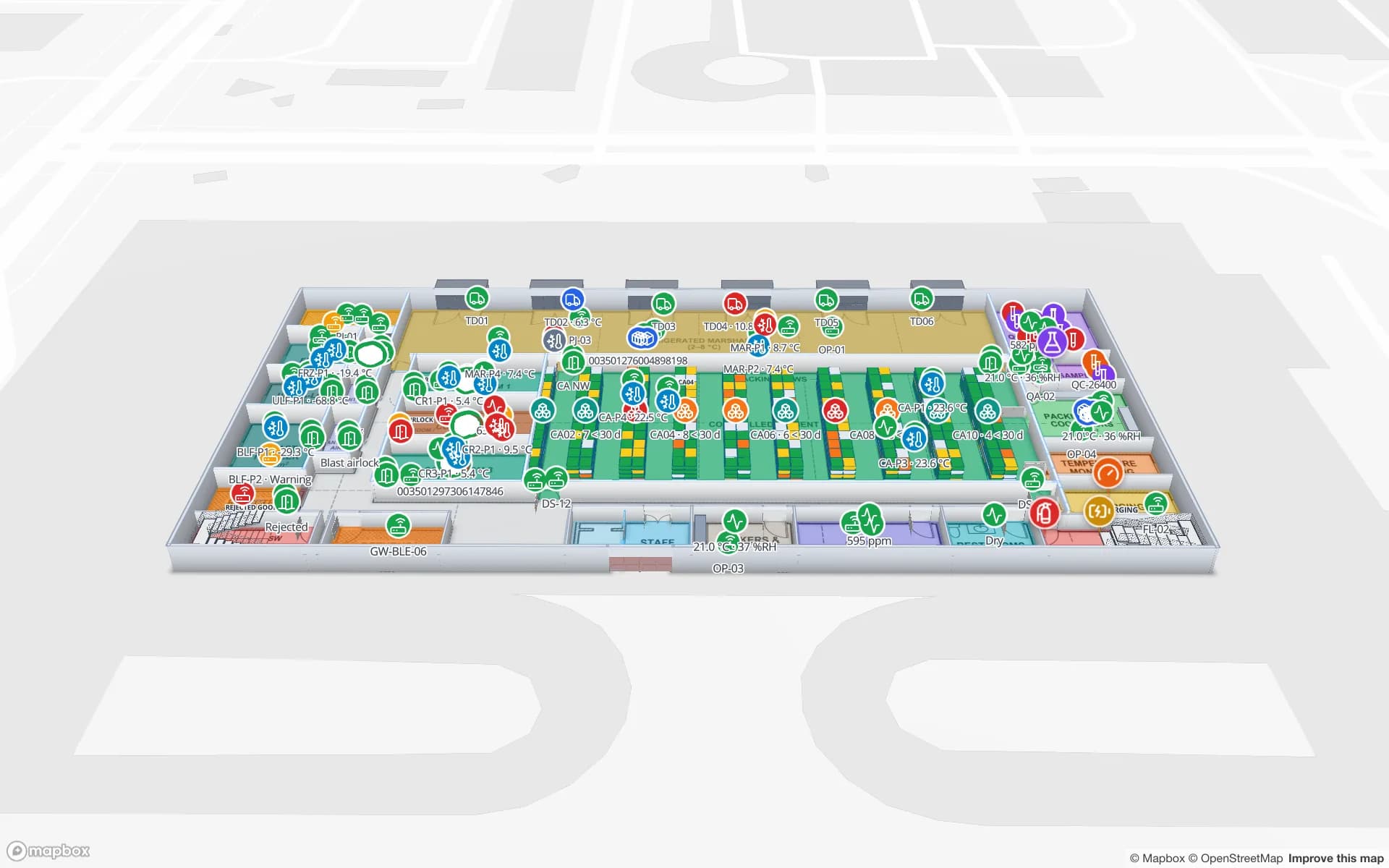
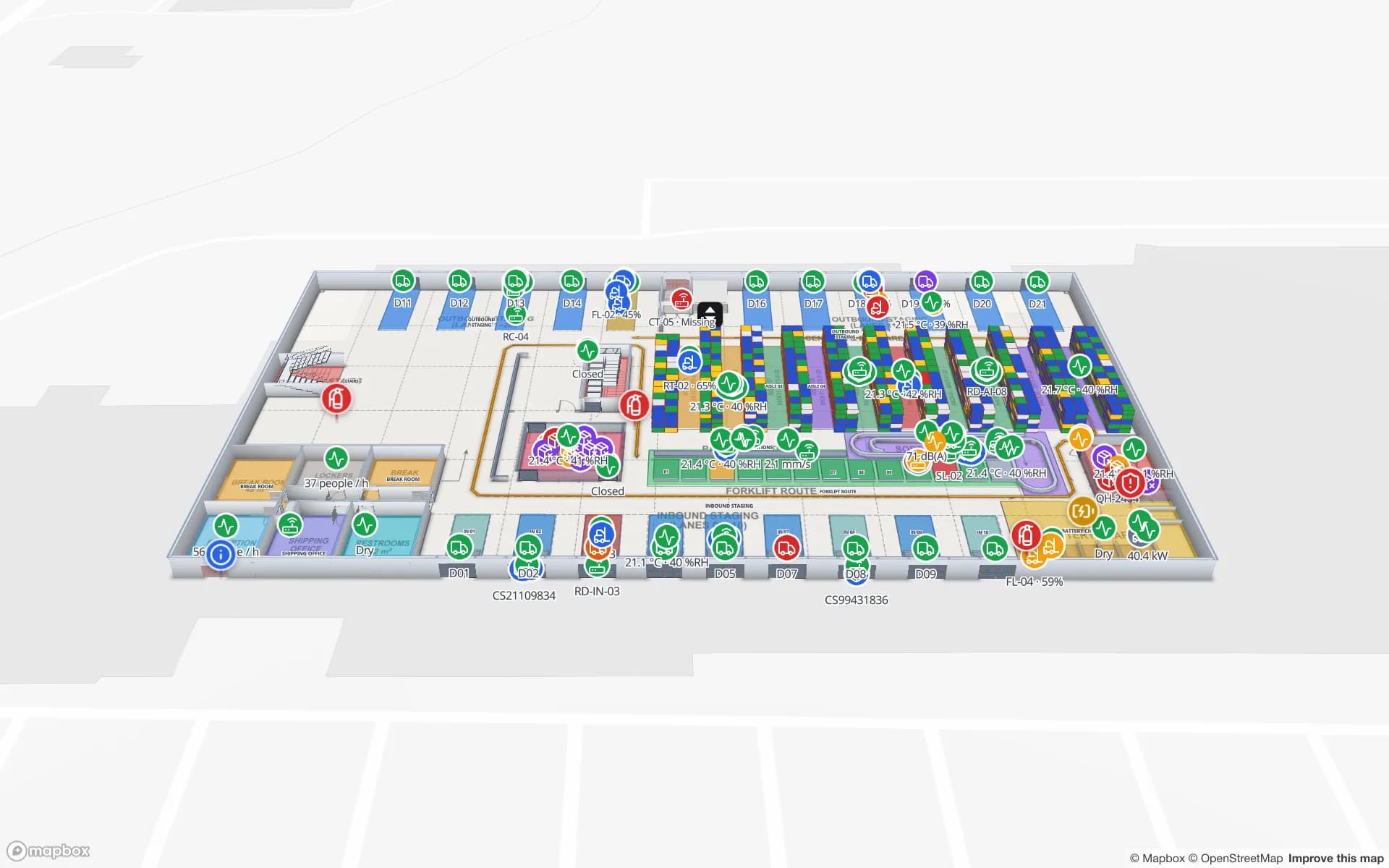
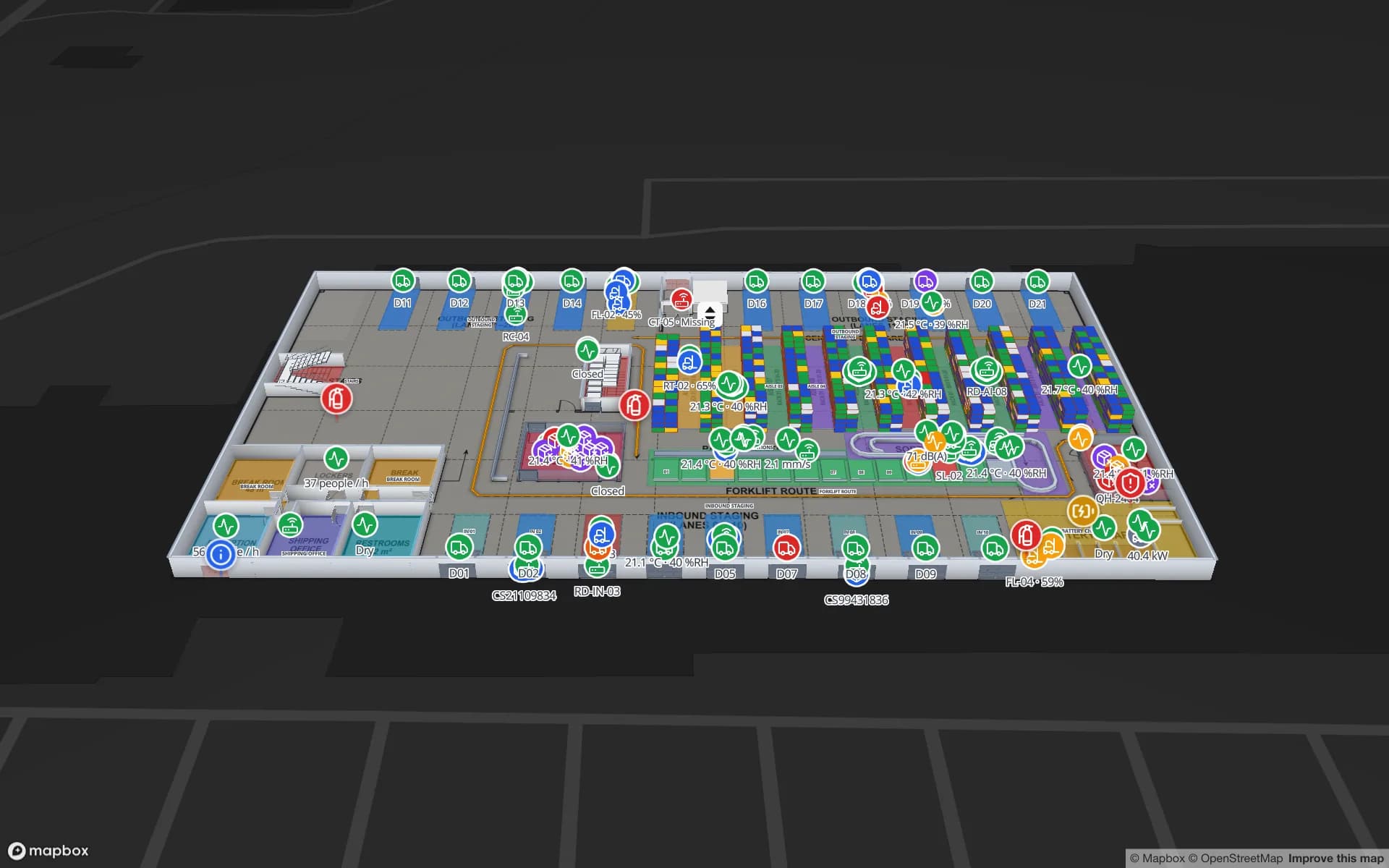
For a warehouse team that map of zones is a map of where the sheds are. Distribution centres cluster near the gates and the airport, each with its own docks and yard, and many tenants hold space in more than one. Draw each as a facility, group them into one solution, and a manager can open all of them from a single page and compare dock queues or stock by site. The Crestline demo shows a fulfilment building with 2,204 rack locations coloured by stock status, staging lanes and a trailer yard.
Tanjung Pelepas: a free trade zone and a rail terminal at the port

The Port of Tanjung Pelepas was inaugurated on 13 March 2000 at Gelang Patah, on the Pulai River estuary about 30 km from Johor Bahru. Its development area sets aside 610 hectares for a free trade zone, and a four-track rail terminal connects it to the peninsula’s freight line. The Malaysia page covers transhipment in general; the question inside a shed is narrower: which container’s pallets are in which lane, and what is waiting for the next vessel, rail slot or truck.

RFID portals at dock doors answer it for tagged pallets, and a table of expected loads from your WMS shows what should be there. The Eastport demo shows 50 dock doors, 44 yard slots and 1,180 RFID pallets with the gate and weighbridge, and the post on dock doors, trailers and yard visibility explains the pattern. Goods in a free zone are subject to customs rules that your own records and systems must satisfy; Spatial Map is not a customs or inventory-of-record system, and it makes no compliance claim. It shows where things are.

Two countries, one stock: the Causeway, the Second Link and the SEZ

Johor Bahru is joined to Singapore by the Causeway, which opened in the 1920s and carries road and a single rail track, and by the Second Link between Tanjung Kupang and Tuas, completed in 1998. On 11 January 2024 the two governments signed a memorandum on a Johor-Singapore Special Economic Zone, with electronics among the sectors named. The zone is still a framework, and Spatial Map has no feed from either country’s customs or border systems.

What it does for a company working both sides is simple. Put each warehouse on its own map, in one workspace, and keep one stock table with a site column: a pallet moved from Tuas to Gelang Patah appears at its new location when your WMS sends the row. A read-only share link per building lets a planner in Singapore open the Johor shed without an account. The Singapore page covers the other side, and the post on WMS integration with REST, webhook and WebSocket shows how your WMS can feed either.

Cold rooms, electronics stores and returns

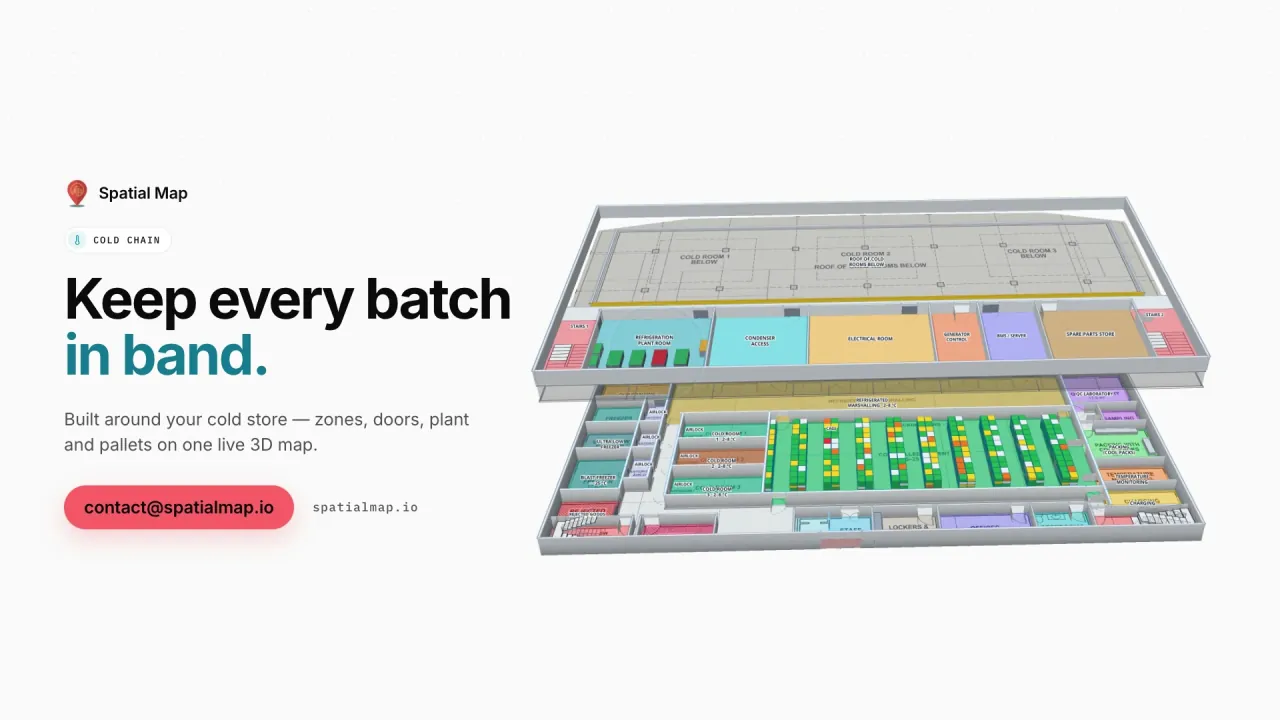
Not every Johor warehouse is general cargo. Cold rooms, electronics stores and returns areas have tighter rules about what sits where, and each is a good first map. For cold storage the Polar Pharma demo tints each temperature zone from its probes and shows reefer docks and quarantine; for electronics the Northgate demo shows a secure store and cage on two floors. See temperature monitoring for how sensor readings and alert rules work. Alerts are in-app only: the bell, a toast and the Alerts page.

Services for teams in Johor Bahru

Johor Bahru teams tend to start with the dock and yard:

  • Warehouse and freight teams start with inventory tracking at dock doors and racks, because a mis-staged pallet costs a vessel cut-off or a border-crossing slot.
  • Operators with equipment such as pallet jacks, reach trucks and returnable cages add asset tracking; RTLS and UWB is for large yards where vehicles must be located continuously.
  • If you have no readers or tags yet, our team can source RFID and BLE devices on request, quoted per project, with manufacturer warranty: see hardware and demo kits on request.
  • Many Johor companies run a WMS on both sides of the border; where you want a handheld app or an integration built, our team does custom software as client projects, including RFID inventory systems. The product runs as cloud or on-premises.

Also served nearby

The same page covers Pasir Gudang, Senai, Kulai, Skudai, Iskandar Puteri and Pontian. Port Klang and the Klang Valley, further up the peninsula, are on the Malaysia page and the Kuala Lumpur page.

How Spatial Map does it

From shed to live map

  1. 01

    Pick one building

    A free-zone shed, a distribution centre or a returns hall, wherever a mis-staged pallet costs most.

  2. 02

    Map docks, lanes and racks

    Upload the plan, let AI Map draft the floor for a person to review, and name read points the way your WMS names them.

  3. 03

    Connect stock and reads

    Your WMS and RFID middleware post rows through the table write API, a polled REST endpoint or CSV and Excel uploads.

  4. 04

    Compare sites

    Group the Johor and Singapore sheds in one solution and open each map, or share one with a planner on a read-only link.

What Johor Bahru teams track

Free-zone and port-side sheds

Dock doors, yard slots and pallets staged for the next vessel, rail slot or truck.

Distribution and fulfilment centres

Rack-level stock, staging lanes and trailer yard in one view.

Cold rooms and controlled stores

Temperature zones, reefer docks and held stock on the same plan.

Plant stores and cross-border supply

Raw-material and finished-goods racks for plants that supply across the Strait.

See it on real demo facilities

Fictional names, real floor plans, live sensors, RFID, BLE tags and gateways — open any of them in the browser.

All 13 demo facilities

Warehouse tracking in Johor Bahru — questions we get

Yes. Each building is a facility, and a workspace holds as many as your plan allows: 5 on the trial, 4 on Pro, more as custom services. Group them into a solution and open them side by side. The same asset or stock table can carry a site column.

No. It has no link to customs, border, port community or terminal systems, in Malaysia or Singapore. It shows what happens inside your own building, from your own WMS, RFID reads and sensors.

No. Your WMS stays the system of record. Spatial Map shows its stock, tasks and RFID reads on a map of the building and raises in-app alerts, but it does not write back to the WMS or ERP.

Not for viewing. A read-only share link can carry an expiry date, a view cap, a locked floor and a choice of layers, and tags on a shared map still move live.

Not yet. The app is available in English, Chinese, Spanish, French, German and Arabic, and each user picks their own. Your rack codes, zone names and report titles can be in Malay.

No. Spatial Map is sold online and our team works with customers in Malaysia remotely, by video call and through the contact form. There are no local resellers or partners.

In US dollars, the same worldwide: a 7-day free trial for up to 5 facilities with no card, then Pro at $60 a month or $600 a year for up to 4 facilities. RFID hardware, if you ask us to source it, is quoted per project and is not part of the subscription.

Map one Johor dock before the next vessel.

Start the free trial and open the Eastport demo, or send us the plan of a shed and a sample of your WMS stock through the contact form.