Latvia · Latvija · Freeport of Riga, timber, rail transit

Indoor mapping & RFID tracking in Latvia, for a transit economy on three ports

Spatial Map turns a warehouse, a yard or a plant into a live 3D map in the browser, with racks coloured by stock, RFID-tagged pallets read at the dock and vehicles as moving markers, fed by the systems you already run. Indoor mapping & RFID tracking in Latvia is shaped by transit: three ports, a broad-gauge railway inherited from a different era, and a standard-gauge line under construction beside it. Each building is its own facility, and one workspace holds them all.

No credit card. Runs in the browser. Pro is $60/month for up to 4 facilities. Book a demo

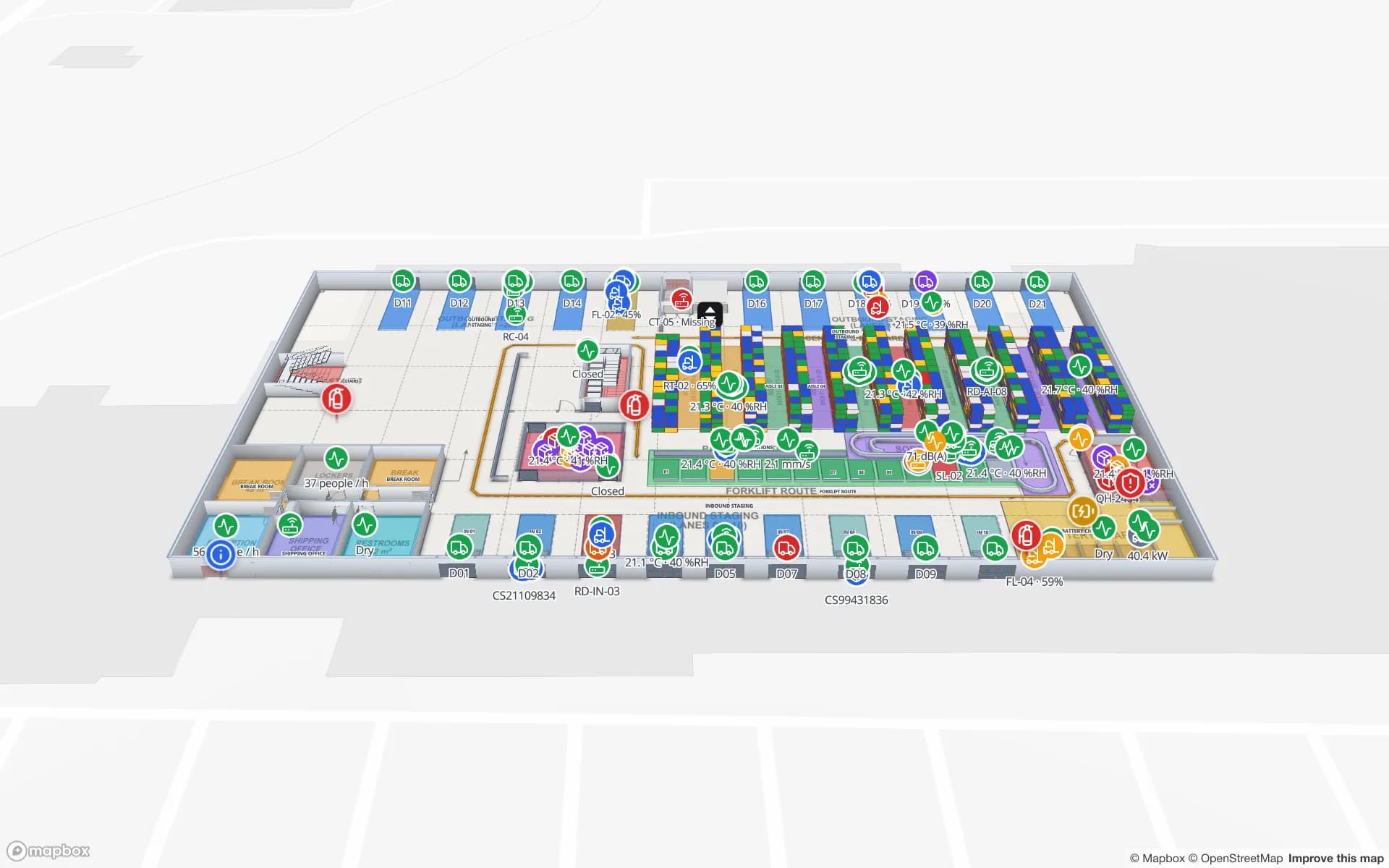
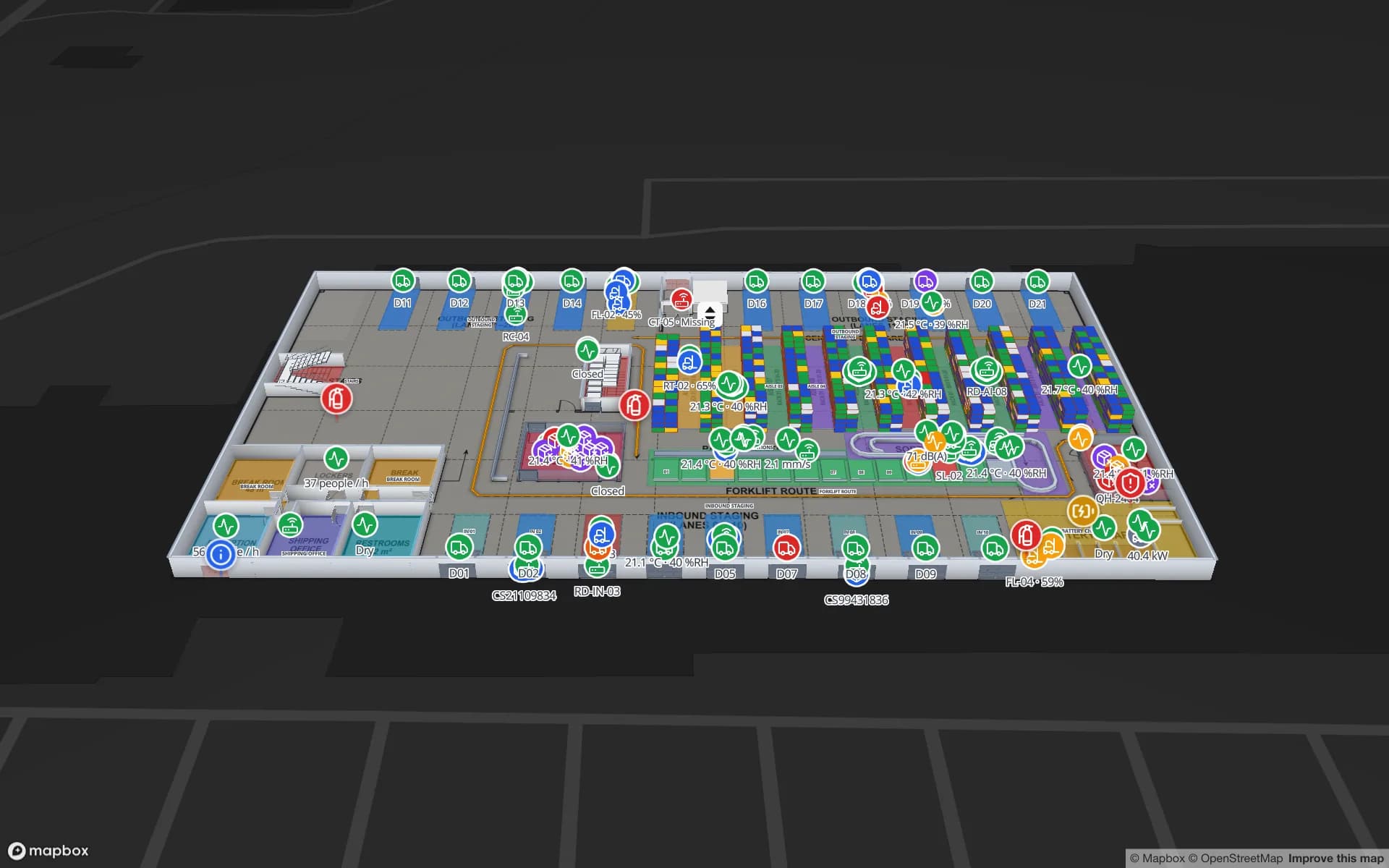
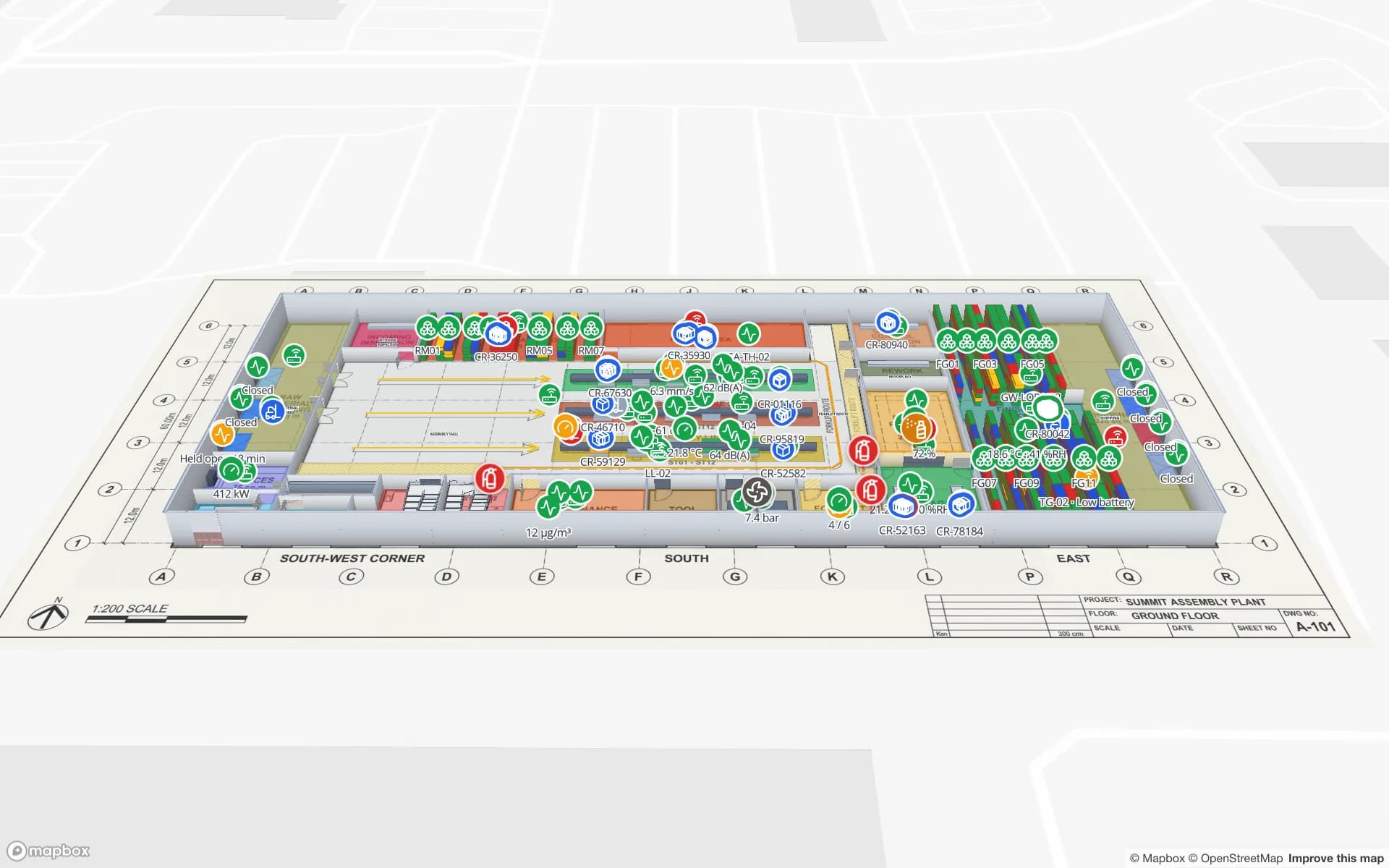
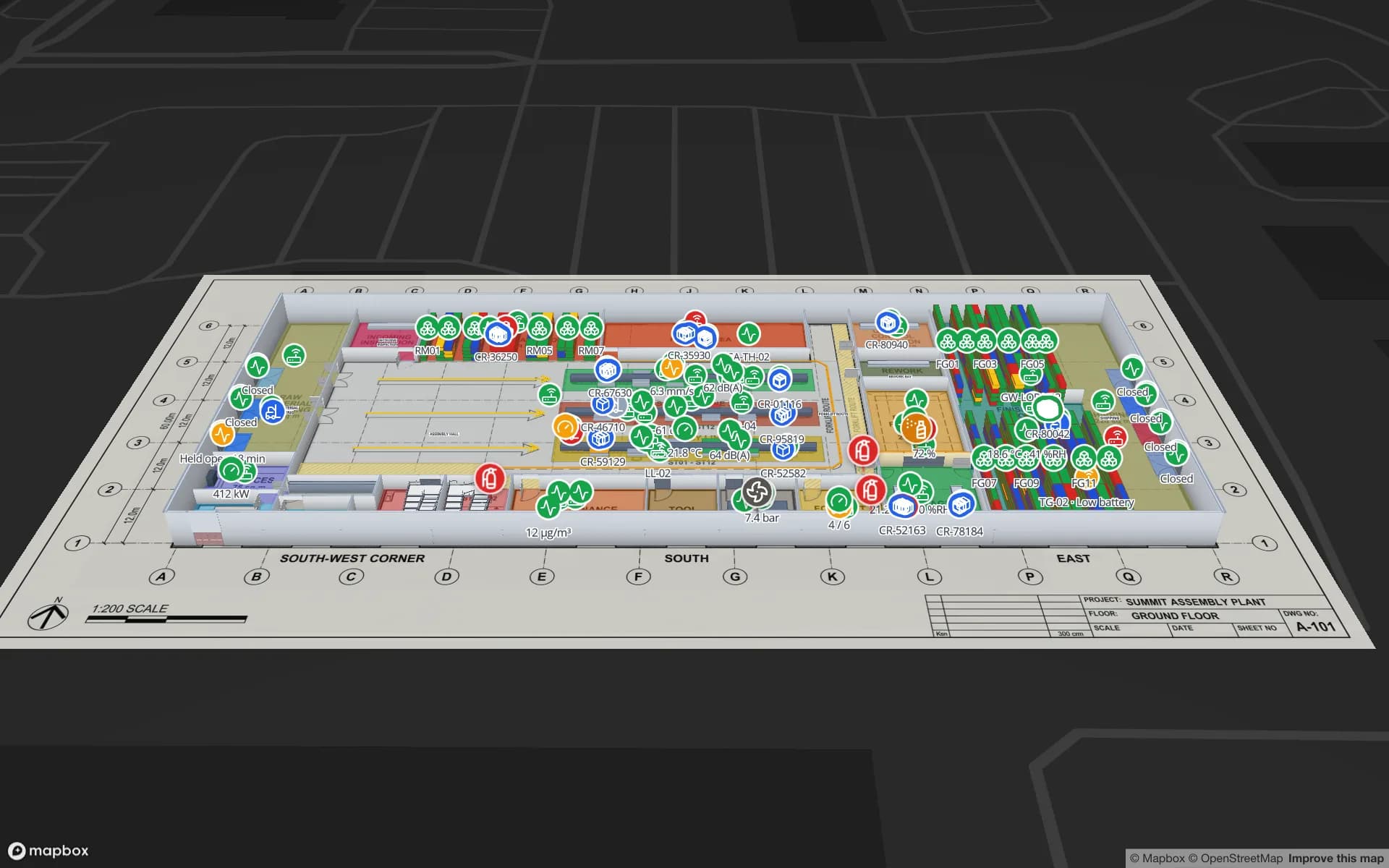
Summit Assembly Plant, a assembly plant demo, in the Spatial Map 3D viewer with live device markers
Summit Assembly Plant
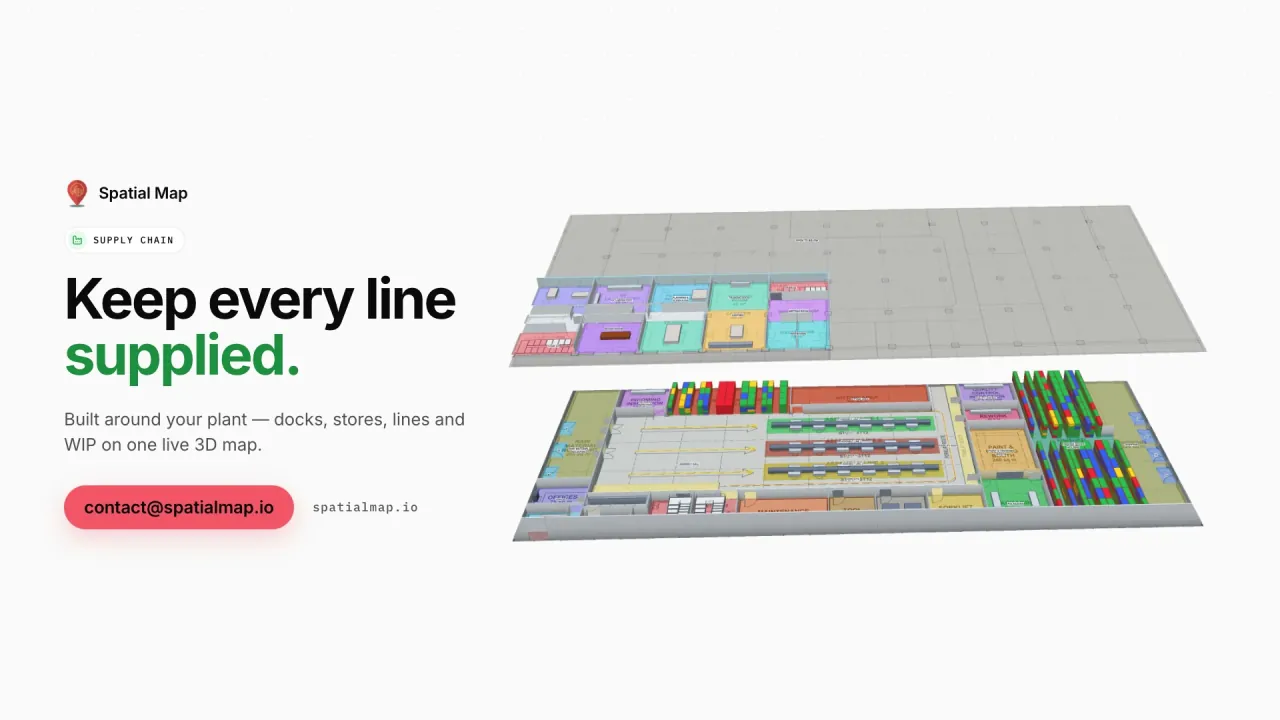
Summit Assembly, a demo assembly plant: three lines, WIP carriers and 867 rack locations for raw materials and finished goods.
Cargo handled by the Freeport of Riga in 2025, per the port authority
16.8 Mt
Freight at Riga Airport in 2025, up 7.2 % (Central Statistical Bureau)
20.1 kt
Interface language for Latvian teams (Latvian and Russian not available)
English
Free trial, up to 5 facilities, no card
7 days

Three ports and a freight system built for transit

Latvia’s main ports are Riga, Ventspils and Liepāja, and the Latvian economy has long leaned on moving other countries’ cargo through them. The Freeport of Riga says it handled 16.8 million tonnes in 2025, down from 23.5 million in 2022, a year in which it counted for 49 % of all seabound cargo handled in Latvian ports. The Central Statistical Bureau puts total port cargo at 34.3 million tonnes in 2025, 4.9 % less than in 2024, and rail freight at 9.5 million tonnes, 14.4 % less.

Volumes that fall do not make buildings emptier at once; they change what sits in them. Cargo that used to move straight through now waits, gets repacked or is rerouted, and an operator wants to know which lanes are full and what has been held the longest. That is a stock-by-location question, which a live map of the warehouse answers without a new system. Spatial Map does not connect to port, customs or rail systems; it shows what your own data says.
Timber and wood processing: lanes, lots and yards

Economic overviews name timber and wood processing as a developed sector and lists sawn coniferous wood among Latvia’s principal merchandise exports in 2023, beside processed food, metals and electronics. The goods are bulky and the yards big: sawn packages, panels and pellets in numbered lanes or on racks, shipped by truck, rail and vessel.

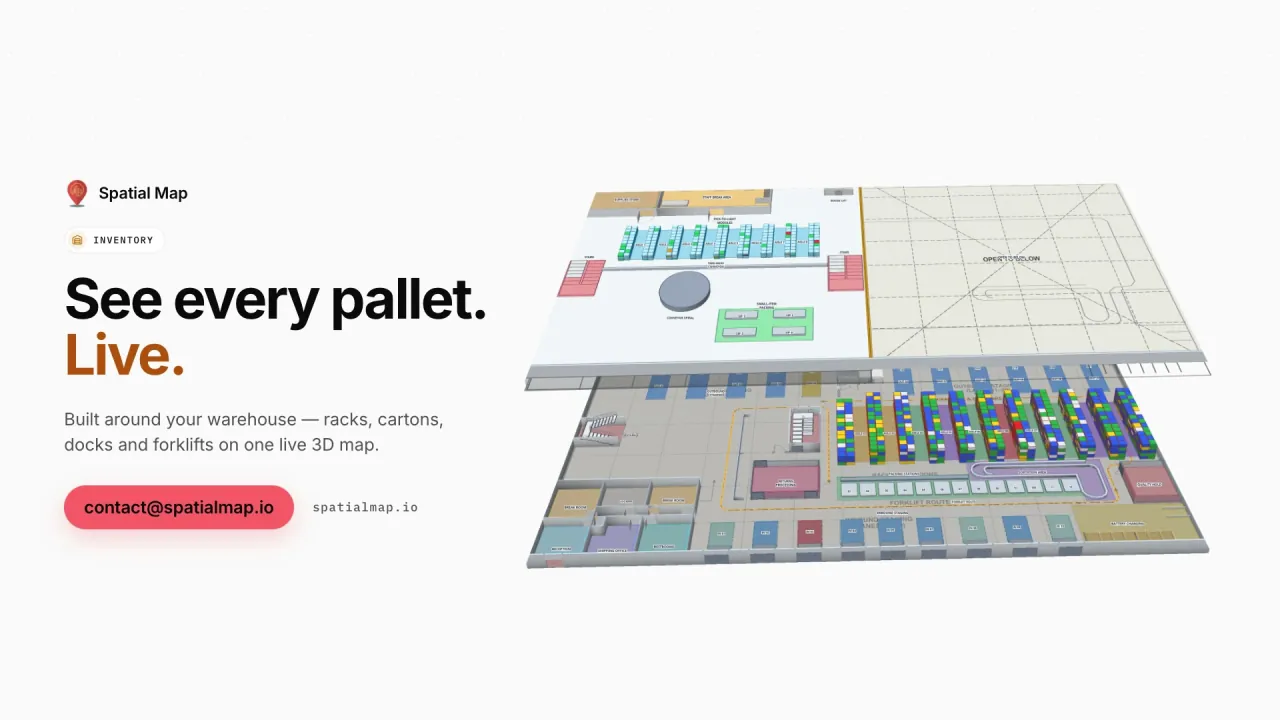
The goods rarely need a tag each. Draw each lane or bay as an area, name it as your system does and post one row per lot with species, grade and destination: the map colours lanes by fill, age or destination and the detail panel shows the lot’s history. Where a pack does carry RFID, the read moves the row on its own. The Crestline demo shows 20 racks with 2,204 locations coloured from stock.

Rail: 1,520 mm today, 1,435 mm on the way

The Freeport of Riga’s railway is built to the 1,520 mm gauge used across Latvia, and the port’s own material says the standard-gauge 1,435 mm Rail Baltica line is planned to connect to it so that cargo can be reloaded quickly between the two. Riga Central Station is part of the Rail Baltica works and is under construction, with the airport station planned later; sources give different opening years, so we give none.

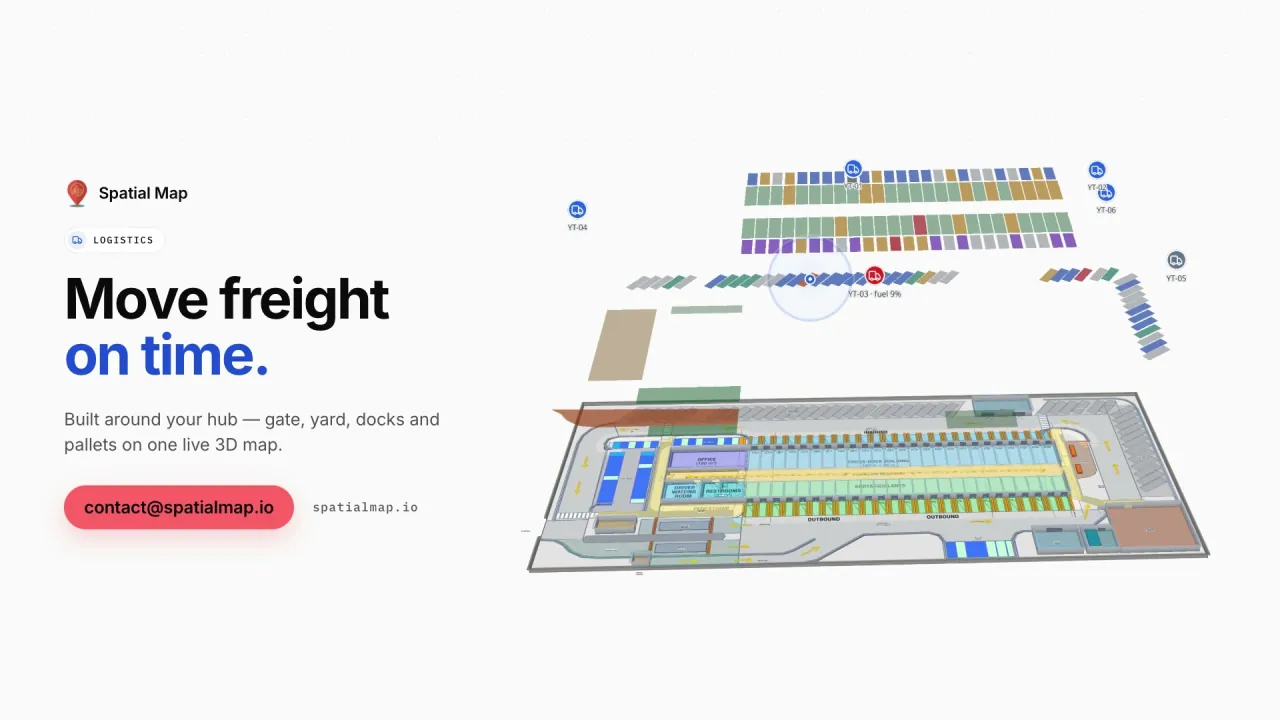
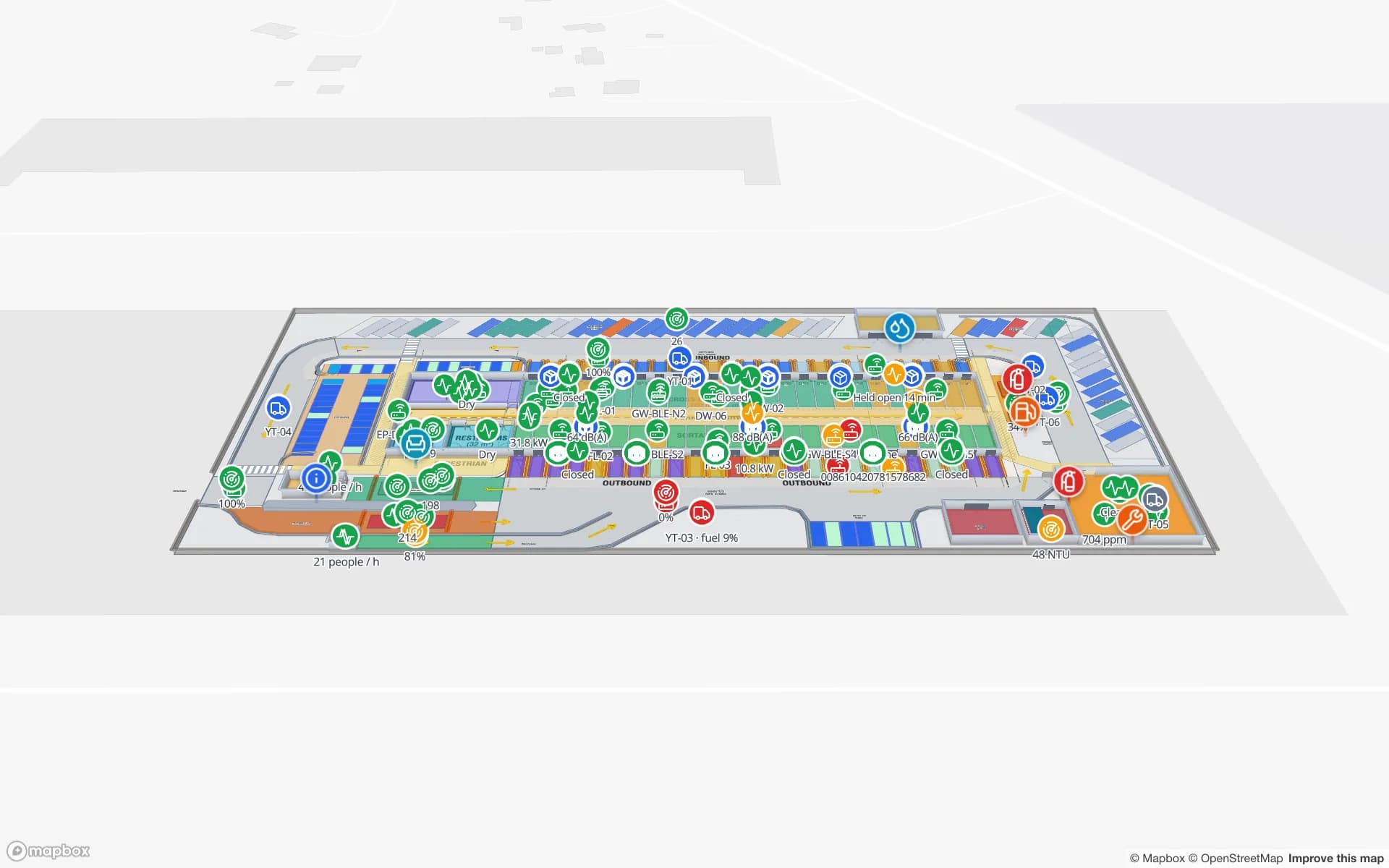
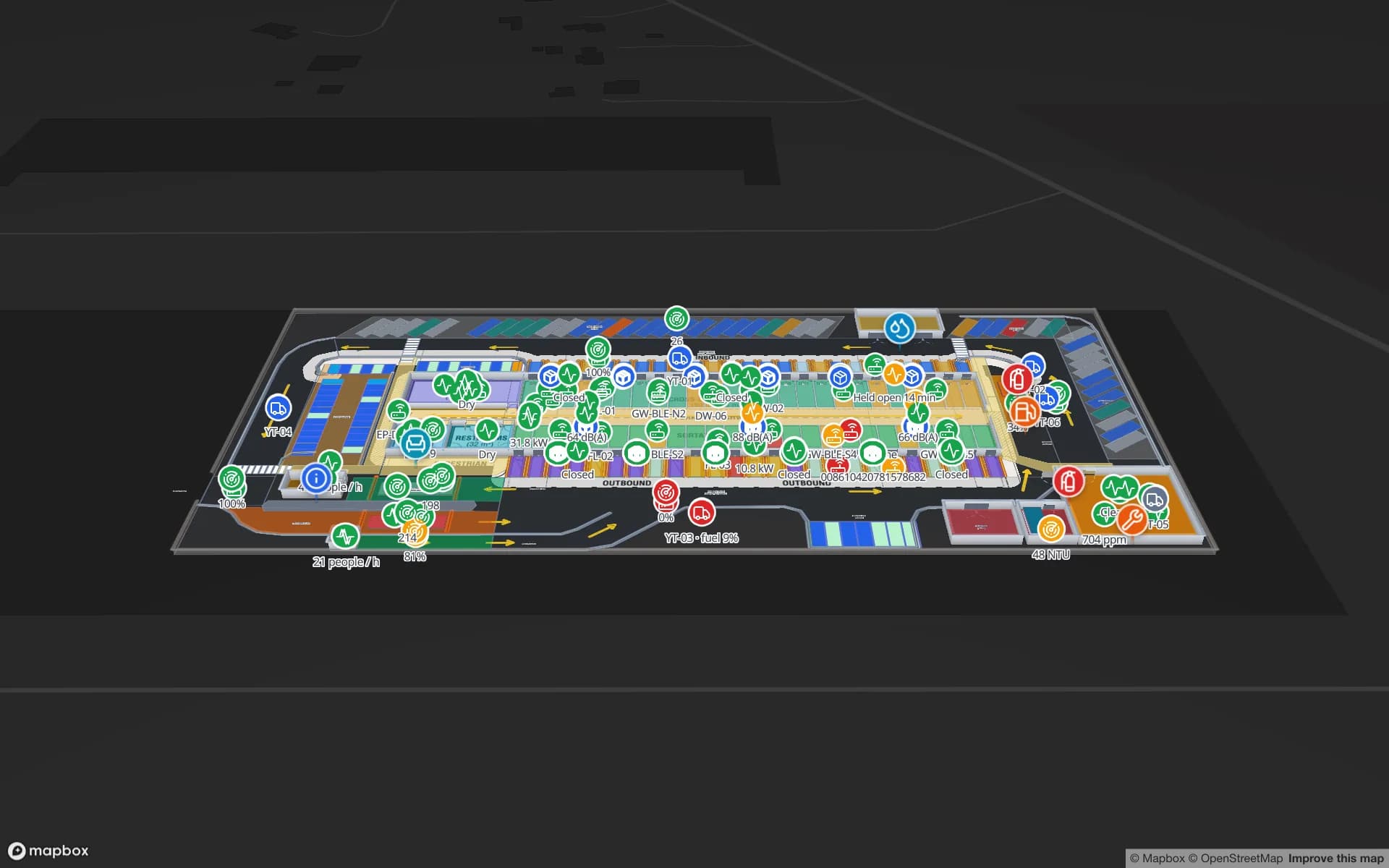
A change of gauge means a transfer point, and a transfer point is a yard: wagons, containers and trailers waiting between two systems. Mapping such a yard with slots, tracks and gates, and posting the position of each unit, is the same job as the Eastport demo, which shows 50 dock doors, 44 yard slots and 1,180 RFID pallets. Cross-dock and yard visibility walks through it.

Riga Airport and the air-freight shed

Latvia’s Central Statistical Bureau counts 20.1 thousand tonnes of freight at Riga International Airport in 2025, 7.2 % more than in 2024. According to press summaries of the airport’s results, roughly half moved on passenger flights and 49 % on dedicated cargo flights. Both end up in a shed with time-critical lanes.

Name each lane for a flight or route, post the pallet count and status per lane, and the map shows what is ready, what is late and what has gone. An in-app alert can fire when a lane that should be full by the cut-off is not; Show on map takes the supervisor to it.

Language, privacy and working with us

The app is not available in Latvian or Russian. Latvian teams normally use it in English; German, French, Spanish, Arabic and Chinese complete the six languages, and each user picks their own. Room names, lane codes and report titles can be in Latvian, with all its diacritics, and appear as typed.

Under the GDPR, location data linked to employees is personal data, and in Latvia the Data State Inspectorate is the supervisory authority; your legal advisers decide what applies. Most projects tag pallets, vehicles and tools rather than people. A data processing agreement is available.

Services for teams in Latvia

Where Latvian teams usually start depends on the yard:

  • Port and rail terminals usually begin with inventory tracking for lanes and lots, because a held lot costs money every day.
  • Plants and sawmills often begin with asset tracking for loaders, moulds and returnable packaging.
  • RTLS and UWB matters only in big yards and plants where vehicles and people must be located continuously.
  • If you have no readers or tags yet, our team can source devices on request, quoted per project, with manufacturer warranty: see RFID readers and tags.
  • Handheld apps, WMS and ERP integrations are built as custom software client projects, and the product runs as cloud or on-premises.

Also served

The same offer covers Ventspils, Liepāja, Daugavpils, Jelgava, Jūrmala and Rēzekne, and the industrial areas around Riga. Only Riga has its own page.

How Spatial Map does it

From plan to live map

  1. 01

    Import the layout

    Upload a PDF or DWG (AutoCAD R2004–R2018, placed as a picture) of the hall and yard; AI Map drafts racks, doors and areas for review.

  2. 02

    Name lanes and racks

    Use the codes your system uses so every row finds its place.

  3. 03

    Connect stock and reads

    CSV or Excel exports, a polled REST endpoint, or the table write API for bulk upserts.

  4. 04

    Rules and reports

    In-app alerts for held lots or silent readers, History playback, and PDF or Excel reports.

What Latvian teams use it for

Port and rail yards

Slots, gates and units waiting between two systems.

Plants and sawmills

Raw materials, WIP carriers and finished lots from line to dock.

Distribution centres

Rack-level stock by bin, pick zones and staging lanes.

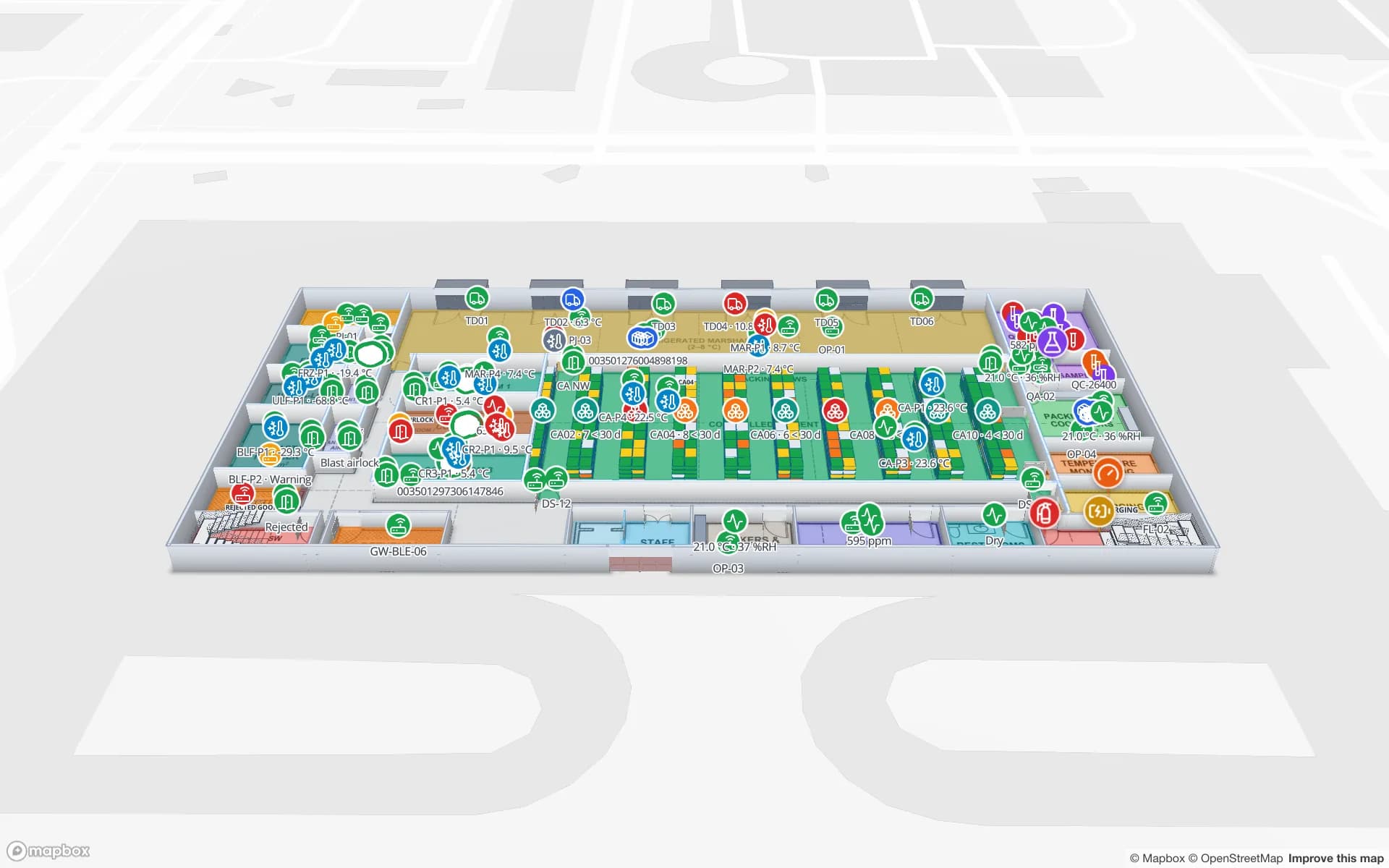
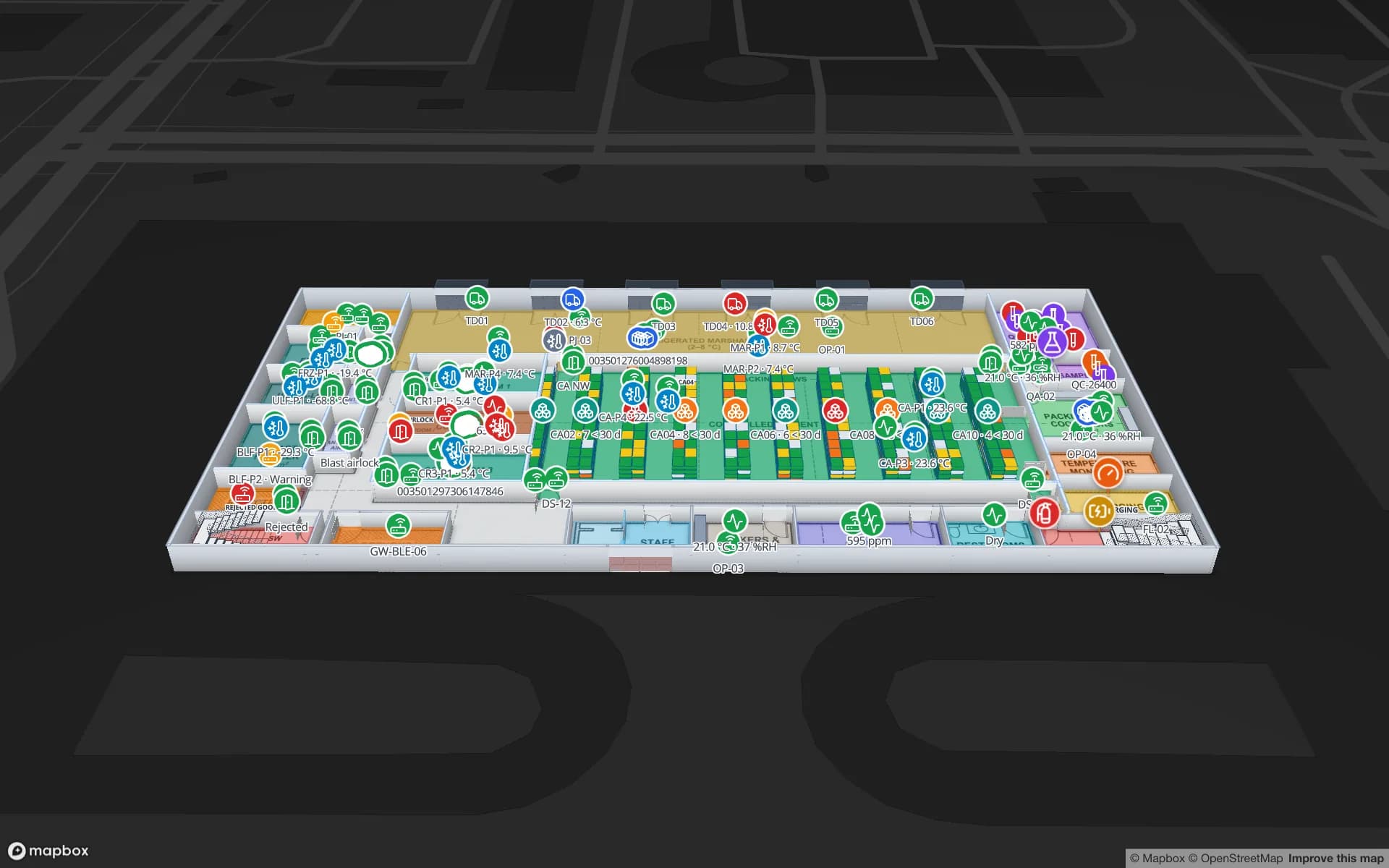
Cold stores for food and pharma

Room temperatures and doors coloured on the plan.

See it on real demo facilities

Fictional names, real floor plans, live sensors, RFID, BLE tags and gateways — open any of them in the browser.

All 13 demo facilities

Questions from Latvian teams

No. The app is available in English, German, French, Spanish, Arabic and Chinese, and each user picks their own language. Your content — lane codes, room names, report titles — can be in Latvian or Russian.

No. It reads from your systems and shows their data on the building. Data comes in through REST polling, file uploads or the table write API, and Spatial Map does not write back. It does not connect to port, customs or rail systems.

Yes. A lane assignment from your system is enough to colour a lane and show a lot’s location. RFID adds automatic reads where a lot or carrier carries a tag.

Yes. DWG files from AutoCAD R2004–R2018 are placed as a picture at real-world units, and PDFs are scaled from standard sheet sizes. DXF is not supported.

No. Spatial Map is sold online and our team works with customers in Latvia remotely, by video call and through the contact form. There are no local resellers or partners.

No. Pricing is the same worldwide and in US dollars: a 7-day free trial for up to 5 facilities with no card, then Pro at $60 a month or $600 a year for up to 4 facilities. Hardware, if requested, is quoted per project.

Map your first Latvian yard or warehouse this week.

Start the free trial and open the demo facilities, or send us a hall layout and a sample of your stock export through the contact form.