Riga · the Freeport, the container shuttle, the airport and Rail Baltica

Warehouse tracking in Riga, from the Freeport lease to the airport shed

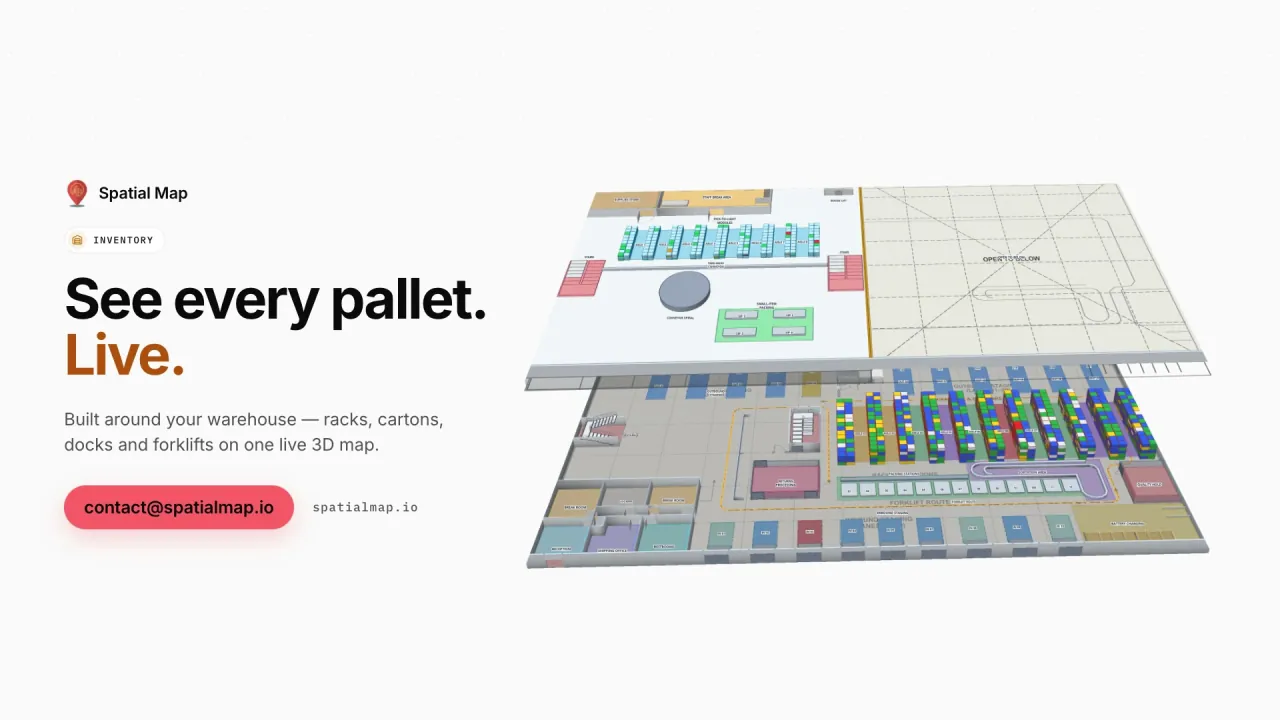
Spatial Map shows a warehouse on a live 3D map: racks coloured by stock, dock doors with their trucks, forklifts and pallets as markers, fed by the WMS, readers and sensors you already run. Warehouse tracking in Riga covers an unusual mix: sheds on leased Freeport land where the authority is the landlord and private companies run the cargo, a shuttle train that moves containers between terminals, and an airport shed working to flight times. A company with several buildings keeps each as its own facility in one workspace.

No credit card. Runs in the browser. Pro is $60/month for up to 4 facilities. Book a demo

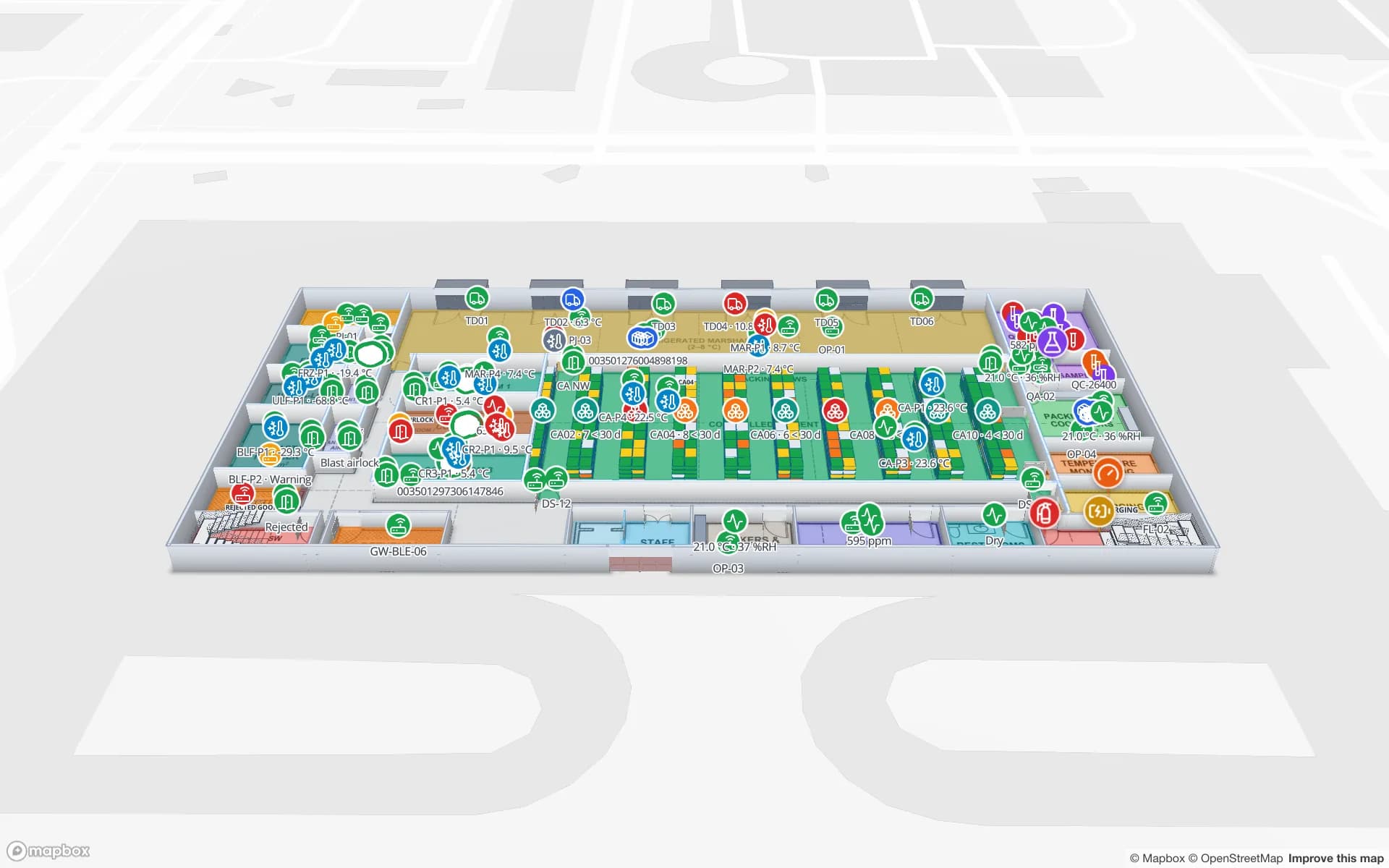
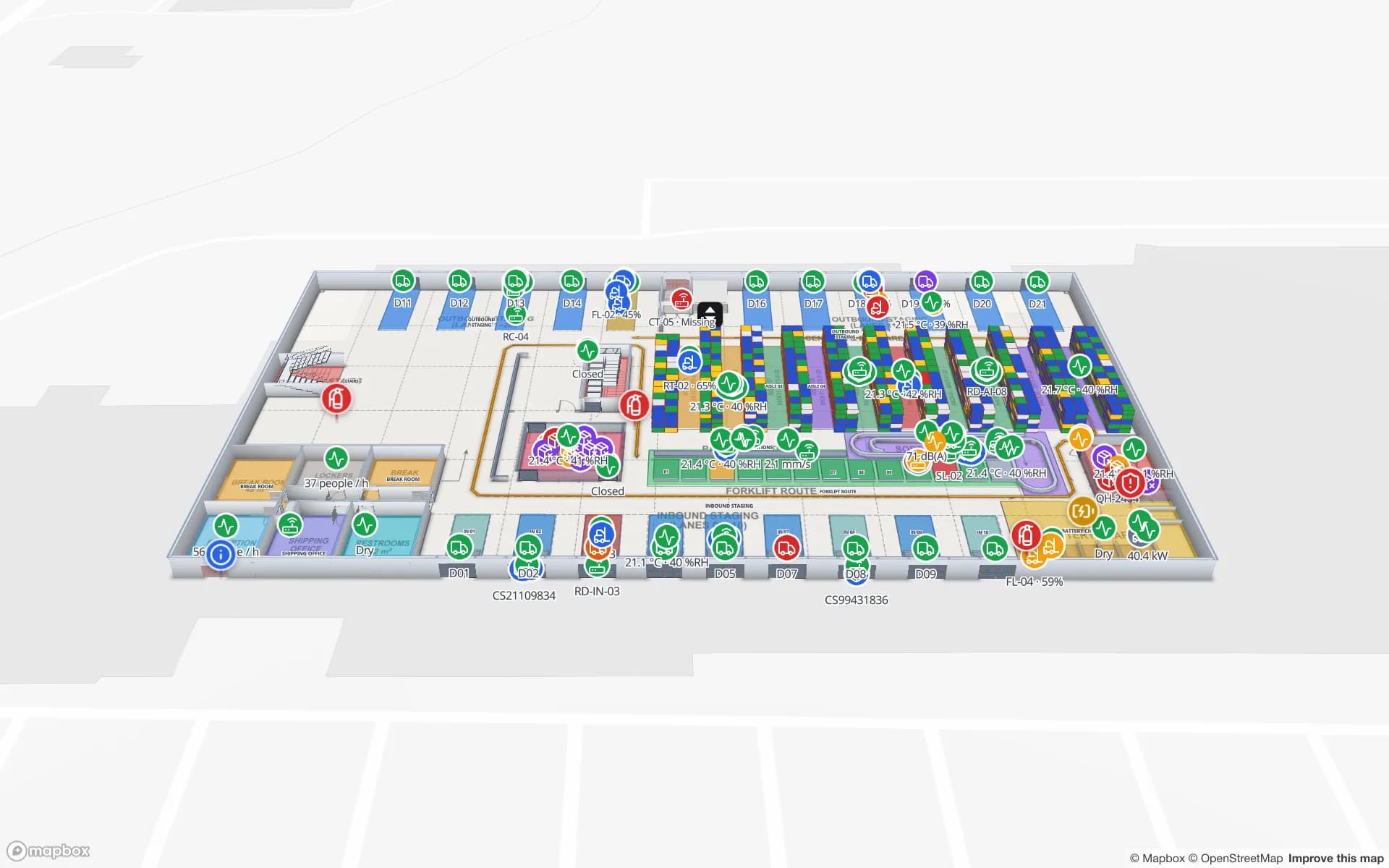
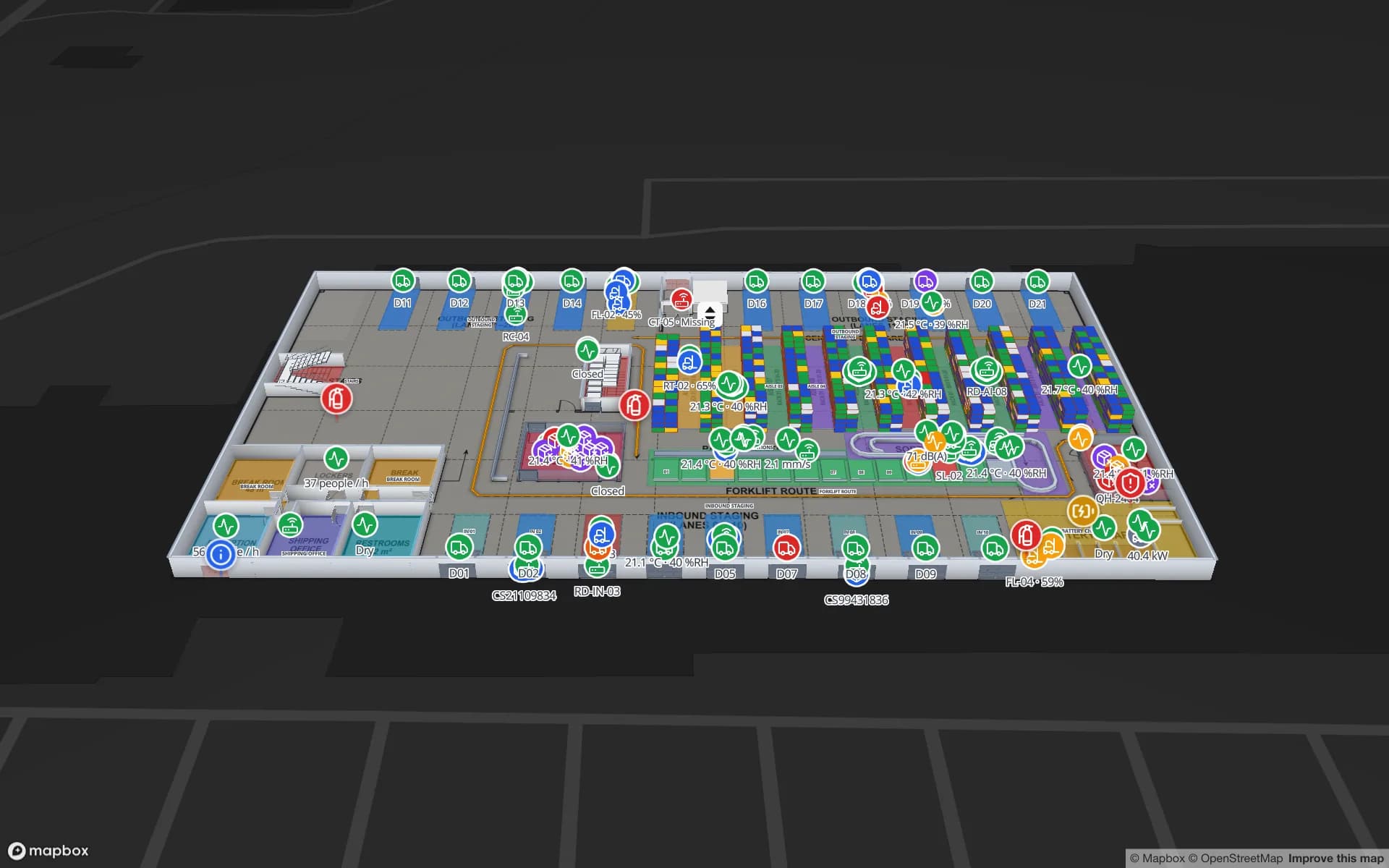
Crestline Fulfillment Center, a fulfillment center demo, in the Spatial Map 3D viewer with live device markers
Crestline Fulfillment Center
Crestline Fulfillment Center, a demo warehouse: 20 racks with 2,204 locations, dock doors, staging lanes and the trailer yard.
Cargo handled by the Freeport of Riga in 2025
16.8 Mt
Rack locations in the Crestline demo warehouse
2,204
Dock doors in the Eastport cross-dock demo
50
Free trial, up to 5 facilities, no card
7 days

The Freeport as landlord: many tenants, one gate

The Freeport of Riga Authority describes its model as managing the port and leasing land and infrastructure to private companies. Its own brochure counts about 200 private companies in the Freeport, including 36 cargo handling terminals, and says more than 450 hectares are available for development near the Daugavgrīva highway. Authority notices state the total area differently, so we quote none.

For a tenant that means a warehouse inside a shared perimeter: common gates and roads, your own roof. Your map covers your own building and yard; the authority’s systems cover theirs. A facility per building keeps the picture clean, and a read-only share link can show a customer or forwarder their own lanes only, with an expiry date. Spatial Map does not connect to the authority’s or to customs systems.


The container shuttle: containers off the city streets

Since December 2023 a container train has run daily between two terminals in the Freeport, a service the authority says is meant to take container trucking off terminal infrastructure, port motorways and city streets, and to deliver containers to vessels faster and more safely. It is the sort of change that moves the bottleneck from the road to the siding.

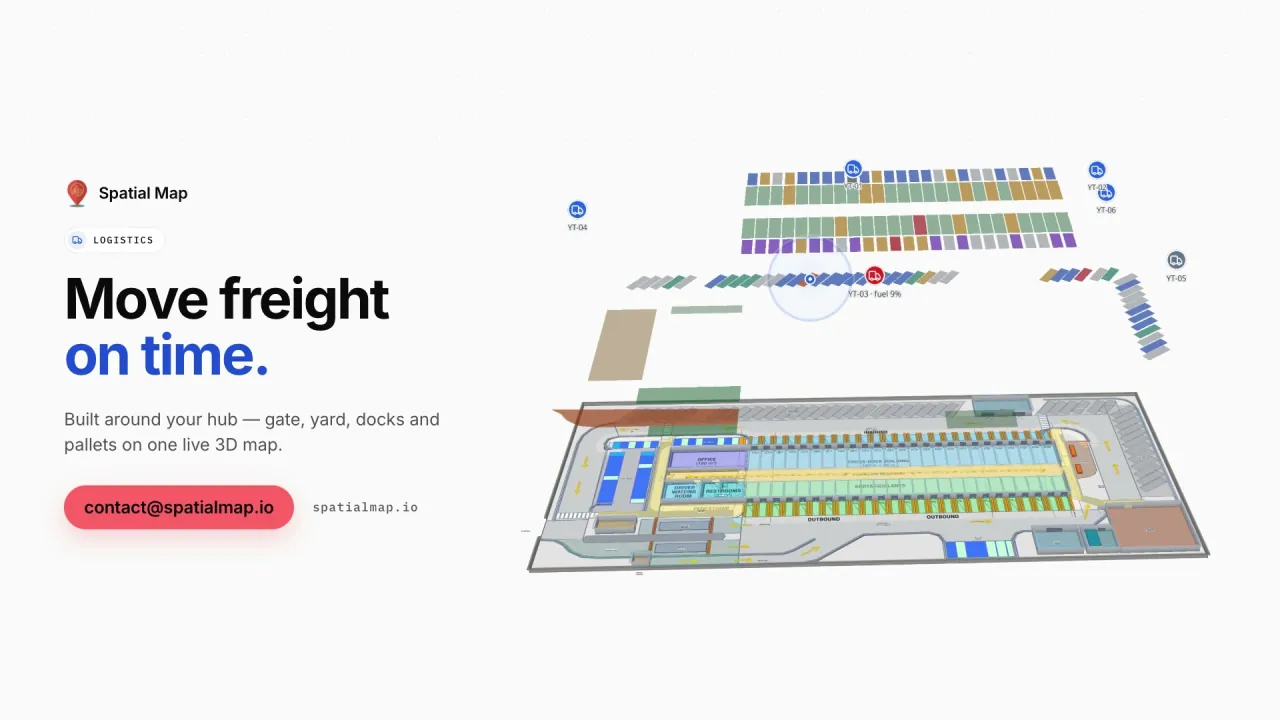
For a warehouse at either end the question is arrival timing: which containers are due, which are unloaded and which pallets inside them are staged. Name dock doors and lanes, post the container’s expected door and status, and the floor shows what is coming and what is waiting. The Eastport demo shows 50 dock doors, 44 yard slots and 1,180 RFID pallets, and RFID warehouse management shows portals at doors.

Riga Airport: 20,100 tonnes and a shed with deadlines

Riga International Airport loaded and unloaded 20.1 thousand tonnes of freight in 2025, 7.2 % more than in 2024, according to the Central Statistical Bureau. Press summaries of the airport’s results say roughly half moved on passenger flights and 49 % on dedicated cargo flights. Freight on passenger flights goes through the same handling sheds as everything else, at the pace of the schedule.

Handlers and forwarders there work to cut-offs. Draw the shed’s doors and staging lanes, name each lane for a flight or route, and post a row per consignment; a count rule raises an in-app alert when a lane is short, and Show on map takes the supervisor to it. Real-time indoor asset tracking covers the tagged-equipment side.

Rail Baltica and the gauge gap

The Freeport’s railway is the 1,520 mm broad gauge used across Latvia; Rail Baltica is a 1,435 mm standard-gauge line, and the port’s material says the two are planned to meet so that cargo can be reloaded quickly between gauges. Riga Central Station is part of the works and the airport station comes later, and sources differ on years, so we state none.

A reloading point is a building with a lot of short-term stock. If you are planning one, map it before it exists: import the design drawings as a PDF or DWG (AutoCAD R2004–R2018, placed as a picture), let AI Map draft the walls and doors, and set up the table that your WMS will fill, so the map is ready on day one.

Language, privacy and working with us from Riga

The app is not available in Latvian or Russian, both of which are spoken in Riga every day. Staff can use English, German, French, Spanish, Arabic or Chinese, and the content you write — lane codes, notices, report titles — can be in Latvian or Russian, diacritics included. Spatial Map is sold online in US dollars and our team works with customers in Latvia remotely.

Under the GDPR, location data that can be linked to employees is personal data and the Data State Inspectorate is Latvia’s supervisory authority; your legal advisers decide what applies. Most warehouse projects tag pallets, vehicles and tools rather than people. A data processing agreement is available and the security page explains how data is protected.

Services for teams in Riga

Where Riga teams usually start depends on the building:

  • Freeport tenants and forwarders usually begin with inventory tracking at dock doors, because a missing pallet delays a vessel or a train.
  • Operators of equipment — loaders, trailers, returnable packaging — begin with asset tracking by BLE or RFID.
  • Large yards may add RTLS and UWB for vehicles and people; most buildings will not need it first.
  • If you have no readers or tags yet, our team can source devices on request, quoted per project, with manufacturer warranty: see hardware and demo kits on request.
  • WMS integrations, handheld apps and other custom software are built as client projects, and the product runs as cloud or on-premises.

Also served nearby

The same approach covers Mārupe beside the airport, Olaine, Ķekava and Salaspils, and Jūrmala. Nothing needs to be installed on site: the map opens in a browser.

How Spatial Map does it

From the lease to the live map

  1. 01

    Pick one building

    A Freeport shed, a forwarder’s warehouse or an airport handling shed.

  2. 02

    Map doors, lanes and racks

    Upload the plan, let AI Map draft the floor and name read points as your middleware does.

  3. 03

    Connect reads and stock

    RFID middleware and your WMS post rows through the table write API, a polled REST endpoint or CSV and Excel uploads.

  4. 04

    Add door and silence rules

    In-app alerts for pallets staged too long and readers that stopped reporting.

What Riga teams track

Freeport warehouses

Pallets and lots by lane, with each client’s stock on a shareable view.

Container arrivals

Dock doors, yard slots and containers due from the terminal.

Airport handling sheds

Lanes by flight with RFID reads at doors.

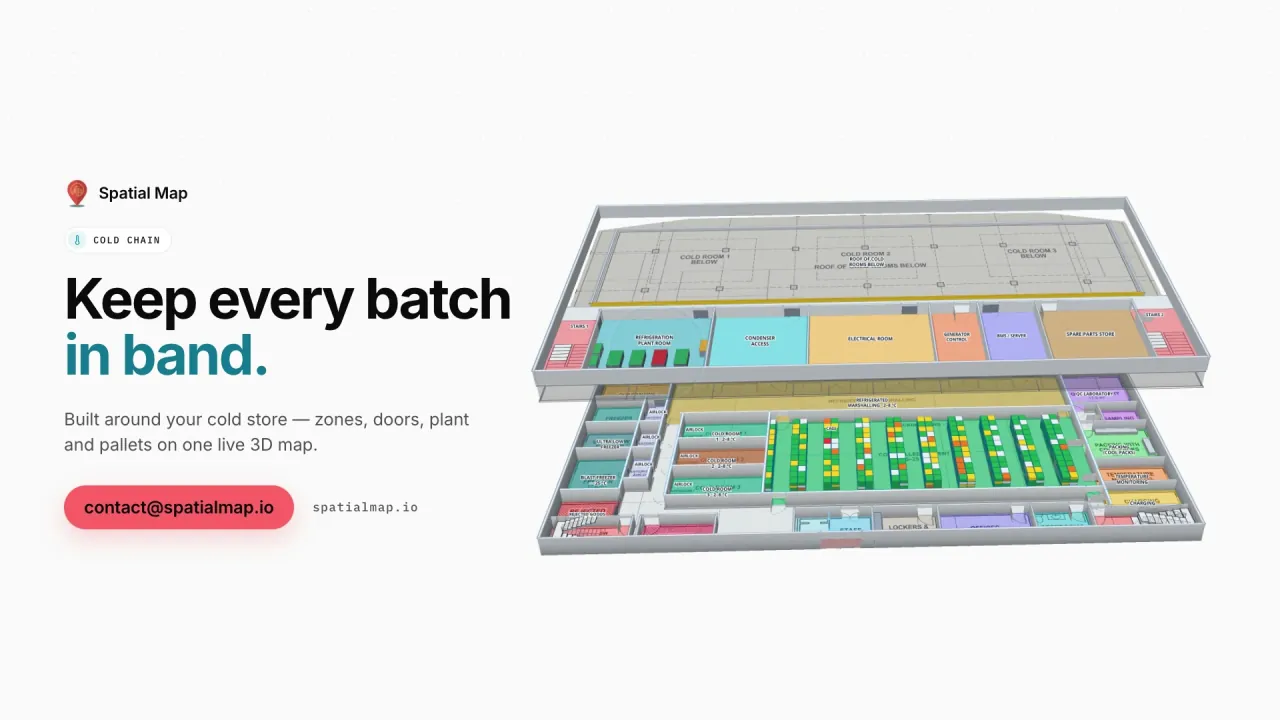
Food and pharma cold rooms

Temperatures and door sensors on the plan.

See it on real demo facilities

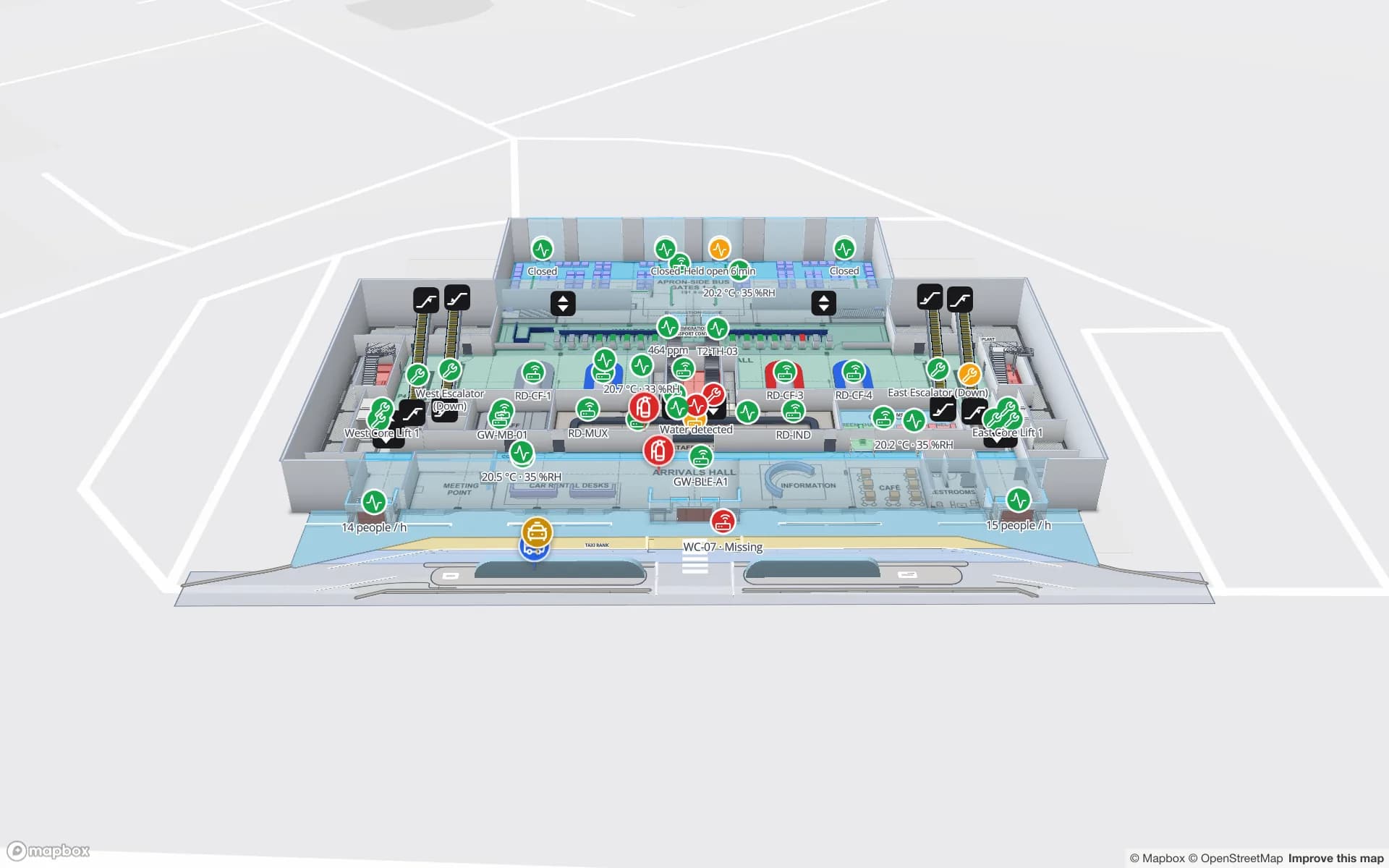
Fictional names, real floor plans, live sensors, RFID, BLE tags and gateways — open any of them in the browser.

All 13 demo facilities

Warehouse tracking in Riga — questions we get

No. It has no link to port, customs, rail or terminal systems. It shows what happens inside your own building from your own WMS, RFID reads and sensors, so it complements those systems rather than replacing them.

Yes. A read-only share link can show chosen layers and floors, with an expiry date and a view cap, and be revoked at any time. Facilities and reports can also be grouped per client.

Yes. The map follows your building, not the railway. Import the drawings of a planned building and set up the table your WMS will fill; the first containers then show up on the first day.

Yes. They can push rows through the write API (HTTPS, bearer API key, bulk upsert, 60 requests per minute per key) or expose a REST endpoint that Spatial Map polls.

No. Spatial Map is sold online and our team works with customers in Latvia remotely, by video call and through the contact form. There are no local resellers or partners.

In US dollars, the same worldwide: a 7-day free trial for up to 5 facilities with no card, then Pro at $60 a month or $600 a year for up to 4 facilities. Hardware, if you ask us to source it, is quoted per project.

Map one Riga warehouse before the next vessel.

Start the free trial and open the Crestline demo, or send us the plan of a Freeport shed or airport handling area and a sample of your stock export.