Haifa · The port, Haifa Bay, Matam and the Technion

RFID tracking in Haifa, from the port rail terminal to the bay plant

Spatial Map puts RFID reads on a live 3D map of the building where they happen, so a tag at a door becomes a pallet in a lane, a drum in a store or an instrument in a lab. RFID tracking in Haifa follows the city’s shape: a port that has been working since 1933, a bay of heavy industry behind it, and technology parks and laboratories at the city’s southern edge. Your readers and middleware do the reading; Spatial Map shows each read in place.

No credit card. Runs in the browser. Pro is $60/month for up to 4 facilities. Book a demo

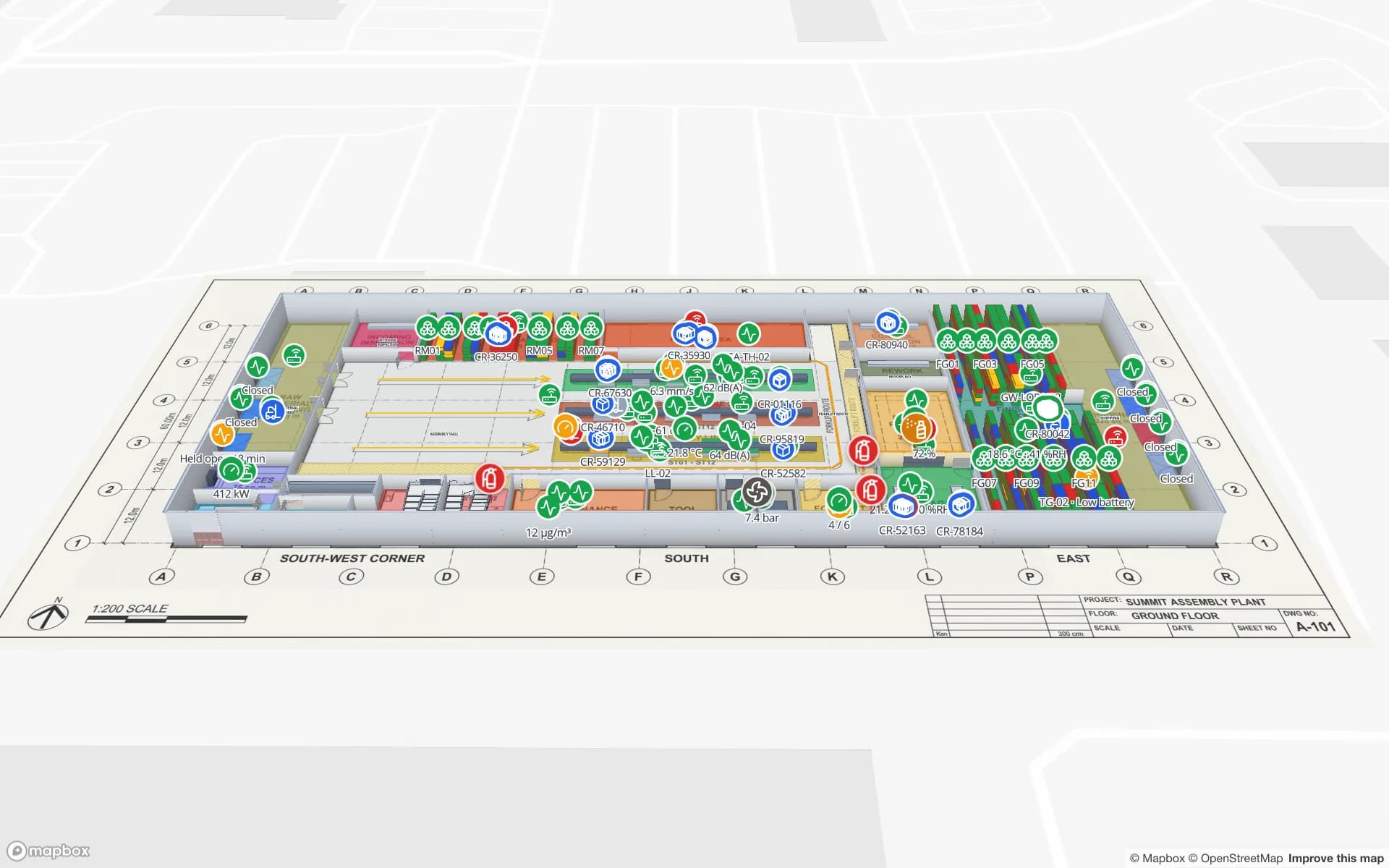
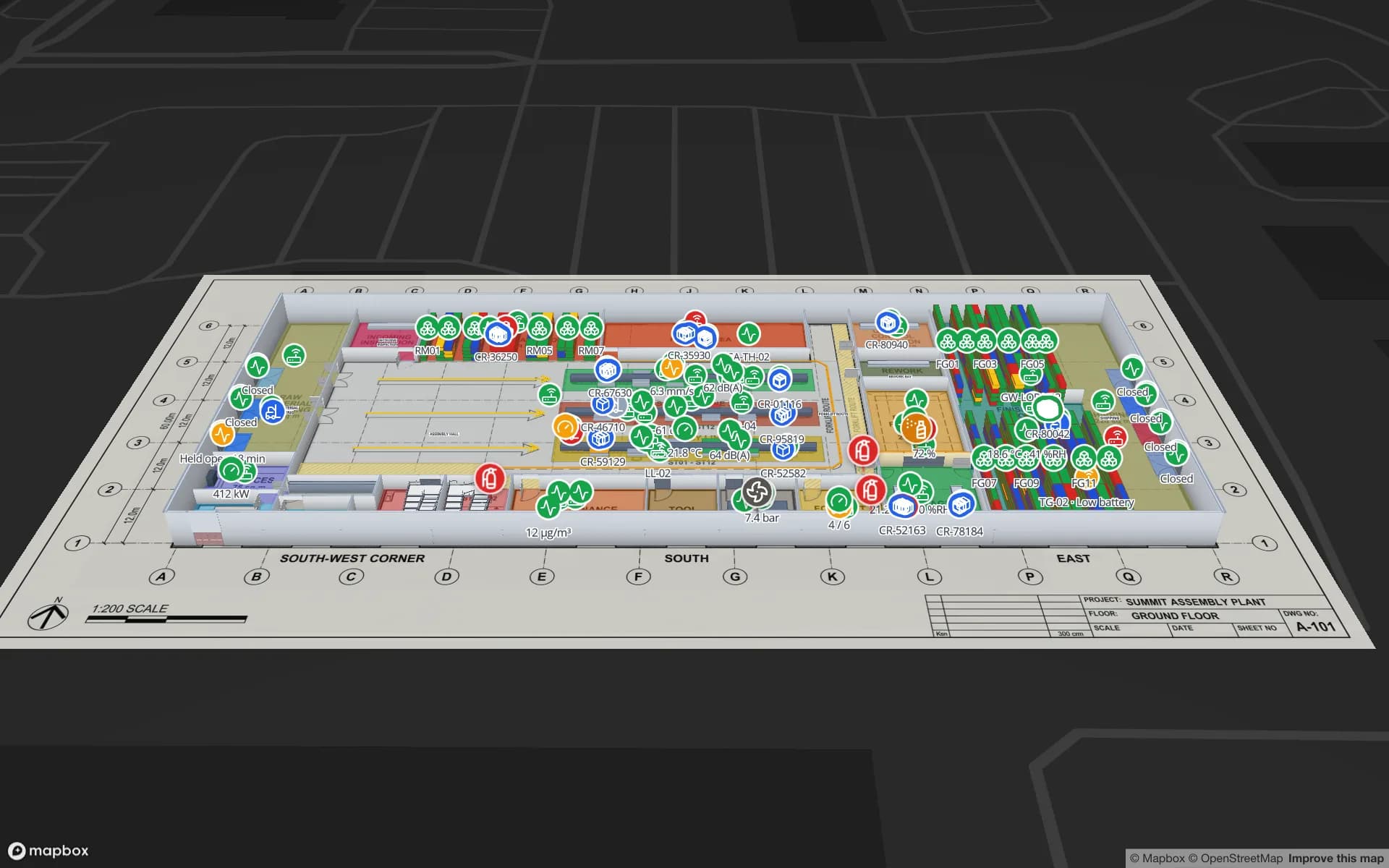
Summit Assembly Plant, a assembly plant demo, in the Spatial Map 3D viewer with live device markers
Summit Assembly Plant
Summit Assembly, a demo assembly plant: 867 rack locations for raw materials and finished goods, lines, workstations and dock appointments on one map.
Rack locations in the Summit assembly-plant demo
867
RFID pallets moving through the Eastport cross-dock demo
1,180
How often alert rules are checked, with alerts shown in the app
15 s
Free trial, up to 5 facilities, no card
7 days

A port with its own railway terminal

The port of Haifa was officially opened on 31 October 1933 and stretches about three kilometres along the city’s central shore. It handles general cargo, containers, grain in large silos, chemicals and fuel, and has a passenger terminal. It also has an internal railway freight terminal, which handled about 221,000 containers by rail in 2018, a first-phase container terminal that opened in 2010 and a second terminal on the bay’s far side completed in 2021.

A container that leaves by rail still has contents that were packed in a shed somewhere, and a shed near the port has the same recurring problem: which pallets belong to which container, and which are still on the floor. Tag pallets and cages with UHF RFID, read them at the dock door, and the map shows what is staged, loaded or left. A row of readers at a door is a gate, and the RFID gates page explains how to place them. The Eastport demo shows 50 dock doors, 44 yard slots and 1,180 RFID pallets. Spatial Map does not connect to port, rail or customs systems.


Haifa Bay: refining, chemicals and returnable containers

Haifa Bay is a centre of heavy industry, with petroleum refining and chemical processing among its trades. Plants like these run on containers that go round in loops: drums, totes, cylinders, pallets and pallet cages that are filled, collected, returned and cleaned. The cost of “where is it?” here is an idle line and a lost deposit, and the more the loop crosses sites, the harder it is to see.

Tag the returnable containers, read them at the filling, despatch and return doors, and a table can show how long each has been out and where it last was. A count rule raises an in-app alert when a store holds fewer containers than its plan, and a “not updated” rule catches a reader that has gone quiet. Where plants handle regulated materials, your safety and quality systems stay the record; Spatial Map makes no compliance claim and sends alerts in the app only, not by email or SMS. Test tags on metal and wet surfaces in your own store first; the post on RFID tags for metal, liquids and apparel lists what to check. The Summit demo shows a plant with 867 rack locations and WIP carriers between stations.

Matam, the Technion and the laboratory bench

The Matam high-tech park, founded in 1968 by the Haifa municipality, sits at the southern edge of the city near the train and central bus stations and is one of the oldest and best-known parks of its kind in the country. The Technion began construction in 1912 and held its first classes in 1924. Research and engineering buildings like these hold test equipment, development boards, instruments and consumables that move between benches, stores and offices.

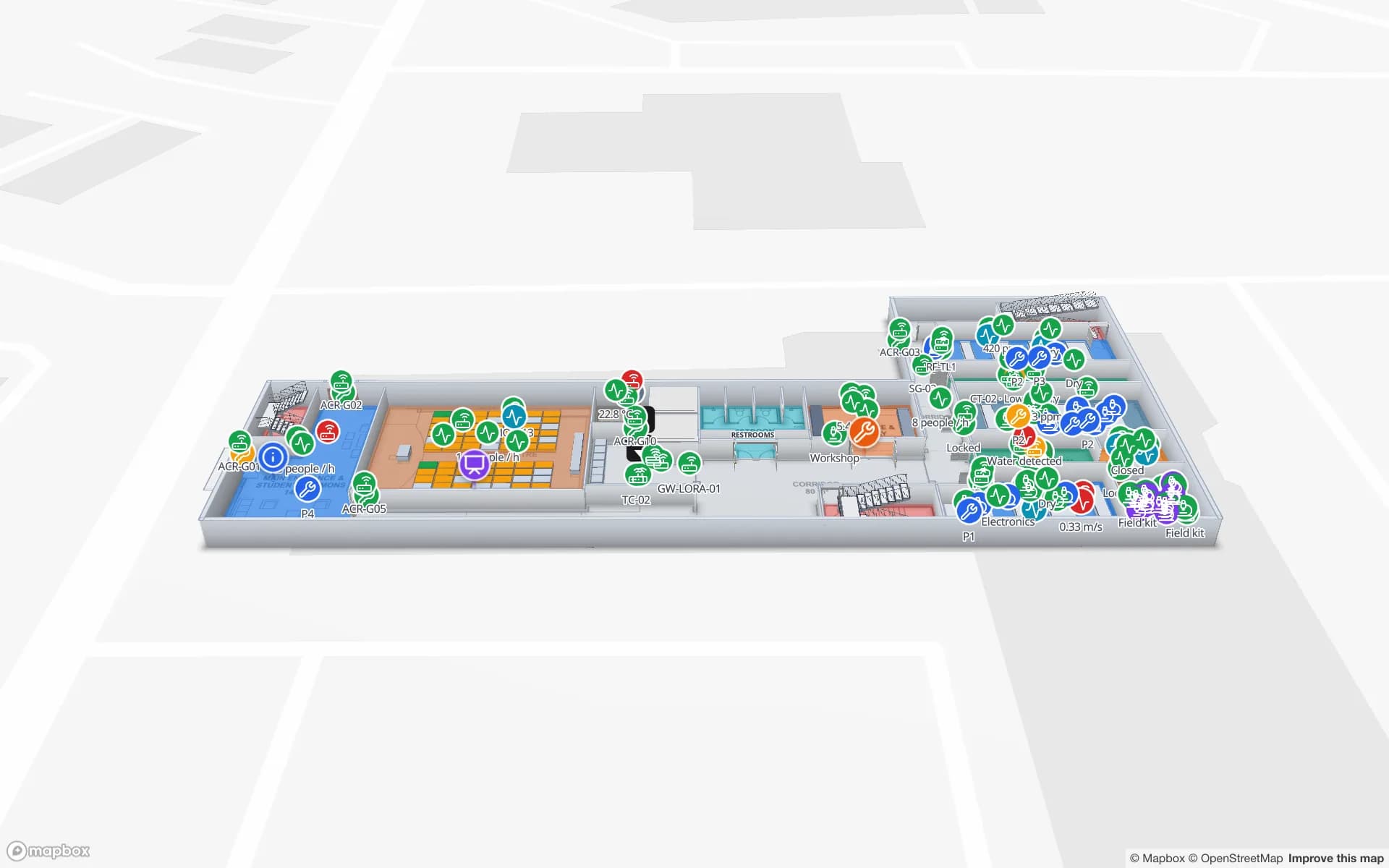
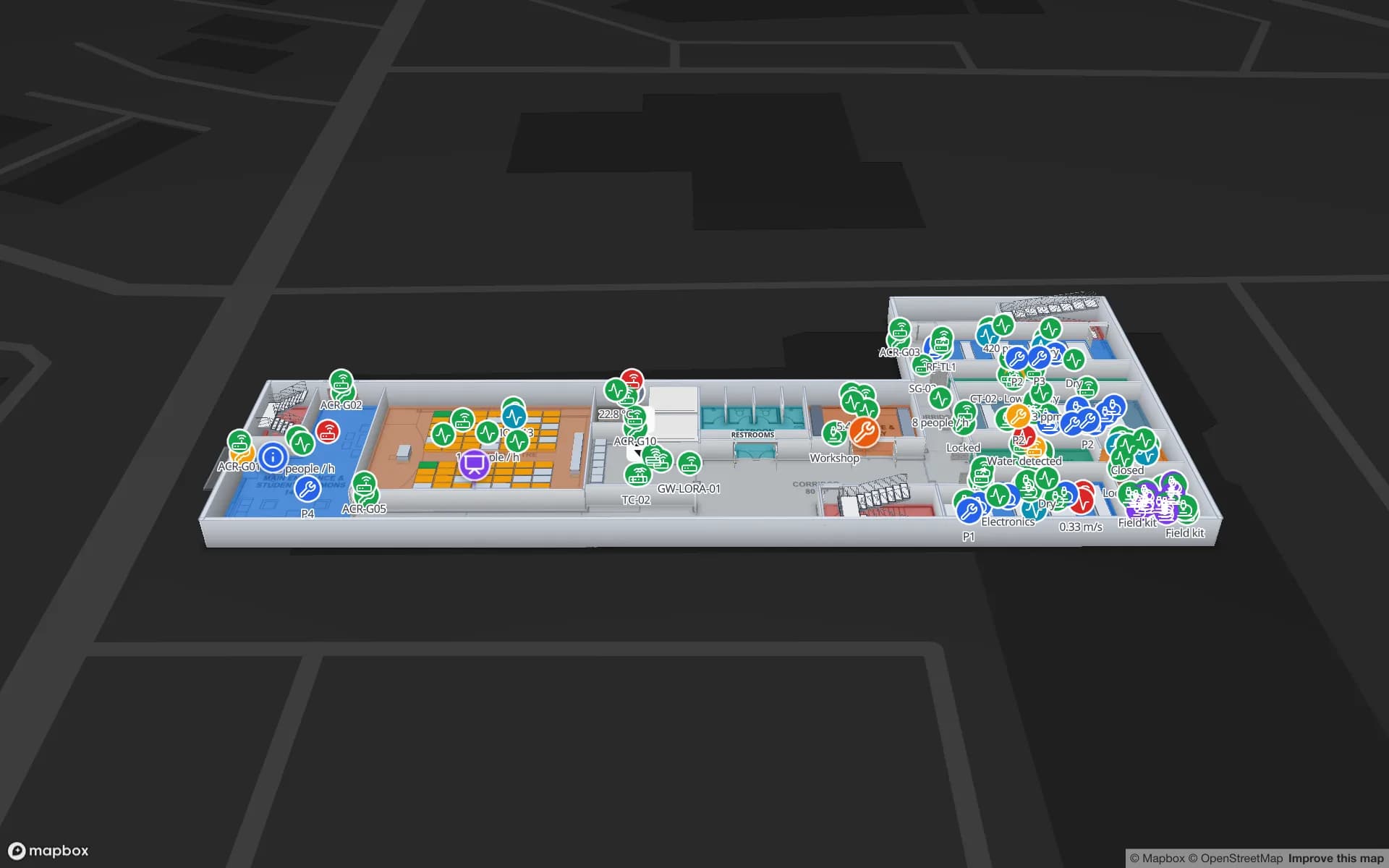
Asset tracking there is usually a register plus an audit. An RFID handheld walk-through updates the register room by room, a reader at the store door catches what leaves, and Spatial Map shows each floor with its assets by room; the RFID tool tracking page covers the check-out pattern. Many Haifa companies have in-house developers, so the register can be fed from your own system through the write API. The Westbrook demo shows a two-floor science building with lab equipment bookings and lab environment readings.

Where road, rail and port meet

Highway 6, the Trans-Israel Highway, starts just east of Haifa and runs to the outskirts of Beersheba, about 200 km. For a warehouse near the port or the bay this means two flows are always close: goods arriving by sea and rail, and goods leaving by road for the rest of the country. A warehouse map that shows yard slots, dock doors and staging lanes lets the shift lead see what is inbound, what is waiting and what has left.

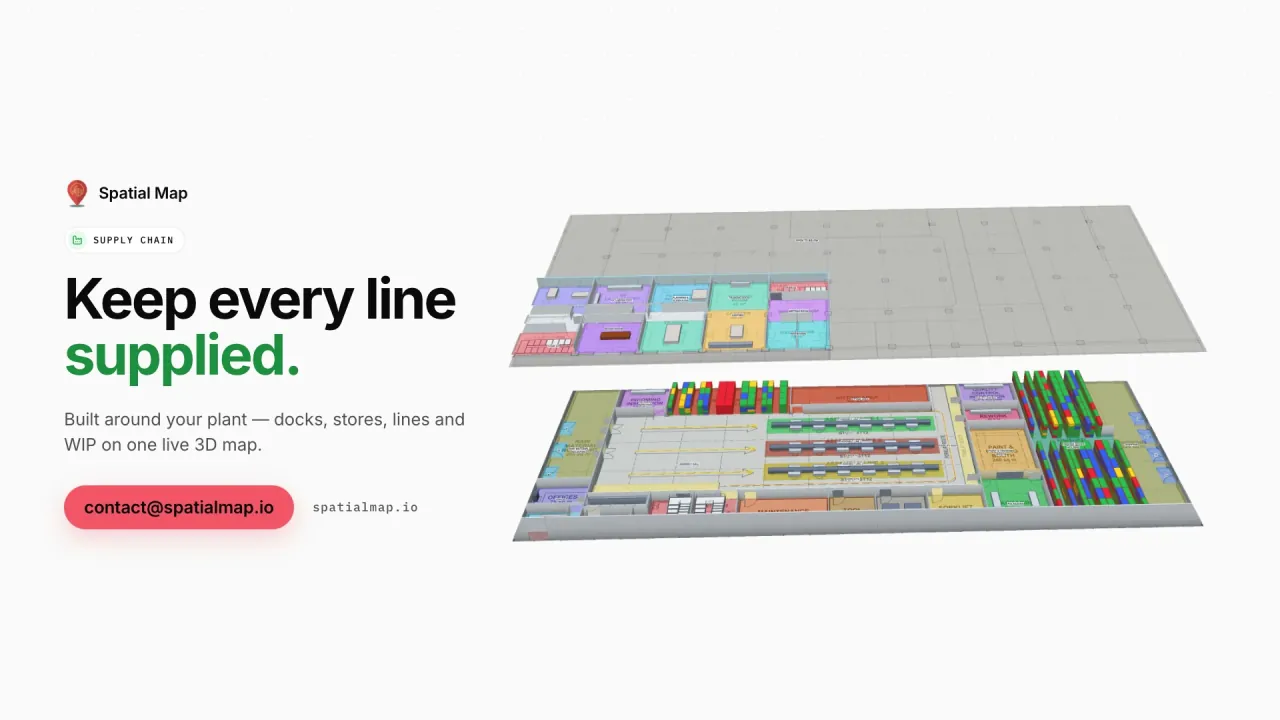
The Crestline demo shows 2,204 rack locations coloured by stock status with packing and staging lanes in front of the docks. Start with one of your busiest sheds, upload your WMS stock as a CSV or Excel file if there is no API, and add RFID where it pays back first.

Services for teams in Haifa

Where Haifa teams usually start:

  • Port-side forwarders and warehouses usually begin with inventory tracking at dock doors and in the yard.
  • Bay plants tend to begin with asset tracking for returnable containers, tooling and forklifts, then add RFID for stock.
  • Matam and the Technion area tend to begin with a laboratory and equipment register, with indoor maps of each building.
  • RTLS and UWB matters mainly for big yards and plants where vehicles and people must be located continuously; most buildings do not need it first.
  • If you have no readers or tags yet, our team can source RFID readers, antennas and tags on request, quoted per project, with warranty and device support from the manufacturer: see hardware and demo kits on request. Where a team has no spare developers, our team builds Android RFID handheld apps and integrations as client projects. The product runs as cloud or on-premises.

Also served nearby

The same approach covers Kiryat Ata, Nesher, Tirat Carmel, Atlit and the Kishon area along the bay. Nothing needs to be installed at any of them: the map opens in a browser.

How Spatial Map does it

From the port gate to the bay plant

  1. 01

    Pick one building

    A port-side shed, a bay plant store or a lab building: wherever a missing item costs most.

  2. 02

    Map doors, lanes and racks

    Upload the plan, scan or sketch, let AI Map draft the floor, and name read points the way your middleware names them.

  3. 03

    Connect reads and stock

    RFID middleware and your ERP post rows through the table write API, a polled REST endpoint or CSV and Excel uploads.

  4. 04

    Add door and silence rules

    In-app alerts for containers out too long, short loads and readers that stopped reporting.

What Haifa teams track

Port-side warehouses

Dock doors, yard slots and pallets staged for the right container or rail wagon.

Returnable containers and tooling

Drums, totes and pallet cages followed between filling, despatch and return.

Distribution sheds

Rack-level stock by bin with packing and staging lanes.

Laboratory and engineering equipment

Instruments and test kit shown by room with their status.

See it on real demo facilities

Fictional names, real floor plans, live sensors, RFID, BLE tags and gateways — open any of them in the browser.

All 13 demo facilities

RFID tracking in Haifa: questions we get

No. It has no link to port community, rail or customs systems. It shows what happens inside your own building, from your own RFID reads, WMS or ERP and sensors, so it complements those systems rather than replacing them.

That depends on the tag and how it is mounted, so ask the vendor for its operating range and test tags in your own store. Spatial Map does not make hardware; what it adds is visibility, including an in-app alert when a reader stops reporting.

No. Spatial Map shows where tagged containers and stock are and keeps a history of every change, but your safety and quality systems stay the record. Alerts appear in the app only, with no email, SMS or push.

Yes. Your developers can push rows to a table through the write API (HTTPS, bearer API key, bulk upsert, 60 requests per minute per key), or expose a REST endpoint that Spatial Map polls. Our team does integrations as client projects if you would rather not build it.

No. The interface is in English, Arabic, French, German, Spanish or Chinese; Hebrew is not available. Names you type, such as rooms, racks and report titles, can be in Hebrew and appear as written.

No. Spatial Map is sold online and our team works with customers in Israel remotely, by video call and through the contact form. There are no local resellers or partners.

In US dollars, the same worldwide: a 7-day free trial for up to 5 facilities with no card, then Pro at $60 a month or $600 a year for up to 4 facilities. RFID hardware, if you ask us to source it, is quoted per project and is not part of the subscription.

Map one Haifa dock or plant store this month.

Start the free trial and open the Eastport demo, or send us the plan of a port-side shed, bay-plant store or lab building and a sample of your reads through the contact form.