Addis Ababa · Bole airport cargo, Modjo and the industrial parks

Warehouse tracking in Addis Ababa, from the Bole cold rooms to the Modjo yard

Spatial Map shows a warehouse as a live 3D map: racks and lanes coloured from your stock list, dock doors and yard slots coloured by what stands in them, and RFID pallets placed at the reader that last saw them. Warehouse tracking in Addis Ababa is shaped by two forces: an airport whose cargo hub is built around temperature-controlled rooms, and a dry port an hour down the railway where the cargo that reaches a landlocked country first arrives. Each shed, depot and factory is its own facility, and all of them can share one workspace.

No credit card. Runs in the browser. Pro is $60/month for up to 4 facilities. Book a demo

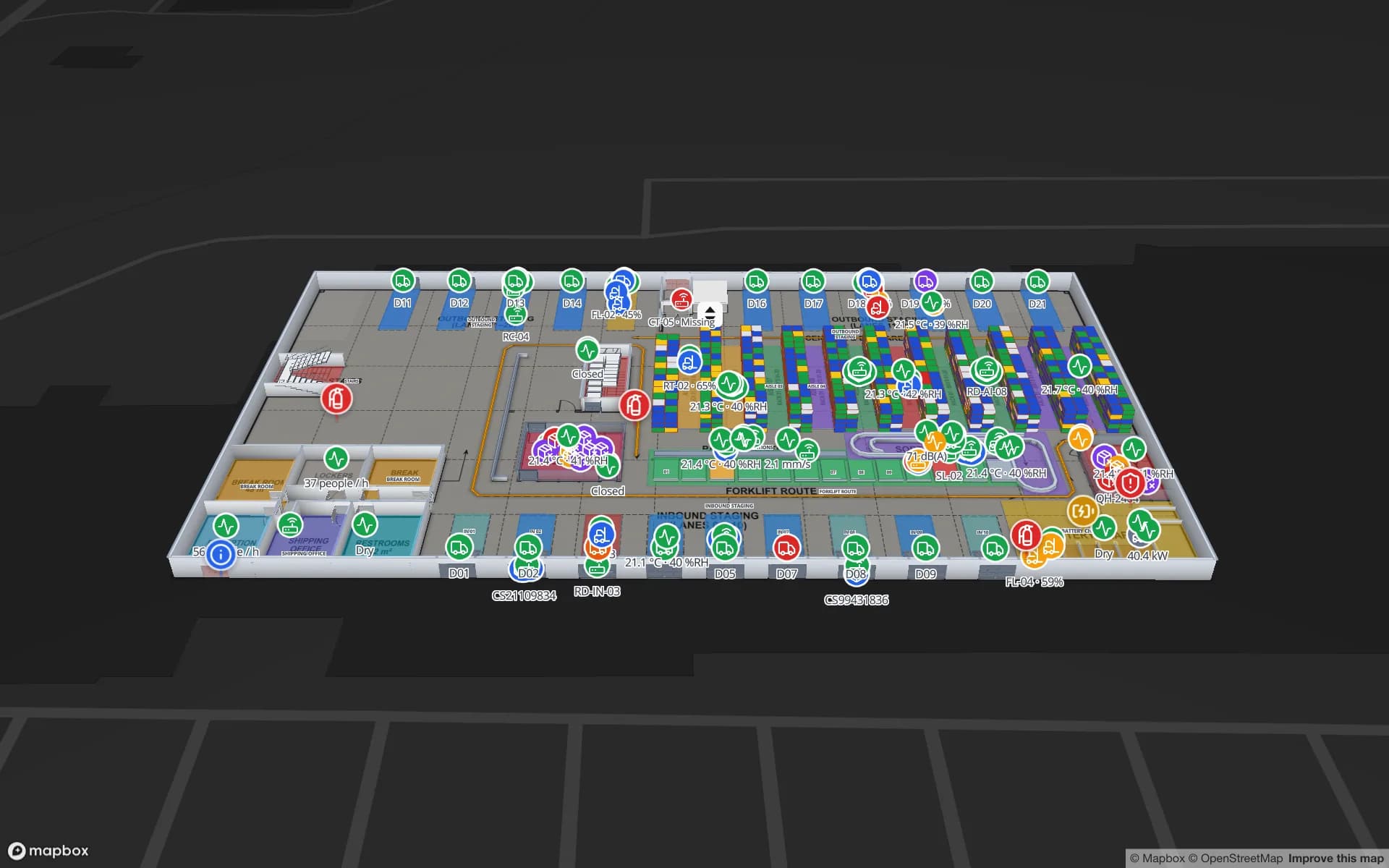
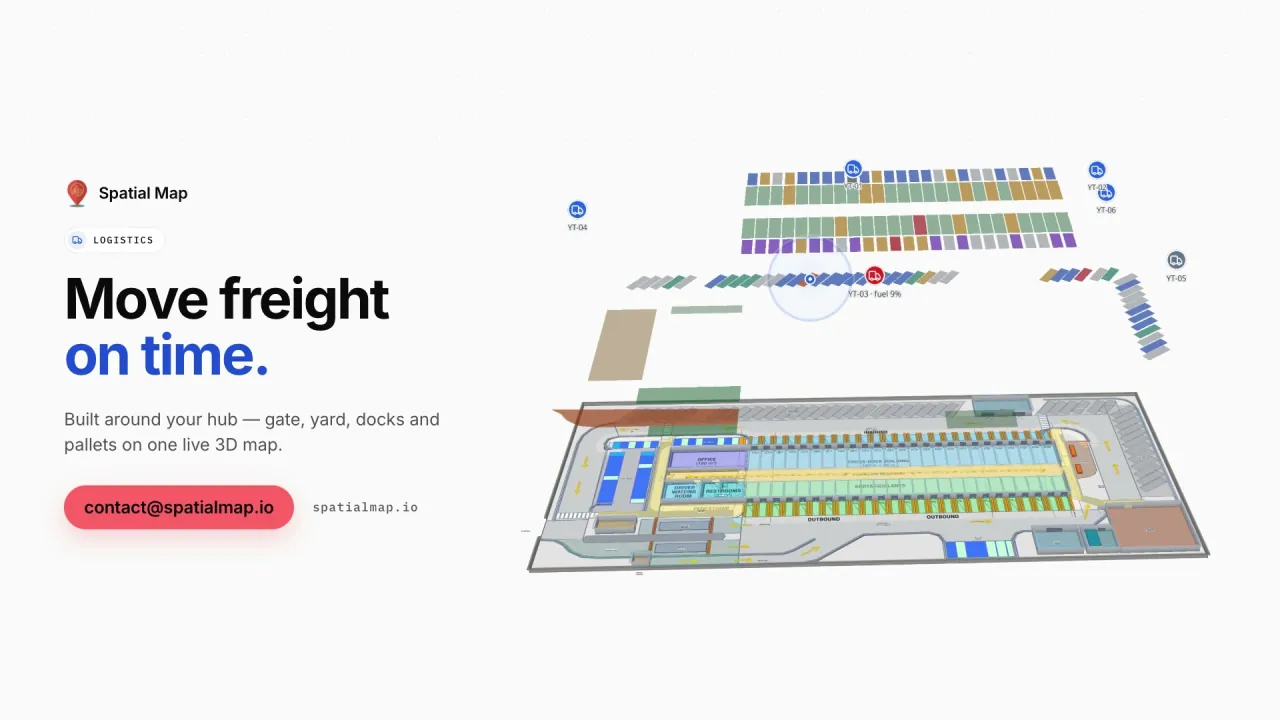
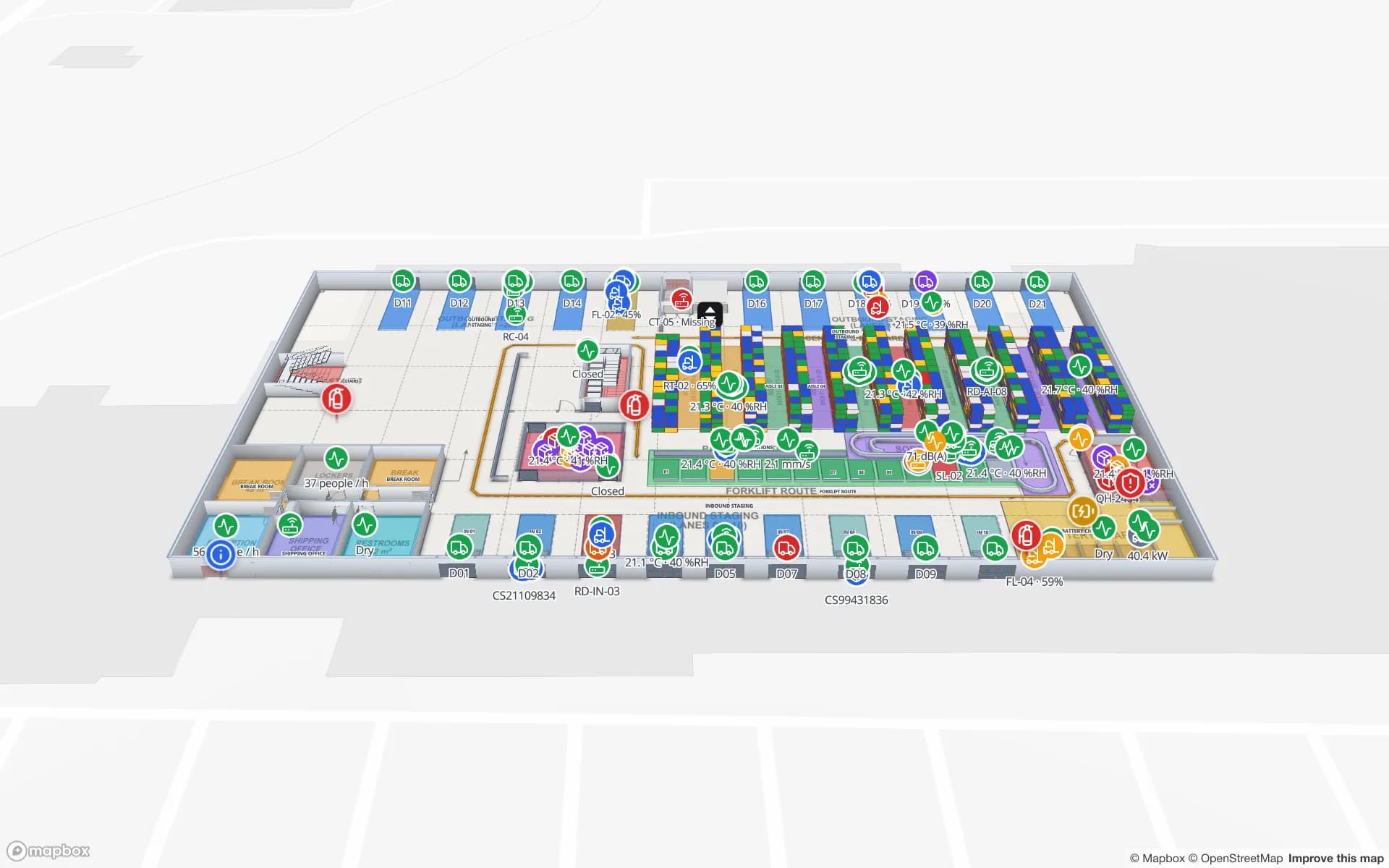
Eastport Cross-Dock Freight Hub, a cross-dock & trailer yard demo, in the Spatial Map 3D viewer with live device markers
Eastport Cross-Dock Freight Hub
Eastport Cross-Dock, a demo freight hub: 50 dock doors, 44 yard slots and 1,180 RFID pallets, with the gate and weighbridge.
Dock doors in the Eastport cross-dock demo
50
RFID pallets moving through Eastport
1,180
Rack locations in the Polar Pharma cold-store demo
1,140
Free trial, up to 5 facilities, no card
7 days

Bole: a cargo hub built around cold rooms

The cargo hub at Bole International Airport lists a capacity of 1,000,000 tonnes a year over 40,000 square metres, according to its operator. Its perishables area alone is given as 336,000 tonnes a year over 18,000 square metres, with about 12,790 square metres at 2–8 °C, about 1,940 square metres at 15–25 °C and a deep freezer room at −20 °C. The same hub lists a dangerous-goods room, valuables stores and live-animal stores. Those figures are the operator’s own.

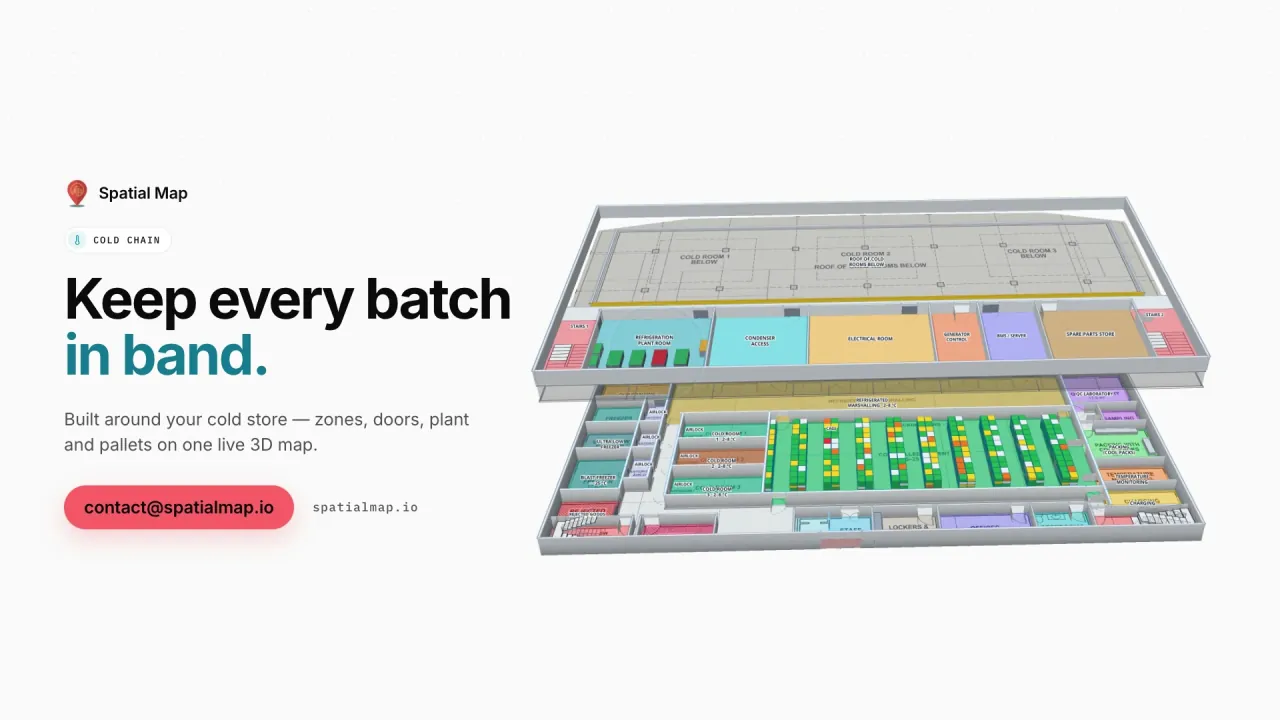
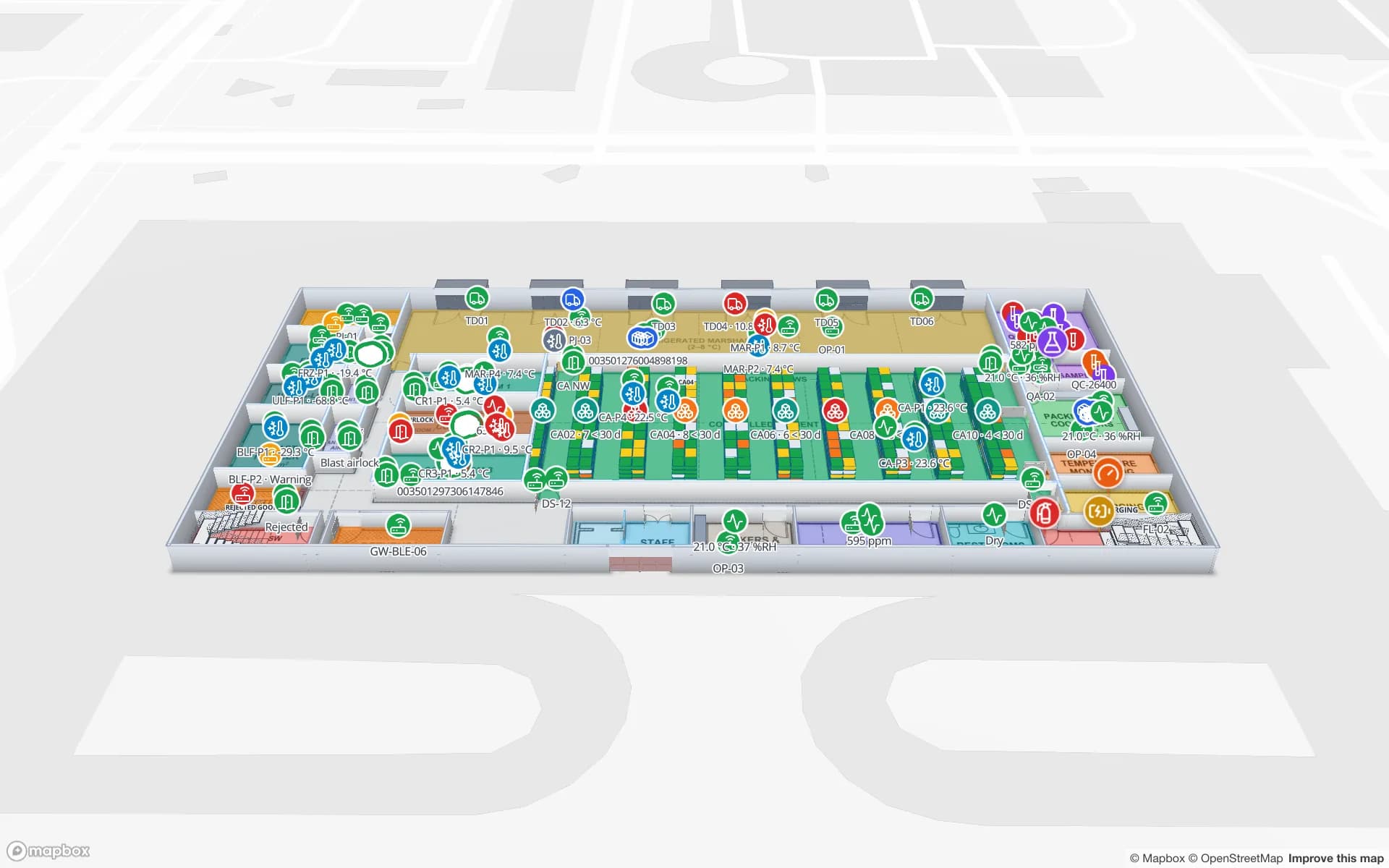
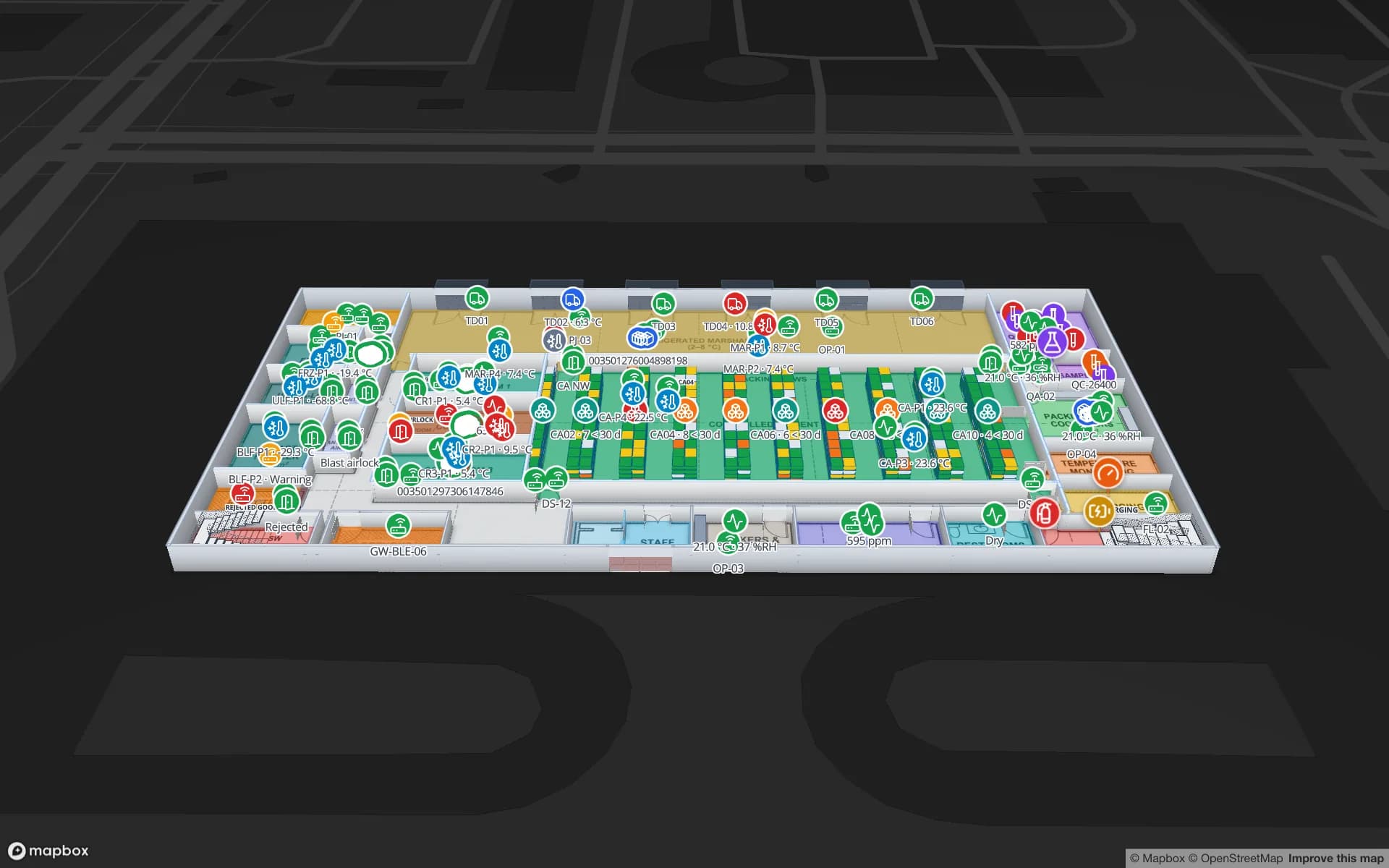
A room list like that is a mapping problem as much as a storage one: a consignment of flowers, vegetables or medicines is in one of several rooms at one of several temperatures, and the right room matters more than the right shelf. On a Spatial Map floor plan each room takes the colour of its latest sensor reading, consignments sit in the room that holds them, and an in-app alert fires when a room stays out of range for a set time or a sensor stops reporting. The Polar Pharma demo shows temperature zones, quarantine areas and 1,140 rack locations. Spatial Map does not connect to airline, customs or airport cargo systems and makes no compliance claim; your own quality system remains the record.
Modjo and Cool Port Addis, an hour down the line

Many Addis Ababa warehouses are the second stop for goods that first arrived at Modjo. The World Bank describes Modjo as about an hour from the capital, long the main entry point for goods from the Port of Djibouti, and says the expansion cut processing times in some cases from 60 days to 15 with larger yards, expanded warehouses and dedicated gates. Cool Port Addis, the perishables facility at Modjo, is integrated into the dry port’s railway terminal and is intended for fruit and vegetables, flowers, frozen imports and medicine imports.

For an importer in the city, the question starts after the gate: which pallet came off which container, which lane in the city warehouse it went to, and which truck leaves tomorrow. Tag the pallets at receiving, draw one lane per consignee, and the map shows what is waiting for whom and for how long. A count rule raises an in-app alert when a lane holds more pallets than planned. The post on yard visibility, dock doors and trailers walks through the pattern.

Bole Lemi and Kilinto: factory sheds in the city

Bole Lemi Industrial Park is in Addis Ababa. It began operating in 2014 and is described by the parks corporation as Ethiopia’s first industrial park; it is open to textile, garment and leather firms, has 20 factory sheds, and its tenants come from India, China and South Korea. The corporation’s own office sits within the Kilinto Special Economic Zone One Stop Service, near Koye Roundabout, and Kilinto is another park on its list.

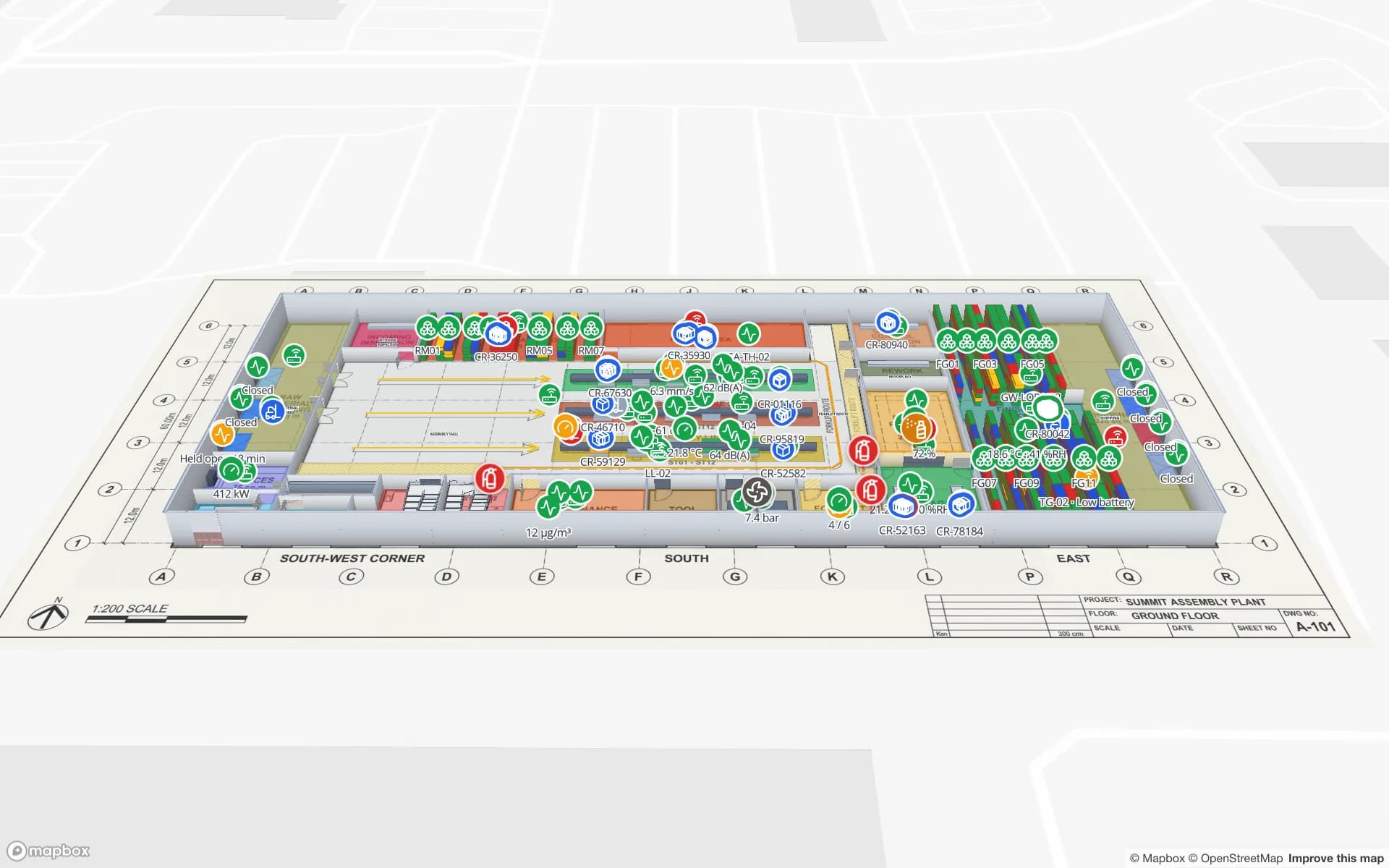
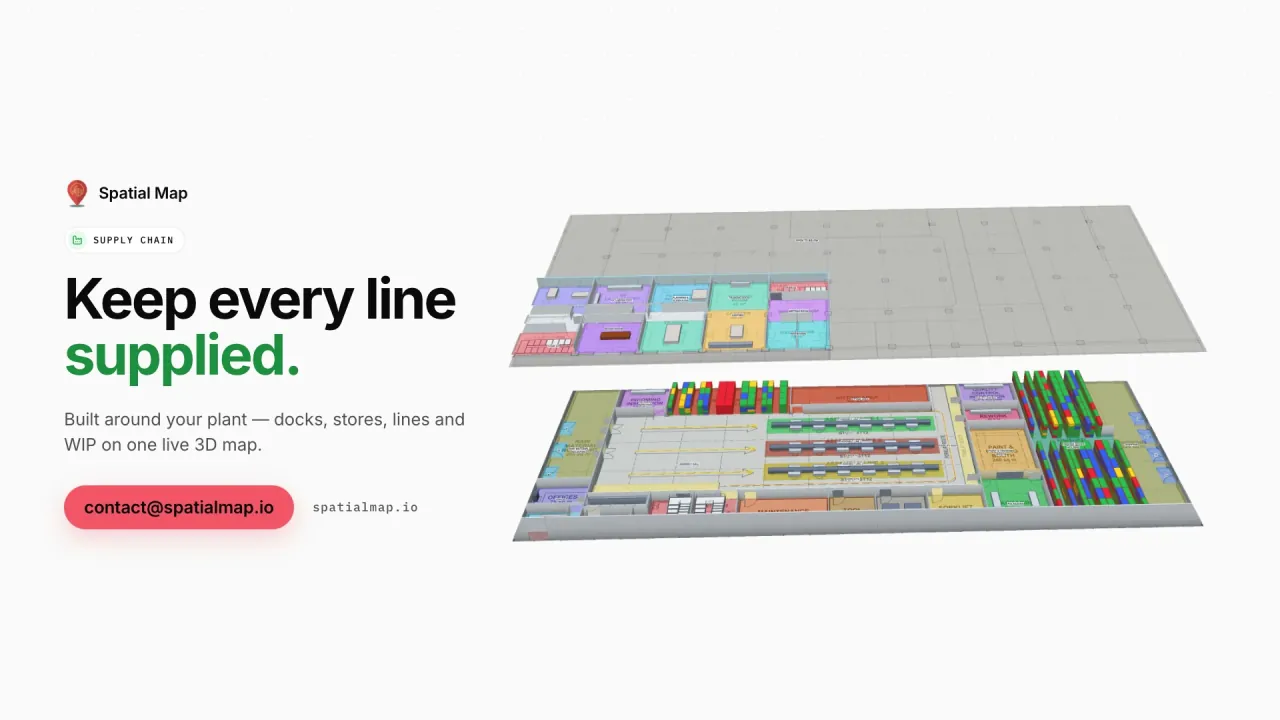
A garment shed in a park like this runs on cartons: each buyer’s order is split by size, colour and destination, and a short carton is usually found at the loading dock. Label cartons with UHF RFID at packing, read them at the despatch door, and the map shows which cartons of an order are staged, which are still on the floor and which have left. The Summit demo shows lines, workstations and 867 raw-material and finished-goods rack locations on one plant map, and the RFID gates page explains where to place readers at a door.

The airport will change: Bishoftu

Bishoftu International Airport, about 40 kilometres south-west of Addis Ababa, held its groundbreaking on 10 January 2026. Its first phase is targeted at 60 million passengers a year by 2030, and the full plan at 110 million; Bole’s capacity is described as around 25 million passengers a year. If your cargo moves there one day, a facility is just a floor plan and a set of rows, so moving a room, a lane or a whole depot is a map edit, not a new system.

Services for teams in Addis Ababa

Addis Ababa teams tend to begin at one of these points:

  • Freight forwarders, clearing agents and transit warehouses start with inventory tracking by lane and consignee at the dock doors.
  • Park factories and depot operators add asset tracking for sewing machines, moulds, returnable crates, forklifts and trailers.
  • RTLS and UWB matters mainly for large yards and plants where vehicles and people must be located continuously; most warehouses will not need it first.
  • If you have no readers or tags yet, our team can source RFID readers, antennas and tags on request, quoted per project, with manufacturer warranty: see hardware and demo kits on request.
  • Where in-house IT is thin, our team builds Android RFID handheld apps, WMS and yard integrations and POS or booking systems as client projects. Run it as cloud or on-premises.

Also served nearby

The same page covers Sebeta, Holleta and Sululta on the edge of the city, where many flower farms and packhouses are, as well as Bishoftu and Modjo. Dire Dawa, Hawassa and Adama are covered with the Ethiopia overview.

How Spatial Map does it

From the cold room to the dock door

  1. 01

    Pick one building

    A perishables cold store, a transit warehouse or a factory shed — wherever a lost pallet costs a flight or a truck.

  2. 02

    Map rooms, lanes and racks

    Upload the plan, let AI Map draft the floor for review, and name rooms and doors the way your system names them.

  3. 03

    Connect reads, stock and sensors

    RFID middleware, sensor gateways and your WMS post rows through the table write API, a polled REST endpoint or CSV and Excel uploads.

  4. 04

    Add temperature and silence rules

    In-app alerts for rooms out of range, pallets waiting too long and readers that stopped reporting.

What Addis Ababa teams track

Airport cold rooms

Rooms by live temperature, with consignments sitting in the room that holds them.

Transit and import warehouses

Lanes per consignee, pallets waiting for trucks, days in the shed.

Garment and leather factory sheds

Cartons read at packing and the despatch door, with each order’s status by lane.

Distribution centres

Rack-level stock by bin and staging lanes before the next run.

See it on real demo facilities

Fictional names, real floor plans, live sensors, RFID, BLE tags and gateways — open any of them in the browser.

All 13 demo facilities

Warehouse tracking in Addis Ababa — questions we get

No. It shows what happens inside your own shed, from your own stock list, RFID reads, scanners and sensors, so it complements airport, customs and dry-port systems rather than replacing them.

Yes. Draw each room as an area, post a reading from its sensor, and each room takes the colour of its latest value with an in-app alert when it stays out of range or goes quiet. Spatial Map makes no compliance claim; your quality system remains the record.
Draw the yard once and give each firm a read-only share link with only its own floors and layers, an expiry date and a view cap. Your own team uses roles: Owner, Admin, Editor, Viewer, or custom roles.

Yes. Upload a PDF, a DWG from AutoCAD R2004–R2018 or a photo, align it at real size, and let AI Map draft the walls, doors and racks for a person to review. Our services team can also do the mapping remotely.

Spatial Map shows rows your own systems post; your RFID middleware or gateway should buffer readings and resend when the link returns. For a BlueIOT RTLS server, the on-site sgv-edge agent buffers to disk while offline and shows its last heartbeat.

No. Spatial Map is sold online and our team works with customers in Ethiopia remotely, by video call and through the contact form. There are no local resellers or partners.

In US dollars, the same worldwide: a 7-day free trial for up to 5 facilities with no card, then Pro at $60 a month or $600 a year for up to 4 facilities. RFID hardware, if you ask us to source it, is quoted per project and is not part of the subscription.

Map one Addis Ababa cold room before the next flight.

Start the free trial and open the Polar Pharma demo, or send us the plan of a cold store, depot or factory shed and a sample of your stock list through the contact form.