Kenya · Nairobi

RFID and cold-chain tracking in Nairobi

Spatial Map handles RFID and cold-chain tracking in Nairobi on one live 3D map: cold rooms coloured by their sensors, RFID-tagged pallets at the dock door that last read them, and stock by bin from your WMS. Nairobi’s logistics sit on a short stretch of the city’s south-east — the cargo sheds at JKIA, the Inland Container Depot at Embakasi and the warehouses along Mombasa Road towards Mlolongo and Athi River — and a single workspace can hold all three.

No credit card. Runs in the browser. Pro is $60/month for up to 4 facilities. Book a demo

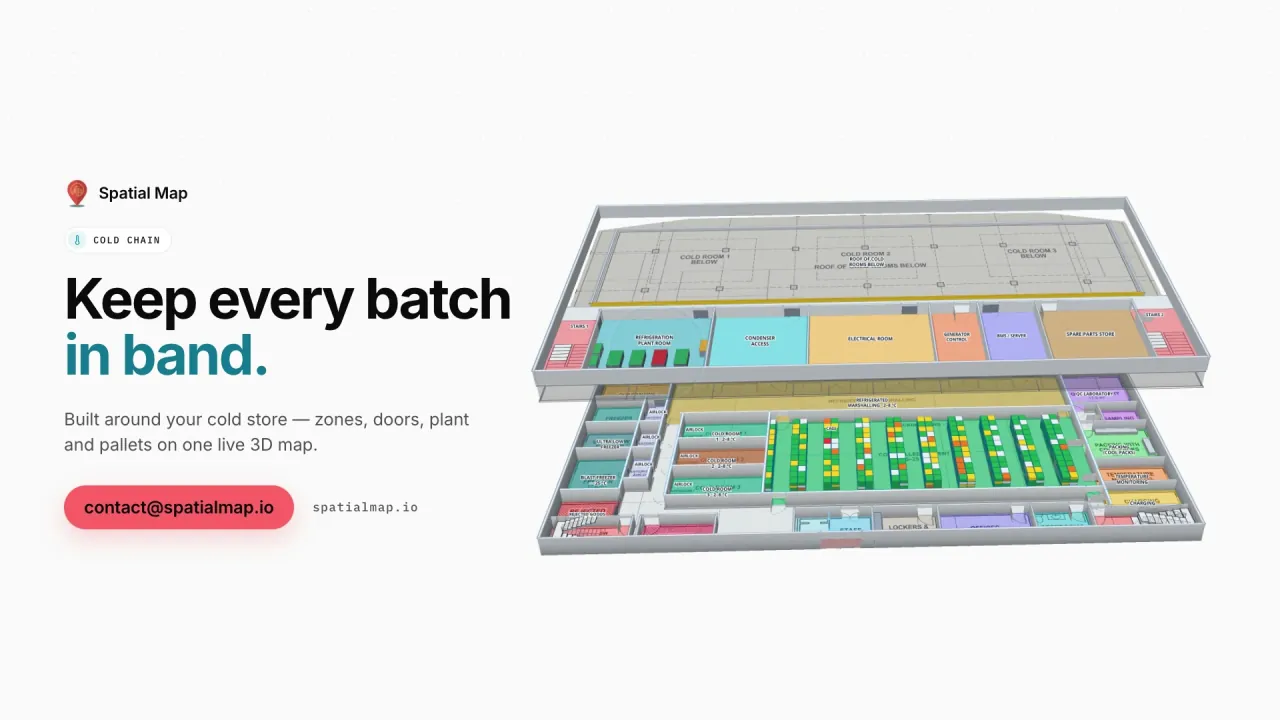
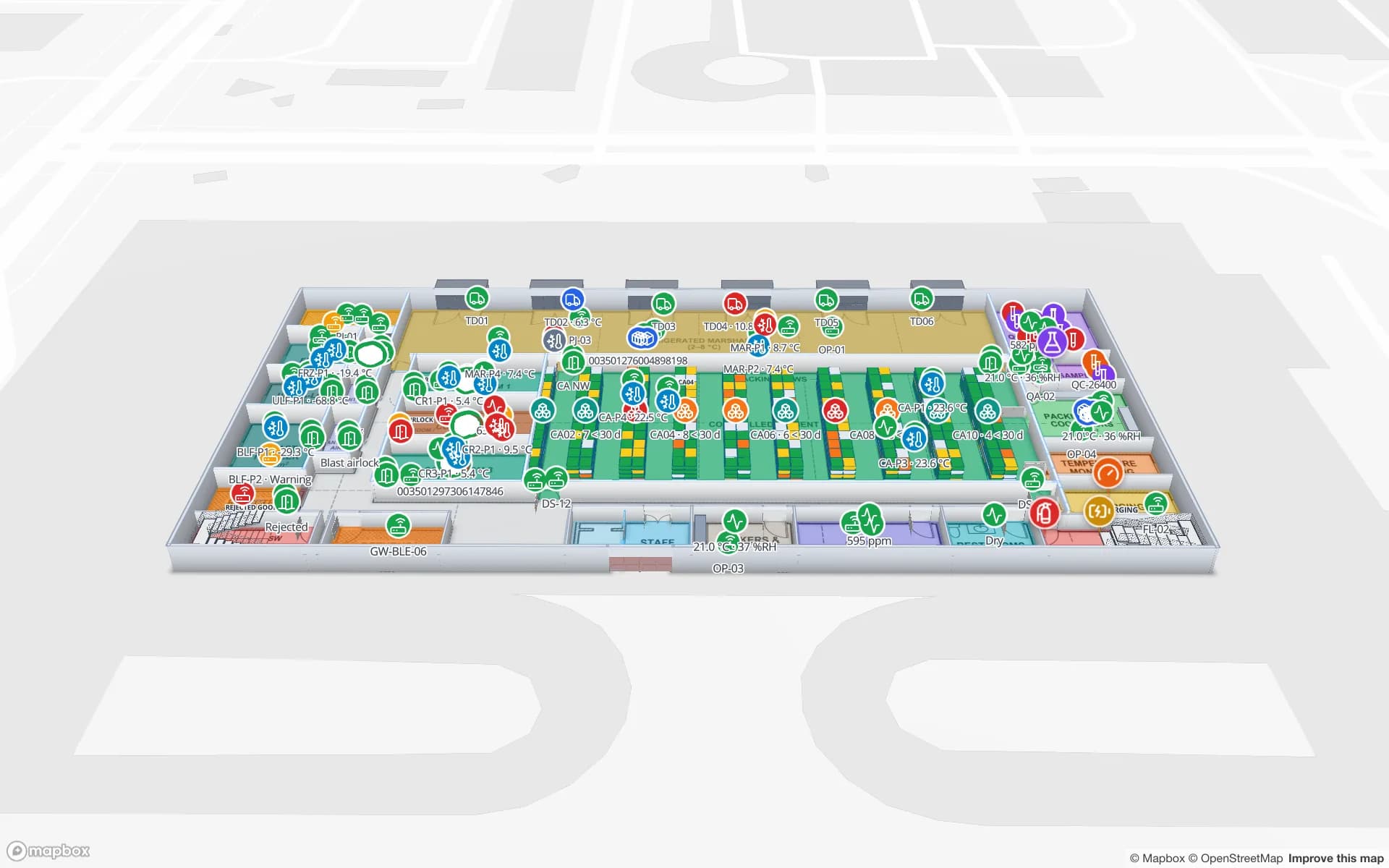
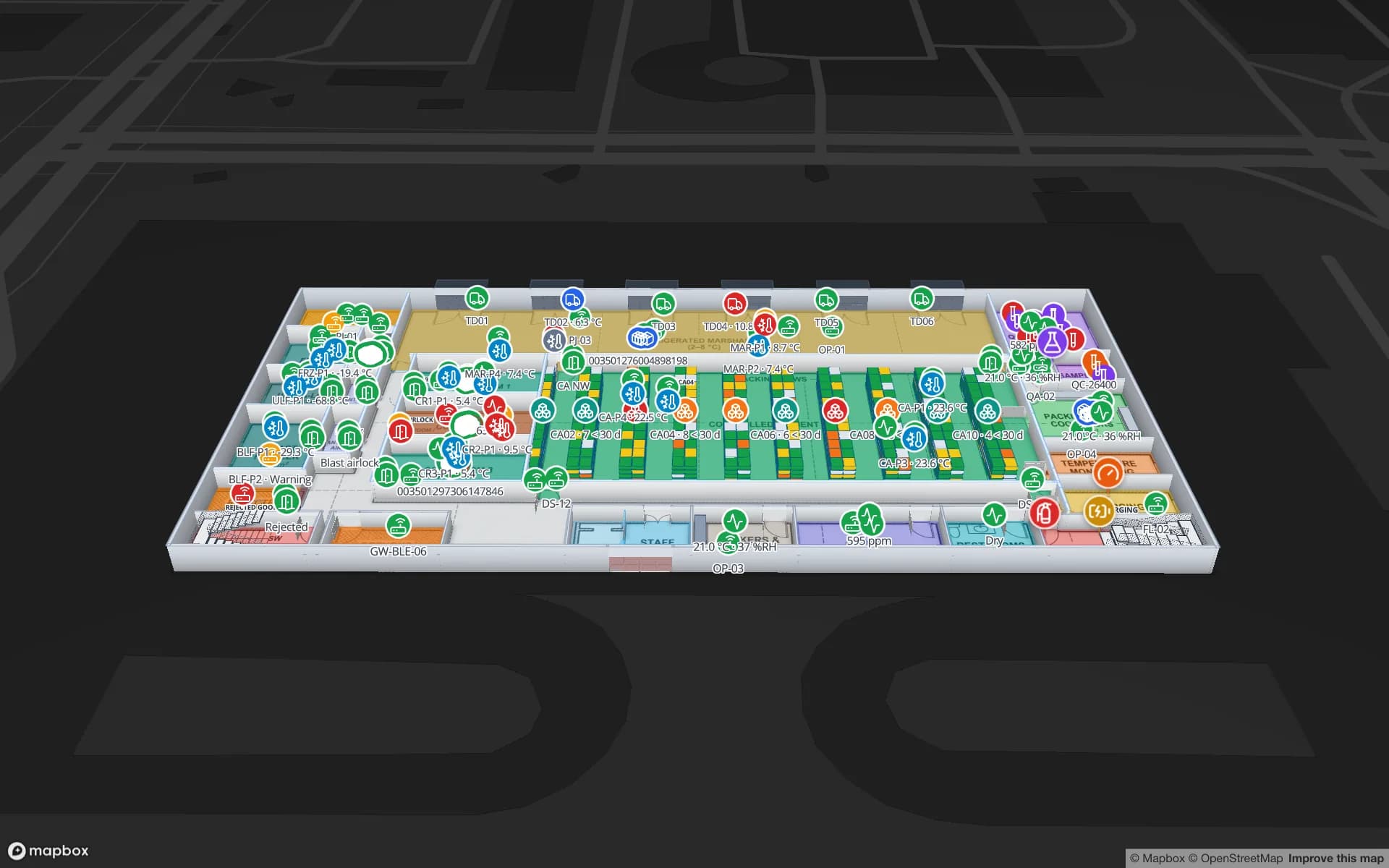
Polar Pharma — Cold Storage & QC Facility, a pharmaceutical cold store & qc lab demo, in the Spatial Map 3D viewer with live device markers
Polar Pharma — Cold Storage & QC Facility
Polar Pharma, a demo cold store and QC lab: temperature zones tinted from their probes, cold-room doors, reefer docks and 1,140 rack locations.
Rack locations in the Polar Pharma cold-store demo
1,140
How often alert rules are checked
15 s
Yard slots in the Eastport cross-dock demo
44
Free trial, no credit card
7 days

JKIA: flowers and fresh produce by air

Jomo Kenyatta International Airport is the main gateway for Kenya’s cut flowers and much of its fresh vegetables and fruit, most of it bound for Europe, with the Netherlands as a leading market. Produce arrives from the farms already cooled, waits in pre-cooling rooms and cold stores in the airport’s freight area, is built up on pallets and loaded on the evening flights. An hour in a warm corridor, or a strike or delay that leaves boxes waiting, shows up later as lost vase life.

On the map, each cold room, build-up area and dock shows its latest temperature, and consignments sit in the room that holds them. An alert rule — out of range for 10 minutes, say — is checked every 15 seconds and appears in the app with Show on map; the History player replays the night for the claim or the audit. See the cold-chain solution and the Polar Pharma demo.


The Inland Container Depot at Embakasi

Since 2018, containers landed at Mombasa have been railed to Nairobi on the Standard Gauge Railway to the Inland Container Depot at Embakasi, run by the Kenya Ports Authority, where importers clear and collect them. That has pulled container freight stations, bonded warehouses and transport yards into the surrounding area.

For the warehouse that receives those boxes, Spatial Map maps the dock doors, yard slots and the gate, shows trailers and containers in their slots, and follows RFID pallets from stripping to storage to the outbound lane, as in the Eastport Cross-Dock demo. Depot and customs systems stay where they are.

Mombasa Road, Mlolongo and Athi River

Much of Nairobi’s newer warehousing has gone up along Mombasa Road and on towards Mlolongo and Athi River, close to the airport, the depot and the route to the port, while the older Industrial Area remains dense and busy. The Nairobi Expressway, an elevated toll road of about 27 km that opened in 2022, runs from Mlolongo past JKIA to James Gichuru Road in the west, shortening trips between the warehouses, the airport and the city.

In those distribution centres, rack locations are coloured from your WMS stock by bin, RFID cartons are read at the dock doors and forklifts show as live markers, as in the Crestline Fulfillment demo with 2,204 rack locations.

Regional DCs serving East Africa

Many Nairobi DCs supply not only Kenya but distributors in Uganda, Rwanda and Tanzania. Group the DC with your other sites into a solution per country or per customer, and give each distributor a read-only link to its own staging lane or bay, with an expiry date. Reports — stock on hand, dock turns, cold-room excursions — export to PDF, Excel, CSV or JSON, or go out as a public read-only report link.

Pack-house badges and the Data Protection Act

Tagging pallets and cold rooms identifies no one. Tagging pickers or drivers does, and then Kenya’s Data Protection Act 2019 is the context — be clear about the purpose, tell staff and collect only what you need; your legal advisers decide what applies. Ask AI (beta) masks personal values before the model sees them. Our DPA describes how Spatial Map processes your data.

How Spatial Map does it

Setting up a Nairobi cold store or DC

  1. 01

    Map the shed

    Upload the cold store or DC plan and draw cold rooms, build-up areas, racks and dock doors.

  2. 02

    Wire up the sensors

    Your gateway or sensor platform posts readings to a table, or Spatial Map polls its REST endpoint.

  3. 03

    Add pallet reads

    RFID middleware posts reads at dock doors and room doors in batches.

  4. 04

    Set the alert rules

    Out of range for N minutes, not updated, or too many pallets waiting — shown in the app.

What Nairobi teams map

JKIA perishables sheds

Pre-cooling and cold rooms by live temperature, consignments by room.

Warehouses near the ICD

Containers by yard slot and pallets from stripping to storage.

Mombasa Road DCs

Stock by bin, RFID cartons at the docks and forklifts live.

See it on real demo facilities

Fictional names, real floor plans, live sensors, RFID, BLE tags and gateways — open any of them in the browser.

All 13 demo facilities

Nairobi — frequently asked questions

Yes, if your sensors or their gateway can send readings over the internet. Each room takes the colour of its latest reading, every reading is kept in row history, and alert rules show excursions in the app. Spatial Map does not replace a validated monitoring system where your buyers require one.

The roles or members you name in the rule. Alerts appear in the app — the bell, a toast and the Alerts page — and resolve themselves when the room is back in range. There is no email, SMS or push, so someone needs the app open on shift.

From your gate onwards, yes: RFID reads at your gate, dock doors and racks place each pallet on the map. Inside the depot and on the railway, Spatial Map has no data — those stay with the depot and rail operators.

Yes. Both are facilities in one workspace, and Pro covers up to 4 facilities. Group them into a solution and give managers the Viewer role or a share link.

No. Spatial Map is sold online and our team works with customers in Nairobi remotely, by video call and through the contact form.

The same worldwide, in US dollars: a 7-day free trial for up to 5 facilities with no credit card, then Pro at $60 a month or $600 a year for up to 4 facilities.

See your cold rooms and docks on one map.

Start a free trial and open the Polar Pharma and Eastport demos, or send us a floor plan and a sample of your sensor readings through the contact form.