Africa · Ethiopia

Indoor mapping & RFID tracking in Ethiopia

Spatial Map is browser-based software for indoor mapping & RFID tracking in Ethiopia: it turns the floor plan of a warehouse, cold room, factory shed or exhibition hall into a live 3D map fed by your readers, gateways and sensors. Ethiopia has no coast, so most of what it trades passes through a few places — the dry port at Modjo, the railway behind it, the cargo sheds at Bole airport and a chain of industrial parks — and each of them is a building or a yard that can carry its own map.

No credit card. Runs in the browser. Pro is $60/month for up to 4 facilities. Book a demo

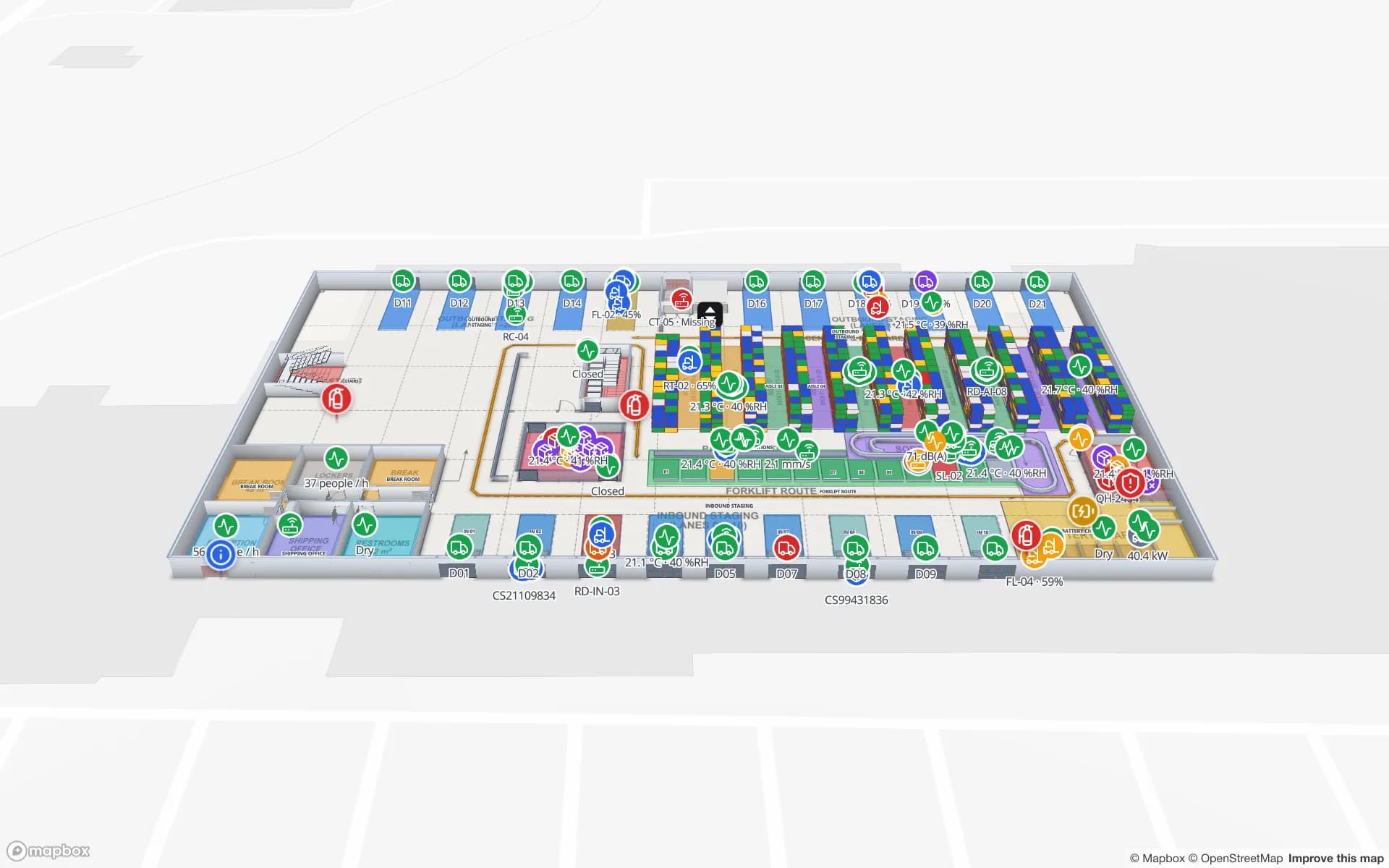
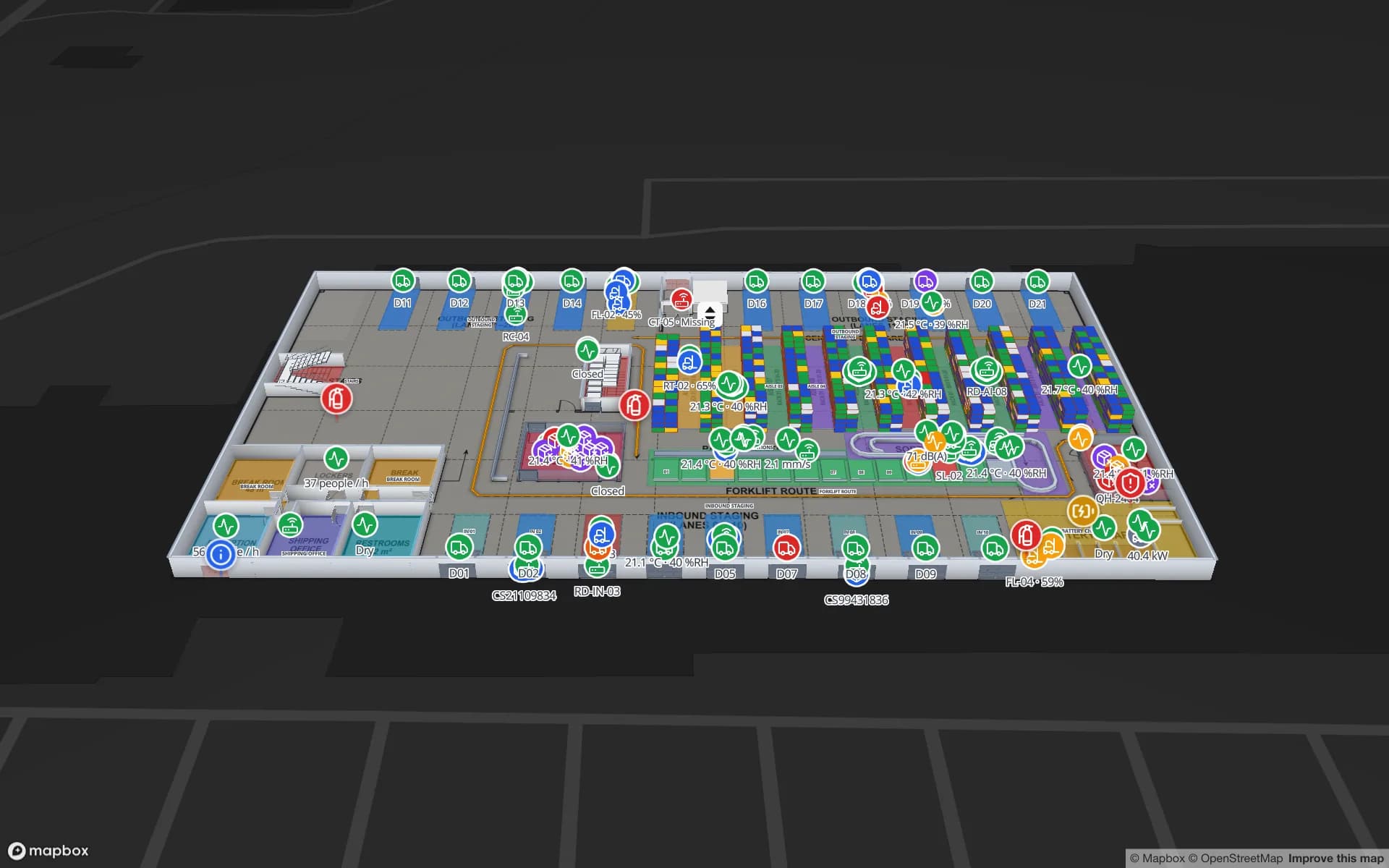
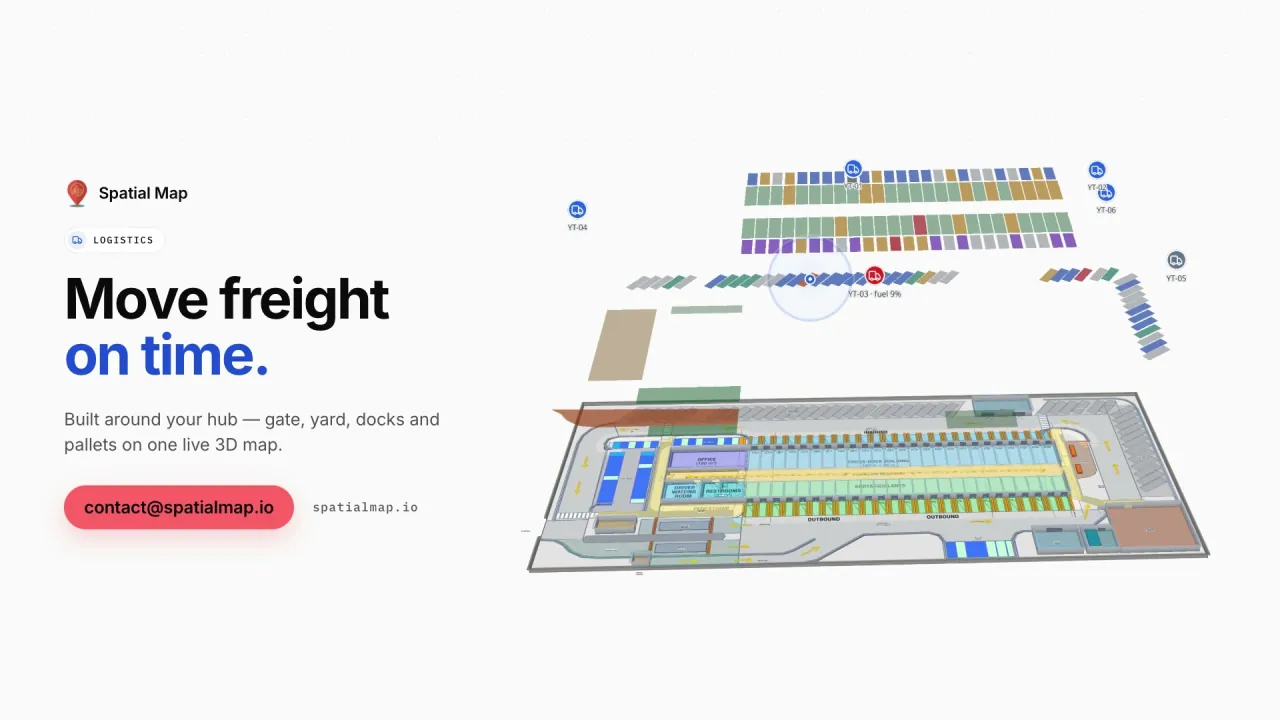
Logistics film: “Move freight on time” beside Eastport Cross-Dock and its trailer yard in 3D
The Logistics film: pallets moving door to door through the Eastport Cross-Dock, then the yard and gate with a congested truck lane.
Dock doors in the Eastport cross-dock demo
50
Yard slots in the Eastport demo
44
Interface languages in the app
6
Free trial, up to 5 facilities, no credit card
7 days

No coast: the corridor to Djibouti

Ethiopia is landlocked, and its sea trade leaves through the Port of Djibouti. Reports put Djibouti’s share of Ethiopia’s external cargo at roughly 95 percent or more, and the exact figure varies by source and year. A 2026 World Bank feature describes the Modjo dry port, about an hour from Addis Ababa, as long the main entry point for goods arriving from Djibouti.

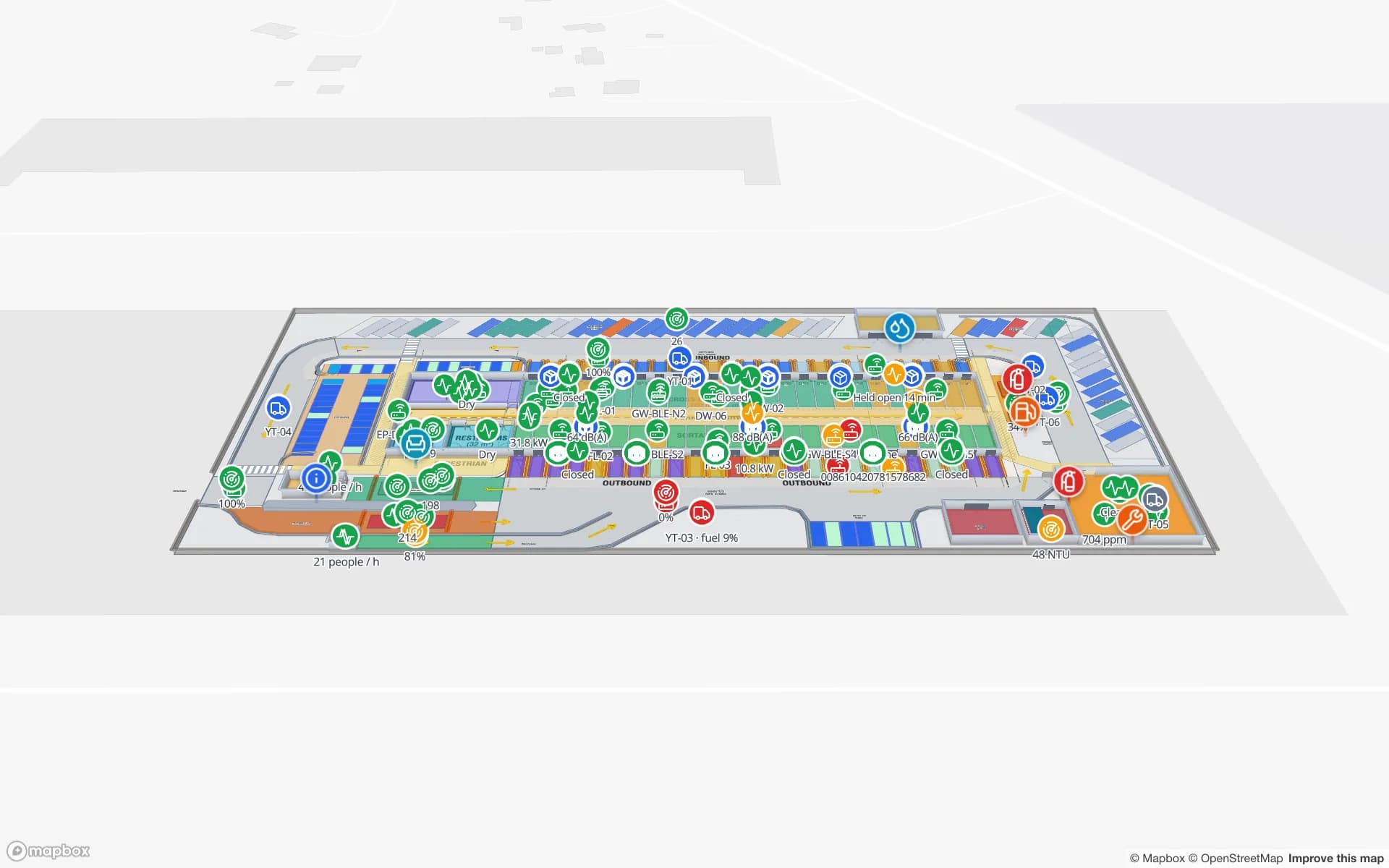
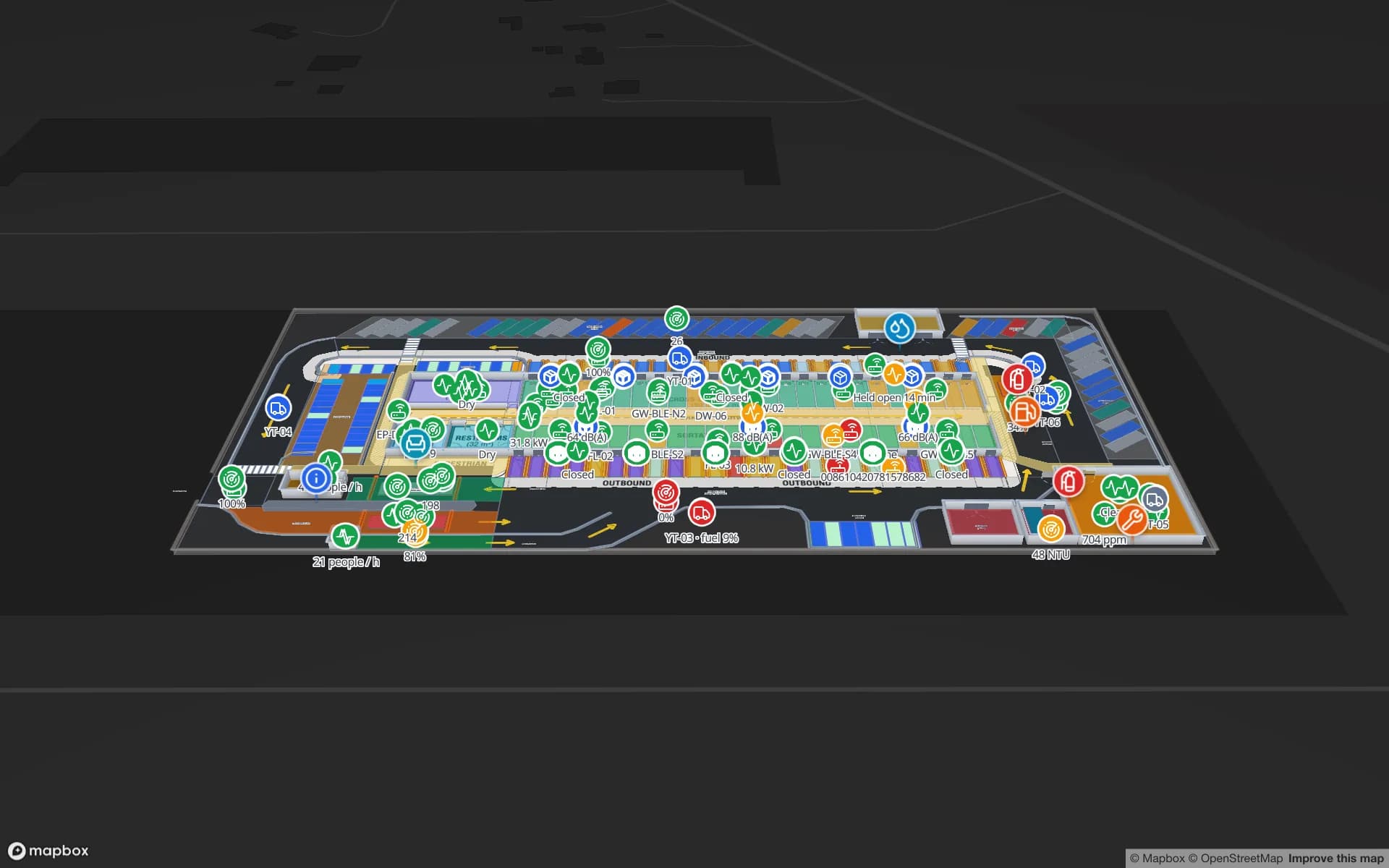
That gives warehouses on the corridor a particular job: take a container from rail or truck, strip it, hold the goods for their consignee and release them on another truck. Spatial Map draws the dock doors, numbered yard slots and gates and colours them from your yard or WMS data, and RFID pallets show where the last reader saw them, as in the Eastport Cross-Dock demo. It does not connect to customs, port or rail systems; those stay where they are.
Modjo, Cool Port Addis and the railway

The World Bank says the Modjo expansion — larger container yards, expanded warehouses and dedicated entry and exit gates — cut processing times by 70 percent in some cases, from 60 days to 15. The port, once mainly an import point, now handles containers for exports as well, including coffee, textiles and agricultural products, and private freight firms now operate inside it. Cool Port Addis, the perishables facility at Modjo, is fully integrated into the dry port’s railway terminal, with a direct link to the Addis Ababa–Djibouti railway, and is meant for fresh fruit and vegetables, flowers, frozen imports and medicine imports. The railway has been in commercial operation since 1 January 2018.

A depot where several firms share one yard has a mapping problem a single warehouse does not: whose container is in which slot, and who may see it. Draw the yard once, give each firm a read-only share link locked to its own floor and layers, and each sees only its own units. Cold rooms take the colour of their latest sensor reading, and an alert rule flags a room that stays out of range or a sensor that has gone quiet, in the app.

Bole today, Bishoftu tomorrow

The cargo hub at Bole International Airport publishes a capacity of 1,000,000 tonnes a year over 40,000 square metres, with temperature-controlled areas at 15–25 °C and 2–8 °C and a deep freezer room at −20 °C, a dangerous-goods room and live-animal stores; these are the operator’s own figures. A new airport is also coming: Bishoftu International Airport, about 40 kilometres south-west of Addis Ababa, broke ground on 10 January 2026, with a first phase of 60 million passengers a year targeted for 2030 and 110 million at full build-out.

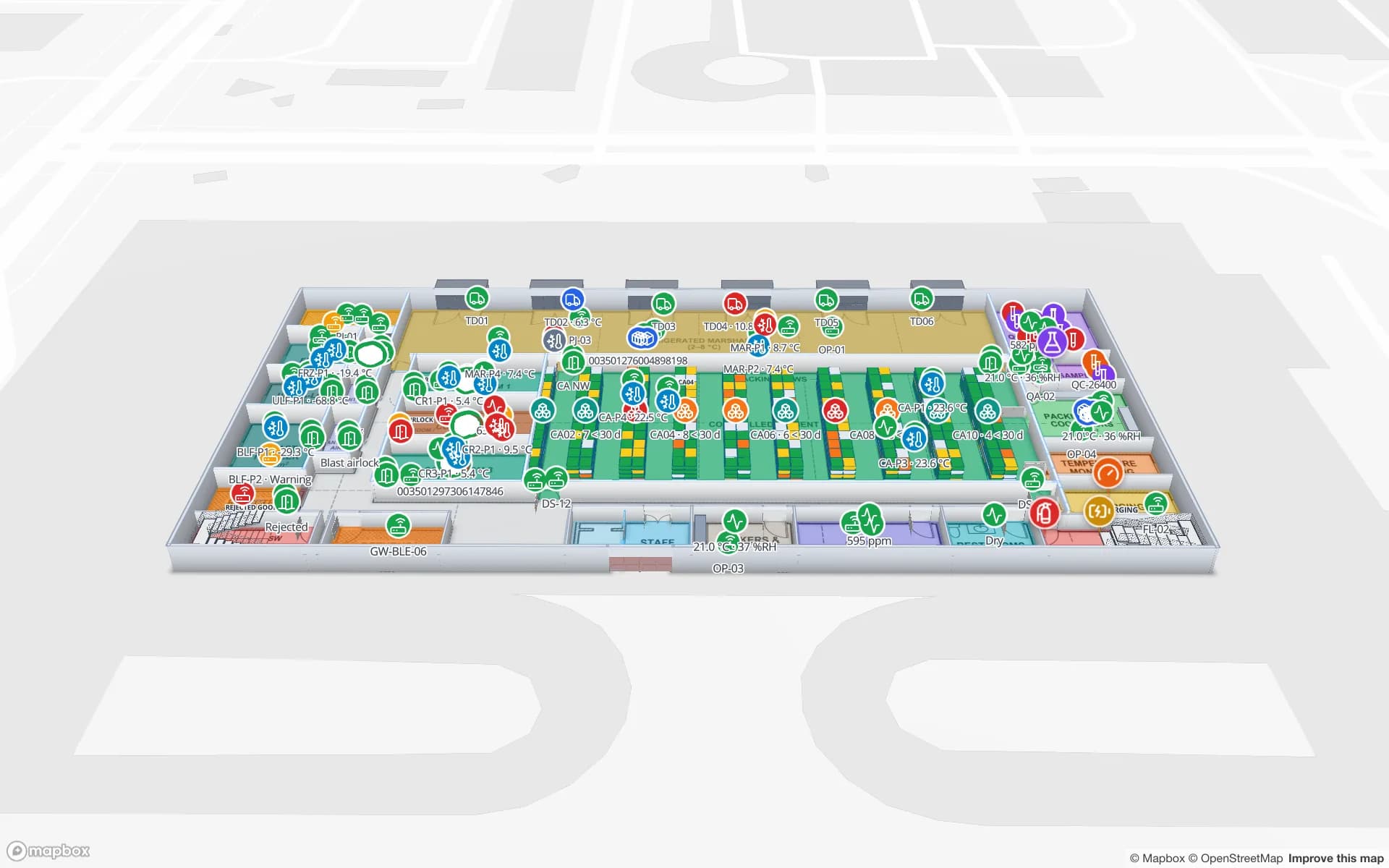
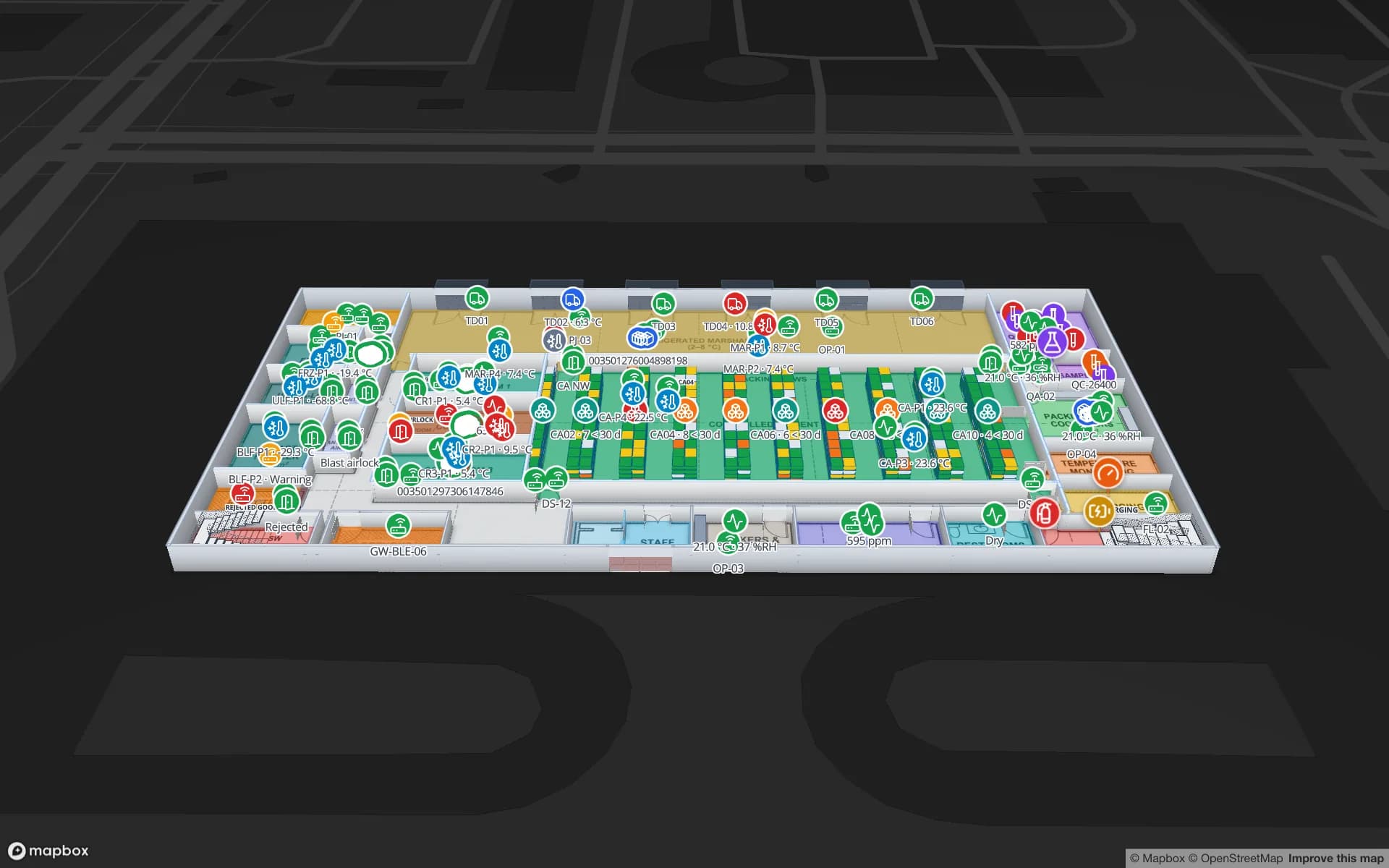
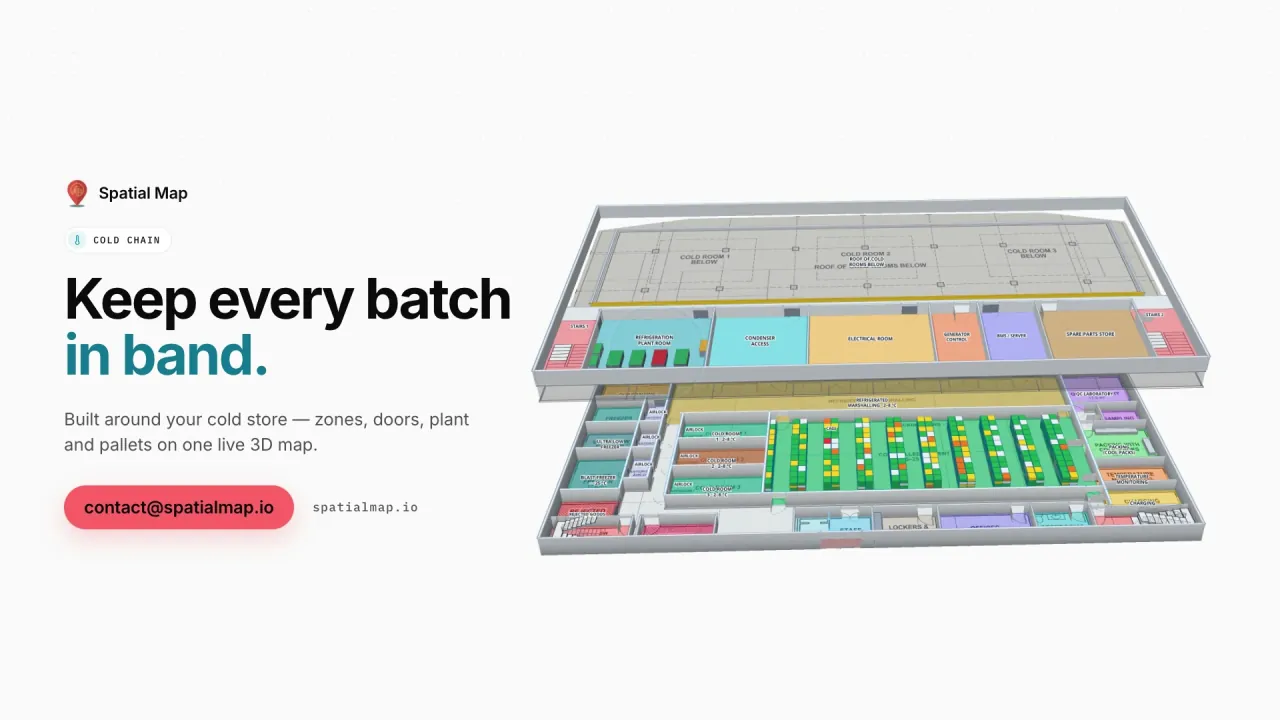
Air cargo is a race against time inside a building: a flower box or a medicine pallet moves from the truck to a cold room, to a build-up area, to an aircraft stand. On a Spatial Map floor plan each room shows its latest temperature, consignments sit in the room that holds them, and the History player replays a night for a claim. The Polar Pharma demo shows temperature zones and 1,140 rack locations. The city page, warehouse tracking in Addis Ababa, covers the airport and the capital’s sheds.

Flowers, coffee and the packhouse

Industry sources describe Ethiopia as the second-largest flower exporter in Africa, with the highest concentration of farms in the Rift Valley, mainly in Oromia, and others clustered at Sebeta, Holleta and Sululta on the edge of Addis Ababa. Europe, mostly the Netherlands, is the main market, and airfreight is the main way flowers travel. Coffee and other agricultural products leave through Modjo by container.

Between the farm and the airport sit packhouses and pre-cooling rooms. Map them room by room, post a sensor reading from each, and the plan shows which room is drifting warm before the truck leaves. For stock, RFID inventory at the dock doors shows which cartons are staged and which are still on the floor. See the cold-chain solution.

Industrial parks

The Industrial Parks Development Corporation lists 13 parks, from Bole Lemi in Addis Ababa and Kilinto to Hawassa, Adama, Dire Dawa, Bahir Dar, Jimma and Kombolcha. Bole Lemi began operating in 2014, is described as Ethiopia’s first industrial park, is open to textile, garment and leather manufacturers and has 20 factory sheds, with tenants from India, China and South Korea.

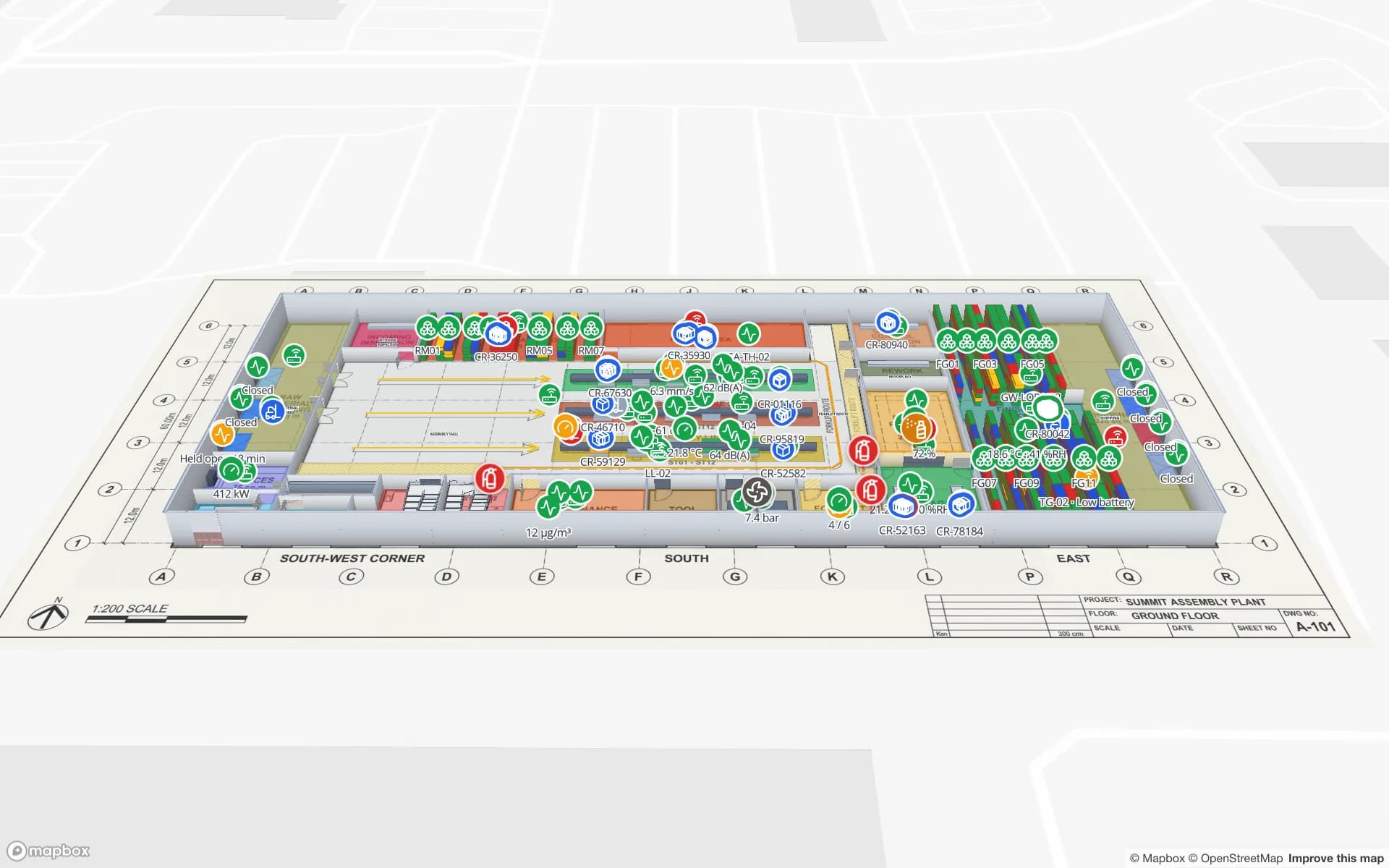
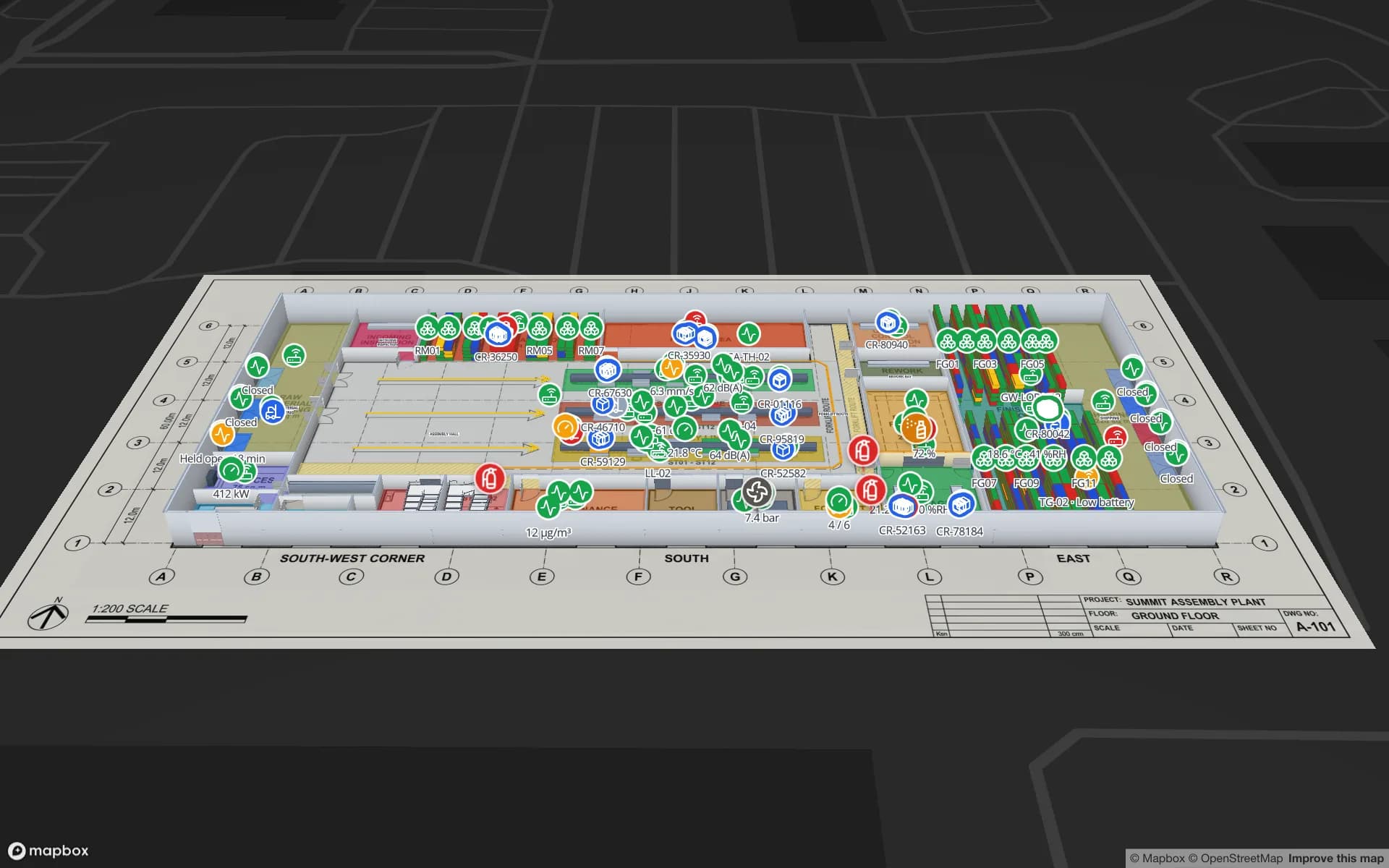
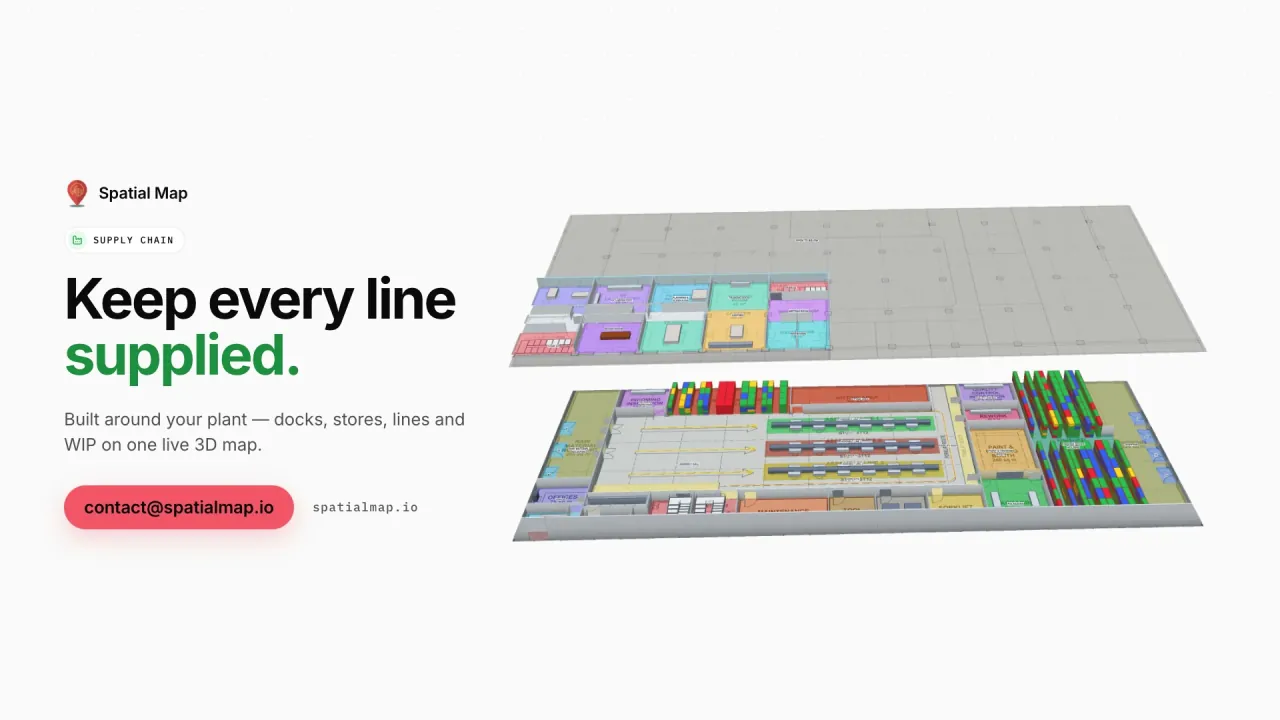
Each factory shed is its own facility with its own floor plan. A garment unit follows cartons from packing to the loading dock; Spatial Map draws the lines and the despatch lanes and shows each tagged carton where the last reader saw it. Asset tracking for sewing machines, moulds and returnable crates uses the same map.

Language and working with us

The Constitution makes Amharic the working language of the Federal Government, and the app has no Amharic interface. The app is available in English, Arabic, Chinese, French, German and Spanish, and each user picks their own. Names you type — rooms, racks, report titles — can be in Amharic script and appear exactly as typed.

Spatial Map is sold online at the same USD price worldwide, and our team works with customers in Ethiopia remotely, by video call and through the contact form. A data processing agreement is available and the security page explains how data is protected.

Also served

The same approach covers Hawassa, Adama, Dire Dawa, Bahir Dar, Jimma and Kombolcha, the cities with industrial parks. They have no pages of their own, and nothing needs to be installed at any of them: the map opens in a browser.

How Spatial Map does it

From floor plan to live map

  1. 01

    Import the plan

    A PDF, a DWG from AutoCAD R2004–R2018 or a scan of the warehouse, depot yard, cold room or factory shed.

  2. 02

    Draw the building and yard

    Racks, dock doors, numbered yard slots, cold rooms and gates, or let AI Map draft them for review.

  3. 03

    Connect the data

    WMS, RFID middleware, a yard system or sensor gateways post rows to a table, or Spatial Map polls a REST endpoint.

  4. 04

    Share by link

    Read-only links for each firm or customer, locked to its own floors and layers, and in-app alerts for the team.

What teams in Ethiopia map first

Dry-port depots and transit warehouses

Dock doors, yard slots and pallets staged by consignee.

Flower, produce and medicine cold rooms

Cold rooms by live temperature, held consignments marked.

Industrial-park factories

Lines, finished-goods racks and despatch lanes with tagged cartons.

Regional distribution centres

Rack-level stock by bin and staging lanes before store runs.

See it on real demo facilities

Fictional names, real floor plans, live sensors, RFID, BLE tags and gateways — open any of them in the browser.

All 13 demo facilities

Questions from teams in Ethiopia

No. It shows your own buildings — dock doors, yard slots, racks and cold rooms — coloured by the data your WMS, readers and sensors send. Customs, port and rail records stay in their own systems.

Yes. Draw the yard once and give each firm a read-only share link with only its floors and layers, an expiry date and a view cap, so each sees its own units. Owners, admins, editors and viewers are separate roles for your own team.

No. The app is available in English, Arabic, Chinese, French, German and Spanish. Your own room names, rack codes and report titles can be written in Amharic and appear exactly as typed.

Yes. They can push rows to a table through the write API — HTTPS, a bearer API key, bulk upsert, 60 requests per minute per key — or expose a REST endpoint that Spatial Map polls. CSV and Excel uploads work too.

No. Spatial Map is sold online and our team works with Ethiopian customers remotely, by video call and through the contact form. There are no local resellers or partners.

The same worldwide, in US dollars: a 7-day free trial for up to 5 facilities with no credit card, then Pro at $60 a month or $600 a year for up to 4 facilities. Larger estates are quoted as custom services.

Map your first Ethiopian site this week.

Start the free trial, or send us a floor plan and a sample of your WMS, RFID or sensor data through the contact form.