Latin America · Ecuador

Indoor mapping & RFID tracking in Ecuador

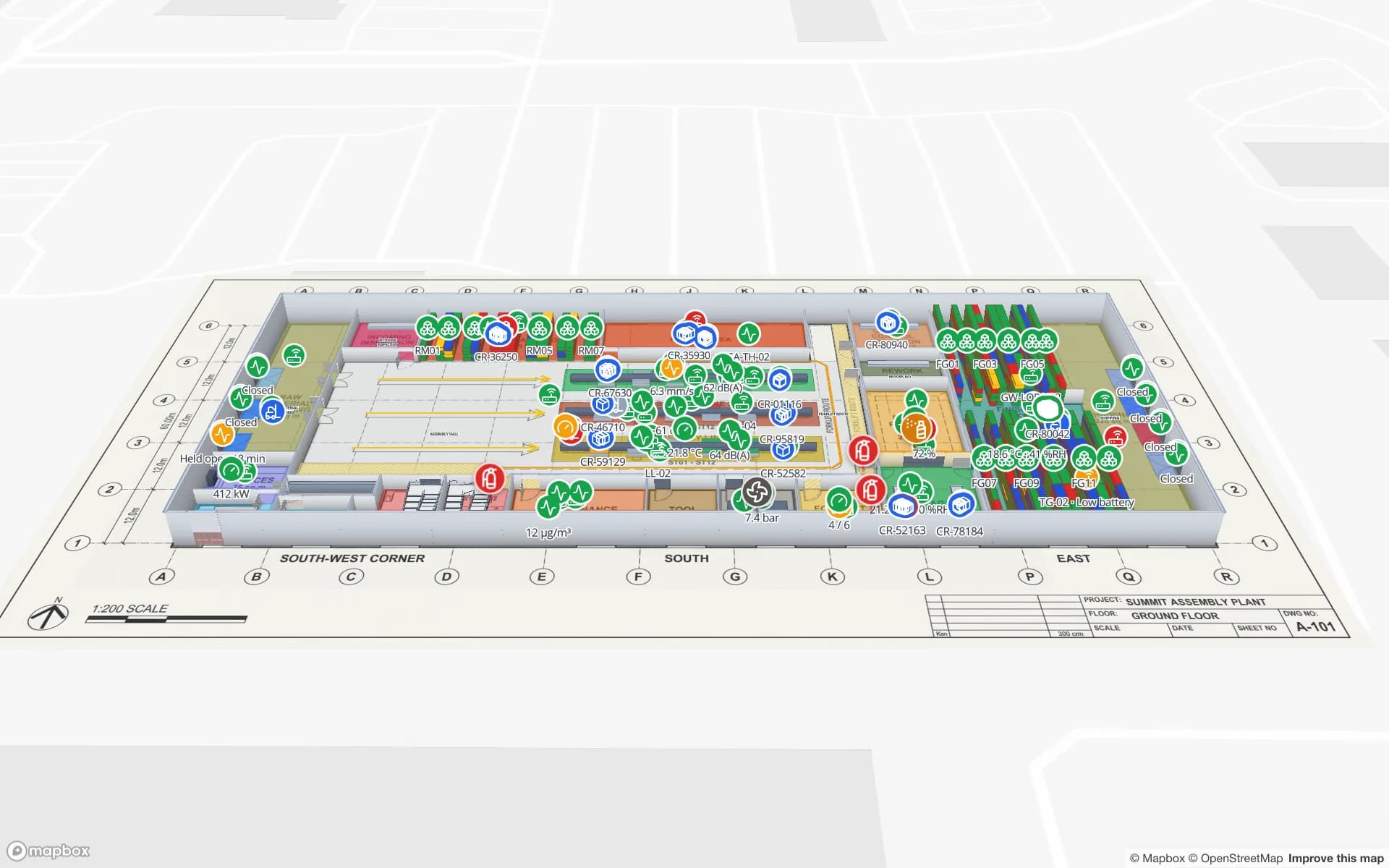
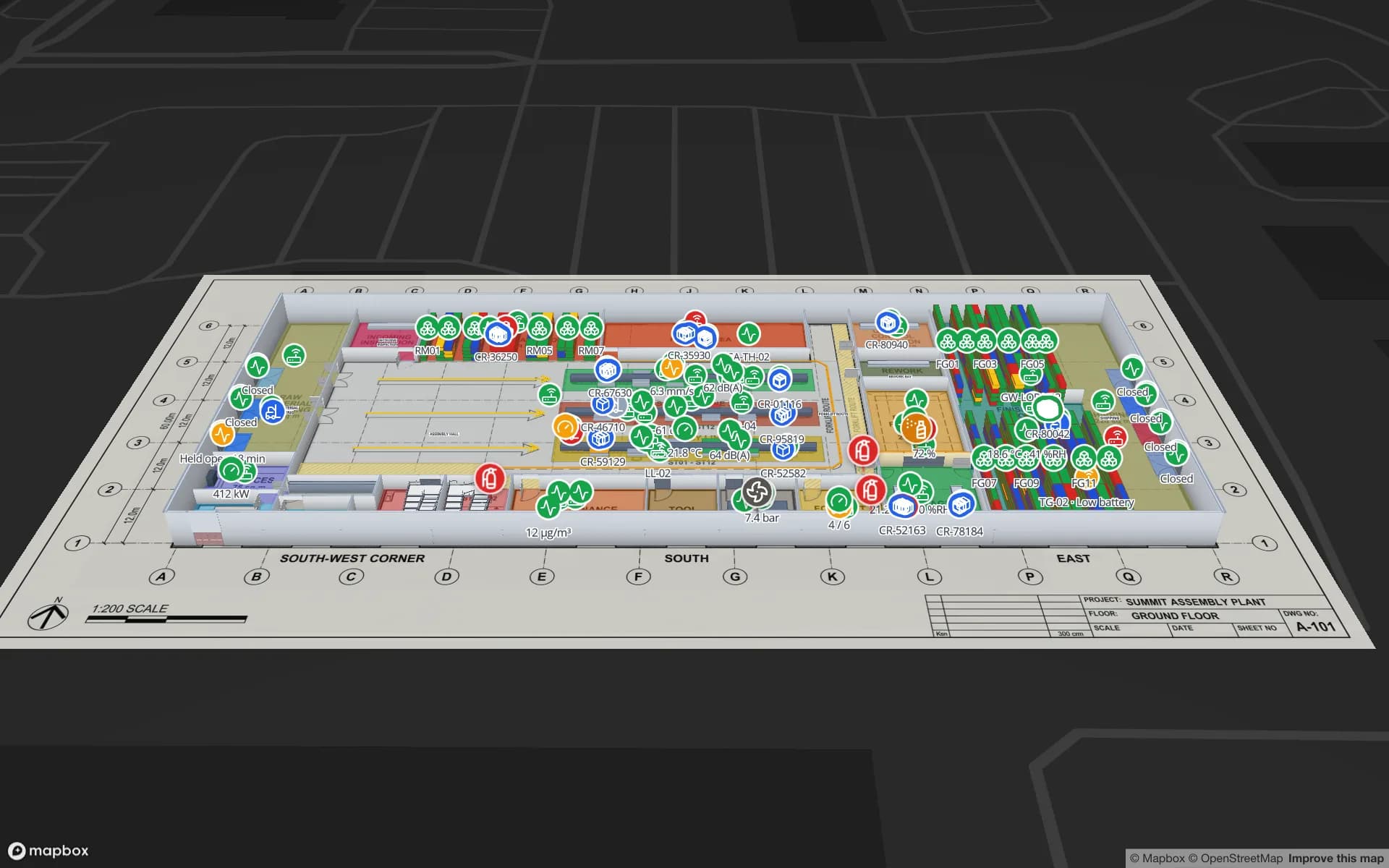
Spatial Map is browser-based software for indoor mapping & RFID tracking in Ecuador: the plan of a packhouse, cold room, port warehouse or plant becomes a live 3D map, coloured by the data your WMS, RFID readers and sensors already produce. Ecuador exports things that spoil: bananas, shrimp and cut flowers move from farms and plants to a port or an airport on a clock, and the buildings in between are where that clock is won or lost. The app has a Spanish interface, so an Ecuadorian team can work in its own language.

No credit card. Runs in the browser. Pro is $60/month for up to 4 facilities. Book a demo

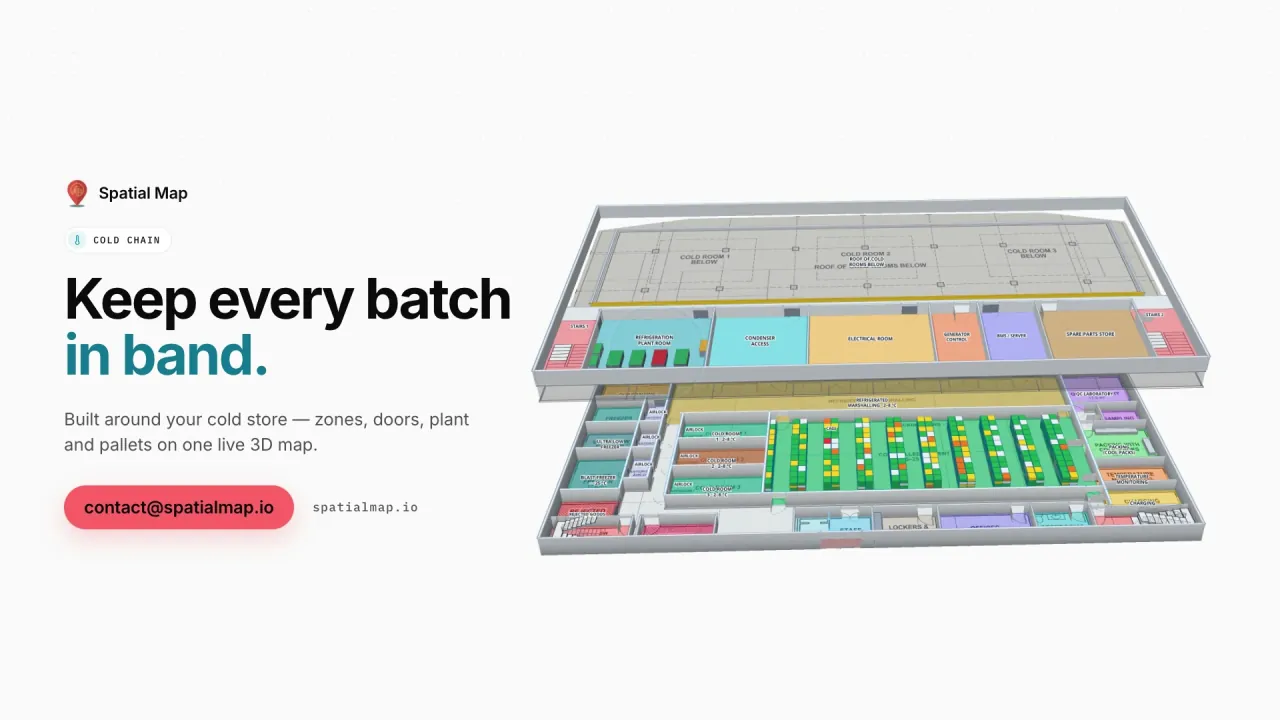
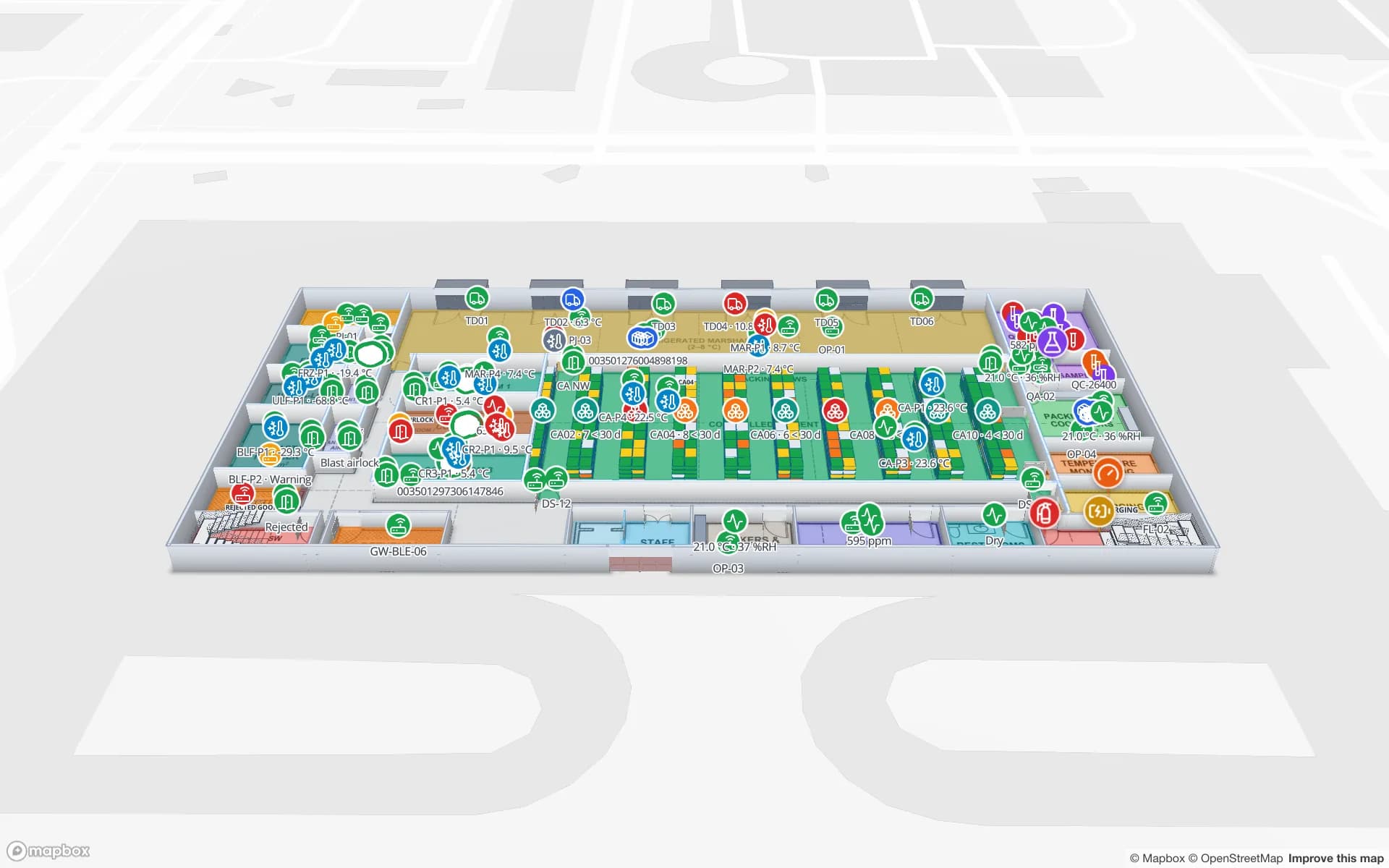
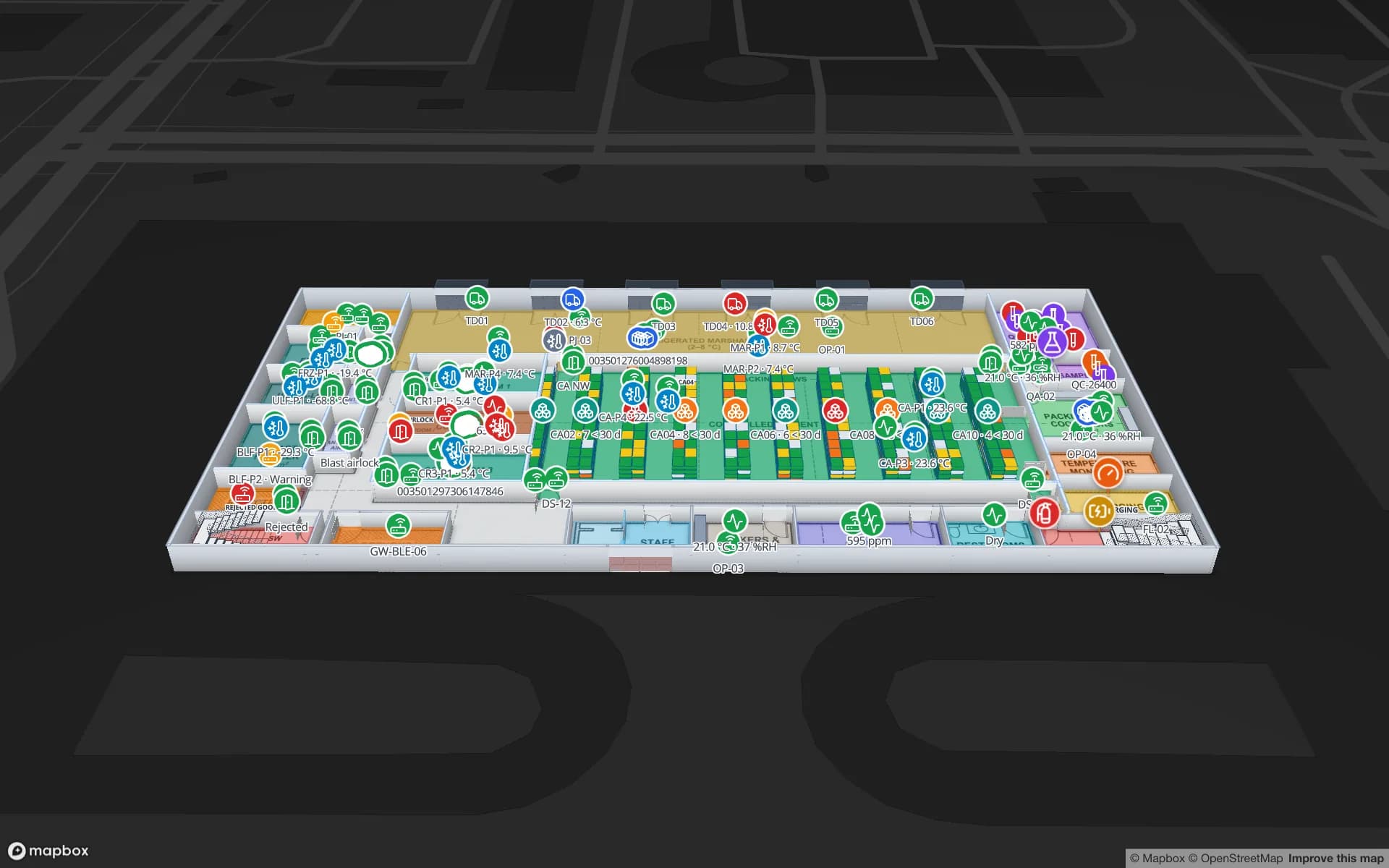
Polar Pharma — Cold Storage & QC Facility, a pharmaceutical cold store & qc lab demo, in the Spatial Map 3D viewer with live device markers
Polar Pharma — Cold Storage & QC Facility
Polar Pharma, a demo cold store: temperature zones tinted from their probes, cold-room doors, reefer docks and 1,140 rack locations.
Rack locations in the Polar Pharma cold-store demo
1,140
Spanish interface, one of six app languages
Español
How often alert rules are checked, with alerts shown in the app
15 s
Free trial, up to 5 facilities, no card
7 days

Bananas, shrimp and flowers: exports on a clock

Ecuador is the world’s largest banana exporter, with exports of US$3.38 billion in 2017 and 36 % of the world’s exported bananas in 2016–2018; the provinces of Los Ríos and Guayas produced 70 % of national output in 2022. Shrimp is the next large export, worth US$3.06 billion in 2017, and cut flowers earned US$846 million the same year. Ecuador’s Central Bank put total exports at US$37.15 billion in 2025, up 7.9 % on 2024, with crude oil about 27 % of export value in 2022.

None of the three food-and-flower exports tolerates waiting. A packing station, a processing plant or a flower packhouse receives product, cools it, sorts it, packs it and hands it to a reefer or an aircraft, and the record of which box went where matters when a buyer complains. Spatial Map draws the cold rooms, packing lines and reefer docks, colours each from its sensors, and shows RFID pallets at the door that last read them. The Guayaquil page looks at the port and the climate in detail; the Polar Pharma demo shows the cold-store pattern.


Two cities, one economy

Guayaquil, on the Guayas River, is described as Ecuador’s financial capital and largest industrial centre, and Quito, in the highlands, as its largest business centre. The same company often runs a plant or packhouse near one and an office or distribution centre near the other, and they have different needs: the coast is about heat, humidity and the port, the highlands about flowers, altitude and the airport.

One Spatial Map workspace can hold both. Each building is a facility with its own floors, tables and alert rules, a read-only share link shows one site to a buyer or an auditor without an account, and reports export to PDF, Excel, CSV and JSON. The History player replays how a pallet or a piece of equipment moved, which is usually what a claim or an internal review needs.

The US dollar, and what it means for a software purchase

The US dollar has been Ecuador’s only official currency since 2000, with the switch from sucres completed in 2001. For a business buying software and devices from abroad that removes one variable: Spatial Map is priced in US dollars, the same everywhere, and Ecuador pays the same as any other country.

Hardware is separate. If you ask our team to source RFID readers, antennas, tags or sensors, it is quoted per project with warranty and device support from the manufacturer, and import duties and shipping depend on what is bought and how it arrives; check them with your customs broker.

Multi-floor sites: offices, malls and venues

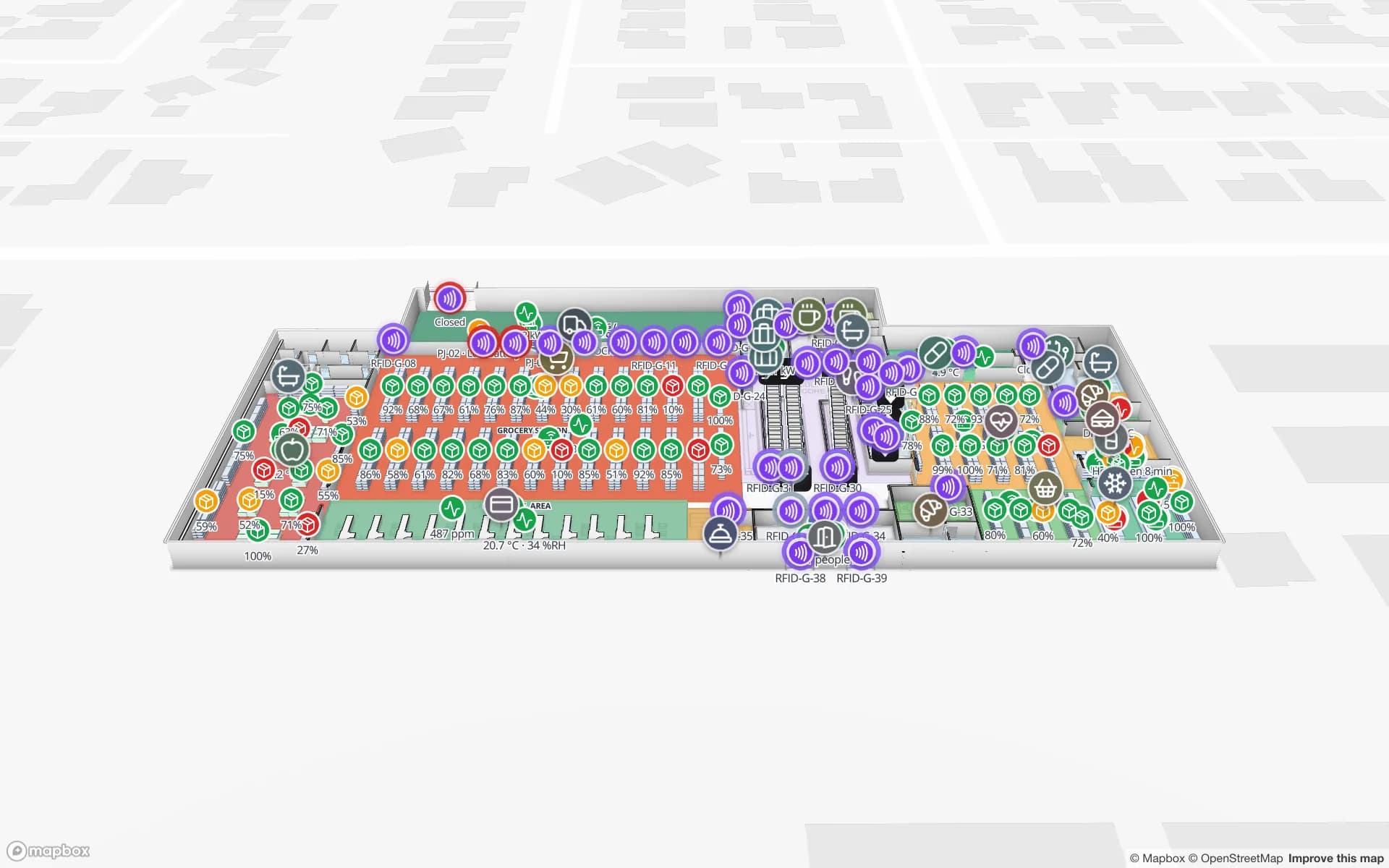
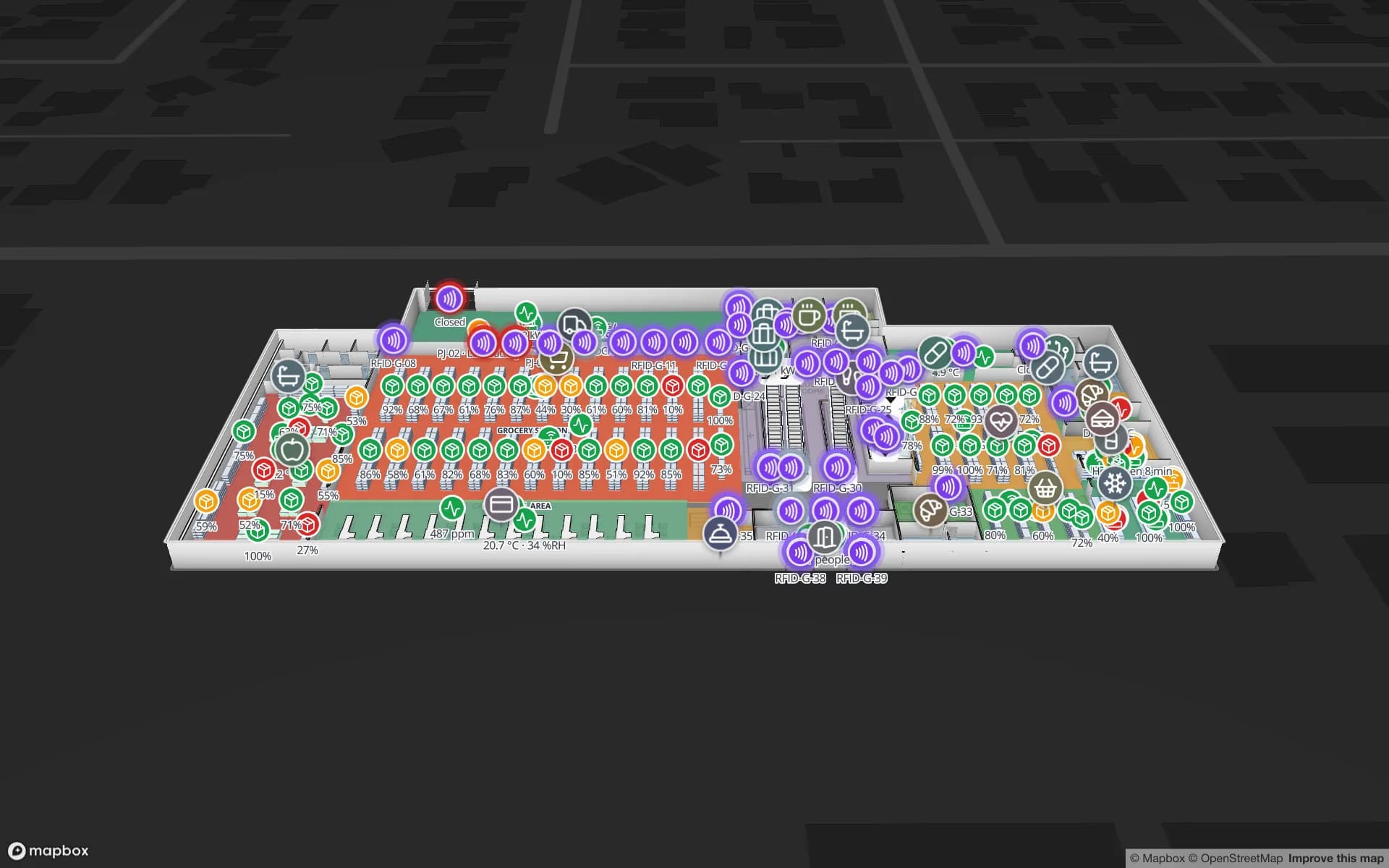
Not everything is cold chain. Ecuador’s two big cities have multi-level malls, office towers and university campuses, and the same map suits them: rooms and areas named for tenants, routes across floors by stairs, lifts and escalators with Fastest and Step-free options, and footfall as a heatmap that stops at walls. The Retail Mart demo shows RFID reads and shelf stock across three floors; the Silverbay Airport demo shows a terminal with routes that cross floors.

Spanish, data protection and working with us

The Spatial Map interface is available in Spanish, English, French, German, Arabic and Chinese, and each user picks their own. Quechua is not available. The services page in Spanish describes the mapping and integration work our team does for larger estates. Room names, rack codes and report titles are your own text and appear exactly as typed.

Where location data can be linked to a person, Ecuador’s Organic Law on Personal Data Protection is the context, supervised by the Superintendency of Personal Data Protection. Your legal advisers decide what applies; tags on pallets, boxes and stock do not identify anyone. A data processing agreement is available, and our team works with customers remotely.

Services for teams in Ecuador

Where Ecuadorian teams usually start:

Also served

The same approach covers Quito, Cuenca, Machala, Manta, Ambato and Santo Domingo. None of them needs anything installed: the map opens in a browser.

How Spatial Map does it

From plan to live map

  1. 01

    Import the plan

    A PDF or a DWG from AutoCAD R2004–R2018 of the packhouse, plant or warehouse, or a photographed plan, placed at scale.

  2. 02

    Draw the building

    Cold rooms, packing lines, reefer docks, racks with their locations, stairs and lifts; AI Map drafts them for a person to review.

  3. 03

    Connect the data

    Sensor gateways, RFID middleware and your ERP post rows to a table, or Spatial Map polls a REST endpoint.

  4. 04

    Share and alert

    Read-only links for buyers and head office, and in-app alerts for the team.

What teams in Ecuador map first

Packhouses and cold rooms

Rooms by live temperature, with boxes staged by container or flight.

Port-side warehouses and yards

Dock doors, yard slots and RFID pallets staged for the next container.

Processing and packing plants

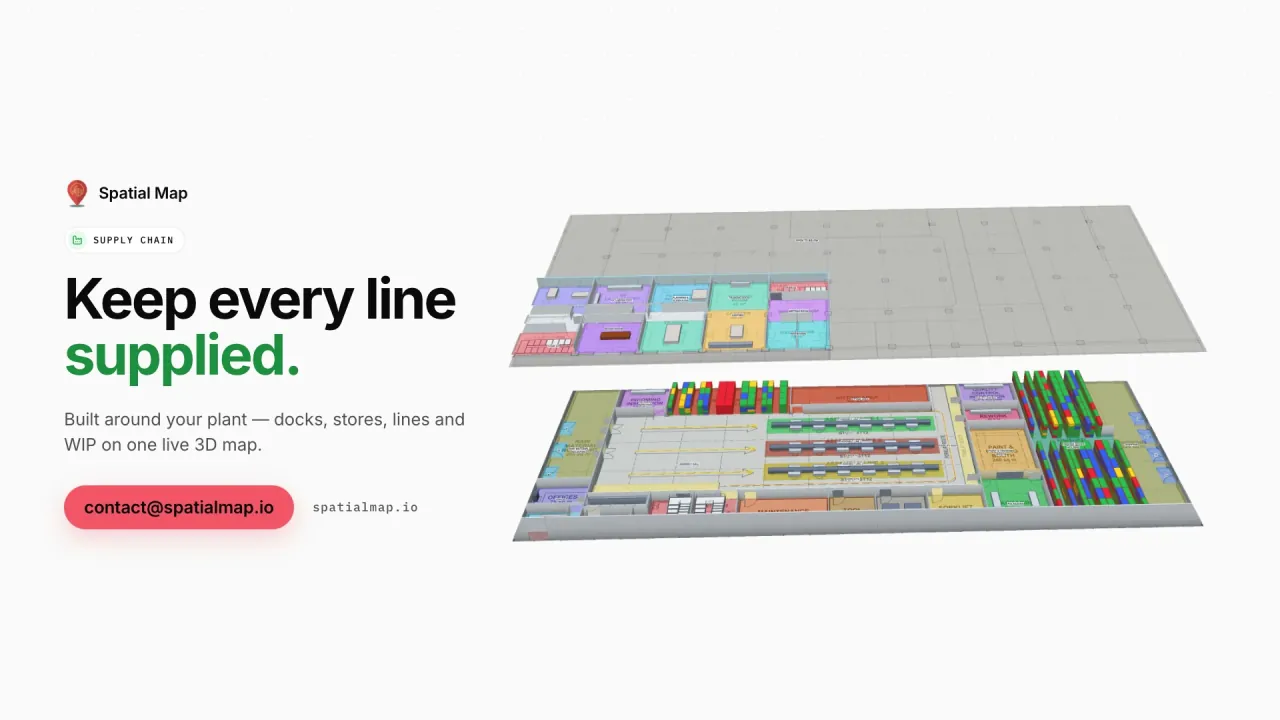
Lines, WIP carriers and materials racks coloured from your own system.

Multi-floor malls and offices

RFID reads and footfall by floor, with routes across levels.

See it on real demo facilities

Fictional names, real floor plans, live sensors, RFID, BLE tags and gateways — open any of them in the browser.

All 13 demo facilities

Questions from teams in Ecuador

Yes. Spanish is one of six interface languages, with English, French, German, Arabic and Chinese, and each user picks their own. Quechua is not available. See the services page in Spanish for the project work our team does. Your own room names, rack codes and report titles can be written in any language.

No. It has no link to customs, port, airport or certification systems. It shows what happens inside your own building, from your own RFID reads, WMS or ERP and sensors, so it complements those systems rather than replacing them.

Yes, as far as your data says so. Each box or pallet is a row with its lot and destination, read at the door by your RFID middleware, and the map colours lanes and bays from those rows. Spatial Map does not read shipping schedules; your system supplies them.

Spatial Map is priced in US dollars everywhere and has no local price. Taxes that apply to a software purchase from abroad depend on your own situation, so check them with your accountant. Hardware, if you ask us to source it, is quoted per project.

Fixed readers, portals, handhelds and sensor gateways approved for use in Ecuador; UHF settings differ between countries, so ask your supplier for the right model and region. Spatial Map has no reader drivers: your middleware posts reads to a table with the write API, or exposes a REST endpoint Spatial Map polls.

No. Spatial Map is sold online and our team works with customers in Ecuador remotely, by video call and through the contact form. There are no local resellers or partners.

In US dollars, the same worldwide: a 7-day free trial for up to 5 facilities with no card, then Pro at $60 a month or $600 a year for up to 4 facilities. Larger estates are quoted as custom services.

Map your first Ecuadorian site this week.

Start the free trial in Spanish or English, or send us the plan of a packhouse, plant or port warehouse and a sample of your sensor or WMS data through the contact form.