Latin America · Dominican Republic

Indoor mapping & RFID tracking in the Dominican Republic

Spatial Map is browser-based software for indoor mapping & RFID tracking in the Dominican Republic: the plan of a plant, warehouse or store becomes a live 3D map, coloured by the data your ERP, WMS, RFID readers and sensors already produce. In a country of about 11.5 million people on the eastern part of Hispaniola, export plants sit in free zones, cargo flows through ports and an airport around the capital, and tourism creates its own supply chain. The app has a Spanish interface, so a Dominican team can work in its own language.

No credit card. Runs in the browser. Pro is $60/month for up to 4 facilities. Book a demo

Crestline Fulfillment Center, a fulfillment center demo, in the Spatial Map 3D viewer with live device markers
Crestline Fulfillment Center
Crestline Fulfillment Center, a demo distribution centre: 20 racks with 2,204 locations coloured by stock status, pick modules, packing stations, dock doors and the trailer yard.
Rack locations in the Crestline fulfilment demo
2,204
Spanish interface, one of six app languages
Español
How often alert rules are checked, with alerts shown in the app
15 s
Free trial, up to 5 facilities, no card
7 days

Free zones: about fifty parks of export plants

A published overview of the Dominican economy counts about 50 industrial free zones with about 500 companies, mostly foreign-owned and mainly serving the North American market, and puts free-zone exports at US$6.2 billion in 2019. Medical devices, pharmaceuticals, electrical equipment and chemicals are the main manufactured exports. The dominant trade agreement, DR-CAFTA, was ratified on 5 September 2005 and took effect for the Dominican Republic on 1 March 2007.

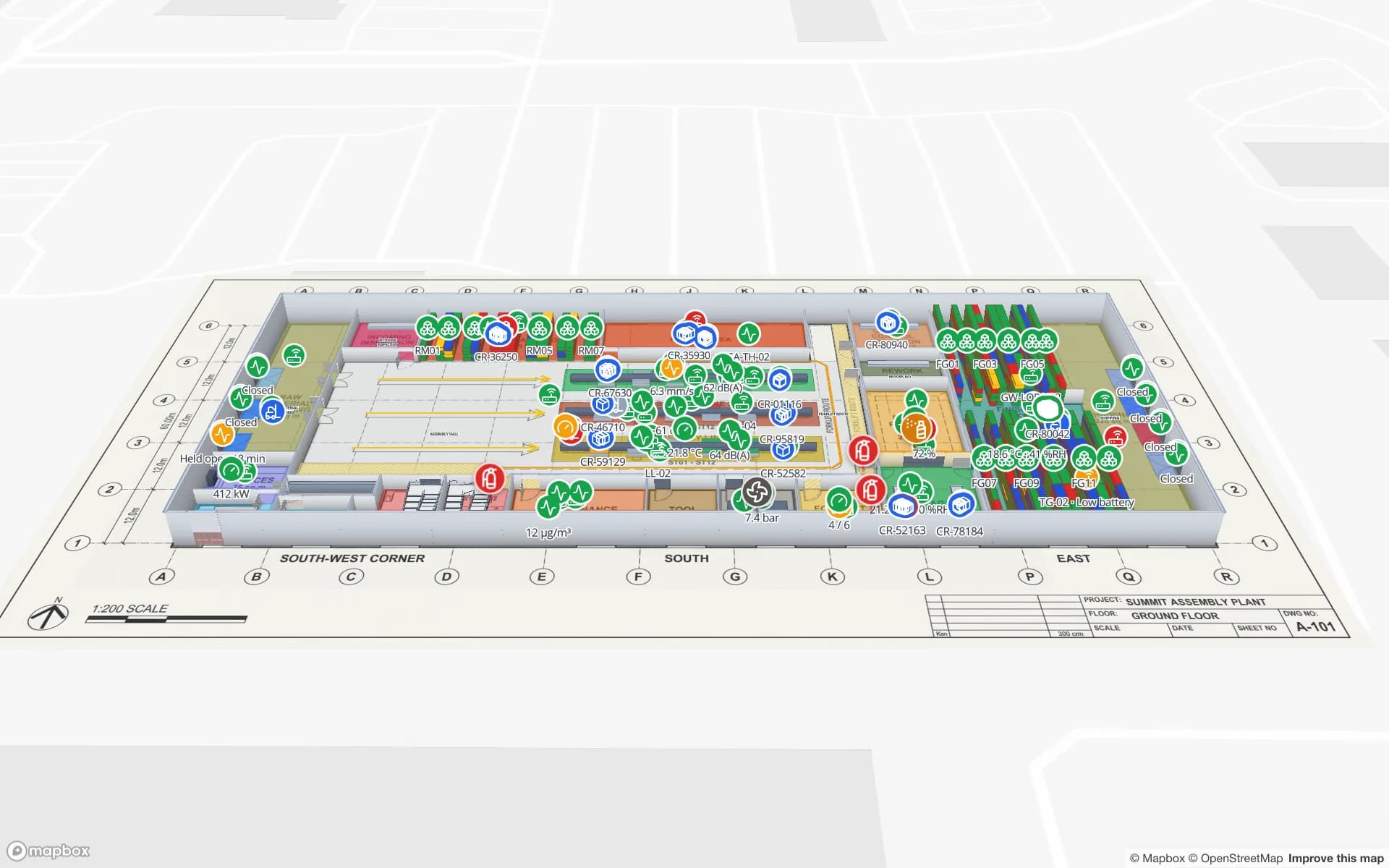
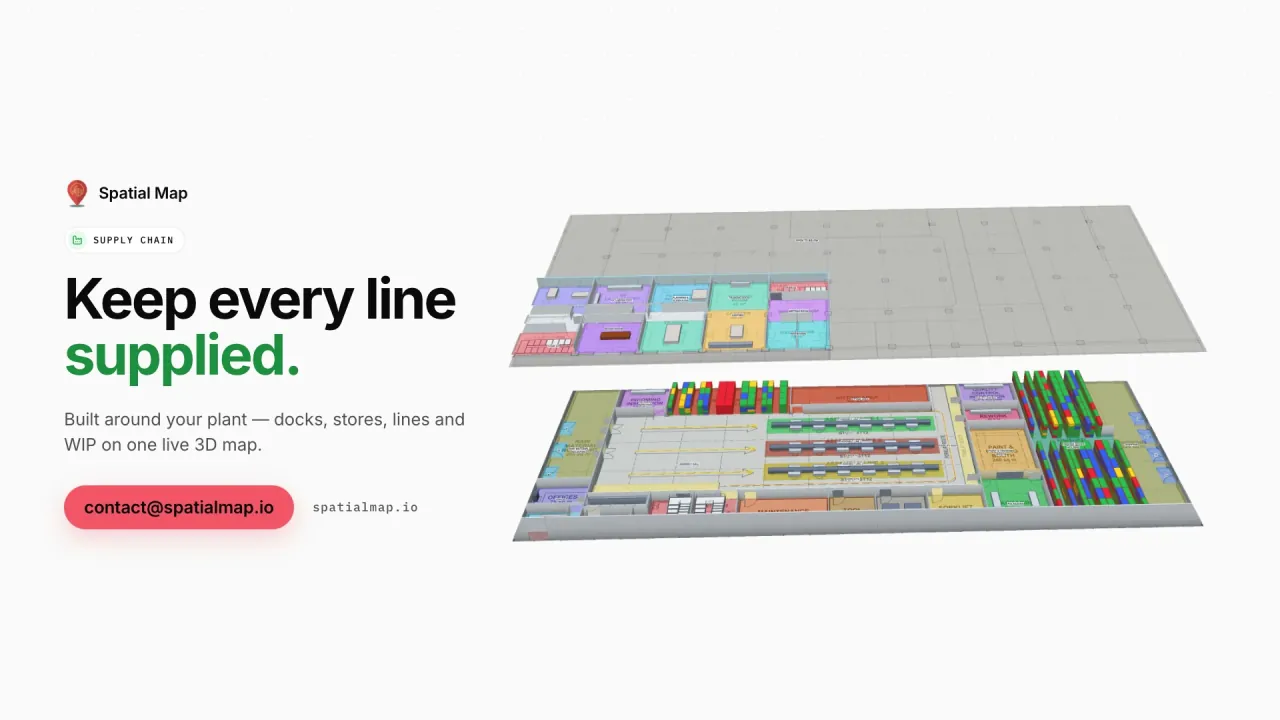
A free-zone plant is a self-contained building group: component stores, lines, finished-goods racks and a despatch dock, usually working to one buyer’s schedule. Spatial Map draws each as an area, colours it from your ERP or MES, and shows RFID reads where the last reader saw them. A read-only share link gives a buyer or head office the one plant, with the floors and layers you choose. The Summit Assembly demo shows lines, WIP carriers and 867 rack locations. Plants work to their own quality systems; Spatial Map makes no compliance claim, and has no link to customs or free-zone systems.


Cargo around the capital

Las Américas International Airport, about 20 km east of Santo Domingo, opened in 1959 and carried 355 million pounds of cargo in 2019. Santo Domingo is also the terminus of four of the country’s five national highways, and the port side works from Haina, about 20 km to the west, and a container port at Boca Chica to the east. The details are on the Santo Domingo page.

For the sheds that serve those gateways the useful map is the dock: doors, yard slots and staging lanes with RFID pallets shown where the last reader saw them, as in the Eastport Cross-Dock demo with 50 dock doors, 44 yard slots and 1,180 RFID pallets. Port, airport and customs systems stay where they are; Spatial Map shows what your own reads and records say is inside your building.

Tourism as a supply chain

More than 10 million tourists visited the Dominican Republic in 2023. Behind every resort and restaurant there is a store: food, linen, spare parts and equipment arriving by truck, issued daily and counted rarely. Cold rooms matter as much as dry stores, and a failed cold room at the start of a weekend is expensive.

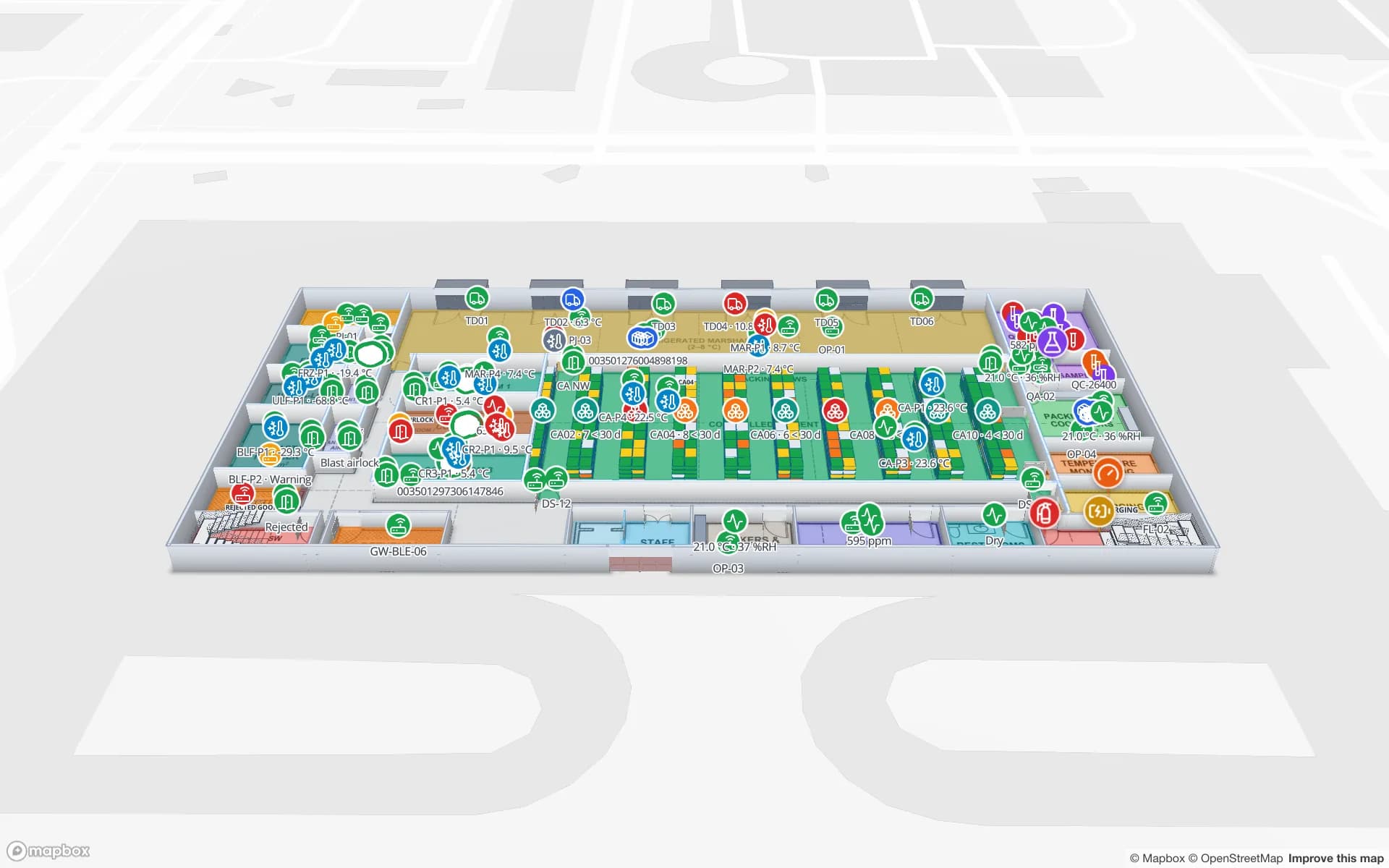
The map for a hotel-supply or resort store is the same as for a small distribution centre: draw the racks and cold rooms, colour each room by its latest probe reading, and add an alert rule such as “out of range for 10 minutes” that appears in the app with Show on map. The Retail Mart demo shows RFID reads and cold-chain layers across three floors; the temperature monitoring page covers sensors. Alerts are shown in the app only; there is no email or SMS.

Spanish and working with us

Spanish is the official language of the Dominican Republic. The Spatial Map interface is available in Spanish, English, French, German, Arabic and Chinese, and each user picks their own. A Dominican team can run the app in Spanish; the services page in Spanish describes the mapping and integration work our team does for larger estates. Room names, rack codes and report titles are your own text and appear exactly as typed.

Where location data can be linked to a person, your legal advisers decide which data-protection rules apply; tags on pallets, crates and stock do not identify anyone. A data processing agreement is available. Spatial Map is sold online at the same USD price everywhere, and our team works with customers remotely.

Services for teams in the Dominican Republic

Where Dominican teams usually start:

Also served

The same approach covers Santiago de los Caballeros, San Pedro de Macorís, La Romana, Puerto Plata, Punta Cana and San Cristóbal, and the free-zone parks around them. Nothing needs to be installed: the map opens in a browser.

How Spatial Map does it

From plan to live map

  1. 01

    Import the plan

    A PDF or a DWG from AutoCAD R2004–R2018 of the warehouse, plant or store, or a photographed plan, placed at scale.

  2. 02

    Draw the building

    Racks with their locations, dock doors, lines, cold rooms and stairs; AI Map drafts them for a person to review.

  3. 03

    Connect the data

    Your ERP, WMS, RFID middleware and sensors post rows to a table, or Spatial Map polls a REST endpoint.

  4. 04

    Share and alert

    Read-only links for buyers and head office, and in-app alerts for the team.

What teams in the Dominican Republic map first

Distribution and import warehouses

Every rack location coloured from the WMS, with staging lanes at the docks.

Port- and airport-side depots

Dock doors, yard slots and RFID pallets staged for the next truck.

Free-zone plants

Lines, WIP carriers and racks coloured from the ERP.

Resort supply stores and cold rooms

Rooms by live temperature, with in-app alerts on excursions.

See it on real demo facilities

Fictional names, real floor plans, live sensors, RFID, BLE tags and gateways — open any of them in the browser.

All 13 demo facilities

Questions from teams in the Dominican Republic

Yes. Spanish is one of six interface languages, with English, French, German, Arabic and Chinese, and each user picks their own. See the services page in Spanish for the project work our team does. Your own room names, rack codes and report titles can be written in any language.

No. It has no link to customs, free-zone, port or airport systems. It shows what happens inside your own building, from your own ERP, WMS, RFID reads and sensors, so those records stay in the systems that own them.

Draw the store with its racks and cold rooms, keep stock as rows in a table coloured by status, and colour each cold room by its latest probe. A read-only share link, with the floors and layers you choose, lets a purchasing manager see stock without an account.

Fixed readers, portals or handhelds approved for use in the country; UHF settings differ between countries, so ask your supplier for the right model and region. Spatial Map has no reader drivers: your middleware posts reads to a table with the write API, or exposes a REST endpoint Spatial Map polls.

No. Spatial Map is sold online and our team works with customers in the Dominican Republic remotely, by video call and through the contact form. There are no local resellers or partners.

In US dollars, the same worldwide: a 7-day free trial for up to 5 facilities with no card, then Pro at $60 a month or $600 a year for up to 4 facilities. Larger estates are quoted as custom services. Hardware, if you ask us to source it, is quoted per project.

Map your first Dominican site this week.

Start the free trial in Spanish or English, or send us the plan of a warehouse, free-zone plant or resort store and a sample of your stock data through the contact form.