Africa · Angola

Indoor mapping & RFID tracking in Angola

Spatial Map is browser-based software for indoor mapping & RFID tracking in Angola: it turns the floor plan of a warehouse, yard or industrial plant into a live 3D map fed by your readers, gateways and sensors. Angola’s freight is concentrated in two places, the Luanda port and the industrial reserves behind it, and the Lobito corridor that runs inland towards the copper and cobalt belt, so the buildings that matter most sit on a few short routes and can share one map. Portuguese is the national language, and the app has no Portuguese interface, which this page explains plainly.

No credit card. Runs in the browser. Pro is $60/month for up to 4 facilities. Book a demo

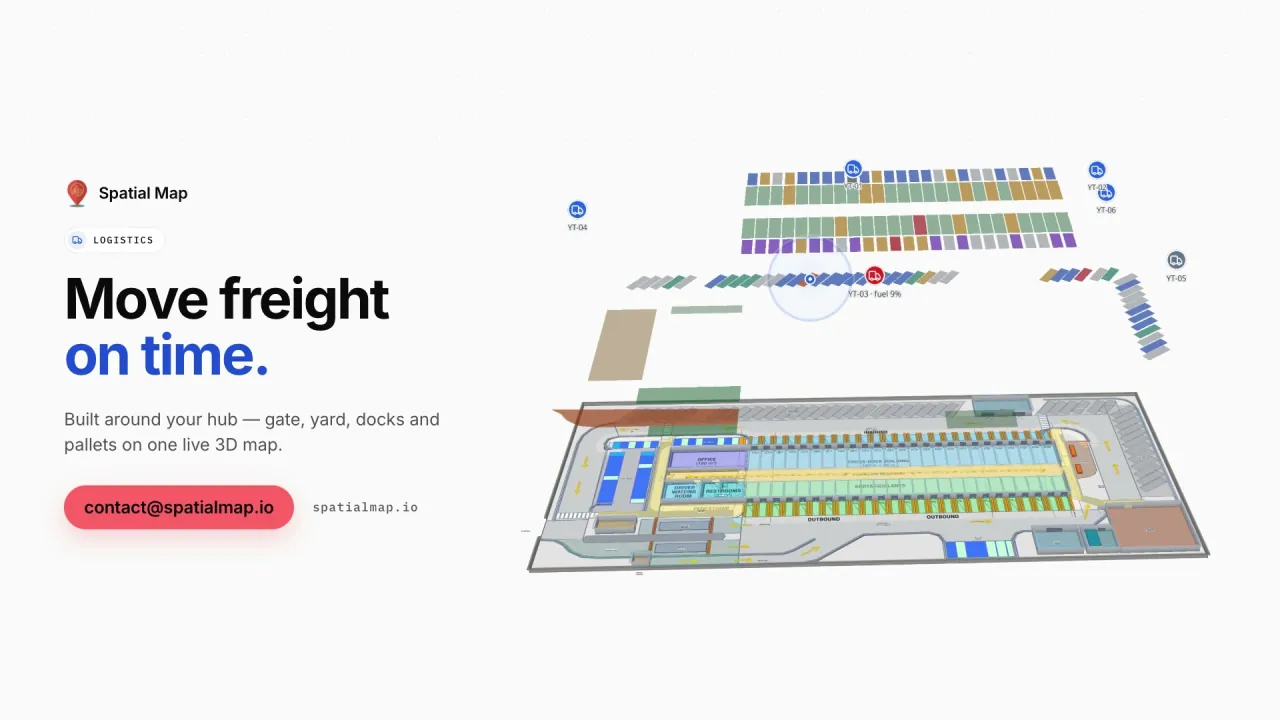
Logistics film: “Move freight on time” beside Eastport Cross-Dock and its trailer yard in 3D
The Logistics film: pallets moving door to door through the Eastport Cross-Dock, then the yard and gate with a congested truck lane.
Dock doors in the Eastport cross-dock demo
50
Yard slots in the Eastport demo
44
Apps to install — share links open in a phone browser
0
Free trial, up to 5 facilities, no card
7 days

The Port of Luanda and the single window

The Port of Luanda has several terminals, and a 2026 industry guide describes it as being expanded, with a new container terminal under construction. Behind its gate, goods are cleared, then moved to bonded sheds, depots and distribution warehouses in and around Luanda, and the city page, warehouse tracking in Luanda, goes through them.

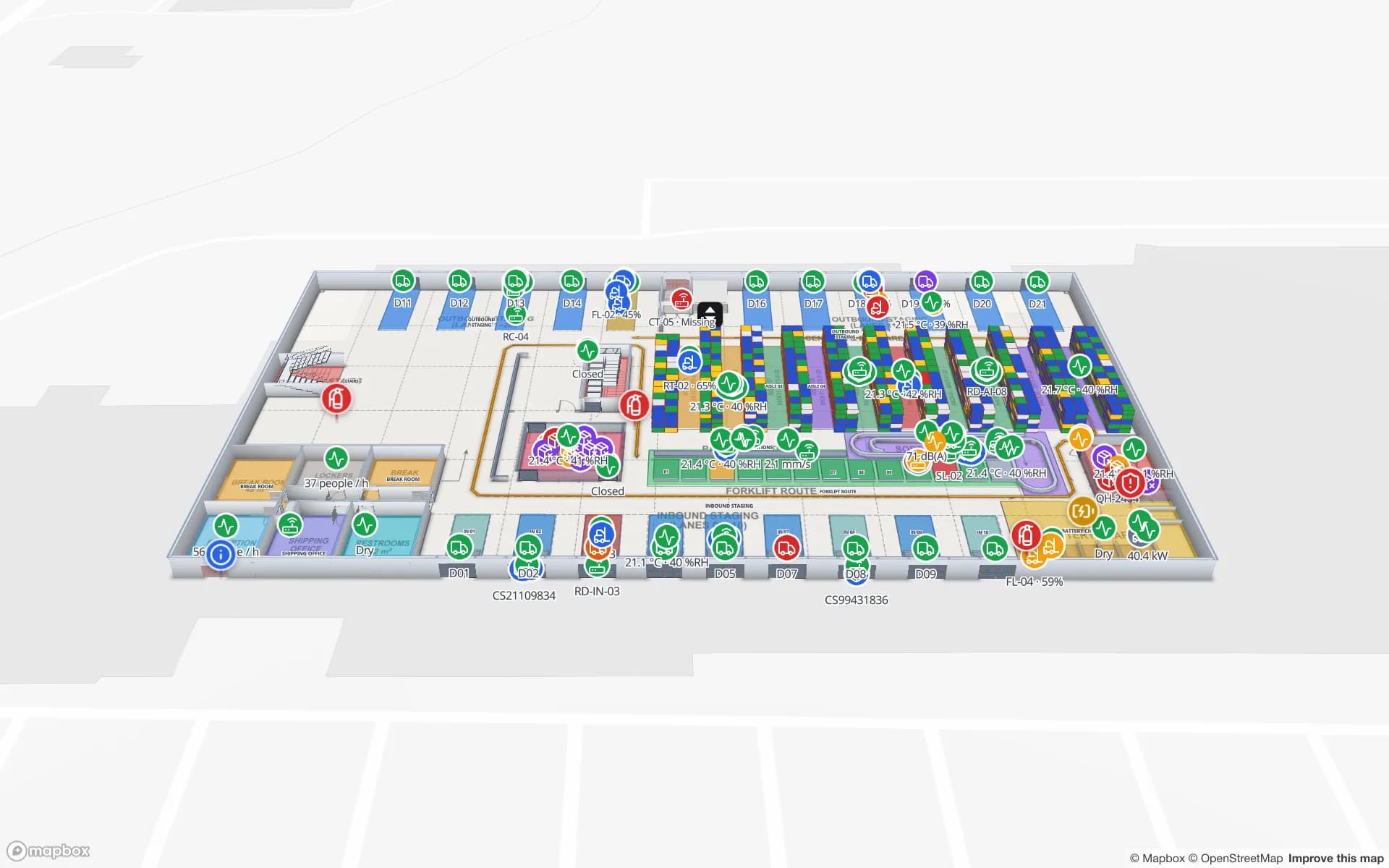
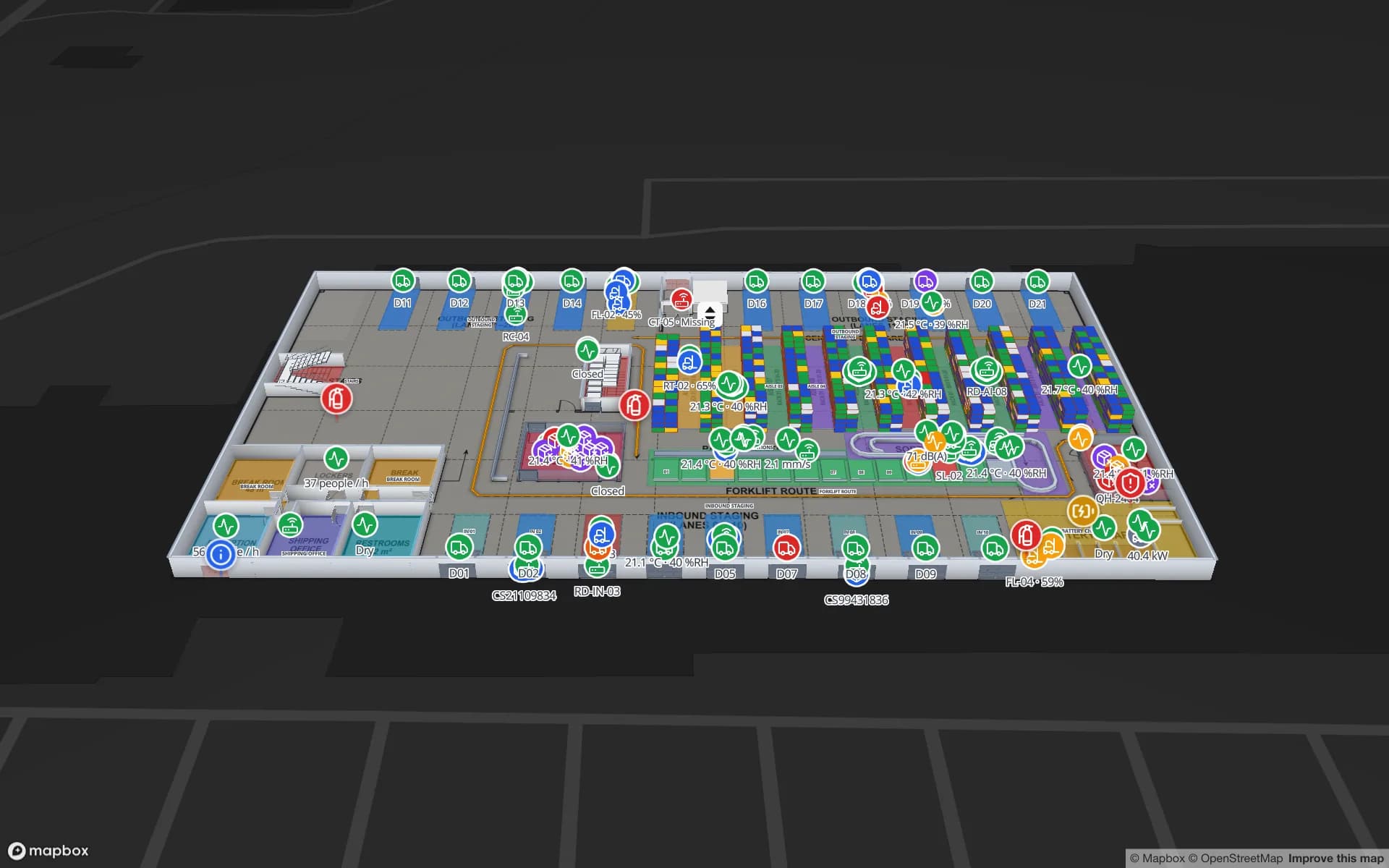
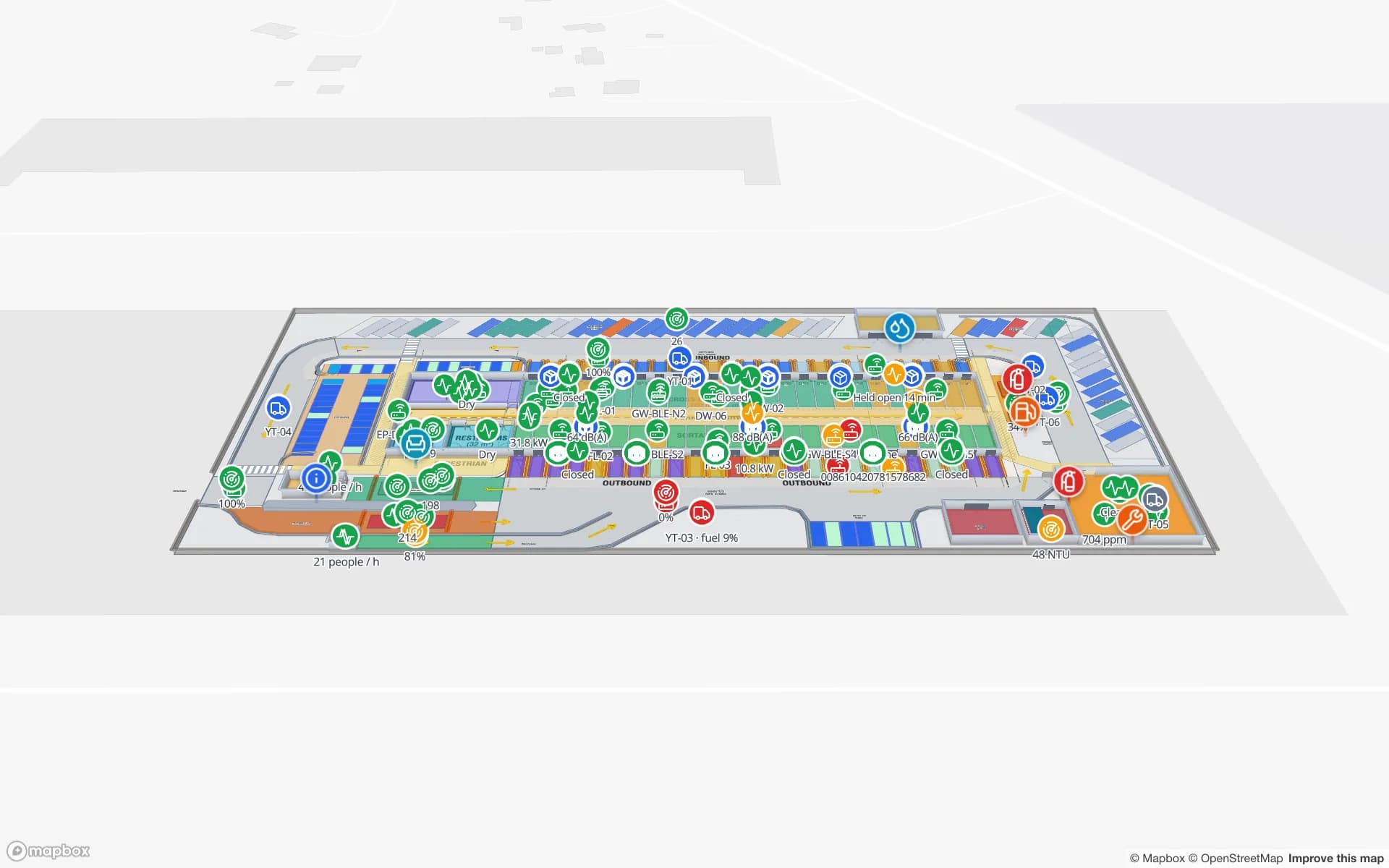
Foreign-trade paperwork is moving onto JUCE, the single window created by Presidential Decree 63/19 of February 2019; a German trade guide, citing the WTO’s 2024 review, says about 80% of the institutions involved are connected. Spatial Map does not connect to it, to customs or to terminal systems. It shows what is inside your own shed: which pallet is in which lane, which container was stripped into which bay. The Eastport demo shows 50 dock doors, 44 yard slots and 1,180 RFID pallets on one map.
Viana, Bom Jesus and the Luanda–Bengo zone

The Luanda–Bengo Special Economic Zone, which dates from 2009, is defined by Presidential Decree 81/21 of 2 March 2021 as two industrial reserves: Viana, with 4,717.91 hectares in the municipality of Viana, and Uala, with 2,860.08 hectares in Icolo e Bengo. The new international airport at Bom Jesus, also in Icolo e Bengo, was inaugurated on 10 November 2023 and opened in phases, with cargo first.

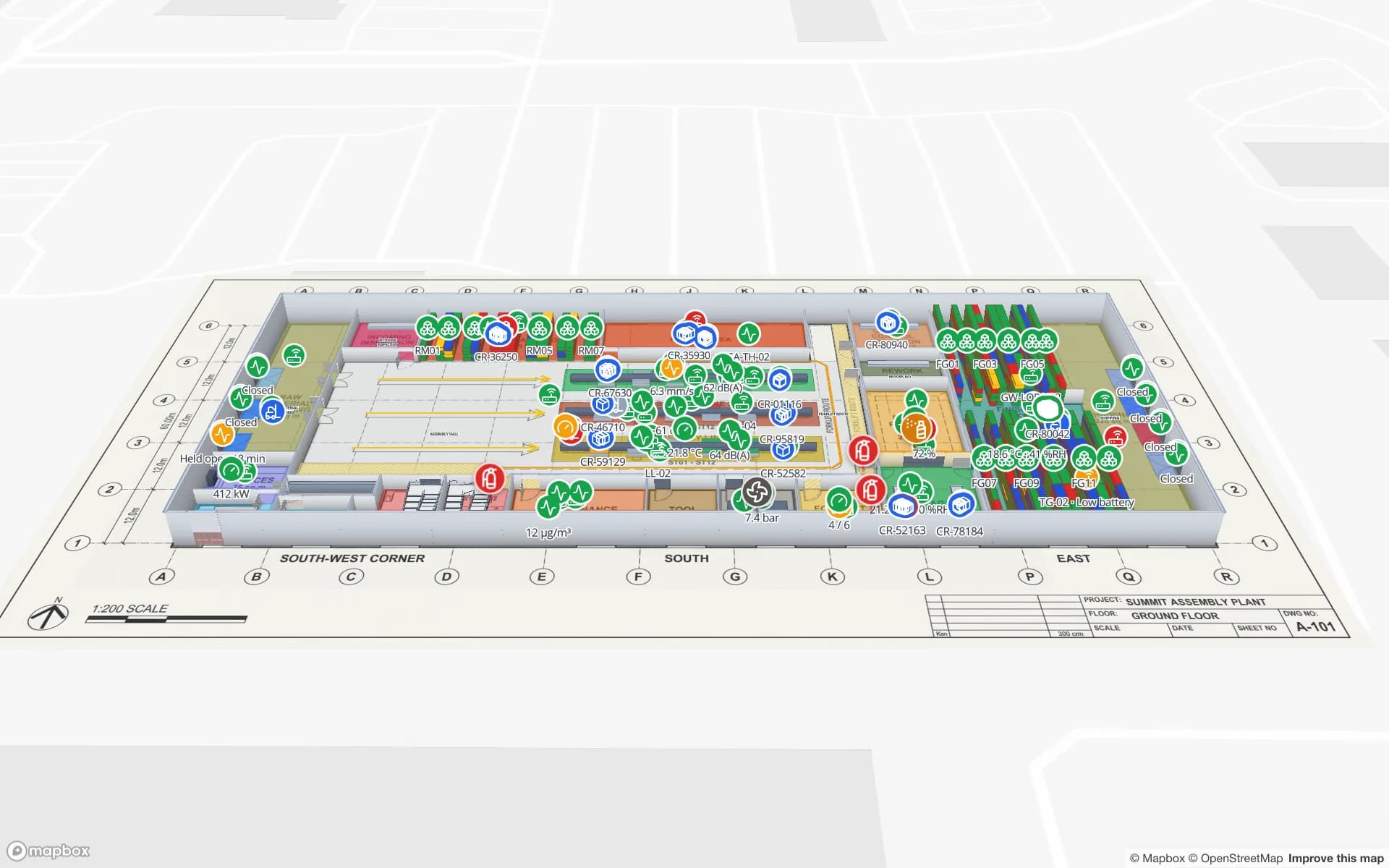
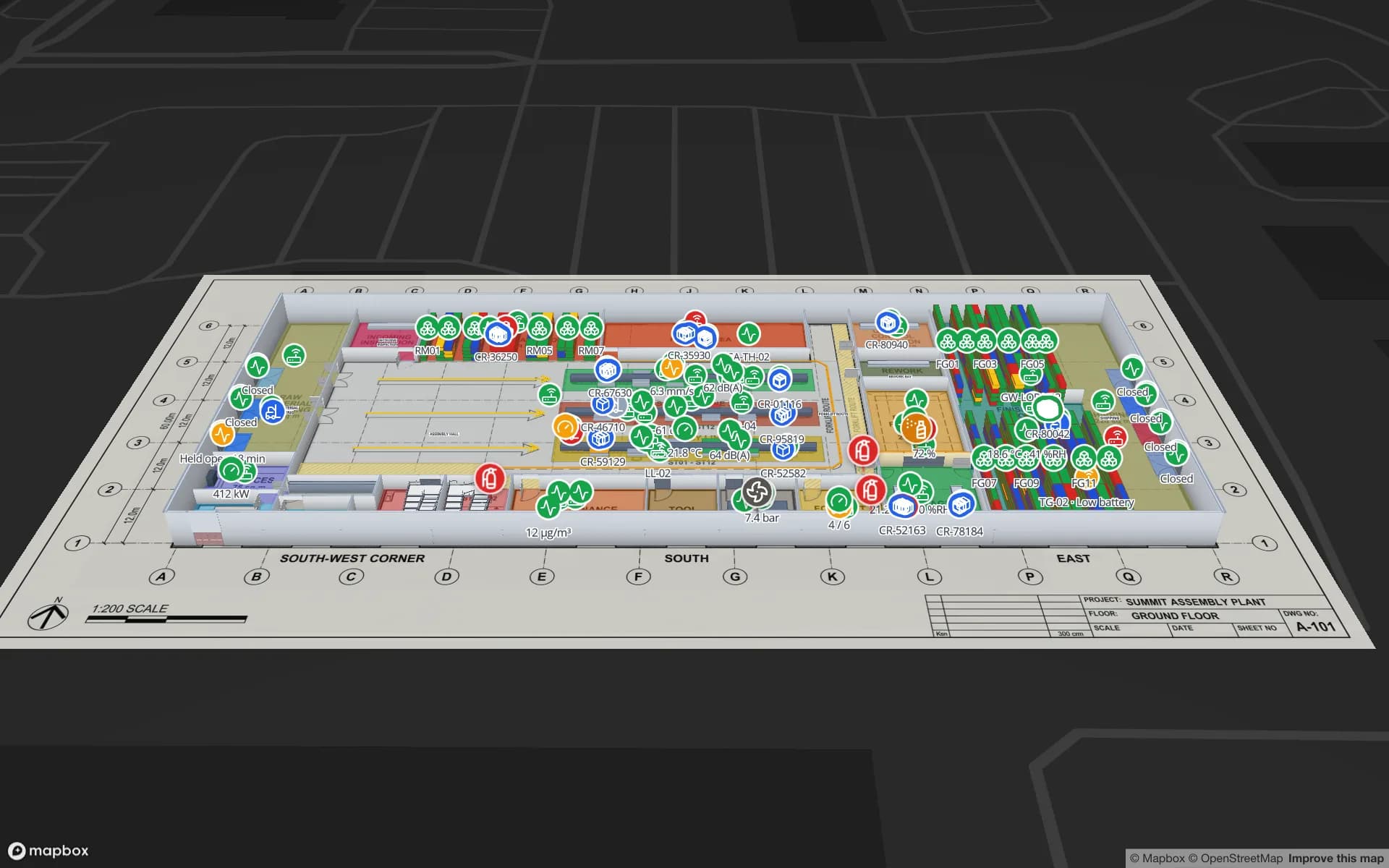
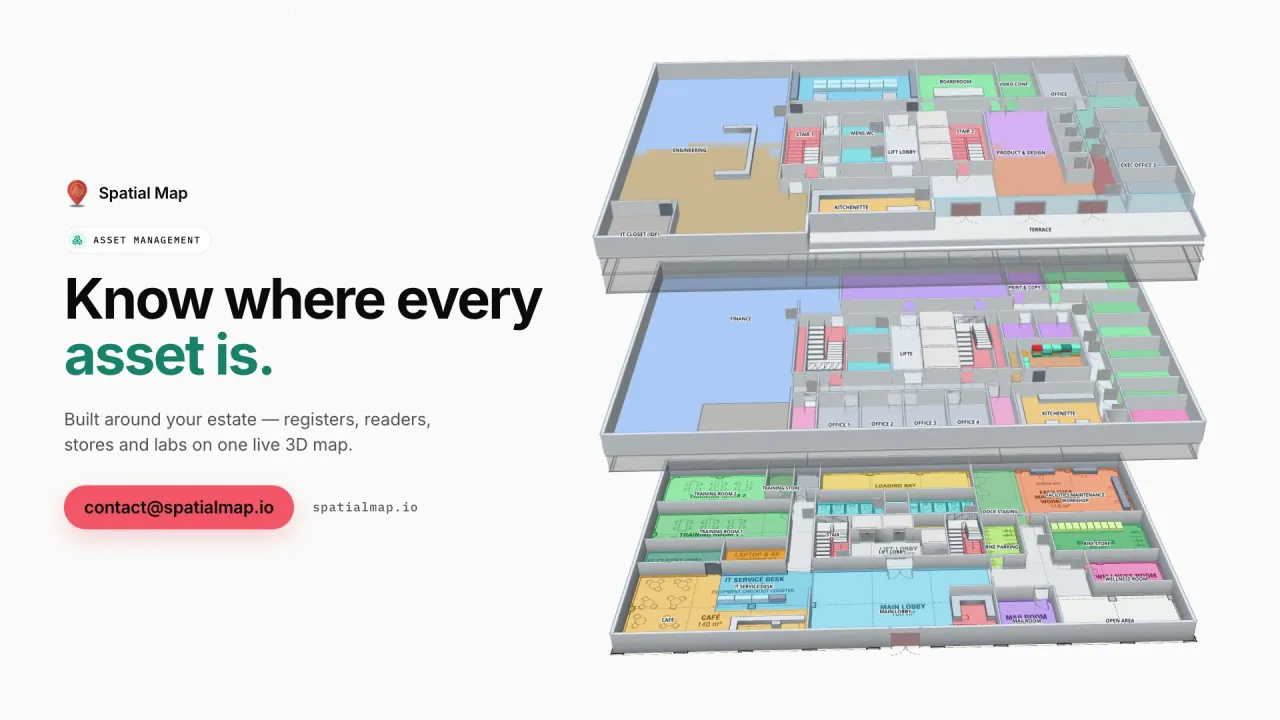
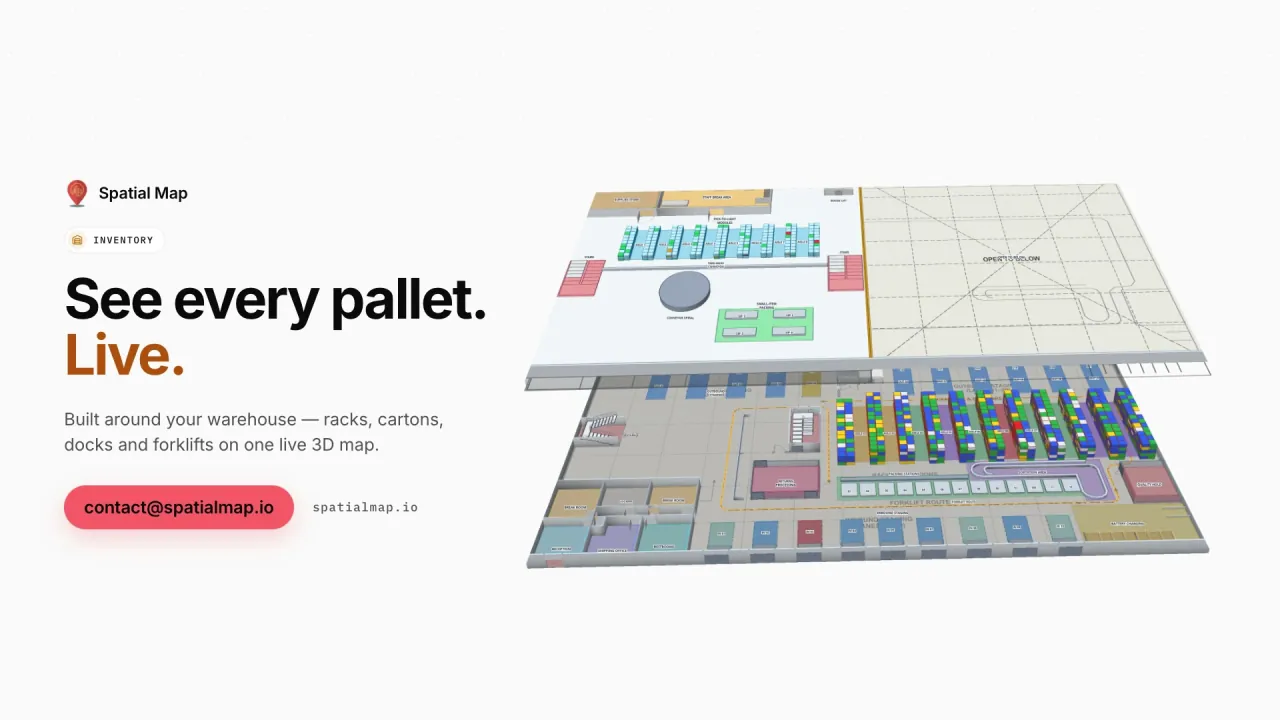
A large industrial reserve means big buildings with many roles: a plant with a raw-material store, lines and a finished-goods store, a distributor with racks and a trailer yard, a bonded shed with its own gate. Spatial Map draws each as a facility, colours racks from the stock list and shows RFID pallets at the door that last read them. The Summit demo shows lines, workstations and 867 rack locations on one plant, and the Crestline demo shows a 2,204-location distribution centre.

The Lobito corridor

The Lobito corridor links the port of Lobito to the Democratic Republic of the Congo and to Zambia’s Copperbelt. The port handled 931,000 tonnes in the first half of 2026, mostly minerals, according to industry press, and the railway runs freight while rehabilitation continues; the extension to Zambia had not yet begun in 2026 reporting. The rail operator has announced a target of 800,000 tonnes of international cargo in 2027.

Mineral cargo is a yard problem before it is a warehouse problem: stockpile areas, weighbridges, loading sidings and a gate. Draw them as areas and slots, colour each from the rows your weighbridge or yard system posts, and the map shows what is waiting where. The post on yard visibility, dock doors and trailers shows the pattern, and RTLS and UWB fits large yards where vehicles must be located continuously.

Oil and gas: yards, stores and equipment

Oil remains central to Angola’s economy: the national agency’s annual report puts average production at 1.04 million barrels a day in 2025, about 8% below the year before. The industry’s onshore footprint — supply yards, pipe stores, spares warehouses and workshops — is full of tools, drilling and handling equipment and consumables that move between stores, rigs and workshops.

Spatial Map keeps an asset register as a table (tag ID, owner, store, status), draws each store and workshop as an area, and shows the last-seen area of every tagged item, with a rule that colours items overdue for return. It does not connect to operators’ systems and makes no safety or compliance claim. RFID tool tracking covers the crib pattern, and the asset management solution shows the register-and-status approach.

Portuguese, and what the app does and does not speak

Portuguese is Angola’s official language. Spatial Map’s interface is English, French, Spanish, German, Arabic and Chinese, and there is no Portuguese interface: Angolan teams usually work in English, and names you type yourself — rooms, racks, report titles, column headings — can be in Portuguese and appear exactly as typed. Please do not expect translated menus.

Angola’s Law 22/11 of June 2011 covers personal data and is overseen by the APD, the national data protection agency. It matters when location data can be linked to a person, such as a driver’s or picker’s badge; tags on pallets, containers and tools do not identify anyone. Your legal advisers decide what applies. A data processing agreement is available and the security page explains how data is protected.

Also served

The same approach covers Lobito, Benguela, Huambo, Lubango, Namibe, Cabinda and Soyo. They have no pages of their own, and nothing needs to be installed at any of them: the map opens in a browser. Spatial Map is sold online, and our team works with customers in Angola remotely, by video call and through the contact form.

How Spatial Map does it

From floor plan to live map

  1. 01

    Import the plan

    A PDF, a DWG from AutoCAD R2004–R2018 or a scan of the warehouse, yard or plant.

  2. 02

    Draw the building and yard

    Racks, dock doors, numbered yard slots, gates and stores, or let AI Map draft them for review.

  3. 03

    Connect the data

    WMS, RFID middleware, a weighbridge or yard system posts rows to a table, or Spatial Map polls a REST endpoint.

  4. 04

    Share by phone

    Read-only links for drivers, agents and contractors, and in-app alerts for the team.

What teams in Angola map first

Port-side and bonded warehouses

Dock doors, yard slots and pallets staged by consignee.

Industrial plants and stores

Raw-material and finished-goods racks, lines and the trailer yard.

Equipment and tool stores

Registers by store, last-seen area and items overdue for return.

Distribution centres

Rack-level stock by bin and staging lanes before store runs.

See it on real demo facilities

Fictional names, real floor plans, live sensors, RFID, BLE tags and gateways — open any of them in the browser.

All 13 demo facilities

Questions from teams in Angola

No. The app is available in English, French, Spanish, German, Arabic and Chinese. Your own room names, rack codes, column headings and report titles can be written in Portuguese and appear exactly as typed.

Yes. A read-only share link opens in any phone browser, with only the floors and layers you choose, an expiry date and a view cap. There is no app to install, and Spatial Map has no released mobile app.

No. It shows your own buildings — dock doors, yard slots, racks and stores — coloured by the data your WMS, readers and sensors send. Customs, single-window and terminal records stay in their own systems.

Yes. Draw the gate, the weighbridge and numbered slots or stockpile areas, then colour each from the rows your yard system or scanner posts. An in-app alert rule can flag a unit that has been in a slot too long.

It is context when location data can be linked to a person, for example through a staff badge. Your legal advisers decide what applies. Spatial Map only shows the data you send it, and a data processing agreement is available.

No. Spatial Map is sold online and our team works with Angolan customers remotely, by video call and through the contact form. There are no local resellers or partners.

The same worldwide, in US dollars: a 7-day free trial for up to 5 facilities with no card, then Pro at $60 a month or $600 a year for up to 4 facilities. Larger networks are quoted as custom services.

Map your first Angolan site this week.

Start the free trial, or send us a floor plan and a sample of your WMS, RFID or yard data through the contact form.