Copenhagen · Medicon Valley, the airport and the Øresund

Cold chain monitoring in Copenhagen, room by room and door by door

Spatial Map shows live temperature, humidity and door readings from your own sensors on a 3D map of the cold room, store or dock where they are taken, with the History player to replay a night. Cold chain monitoring in Copenhagen sits in an unusual setting: a life-science cluster that crosses the Øresund into Sweden, an airport whose cargo mostly rides in the holds of passenger aircraft, a port at the mouth of the Baltic and food exporters shipping chilled loads. It is a map of what your sensors say, not a monitoring system of record.

No credit card. Runs in the browser. Pro is $60/month for up to 4 facilities. Book a demo

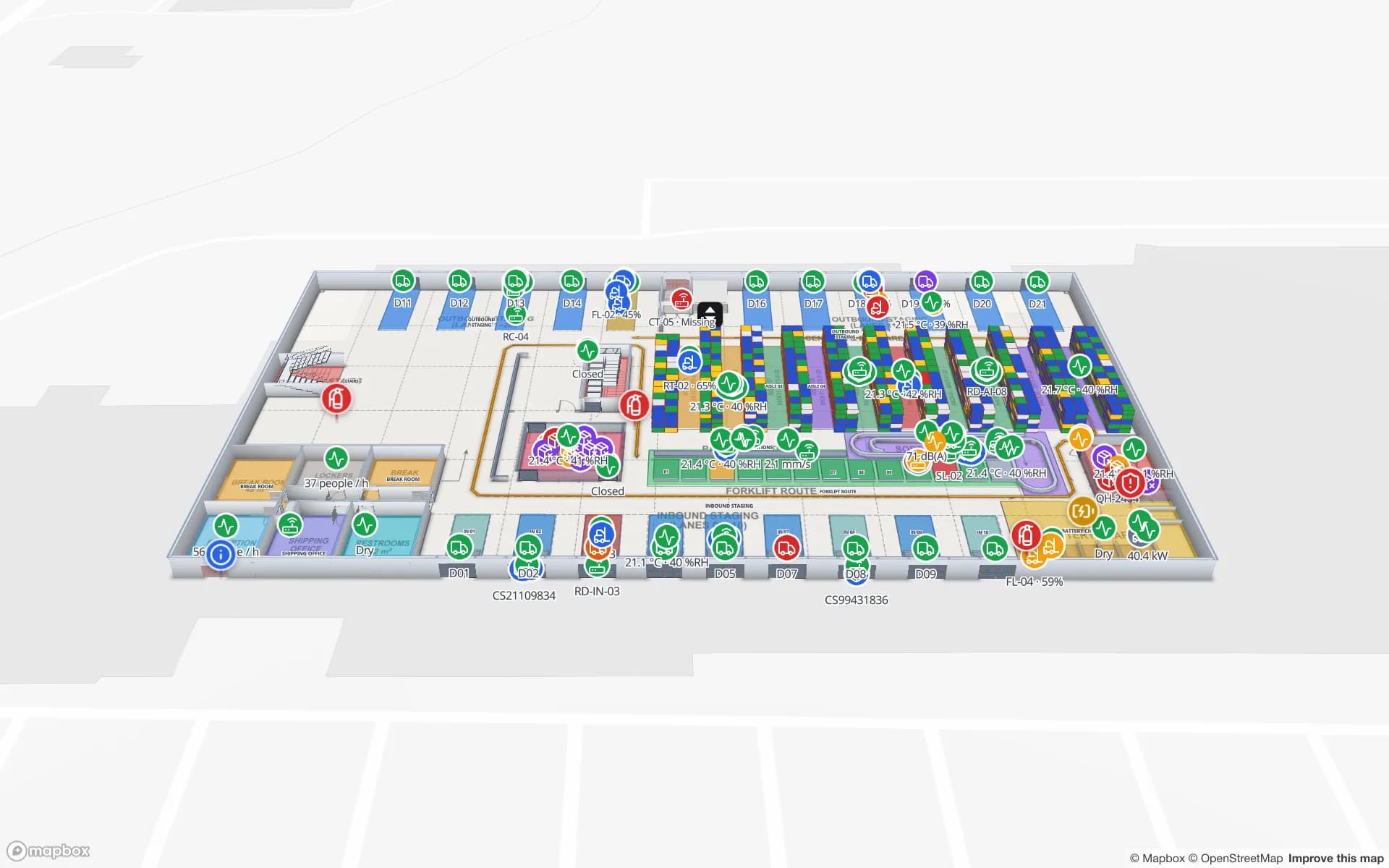
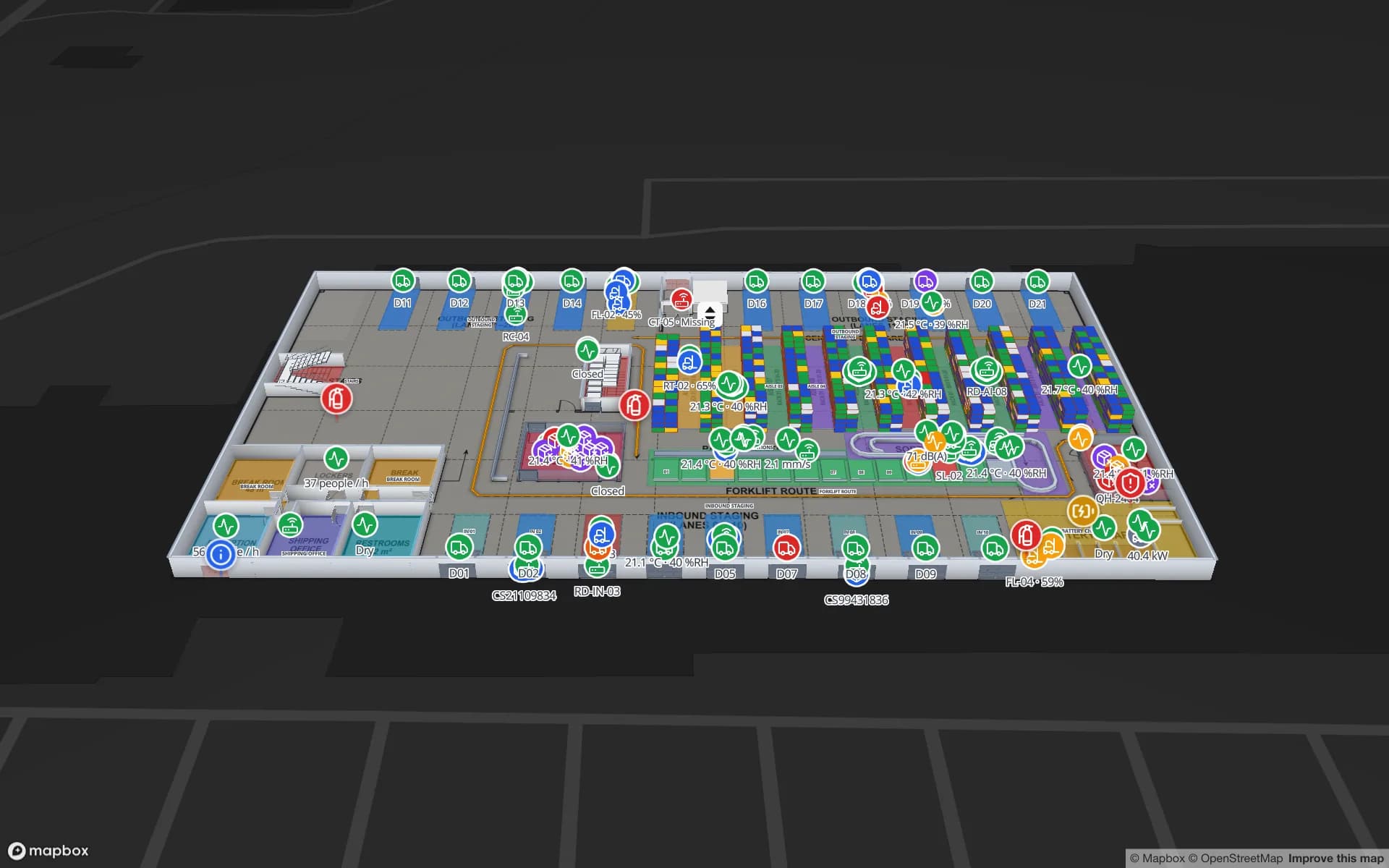
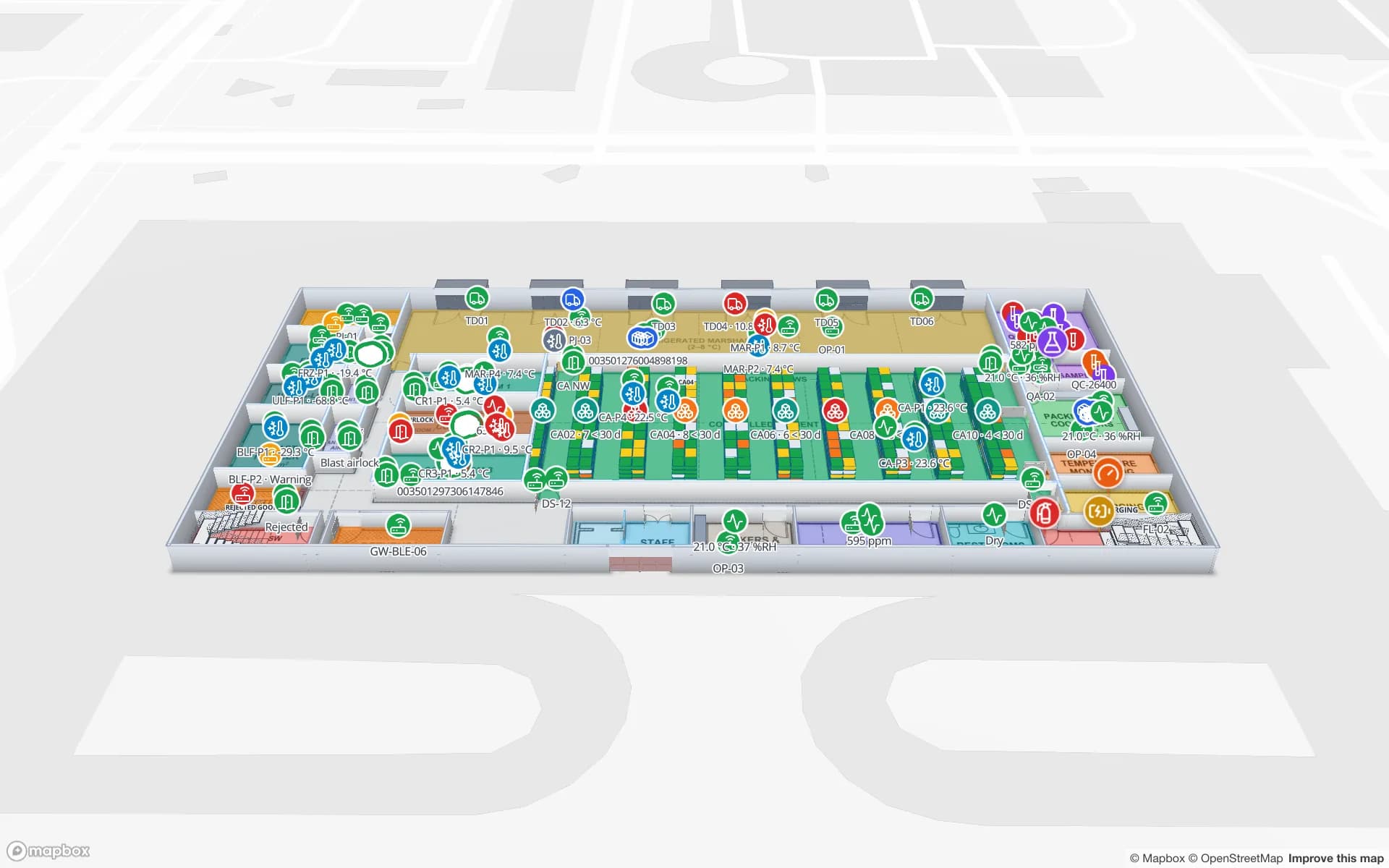
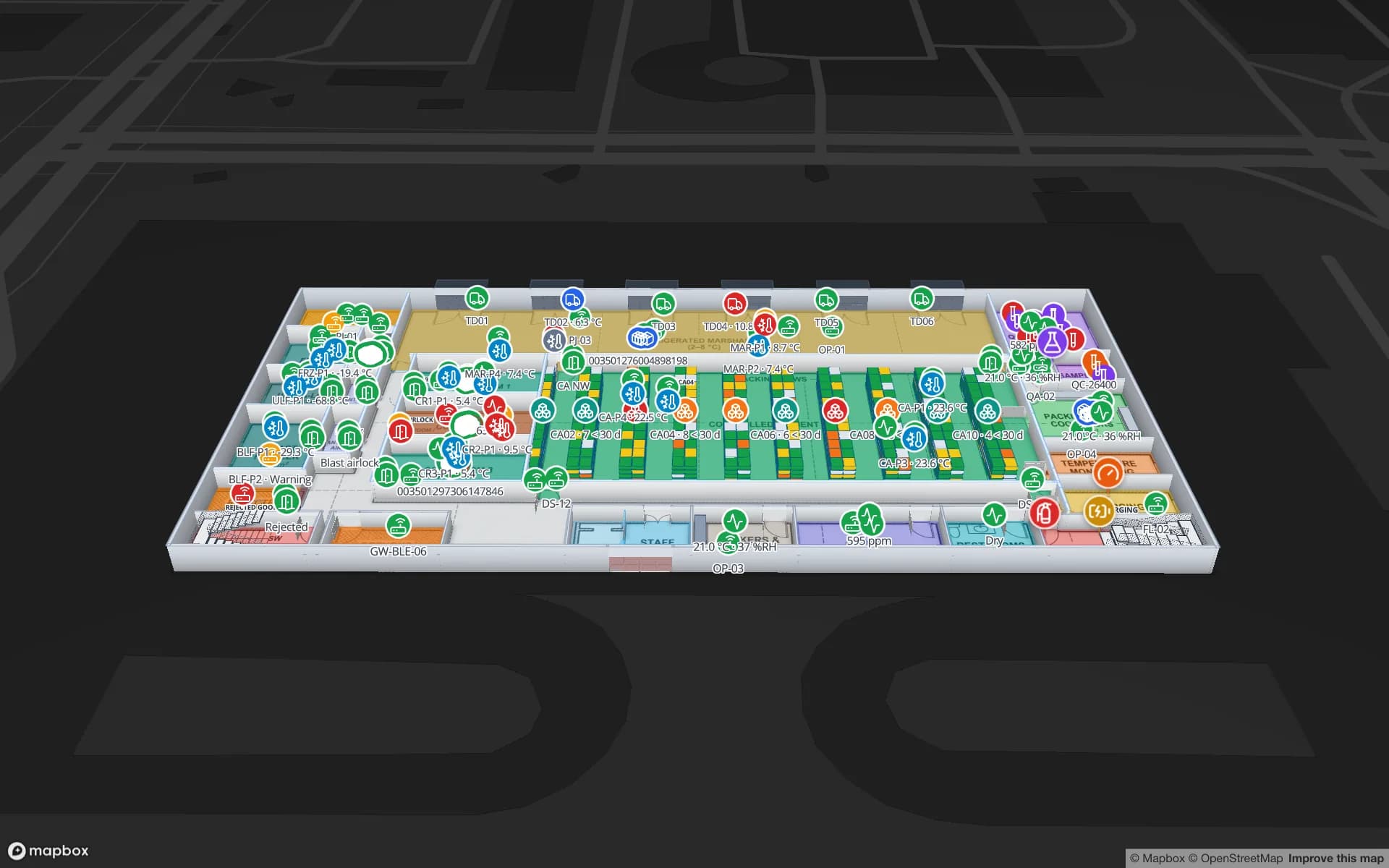
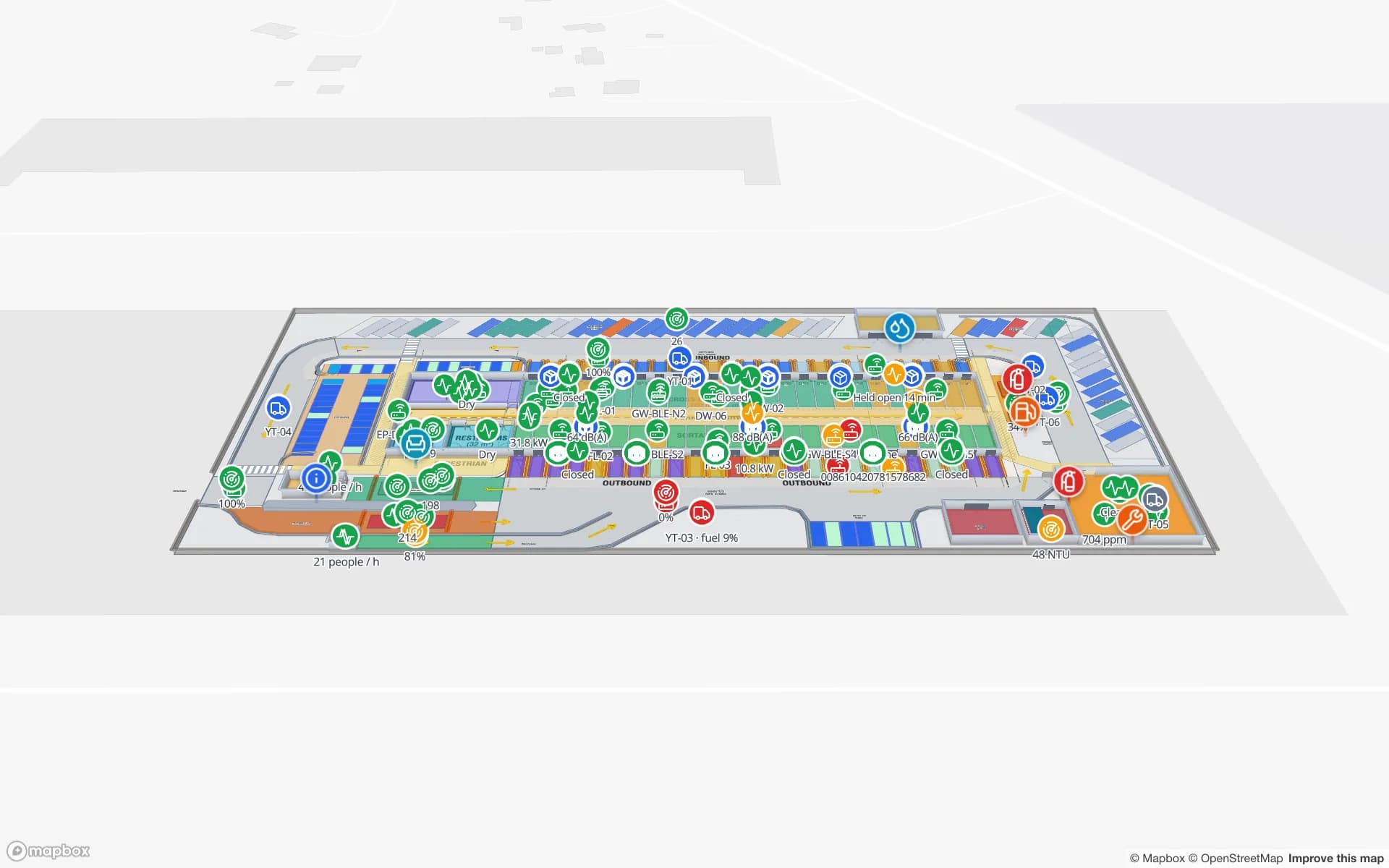
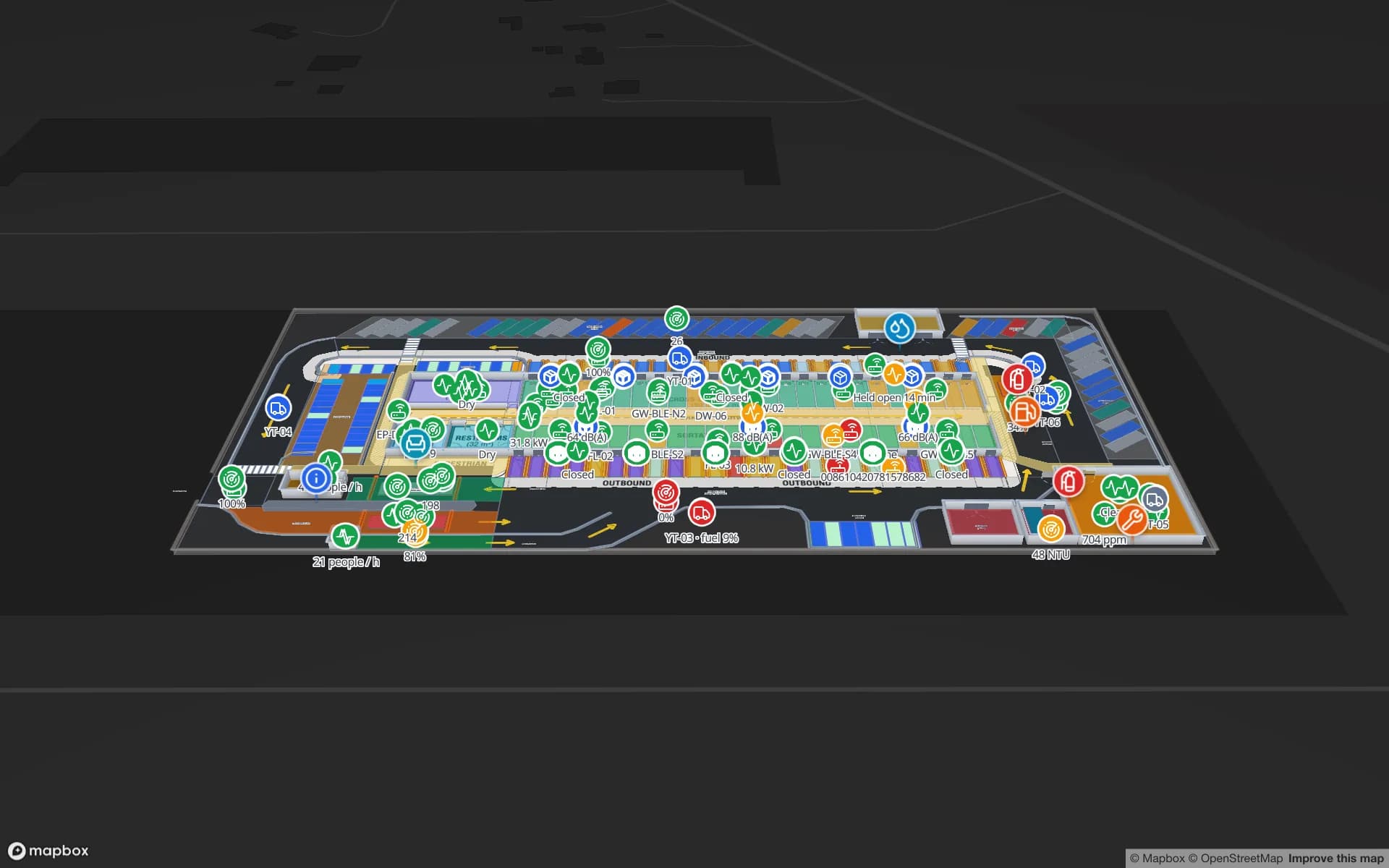
Polar Pharma — Cold Storage & QC Facility, a pharmaceutical cold store & qc lab demo, in the Spatial Map 3D viewer with live device markers
Polar Pharma — Cold Storage & QC Facility
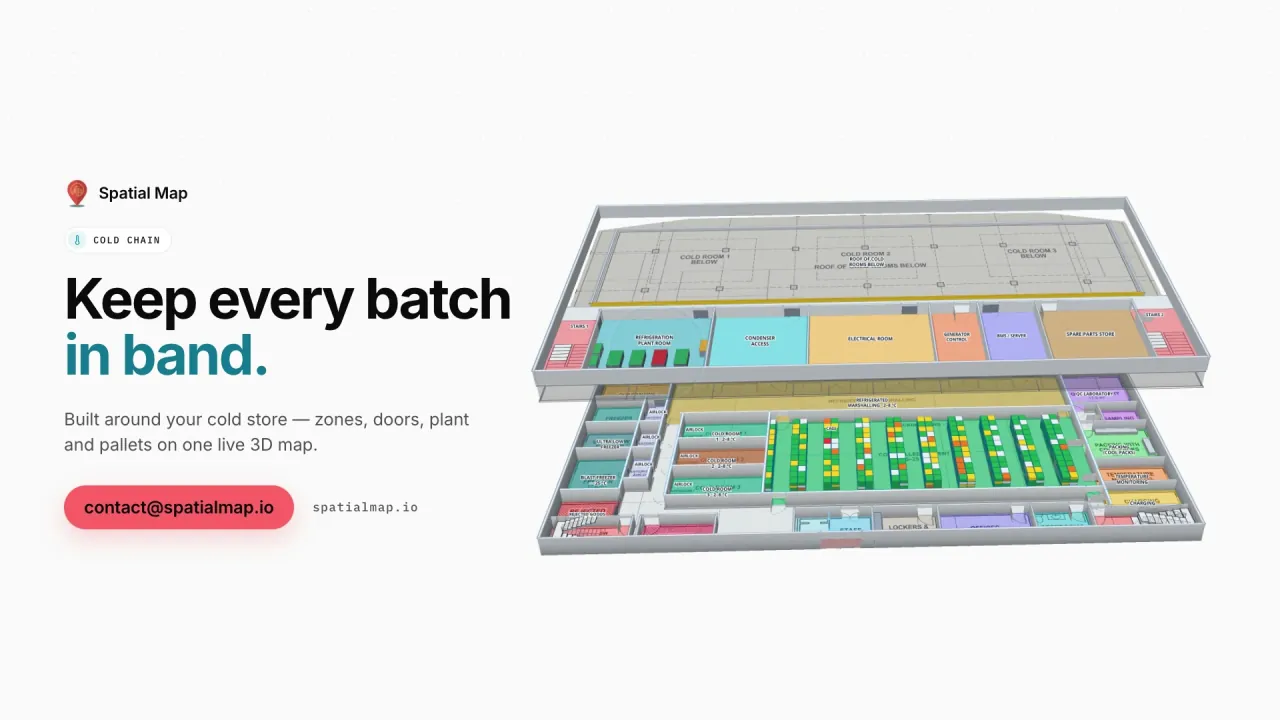
Polar Pharma Cold Storage & QC Facility, a demo cold store: temperature zones, cold rooms and docks with live probe, door and pallet markers, and 1,140 rack locations on two floors.
Rack locations in the Polar Pharma cold-store demo
1,140
Floors in the Polar Pharma demo
2
How often alert rules are checked, with alerts shown in the app
15 s
Free trial, up to 5 facilities, no card
7 days

Medicon Valley: a cluster that crosses a border

Medicon Valley Alliance describes the region as the bi-national life science cluster spanning Eastern Denmark and Southern Sweden: the Sjælland, Hovedstaden and Skåne regions, about 21,000 square kilometres with approximately 4.2 million inhabitants, 12 universities and 32 hospitals, 11 of them academic. The alliance itself notes that its figures may be outdated and points to its annual report for the latest.

Buildings in a cluster like that hold samples, reagents, stability chambers and kit that cannot sit at room temperature for long. Draw each floor, mark every cold room, fridge and freezer as an area, and colour it from the reading your logger or sensor platform sends: green inside range, amber near the limit, red outside it. A site on each side of the Øresund can sit in the same workspace as two facilities. The Polar Pharma demo shows the pattern; the pharma cold storage post explains how readings fit. Spatial Map makes no GDP, GMP or other compliance claim — your quality system stays the record.
Copenhagen Airport: cargo that arrives in the hold

According to Copenhagen Airports’ 2023 annual report, about 70 % of the air cargo at CPH is carried as belly cargo on passenger aircraft, and only a small proportion on dedicated freighters. That shapes a cargo shed. Consignments arrive in many small lots tied to passenger schedules, wait at a set temperature range for a short time and leave by truck.

Time out of the cold room is the number that matters, and a map can show it. Mark each dock door and staging cold area, send door and temperature readings to a table, and an alert rule “matches for N minutes” raises an in-app alert when a door stays open or a room stays warm. The handler’s own system remains the record of each consignment; Spatial Map has no link to airport or airline systems and shows only what your team sends. A cold-chain solution overview and warehouse sensor alert rules show how the rules are built.

The port and the cold stores behind it

Copenhagen Malmö Port calls itself the doorway to Denmark and Sweden and the gateway to the Baltic Sea. Its services include cars, containers, dry and liquid bulk, general cargo and ro-ro, and its container terminal works with ship-to-shore cranes and straddle carriers. The port’s pages say nothing about reefers or cold stores, so those details belong to whoever runs the terminal or the warehouse behind it.

In the warehouses nearby, the same question comes up everywhere: where is the chilled pallet now, and for how long has it been outside its range? Draw the cold store with its chambers and docks, read pallet tags at the door with RFID, and the map shows what is inside which room. Probes and door sensors coloured on the plan show the rest. The temperature monitoring page covers the sensor side and cold storage heatmaps shows how a heatmap finds the warm corner.

Chilled loads for export

The Danish Agriculture & Food Council describes Denmark as globally known for pig production and pig-meat processing; its 2021 statistics put 41.1 % of pigmeat products in EU-27 countries and 58.9 % in third countries. Whatever the product, a chilled export load has the same weak points: the dock, the staging lane and the minutes between cold room and trailer.

A cold-chain map for an export store shows each chamber, each reefer dock and the door states, with History to replay what happened between the evening shift and the morning one. Denmark’s country page covers the pork and dairy chain at the national level; here the point is the building — which door, which room, which hour.

What the map does not do

Say it plainly: Spatial Map does not measure temperature, has no validated or qualified status, and does not send email, SMS or push — alerts appear in the app, on the bell and the Alerts page, with Show on map. The alarm that wakes a person at night stays in your monitoring system or building management system, and the map reads from the same sensors so that anyone can see which room, which door and which pallet.

The sensors come from your integrator; our team can source devices on request, quoted per project, with warranty from the manufacturer, and gateways post rows to a table through the write API. See IoT sensor monitoring for the set-up.

Services for teams in Copenhagen

Where Copenhagen teams usually start depends on what is in the room:

  • Life-science and lab buildings start with temperature monitoring of cold rooms and freezers, then add asset tracking for shared instruments.
  • Cargo handlers and forwarders near the airport start with door and temperature readings at the docks, then inventory tracking for what is in each room.
  • Food exporters begin with the reefer docks and chambers, and RFID at the door only where the pallet count matters.
  • If you have no sensors, gateways or tags yet, our team can source them on request: see hardware and demo kits on request.
  • Integrations with your quality or building-management system, and other custom software, are built as client projects; the product runs as cloud or on-premises.

Also served nearby

The same page covers Ballerup, Glostrup and Høje-Taastrup, Hvidovre and Køge, Roskilde to the west, and, across the Øresund, Malmö and Lund. Nothing needs installing at any of them: the map opens in a browser.

How Spatial Map does it

From a cold room to a live cold-chain map

  1. 01

    Pick one cold area

    A freezer corridor, a cargo shed’s cold room or a chilled export store — wherever an excursion costs most.

  2. 02

    Draw rooms and doors

    Upload the plan, align it, and draw chambers, docks and door sensors as areas and markers named like your loggers.

  3. 03

    Connect your sensors

    Loggers, gateways and your monitoring platform post rows through the table write API, a polled REST endpoint or CSV uploads.

  4. 04

    Set bands and silence rules

    Style rules for in-range, near-limit and out-of-range, and in-app alerts for open doors and sensors that stopped reporting.

What Copenhagen teams monitor

Lab cold rooms and freezers

Probe readings and door states by room, with History to replay a night.

Airport cargo sheds

Dock doors, staging lanes and pallets staged for the right departure.

Chilled export stores

Chambers, reefer docks and rack locations coloured by stock and temperature.

Supermarket and retail fridges

Fridge and freezer sensors on the shop floor, with the stock room behind.

See it on real demo facilities

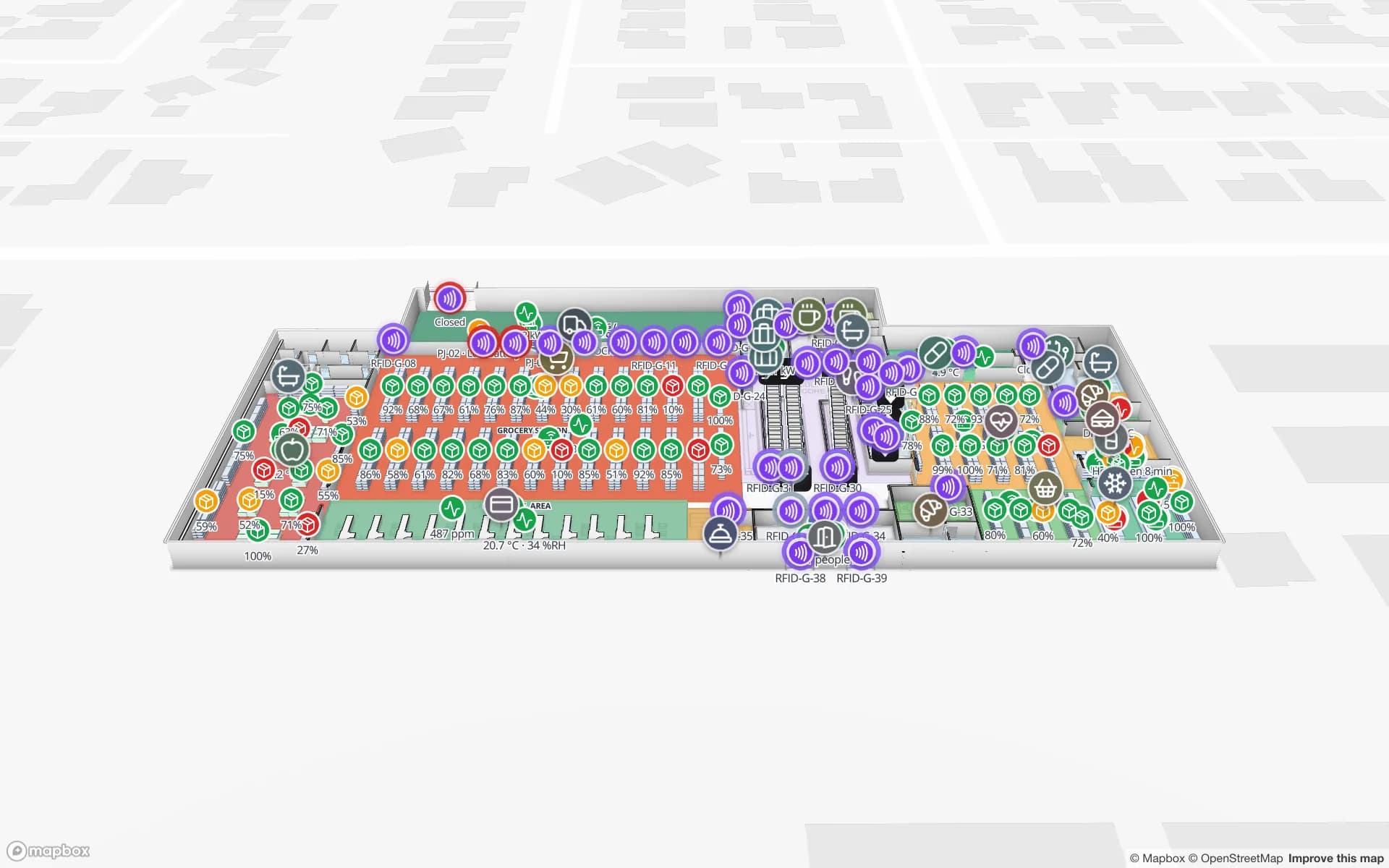
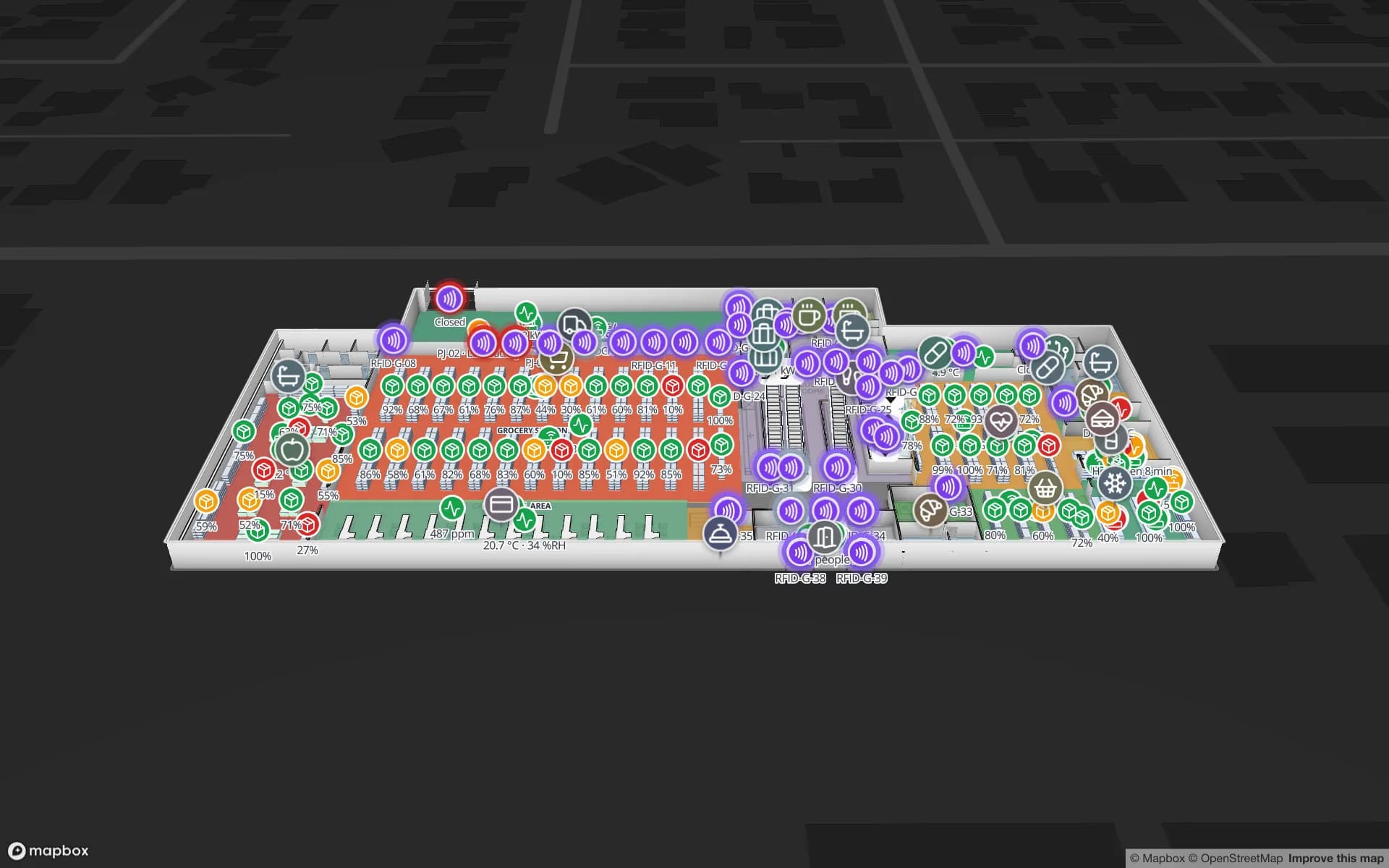
Fictional names, real floor plans, live sensors, RFID, BLE tags and gateways — open any of them in the browser.

All 13 demo facilities

Cold chain monitoring in Copenhagen — questions we get

No, and it makes no such claim. It shows readings that your own sensors and systems send, on a map. Your quality system, loggers and procedures remain the record for any regulated product.

Not Spatial Map. Alert rules raise in-app alerts on the bell and the Alerts page, with Show on map, but nothing goes out by email, SMS or push. Keep the escalation in the monitoring or building system that already pages your on-call person.

Yes. Each site is its own facility in the same workspace, with its own floors, tables and rules. Roles and share links control who sees what.

The History player replays rows from your tables on the map for a chosen period, and reports export to PDF, Excel, CSV or JSON. It shows what your sensors reported; it does not replace your own records.

No. Spatial Map is sold online and our team works with customers in Denmark remotely, by video call and through the contact form. There are no local resellers or partners. The interface is in English, not Danish; your room and report names can be in Danish, æ, ø and å included.

In US dollars, the same worldwide: a 7-day free trial for up to 5 facilities with no card, then Pro at $60 a month or $600 a year for up to 4 facilities. Sensors and gateways, if you ask us to source them, are quoted per project.

Map one cold room before the next night shift.

Start the free trial and open the Polar Pharma demo, or send us the plan of a lab floor, a cargo shed or a chilled store and a sample of your sensor readings through the contact form.