
Indoor positioning system in India: technologies, rules and where it fits
Indoor positioning system in India: BLE, UWB, Wi-Fi and RFID for malls, airports, metro and warehouses, UHF RFID frequency rules and the DPDP Act, explained.
Why indoor positioning is a live question in India
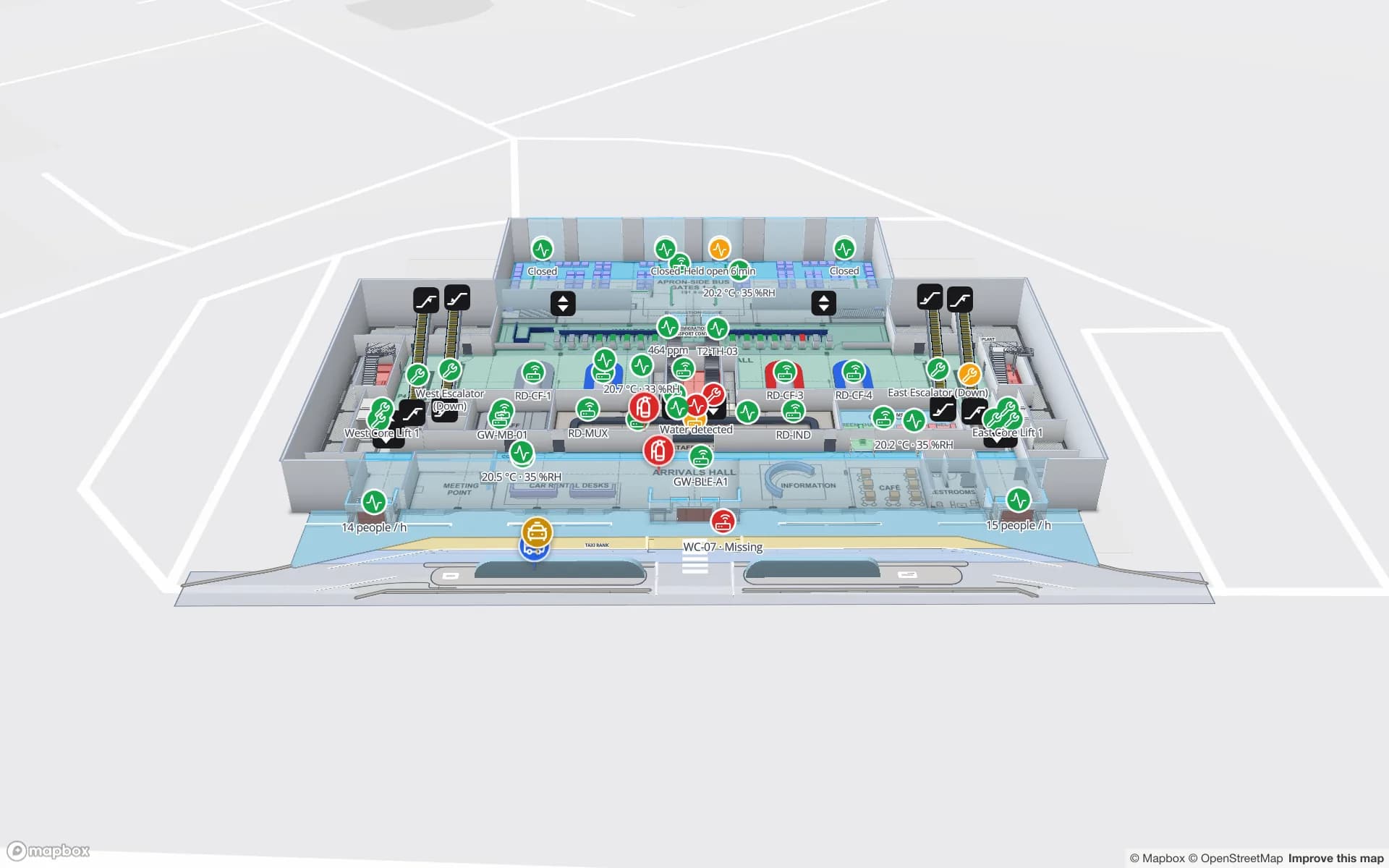
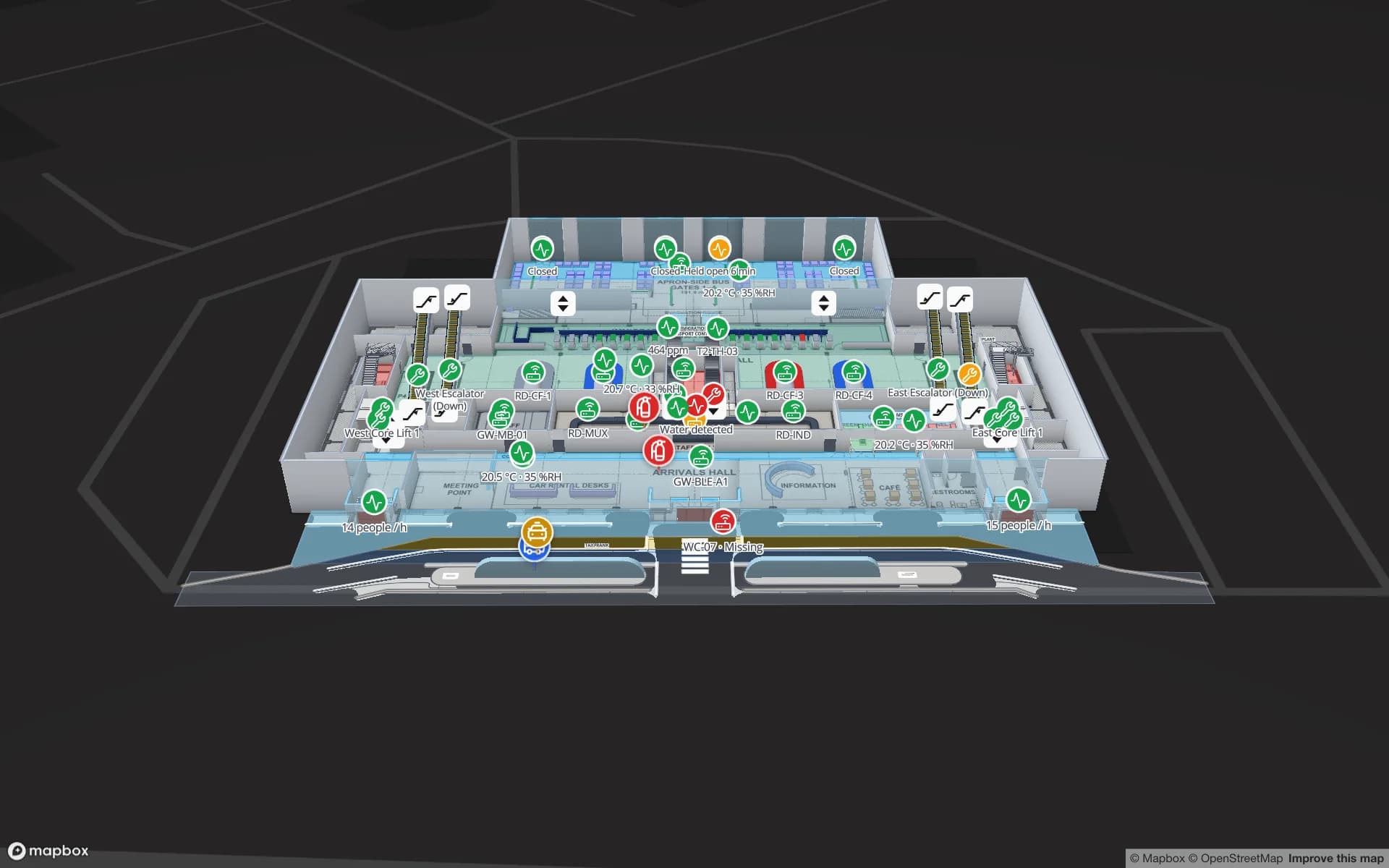
Spatial Map is an indoor map and digital twin app that shows the positions your indoor positioning system reports — it does not compute them itself. An indoor positioning system in India works the same way as anywhere else: satellites cannot see inside buildings, so GPS, and India’s own NavIC system, stop being useful at the door. Something inside the building — beacons, anchors, access points or readers — has to take over.
The demand is easy to see. Indian cities have large multi-level malls, airports that handle very high passenger numbers, fast-growing metro rail networks in several cities, and big warehousing and logistics clusters on the edges of the major metros, such as the Bhiwandi area near Mumbai. Each of these has people, equipment or stock that someone needs to find quickly — and each needs a different kind of positioning.
The technologies, compared
| Technology | How it works | Typical result | Good fit |
|---|---|---|---|
| BLE beacons + phone app | The phone hears fixed beacons and estimates its own position | Room level to a few metres, depending on beacon density and calibration | Visitor wayfinding in malls and airports |
| BLE tags + gateways | Gateways hear battery tags; an RTLS engine estimates zone or x/y | Zone or room presence; x/y with dense gateways | Equipment, trolleys, staff in large buildings |
| UWB tags + anchors | Time-of-flight between tags and fixed anchors | Often quoted at sub-metre for industrial systems | Forklifts, tools, safety zones |
| Wi-Fi (fingerprinting, RTT) | Devices measured against access points | Coarse, metres to tens of metres | Trends and floor-level counts with existing Wi-Fi |
| UHF RFID readers and portals | Passive tags read when they pass an antenna | Presence at a reader or zone, not continuous position | Pallets, cartons, IT assets, baggage |
| Phone sensors (PDR, geomagnetic) | Step counting and magnetic signatures, often fused with BLE | Varies widely by building | Apps that must avoid installed hardware |
Every accuracy figure depends on the building: concrete, steel racking, glass and crowds all change radio behaviour. Ask vendors for results in a pilot on your own floor, not a brochure number. The RTLS software page explains how positioning engines and the software that displays positions divide the work, and BLE asset tracking goes deeper on tags and gateways.
What each kind of venue usually needs
| Venue | Typical goal | Common technology |
|---|---|---|
| Malls | Visitor directions, footfall by zone, tenant and facilities operations | BLE beacons with an app; people counters; Wi-Fi counts |
| Airports | Locating wheelchairs, trolleys and ground equipment; crowding at security and gates | BLE tags and gateways; RFID for baggage; counters |
| Metro stations | Crowd flow on platforms and concourses, staff on duty, equipment status | Counters and cameras with on-site analytics; BLE for staff |
| Warehouses | Forklift and picker positions, pallets at docks, stock by location | UWB or BLE for vehicles; UHF RFID at docks and portals |
| Factories | WIP carriers, tools, people in hazardous zones | RFID between stations; UWB or BLE for tools and safety |
Radio rules for positioning hardware in India
- UHF RFID — India uses the 865–867 MHz band for UHF RFID. It has been licence-exempt for low-power use since the mid-2000s, and the current short-range device rules (notified in December 2021) cover 865–868 MHz on a non-interference, non-exclusive basis, with power and bandwidth limits. Buy readers configured for the Indian band — equipment set for the US 902–928 MHz band is not the same thing.
- BLE and Wi-Fi — the 2.4 GHz band, and parts of 5 GHz for Wi-Fi, are licence-exempt for low-power equipment, again with conditions.
- UWB — confirm the regulatory position for the exact equipment with your vendor before you commit.
- Equipment approval — wireless equipment imported or sold in India generally needs the relevant WPC approval; your hardware supplier should provide it.
Positions of people and the DPDP Act
Tracking a pallet raises no privacy question. Tracking a badge worn by a named employee, or a phone that belongs to a shopper, does. India’s Digital Personal Data Protection Act, 2023 governs digital personal data, and the Digital Personal Data Protection Rules, 2025 were notified in November 2025, with most obligations phasing in over the following 18 months. In broad terms, an organisation deciding why and how data is processed (a “Data Fiduciary”) must give notice, have a lawful basis — consent, or one of the “legitimate uses” the Act lists — keep data secure, and limit it to its purpose.
- Track equipment, not people, where you can. A wheelchair tag answers most airport questions.
- Count rather than identify. Zone counts from counters or Wi-Fi need no identity.
- For staff tags, be specific. Say what is tracked, where, during which hours and why. The Act lists certain employment-related legitimate uses; how they apply to your tracking is a question for counsel.
- Keep positions briefly. Raw positions for days or weeks, aggregates for longer.
- Secure the data and know where it goes. Including the vendors that process it for you.
Where Spatial Map fits
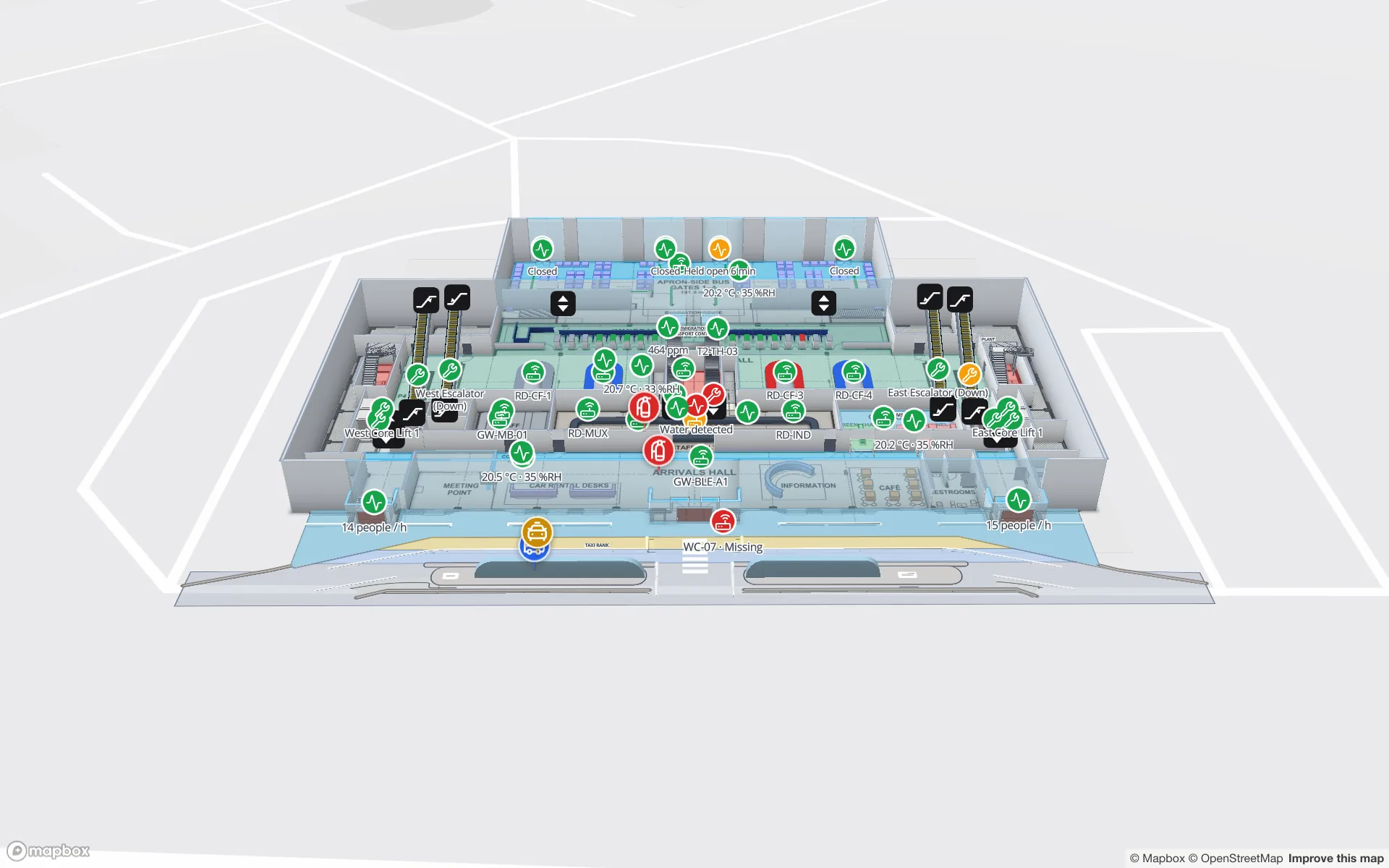
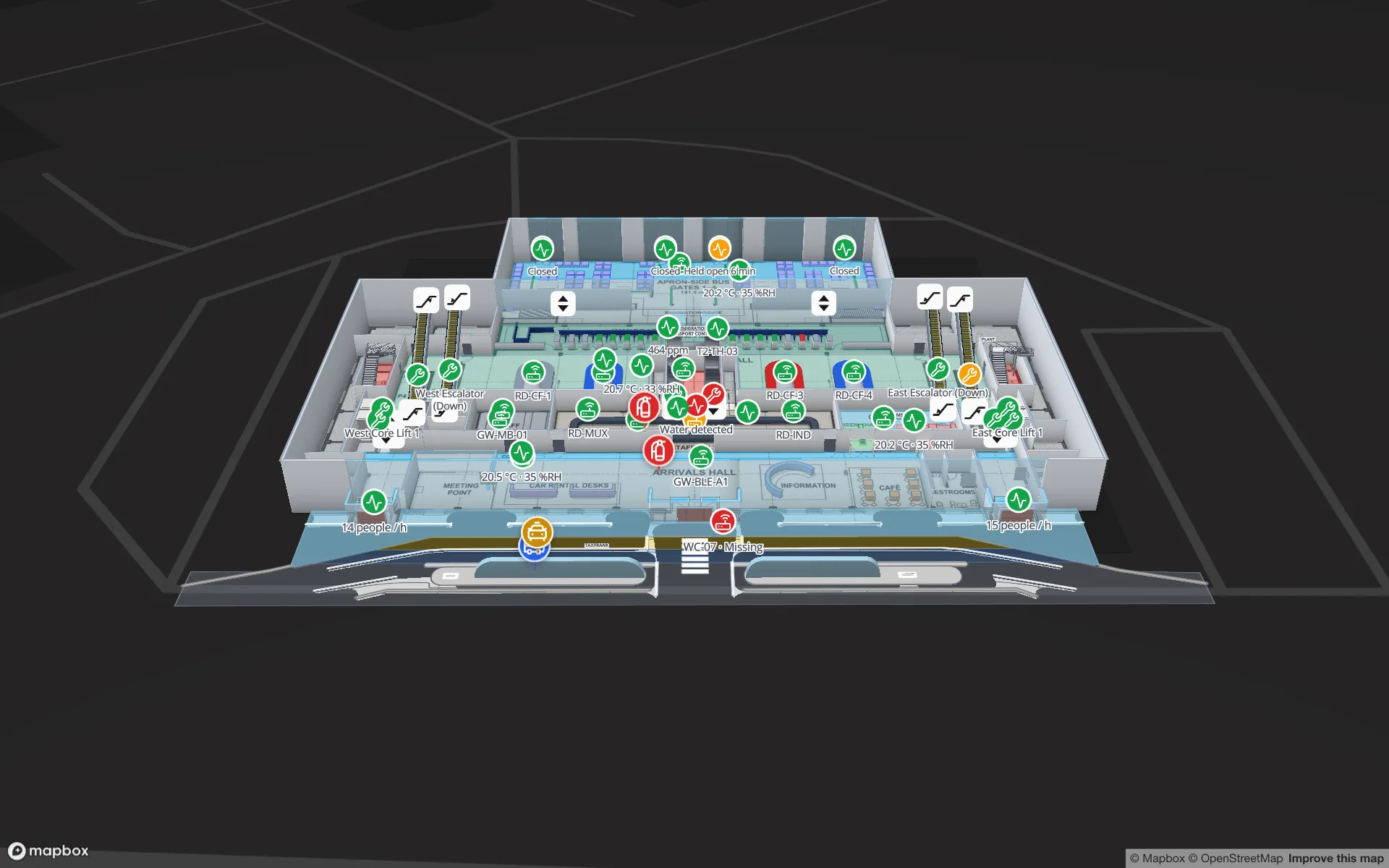
Spatial Map sits after the positioning system. Your IPS, RTLS engine or RFID middleware writes positions or reads into a table over HTTP; Spatial Map places them on a multi-floor map of the building, next to the racks, rooms, sensors and stock they relate to, and keeps each row’s history. It is hardware-neutral: it does not sell tags, and it does not compute BLE or UWB positions from signal strength.
- Floor plans from PDF, DWG or images, traced into rooms, walls, doors, stairs and lifts — or drafted by AI Map for you to review.
- Walking routes across floors through stairs, lifts and escalators, with a step-free option. There is no live “blue dot” for the visitor.
- In-app alerts on any table, such as “trolley not seen for 60 minutes”.
- An app interface in English, Spanish, French, German, Arabic and Chinese; there is no Hindi interface today.
- Published pricing in US dollars: a 7-day free trial, then Pro at $60 a month or $600 a year for up to four facilities. The MIT open-source edition can be self-hosted on your own servers.
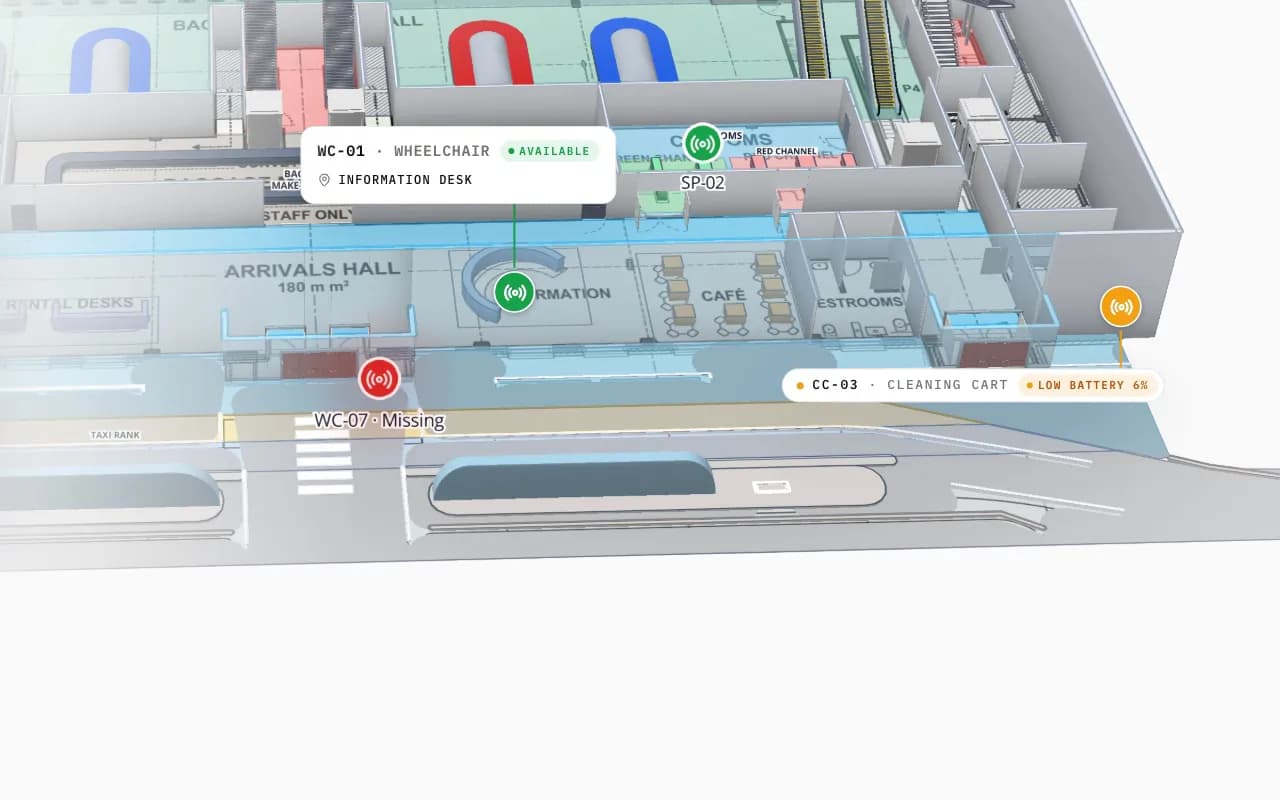
For the building side — malls, airports, warehouses and how to map them — see indoor mapping in India, and the Spatial Map India page for RFID and the rest of the platform.
Questions to ask an IPS vendor
- What accuracy did you measure in a building like ours, and how was it measured?
- How many beacons, anchors or gateways per 1,000 m², and who maintains their batteries?
- Is the hardware configured and approved for Indian frequency bands?
- How do positions leave your system — an API, webhooks, MQTT, files — and in what format?
- Where is the data stored and processed, and how do you support our DPDP obligations?
- What does a pilot on one floor cost, and what would make it a failure?
Try the platform your data belongs on.
Spatial Map turns spreadsheets, sensor streams, and CAD drawings into one live 3D facility view — nothing to install, seven-day free trial.
Keep reading
- IndustryData center RFID asset tracking: audits, door portals and reconciliationRFID turns data centre audits from weeks of barcode scanning into repeatable cabinet sweeps — if you plan the reconciliation. Tags, readers, portals, exceptions and sensors, and how it all sits on a map of the hall.
- IndustryIndoor wayfinding for airports and malls: what actually worksSigns do most of the work; an up-to-date map does the rest. What helps people find their way in terminals and malls, and what blue-dot positioning really gives you.
- IndustryRFID in the Middle East: retail, logistics and cold chainRetail estates, re-export logistics hubs and cold chains in extreme heat drive RFID in the Gulf. What each gains, the usual traps, and region-specific checks.