Kuwait · RFID tracking

RFID tracking in Kuwait for co-op supermarkets, malls and stores

Grocery in Kuwait has a shape you find almost nowhere else: much of it runs through the cooperative societies, each serving its own residential area with a main market and branches restocked from a warehouse. Roll cages and pallets leave that warehouse every morning, and not all of them come back. RFID tells you what left and what arrived; Spatial Map shows it on a map of the warehouse and of every branch — next to mall stores, cold stores and oil-sector spares stores that face the same question.

No credit card. Runs in the browser. Pro is $60/month for up to 4 facilities. Book a demo

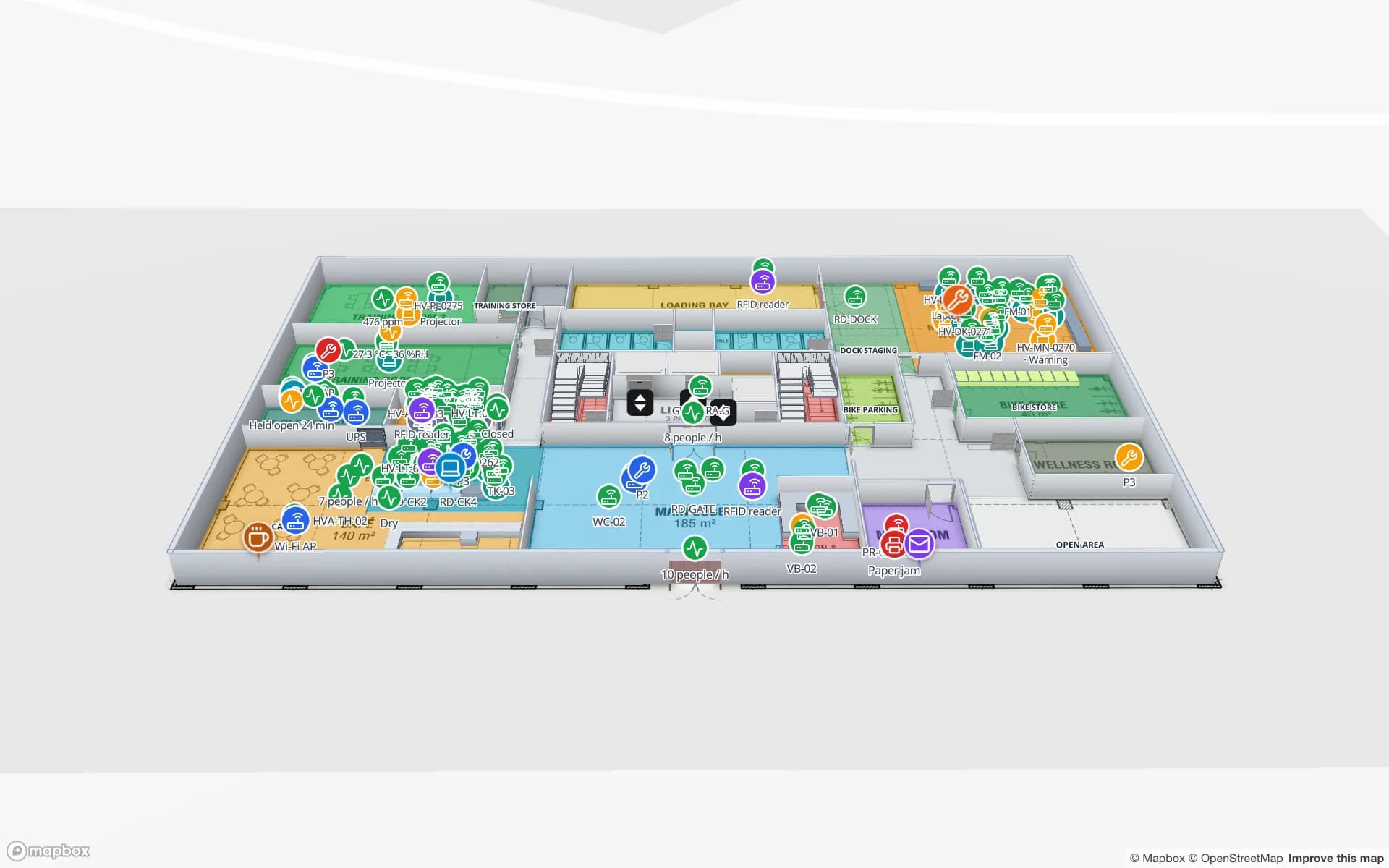
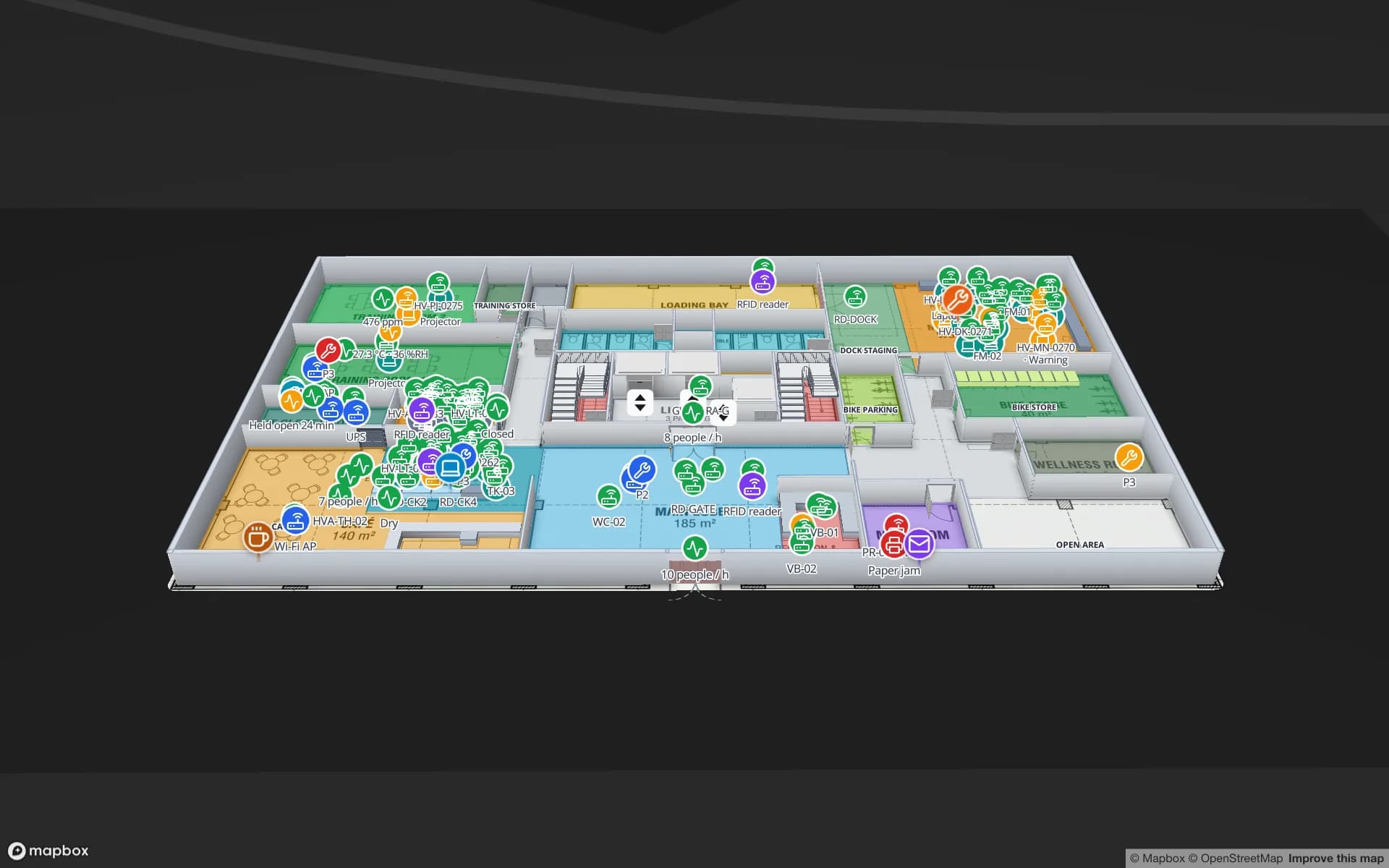
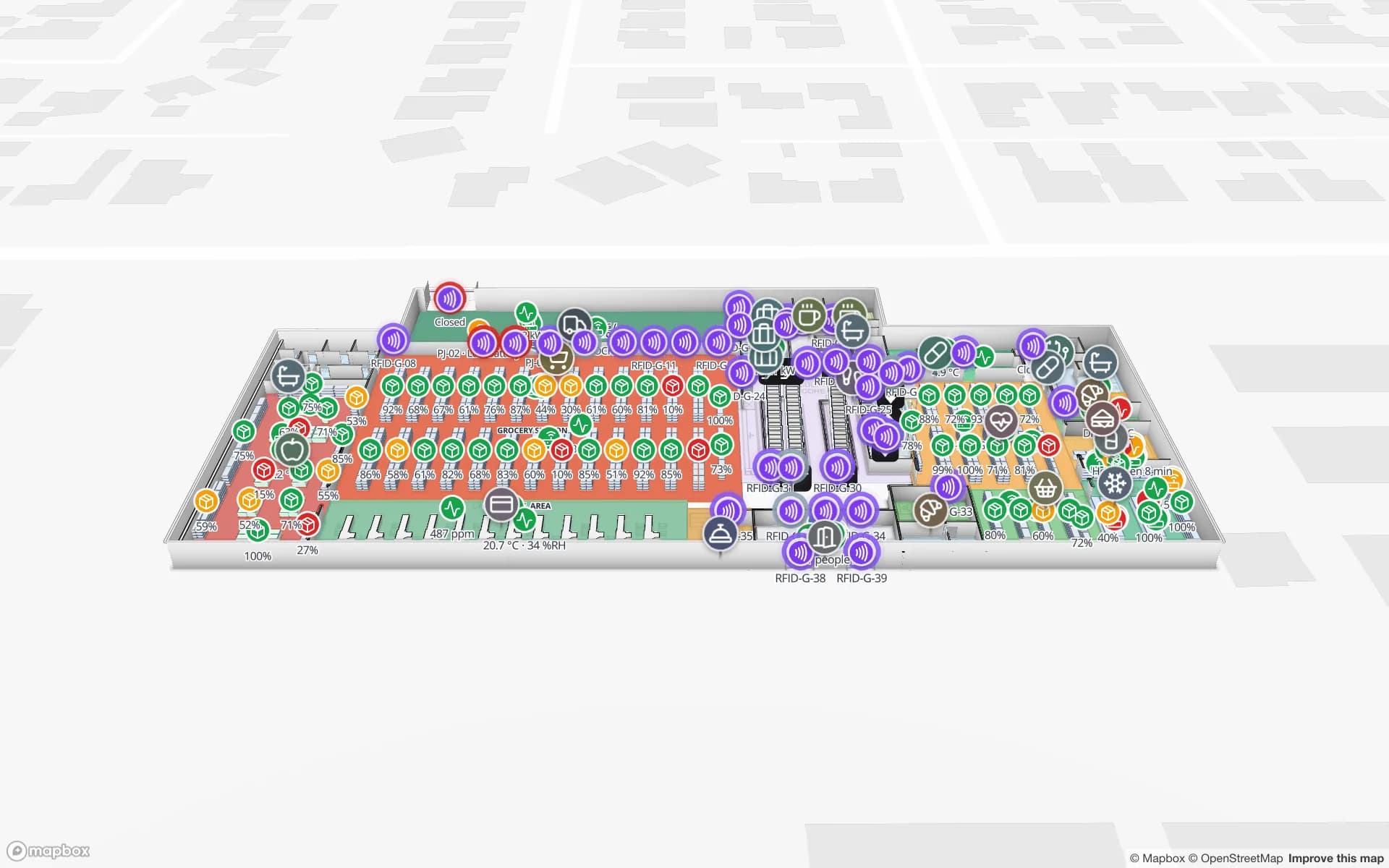
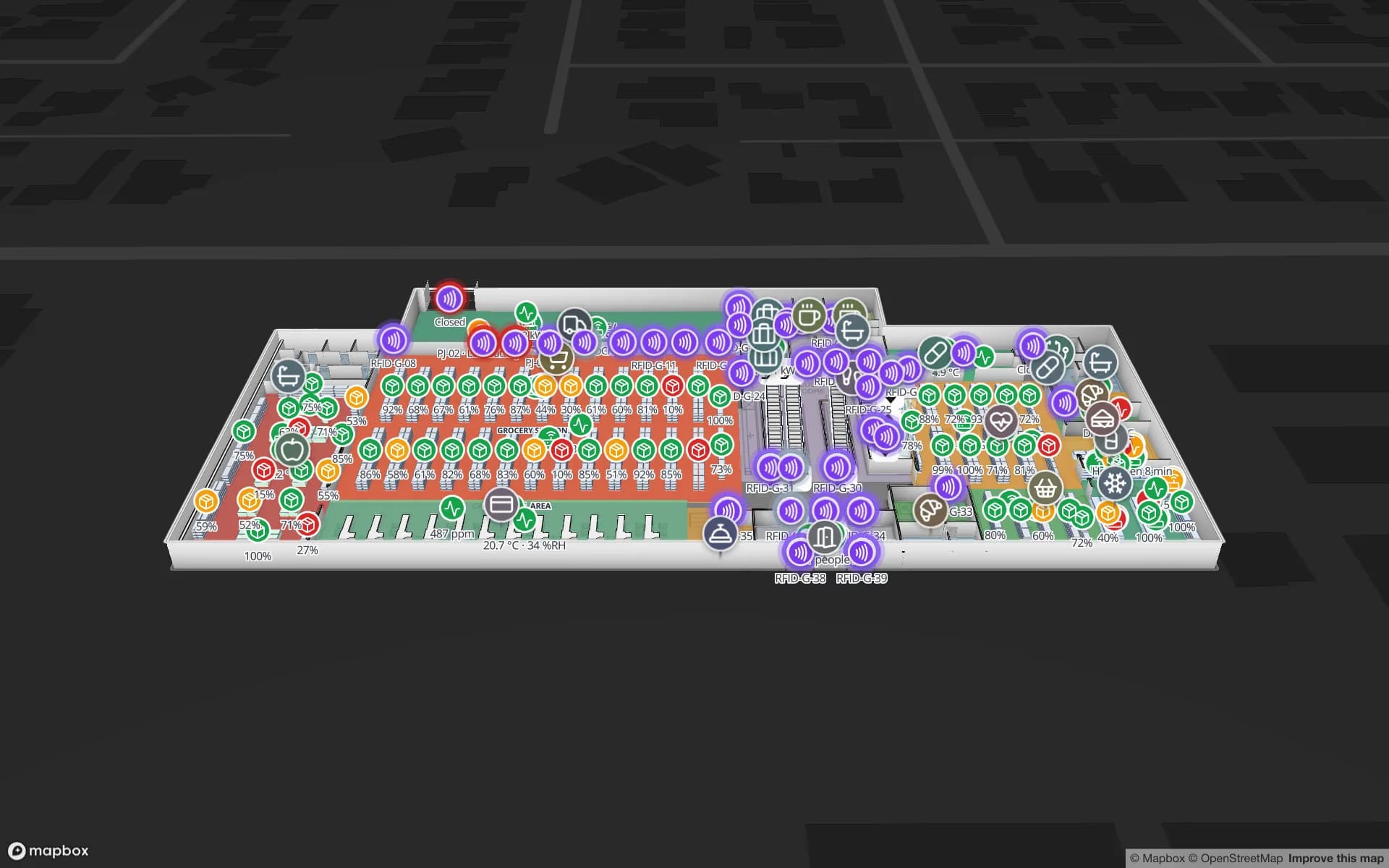
Retail Mart Store, a three-floor retail store demo, in the Spatial Map 3D viewer with live device markers
Retail Mart Store
Retail Mart, a three-floor demo store: 85 RFID readers at doors, escalators and lifts, shelf and department stock, and fridge and freezer sensors.
RFID readers in the Retail Mart demo store
85
RFID pallets in the Polar Pharma cold-chain film
647
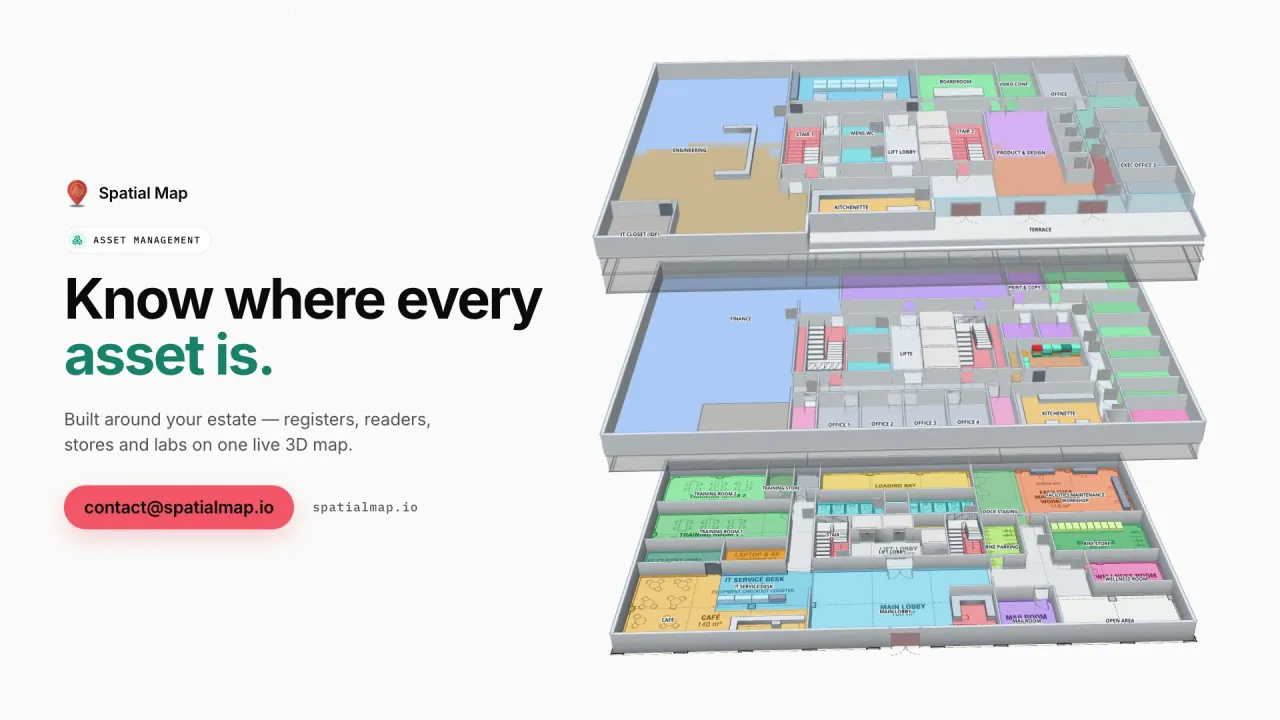
Registered assets across the three asset-management demos
796
App languages, Arabic and English included
6

Where Kuwaiti RFID projects start

Four settings come up again and again: the co-op supermarkets and the warehouses behind them, retail in Kuwait’s large malls, cold stores for a country that relies heavily on imported food, and the materials stores and tool cribs of the oil sector. Goods reach all of them through Shuwaikh Port in Kuwait City, Shuaiba Port to the south and the road network, and every one of them has doors where a read can be taken.

For the general mechanics of tags, readers and middleware, see our RFID page. Here we cover what each of the four Kuwaiti settings needs from the map.
Co-op supermarkets: roll cages between warehouse and branch

A society’s warehouse dispatches roll cages and pallets to its main market and branches, and the empties are supposed to return. Tag the cages, read them at the warehouse dispatch door and at each branch’s receiving door, and the map shows how many cages are at each site, which delivery has not been read in yet and which cages have not been seen for weeks.

Each branch is a facility; the warehouse is another; all of them sit in one solution, so the society’s management sees the whole estate on one screen and each branch manager sees their own store.

  • Dispatch lanes per branch drawn as zones, so a cage staged for the wrong branch is visible before the truck leaves.
  • Branch receiving doors coloured by whether today’s delivery has been read in.
  • Shelf and department stock from a CSV or Excel export, on the same branch map as the reads.

Mall stores and loss prevention

In Kuwait’s large malls, a store’s exposure is not only the front door but the stockroom on a shared service corridor and, in larger stores, the escalator landings between floors. The Retail Mart demo shows 85 readers at doors, escalators and lifts across three floors, with offline readers in red. Spatial Map does not drive EAS gates or send notifications; it gives the loss-prevention team one floor-by-floor picture and a shrink report to export.

Imported food in the cold chain

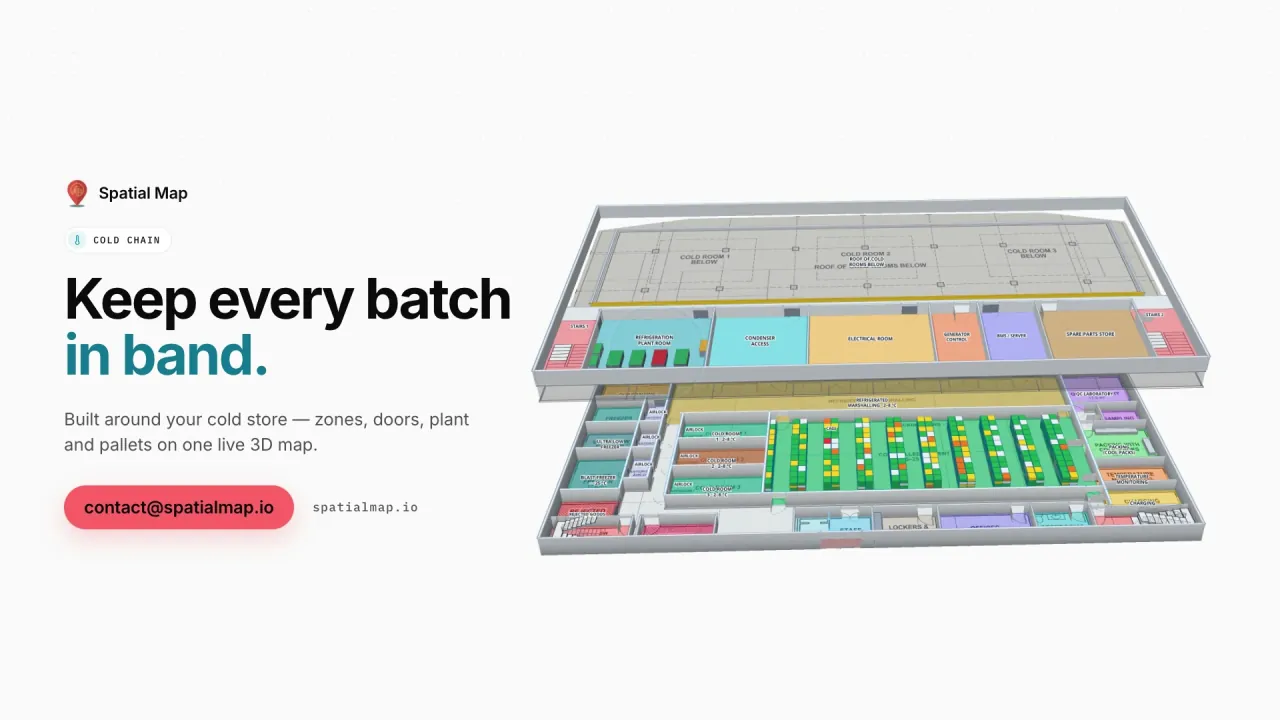
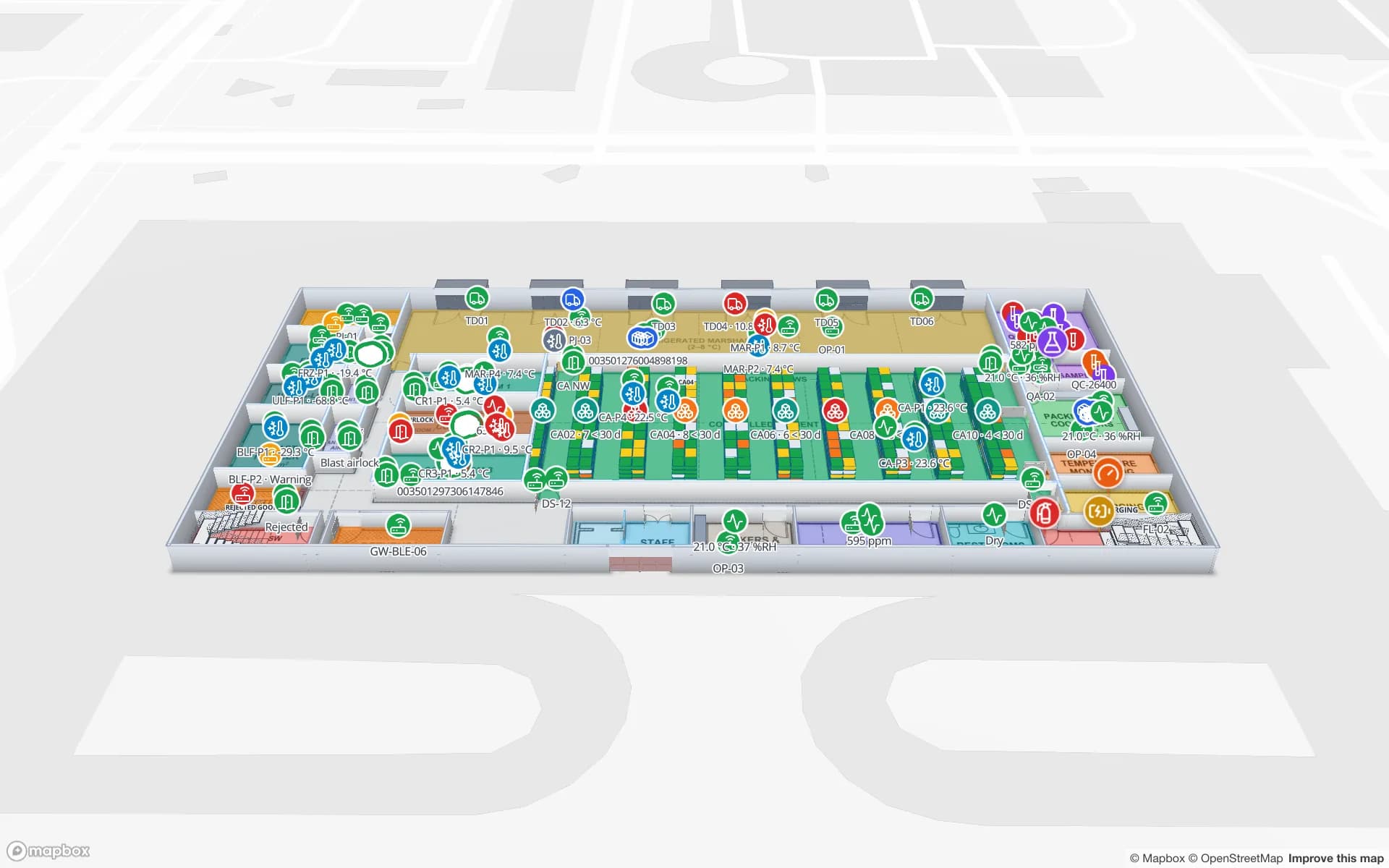
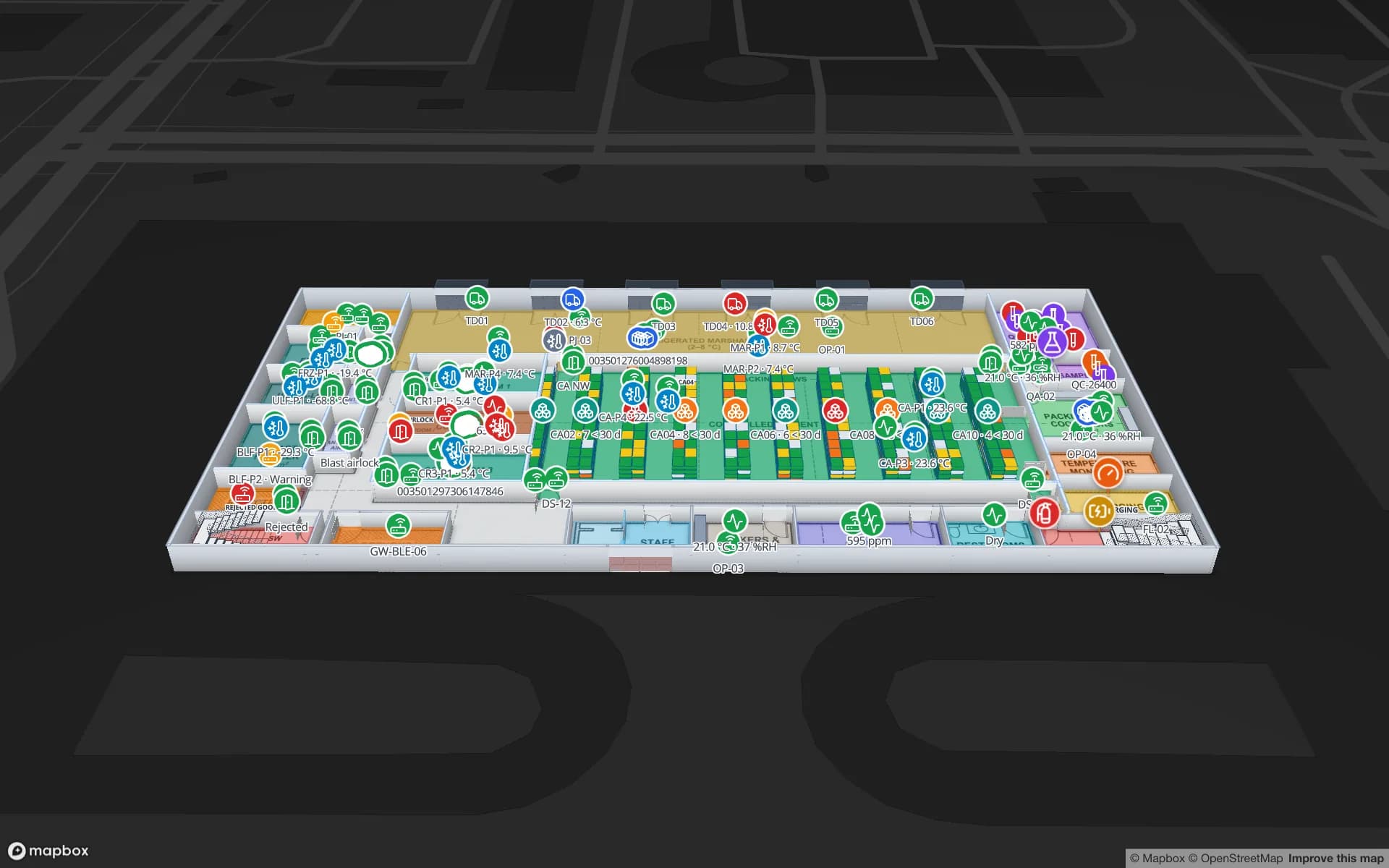
Chilled and frozen food arrives by sea and by road, and in a Kuwaiti summer a few minutes on an open dock matter. Pallet reads at the reefer docks and cold-room doors, shown next to live temperature zones, answer two questions at once: where is this pallet, and is the room it is in holding temperature? The Polar Pharma demo shows the pattern with cold rooms, freezers and pallets on hold. Your QA procedures remain the record; the map and exported reports make the evidence quicker to find.

Oil-sector spares stores and tool cribs

Upstream fields and refineries keep large materials stores of critical spares — valves, pump parts, seals, instruments — and tool cribs for calibrated and shared tools. RFID on bins, items or tool cases, read at the issue window and the store doors, shows what is in, what is out and with which crew. Racks drawn with the rack tool give every bin location its own name, and the ERP or maintenance system stays the record: export a CSV or Excel file from it, or let Spatial Map poll its REST endpoint.

Tool check-out and check-in follows the pattern of the Harborview demo, and calibration status the pattern of the Westbrook University labs.

How Spatial Map does it

How a Kuwaiti RFID rollout comes together

  1. 01

    Map the warehouse and branches

    Import each site from PDF, DWG or a PNG photo of the plan, and trace doors, lanes, aisles and racks.

  2. 02

    Name the read points

    Dispatch doors, receiving doors and issue windows become markers or zones, named as your middleware names them.

  3. 03

    Feed reads and stock

    Middleware posts batched reads to a table; stock and ERP data arrive as CSV or Excel uploads or a polled REST source.

  4. 04

    Group, report, share

    Put all sites in one solution, export weekly reports to PDF or Excel, and share read-only links with branch managers.

RFID use cases in Kuwait

Roll cages between warehouse and branches

Cage counts per site, missing deliveries and cages not seen for weeks.

Co-op warehouse dispatch

Pallets and cages by dispatch lane, checked before the truck leaves.

Mall stores

Exit, stockroom and escalator reads per floor, offline readers in red.

Imported-food cold stores

Pallet location and temperature zone on one map, held stock visible to QA.

Spares stores and tool cribs

Bins, tools and calibrated instruments by location, with check-out and check-in.

Port-side warehouses

Pallets by dock door and lane at sites serving Shuwaikh and Shuaiba.

See it on real demo facilities

Fictional names, real floor plans, live sensors, RFID, BLE tags and gateways — open any of them in the browser.

All 13 demo facilities

RFID in Kuwait — questions we get

Yes. Each site is a facility, and grouping them into one solution puts the whole estate in one place. Branch managers can get a Viewer role or a read-only share link that shows only their own store.

Each read updates the cage’s row, with its last door and time. If your middleware adds a last-seen date or days-since-read field, a style rule colours cages by it and the report lists the ones overdue.

There are no built-in ERP or POS connectors. Data comes in three ways: CSV, Excel, JSON or GeoJSON uploads, a REST endpoint polled on a schedule, or a table write API your middleware posts to.

The interface is available in English, Arabic, French, German, Spanish and Chinese; it is not available in Hindi, Urdu, Malayalam or Tagalog. Your own names for doors, zones and racks can be in any language or script.

No. Spatial Map is sold online and our team works with customers remotely, by video call and through the contact form, in English or Arabic. Nothing is installed on site.

No — prices are in US dollars and the same worldwide: a 7-day free trial for up to 5 facilities, then Pro at $60 a month or $600 a year for up to 4 facilities. A co-op with many branches is quoted as a custom service.

See your warehouse and branches on one map.

Start a free trial and open the Retail Mart and Polar Pharma demos, or send us a store plan and a sample of your reads through the contact form.