Saudi Arabia · RFID tracking

RFID tracking system for Saudi warehouses, retail and cold chain

New distribution centres, 3PL sites and cold stores are opening across the Kingdom, and many are specifying RFID portals from day one. Spatial Map is the layer those projects usually lack: a live 3D map of the building where every dock-door read, cage-gate read and pallet location shows up in place — for the operations team in Riyadh or Dammam, in English or Arabic.

No credit card. Runs in the browser. Pro is $60/month for up to 4 facilities. Book a demo

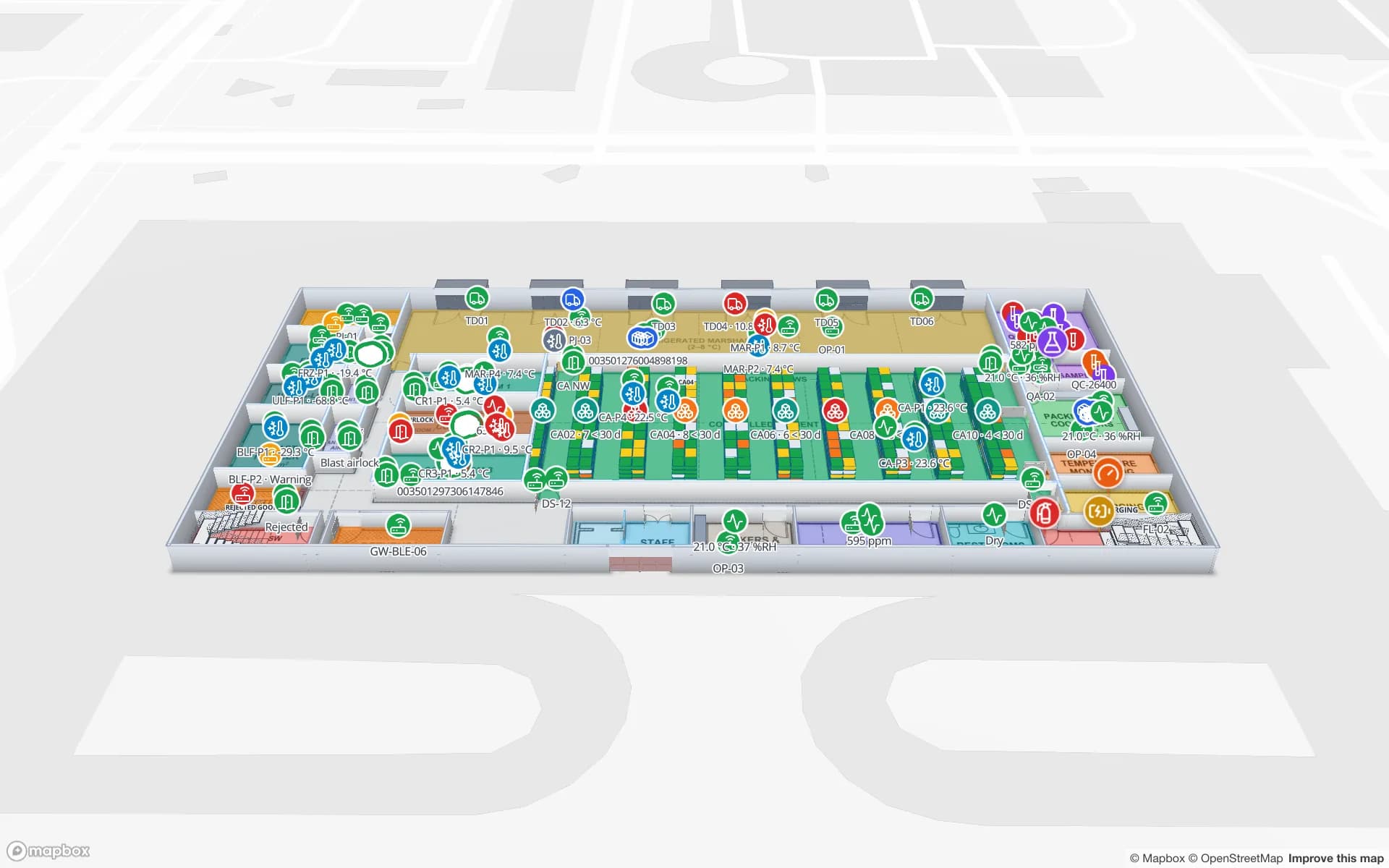
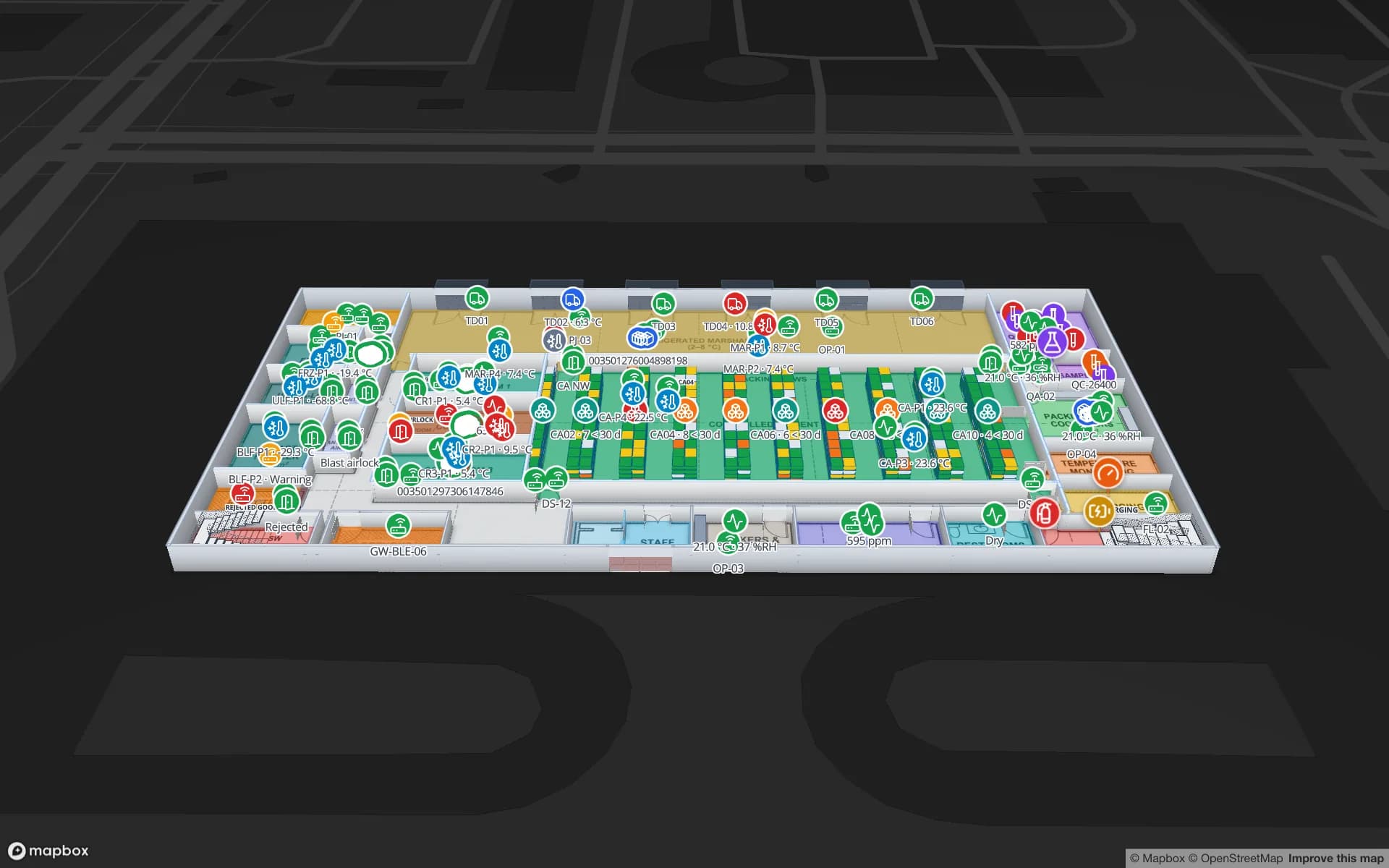
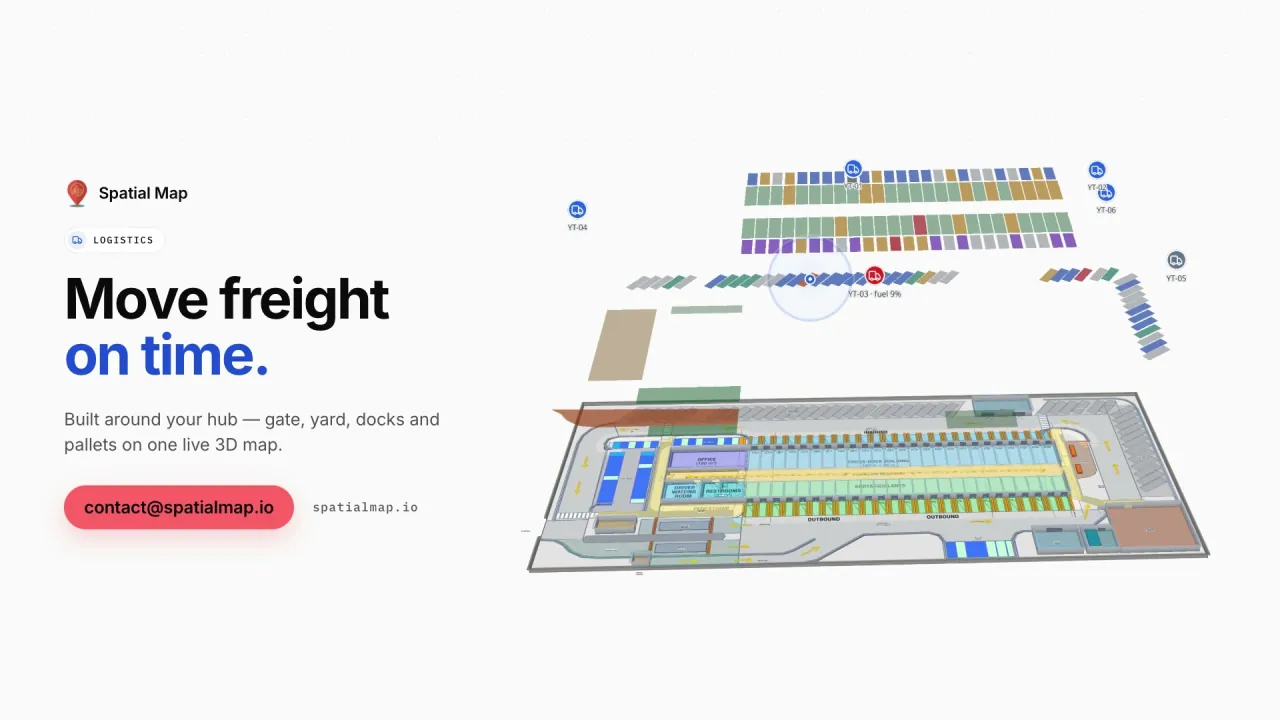
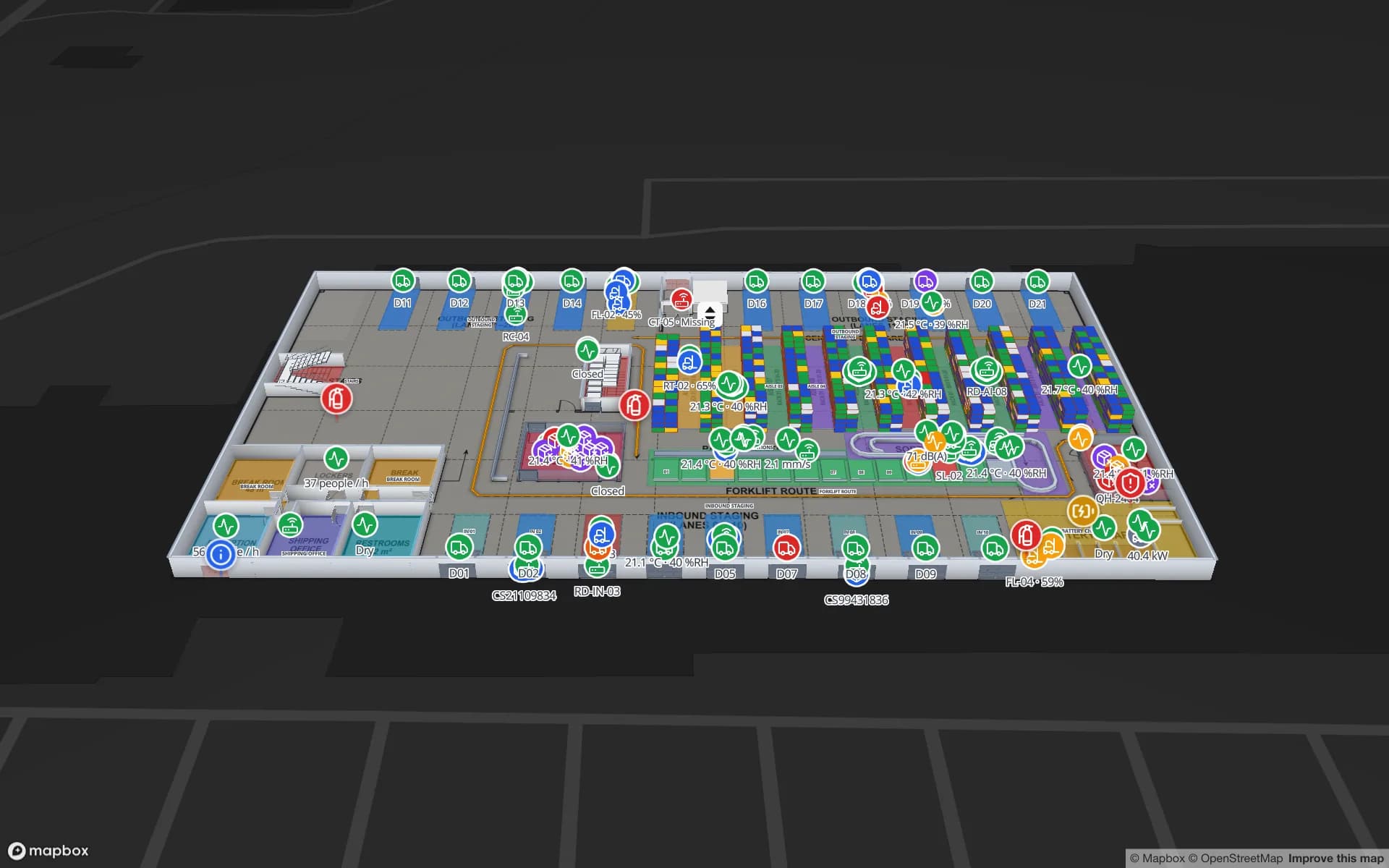
Eastport Cross-Dock Freight Hub, a cross-dock & trailer yard demo, in the Spatial Map 3D viewer with live device markers
Eastport Cross-Dock Freight Hub
Eastport Cross-Dock, a demo freight hub: 1,180 RFID-tagged pallets shown at the dock door and sortation lane where they were last read.
RFID pallets in the Eastport cross-dock demo
1,180
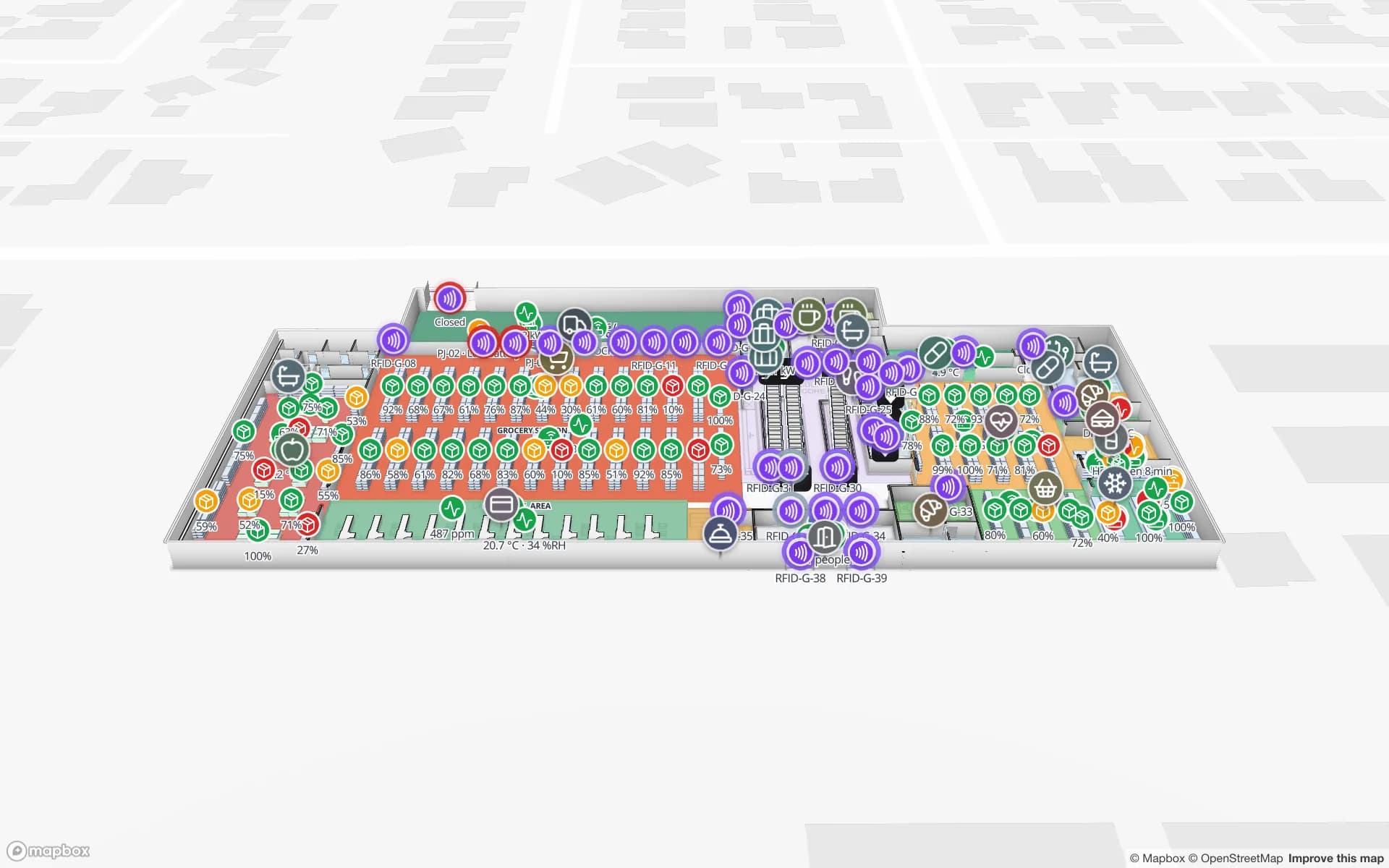
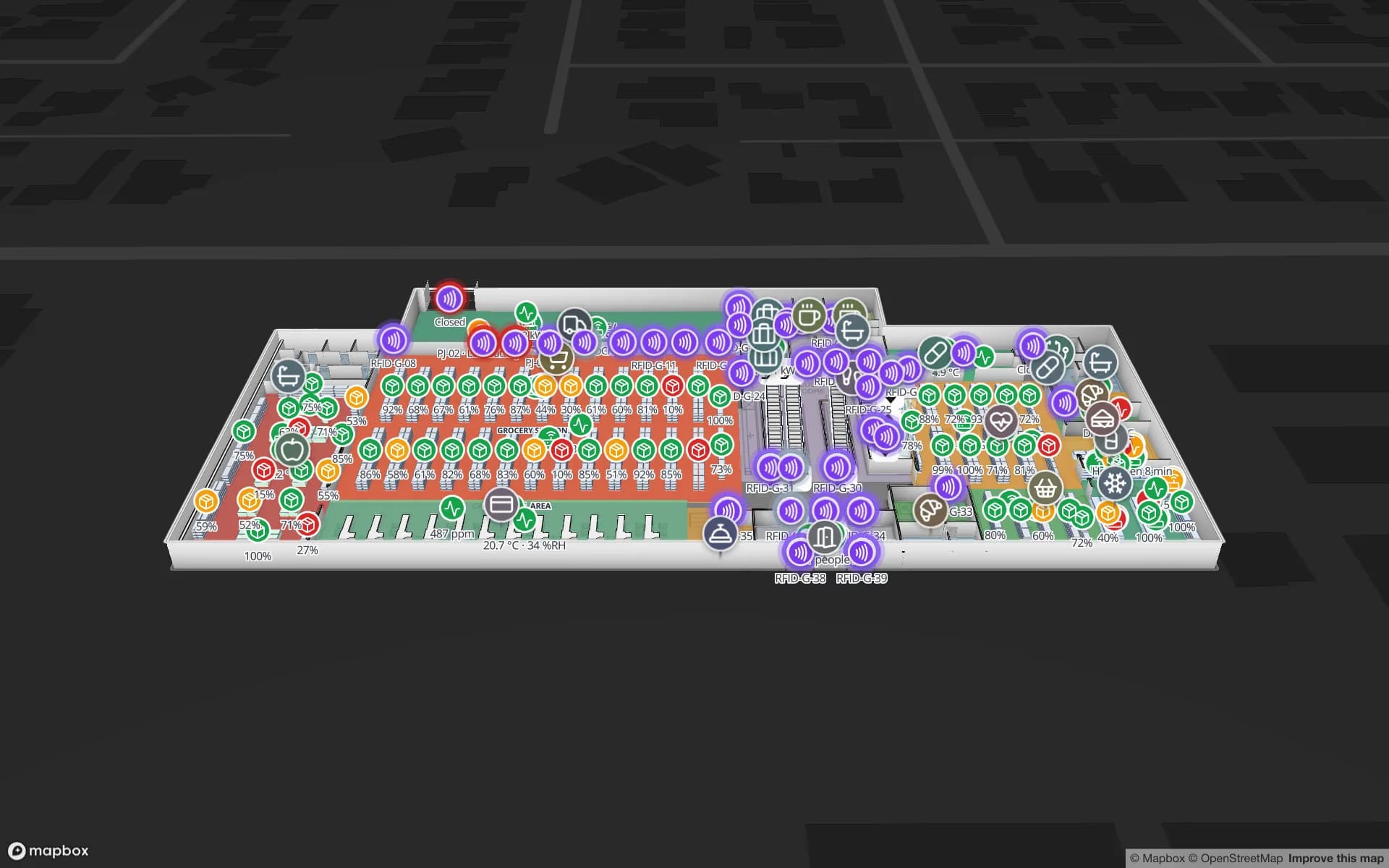
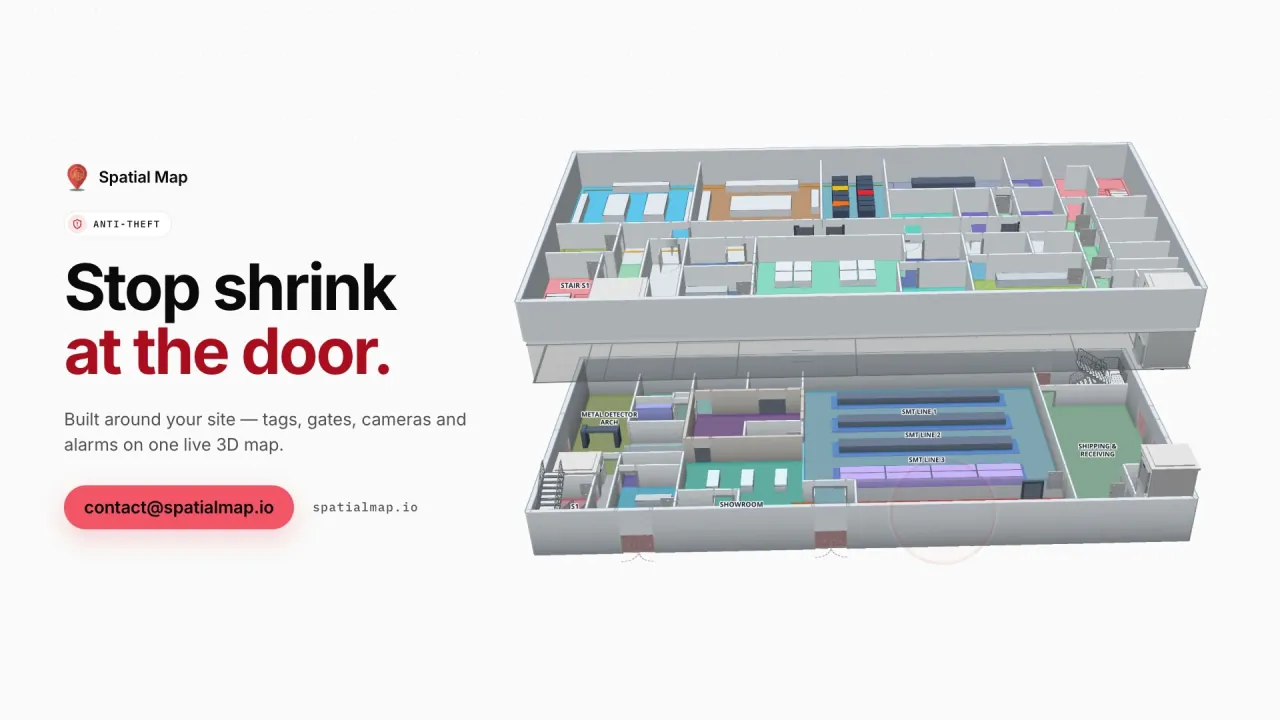
RFID readers across the three-floor Retail Mart demo
85
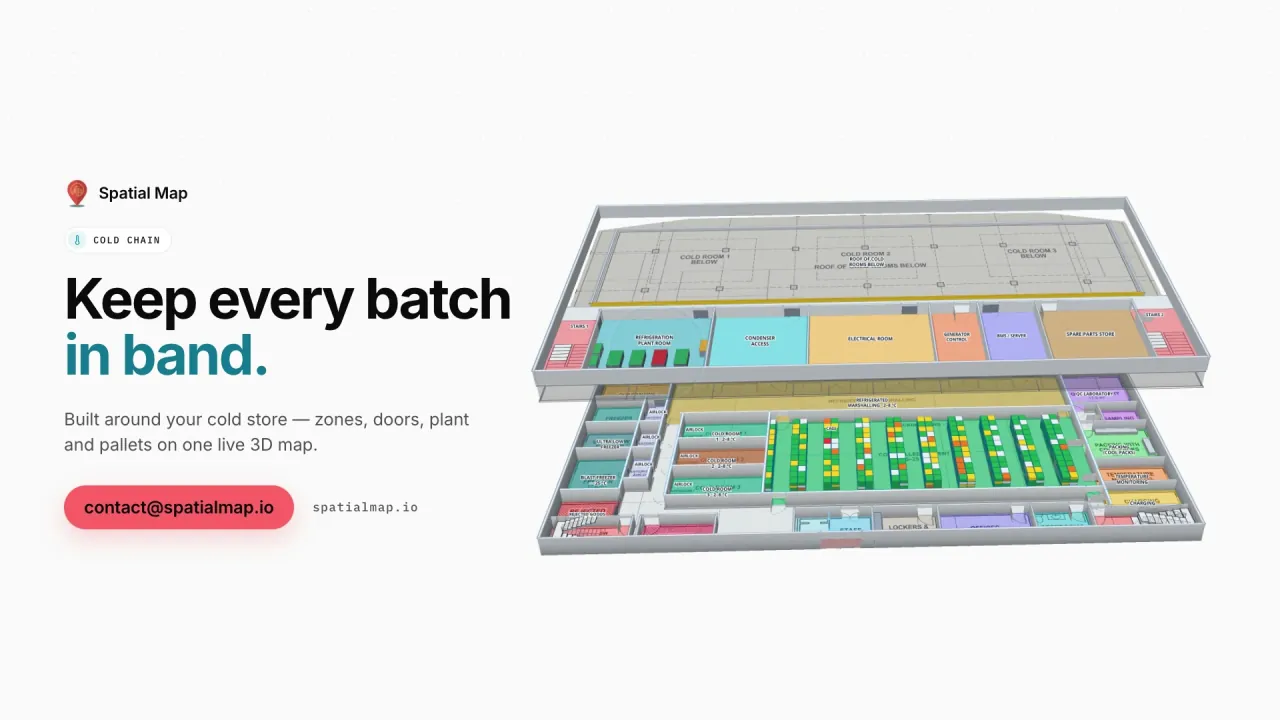
Rack locations in the Polar Pharma cold-store demo
1,140
Arabic interface with full right-to-left layout
العربية

Where RFID is being specified in the Kingdom

The National Transport and Logistics Strategy has put warehousing at the centre of Vision 2030, and new bonded and special logistics zones, distribution parks and industrial cities around Riyadh, Jeddah and Dammam are being filled with multi-client 3PL and e-commerce sites. Retail is growing alongside them in large malls, and pharma and food distributors are expanding temperature-controlled capacity. These are the three places Saudi RFID projects tend to start.

If you want the general picture of how RFID tags, readers and software fit together, our RFID page covers it. This page is about what those three Saudi settings need from the map — and where the limits are.
3PL and multi-client warehouses in logistics zones

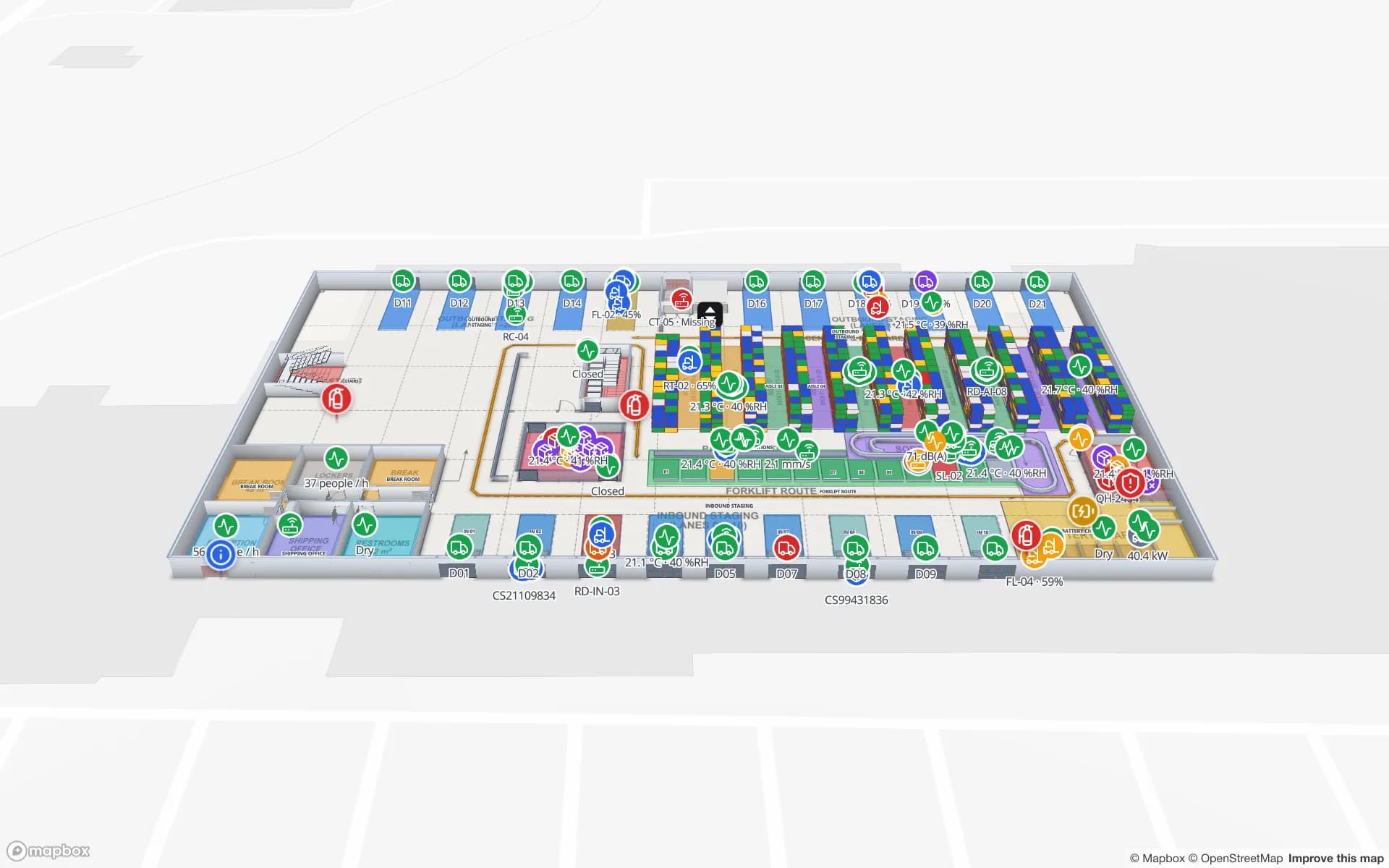
A multi-client warehouse has one building and many owners of the stock inside it. Portals at the dock doors and the bonded cage tell you which pallet moved; the map tells you whose it was and where it went. In Spatial Map, each client’s reads can sit in its own table and data link, so the same rack view can be filtered to one client or coloured by client across the whole floor.

Clients rarely want a login to your systems; they want to see their own stock. A read-only share link per client — limited to their layers and floors, with an expiry and view cap — answers that without a seat in your workspace. The Eastport demo shows the operational side: 50 dock doors, 44 yard slots and pallets staged in the right (or wrong) lane before cut-off.

Malls and multi-floor stores: loss prevention

Saudi retail increasingly happens in multi-level malls, where a store’s exposure is not one front door but escalator landings, lift lobbies, stockrooms and service corridors. RFID readers at those points produce reads; the question for a loss-prevention manager is which exit, on which floor, and whether that reader was even online.

In the Retail Mart demo, 85 readers at doors, escalators and lifts across three floors pulse with their reads and turn red when offline, next to shelf and department stock. Spatial Map does not trigger your EAS gates or replace them; it gives the team one floor-by-floor picture and a shrink report they can export for the area manager.

Cold-chain pallets for pharma and food

Medicines in the Kingdom are serialised with 2D barcodes reported to the Saudi Food and Drug Authority’s (SFDA) drug track-and-trace system, and SFDA good storage and distribution guidance shapes how cold stores are run. RFID on pallets and cold-room doors sits alongside that, answering a different question: where is this pallet physically, right now, and how long has it been outside its zone?

Spatial Map shows pallet reads and live temperature zones on the same map — the Polar Pharma demo has cold rooms, freezers, reefer docks and pallets on hold. It does not connect to SFDA systems or certify anything; your QA procedures remain the record, and the map and exported reports make the evidence quicker to find.

Returnable assets: crates, roll cages and pallets

Dairy, bakery, beverage and grocery distribution in the Kingdom runs on large pools of returnable crates, roll cages and pallets, and losses are usually invisible until a count. Tag the asset, read it at your inbound and outbound doors and at wash or repair bays, and Spatial Map shows how many are in each zone of each depot, which ones have not been read for a while, and the last door each one left by.

  • Group several depots or DCs into one solution, so the pool is visible across sites in one place.
  • Once an asset leaves for a customer, the map shows its last read at your outbound door — Spatial Map maps your buildings, not the road between them.
  • Arabic asset names, zone names and report titles show exactly as you typed them.
How Spatial Map does it

How a Saudi RFID rollout comes together

  1. 01

    Start from the drawings

    Import the DWG or PDF your contractor handed over, place it at real scale and trace docks, cages, racks and cold rooms.

  2. 02

    Name the read points

    Add a marker or zone for every portal, gate and antenna group, named exactly as your middleware reports them.

  3. 03

    Feed the reads

    Your RFID middleware posts batched reads to a table over the write API, or Spatial Map polls its REST endpoint.

  4. 04

    Split by client and share

    Filter or colour by client, build reports for each, and send each client a read-only share link.

RFID use cases we see in Saudi projects

Multi-client 3PL

Pallets by client, door and lane, with a read-only view for each client instead of a login.

E-commerce fulfilment

Carton reads at docks, packing and staging lanes next to rack-level stock from the WMS.

Mall retail

Readers at exits, escalators and lifts across floors, offline readers in red, shrink report for the area manager.

Pharma and food cold stores

Pallet location and temperature zone on one map, with held stock visible to QA.

Returnable crates and roll cages

Pool counts by depot and zone, dormant assets, and the door each asset last left by.

See it on real demo facilities

Fictional names, real floor plans, live sensors, RFID, BLE tags and gateways — open any of them in the browser.

All 13 demo facilities

RFID in Saudi Arabia — questions we get

Yes. Keep each client’s reads in its own table and data link, then create a read-only share link per client that shows only those layers and floors. The link can expire, have a view cap and be revoked, and the client needs no account.

No. Serialisation reporting stays in your existing systems. Spatial Map shows where pallets physically are and what temperature their zone is at, and exports reports that your QA team can file alongside its own records.

Spatial Map only receives reads, so it works with whichever fixed portals, gates or handhelds your hardware supplier provides for use in Saudi Arabia. Your middleware or a small relay posts the reads to a table, or exposes a REST endpoint that Spatial Map polls.

No. It does not drive EAS gates or send notifications. It shows exit and escalator reads, reader health and stock on the map, and the shrink report shows where losses cluster over time.

Yes. The app has a full Arabic right-to-left interface, and each user picks their language. Shape names, table values and report titles are your own text, so Arabic labels appear on the map and in exports as typed.

See your Saudi warehouse with its reads on the map.

Start a free trial and open the Eastport and Retail Mart demos, or send us a floor plan and a sample of your read log through the contact form.