UAE · RFID tracking

RFID tracking for Dubai’s free zones, airports and high-value retail

The UAE moves an enormous volume of goods that only pass through: into a free-zone warehouse, re-packed, and out again by sea or air. RFID tells you what crossed each door. Spatial Map shows it on a 3D map of the warehouse, the secure cage, the baggage hall or the mall store — so a read log becomes something a shift supervisor, a security manager or a client can actually look at.

No credit card. Runs in the browser. Pro is $60/month for up to 4 facilities. Book a demo

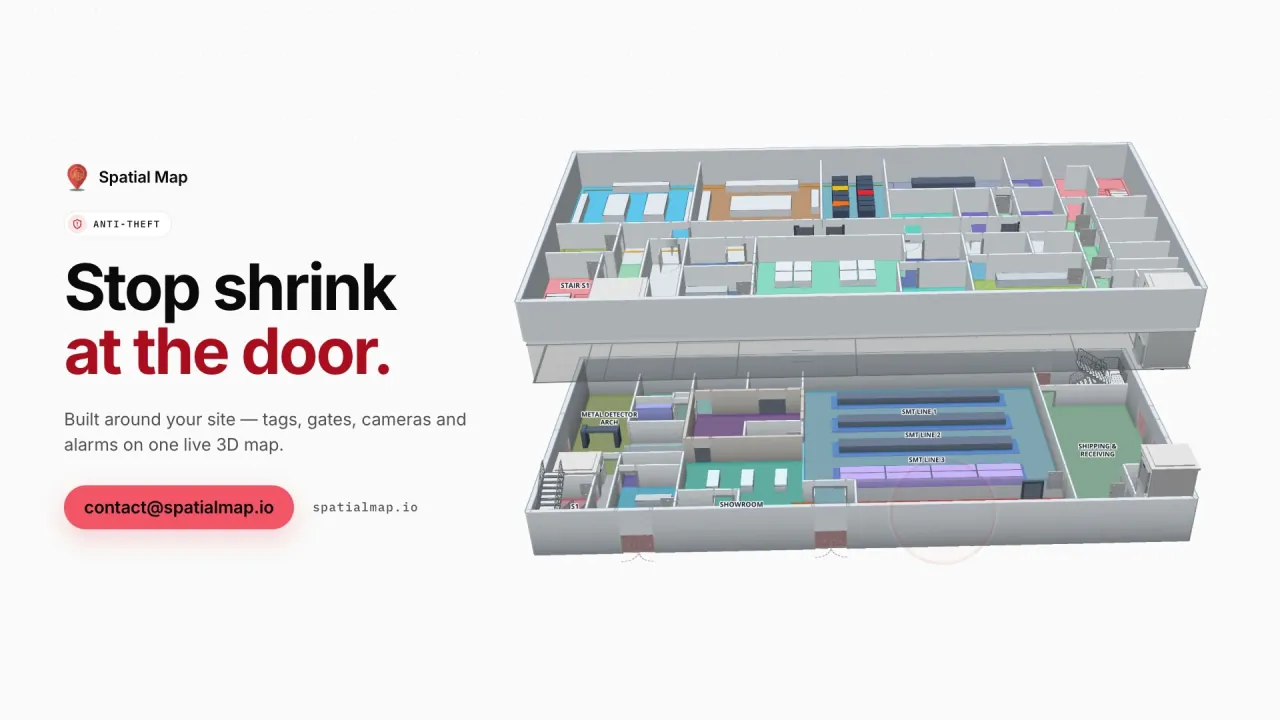
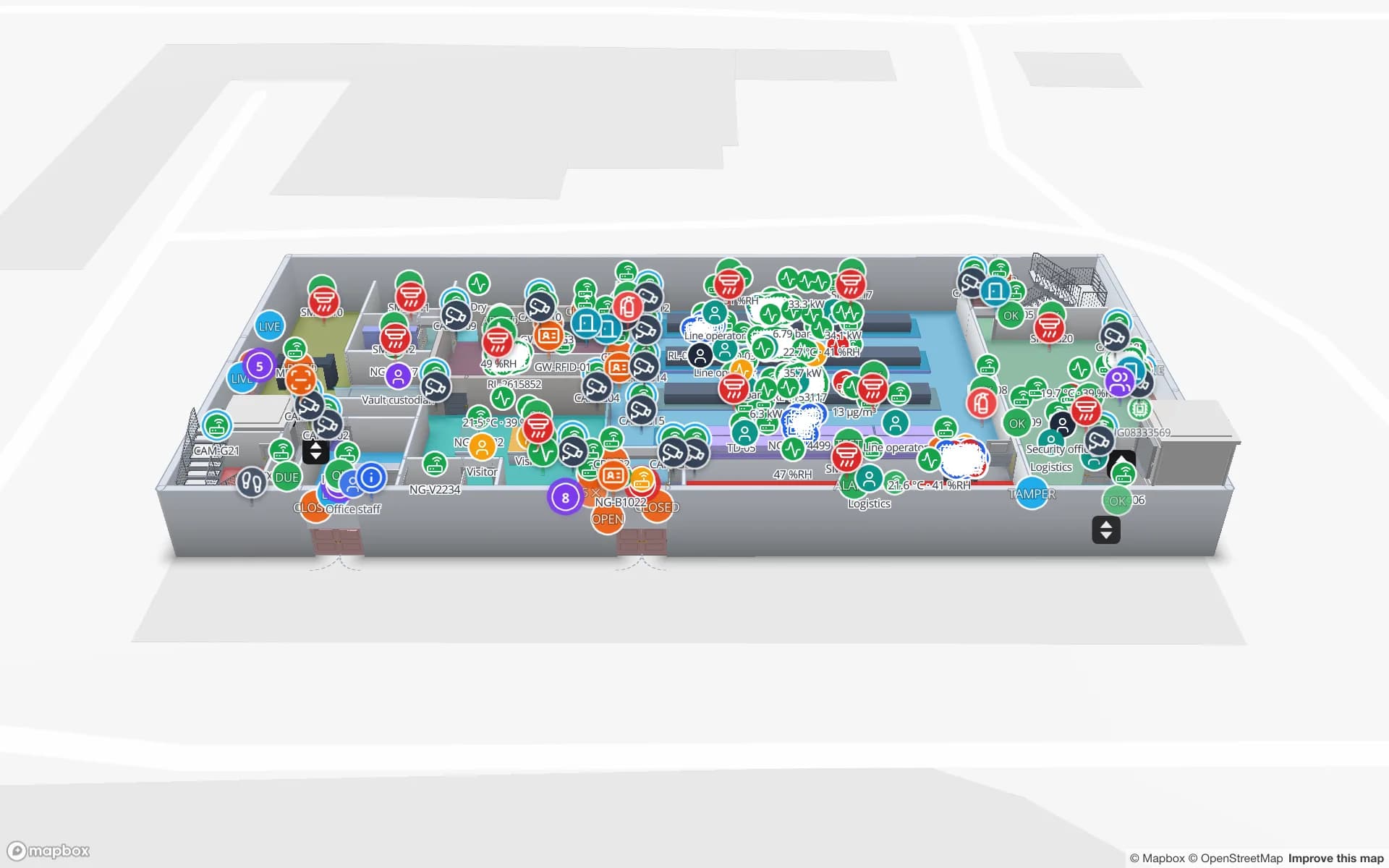
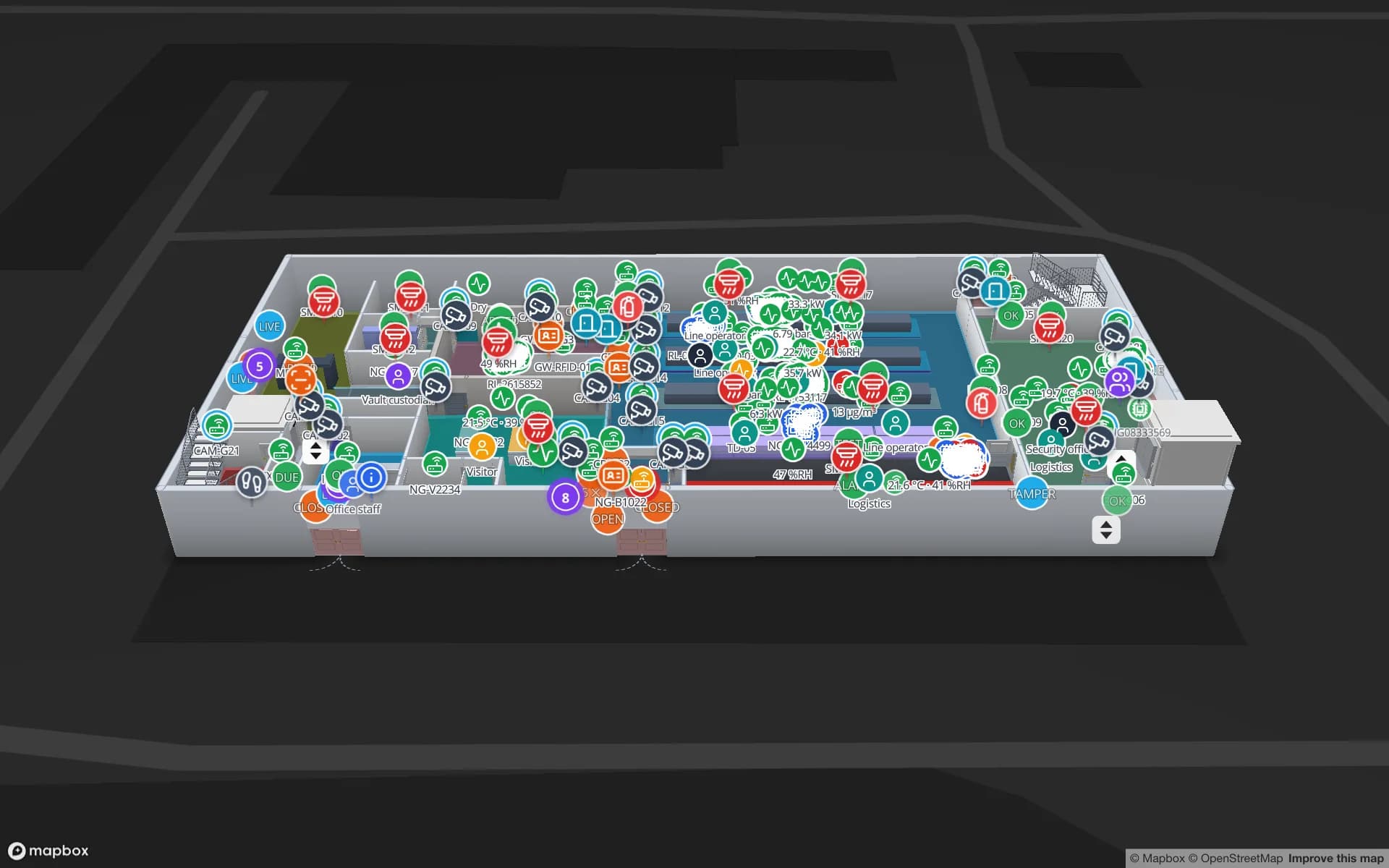
Northgate Electronics — Assembly & Secure Store, a electronics assembly & secure store demo, in the Spatial Map 3D viewer with live device markers
Northgate Electronics — Assembly & Secure Store
Northgate Electronics, a demo secure store: 863 RFID-tagged units followed reader by reader through the cage gate, vault and dock.
RFID-tagged units in the Northgate secure-store demo
863
RFID readers across the Retail Mart demo store
85
Terminal floors in the Silverbay airport demo, bag tags included
2
App languages, including Arabic and English
6

A re-export hub runs on reads at the door

Jebel Ali Port and the Jebel Ali Free Zone beside it make Dubai one of the world’s major re-export hubs, and free zones across the Emirates host distributors of electronics, consumer goods, auto parts and luxury products serving the wider region. Stock in these warehouses often belongs to many consignees and can sit under different customs statuses, so knowing exactly what crossed which door — and when — matters more than in a simple store-and-ship site.

For the general explanation of tags, readers and middleware, see our RFID page. This page covers four UAE settings: free-zone warehouses, high-value goods, airports and malls.
Free-zone and re-export warehouses

Portals at inbound doors, the re-pack area and outbound docks give you the movements; Spatial Map places them. Rack locations are coloured from your WMS stock, RFID pallets show the door or lane where they were last read, and a consignee or customs-status field in the data lets a style rule colour stock by who owns it or how it is held. Short or mis-staged shipments are visible on the dock before the truck leaves for the port or the airport.

Spatial Map does not file customs declarations or connect to customs systems; it shows what your reads and WMS say is physically in the building. Reports export to PDF, Excel, CSV or JSON for the client or the auditor.

High-value goods: electronics, luxury and gold

Distributors of phones and laptops, luxury brands and jewellery and precious-metal traders all keep a cage, vault or strongroom where a single missing unit matters. Item-level or tray-level tags read at the cage gate, together with access-control events from the same doors, show who was in the zone when stock moved.

In the Northgate demo, 863 tagged units are followed reader by reader through the secure store, and the History player replays a unit’s path for an investigation. Spatial Map does not open or lock doors and does not raise alarms — your access control and security systems keep that job.

Airport baggage and cargo

Dubai International is one of the world’s busiest airports for international passengers, and the UAE’s airports handle large volumes of transfer bags and air cargo. IATA Resolution 753 asks airlines to track each bag at key points of its journey, and RFID bag tags are one of the ways airports and airlines do it. A map makes those reads legible: which bag-drop belt, which make-up area, which carousel.

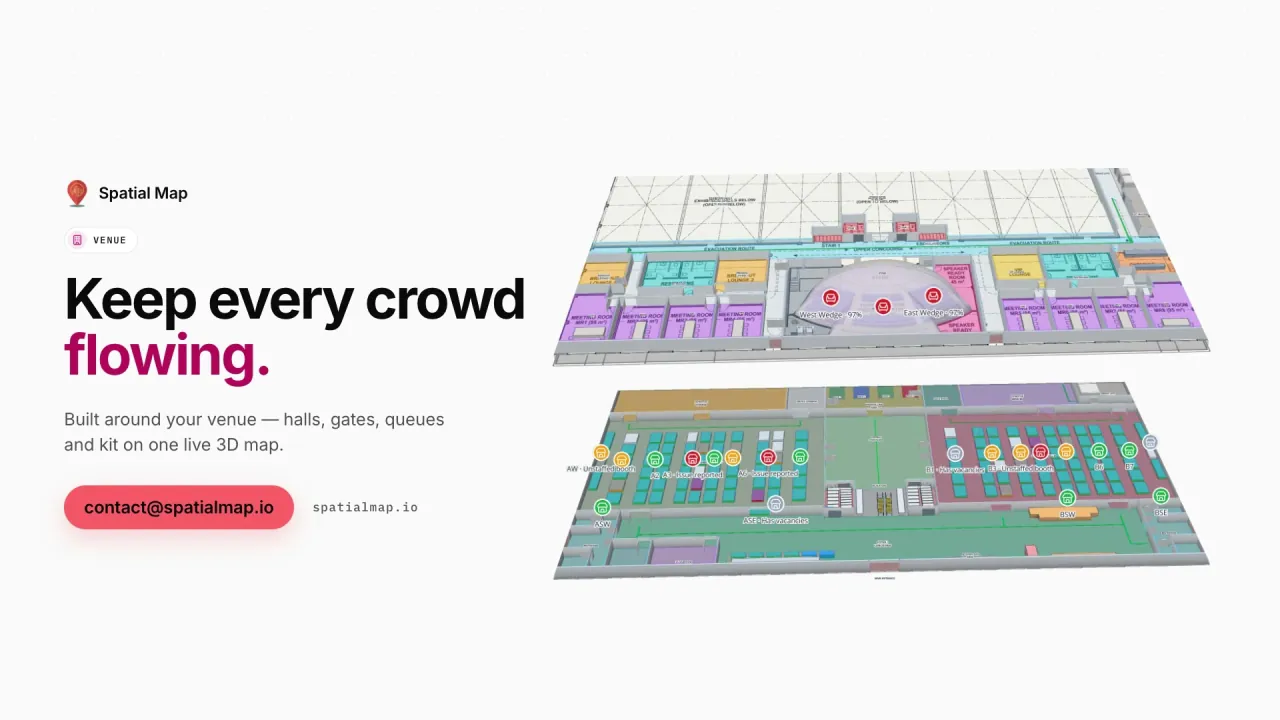
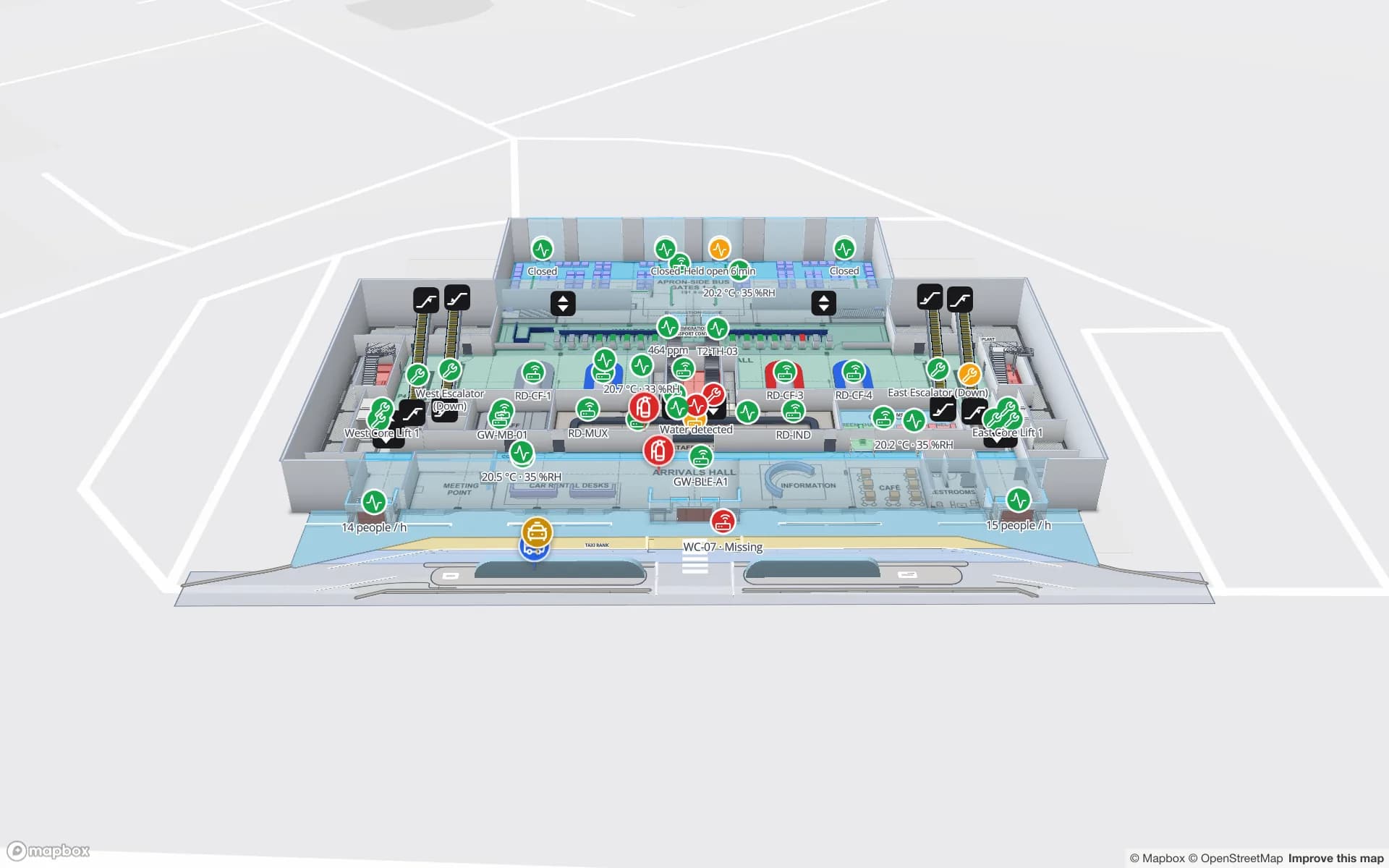
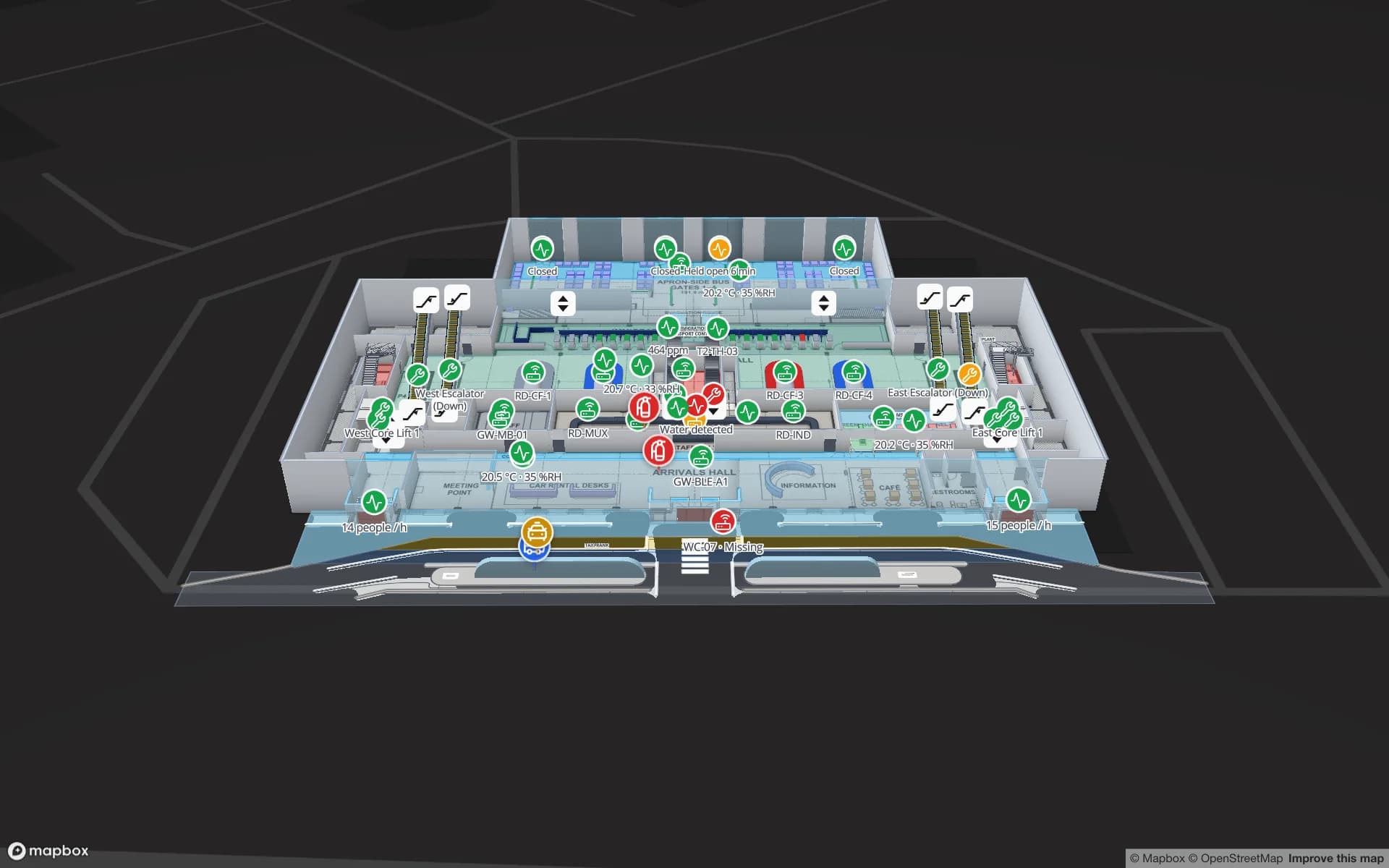
The Silverbay Terminal 2 demo shows bag tags read from bag drop to the carousel next to check-in, security and gates. Spatial Map sits beside your baggage and cargo systems — it does not replace a baggage reconciliation system or prove Resolution 753 compliance. For cargo sheds, the Eastport demo shows the same idea with pallets, dock doors and staging lanes.

Mall stores and loss prevention

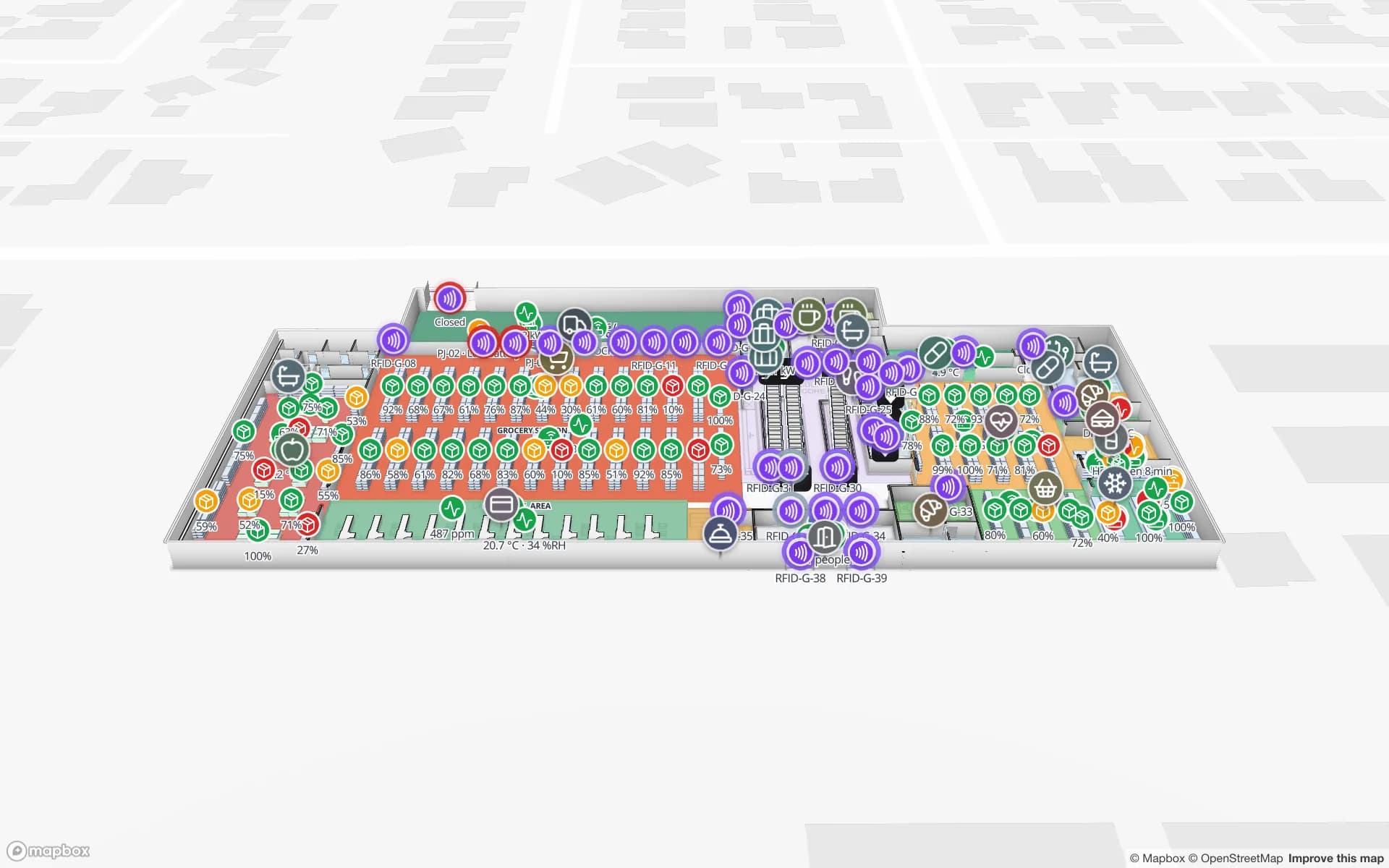
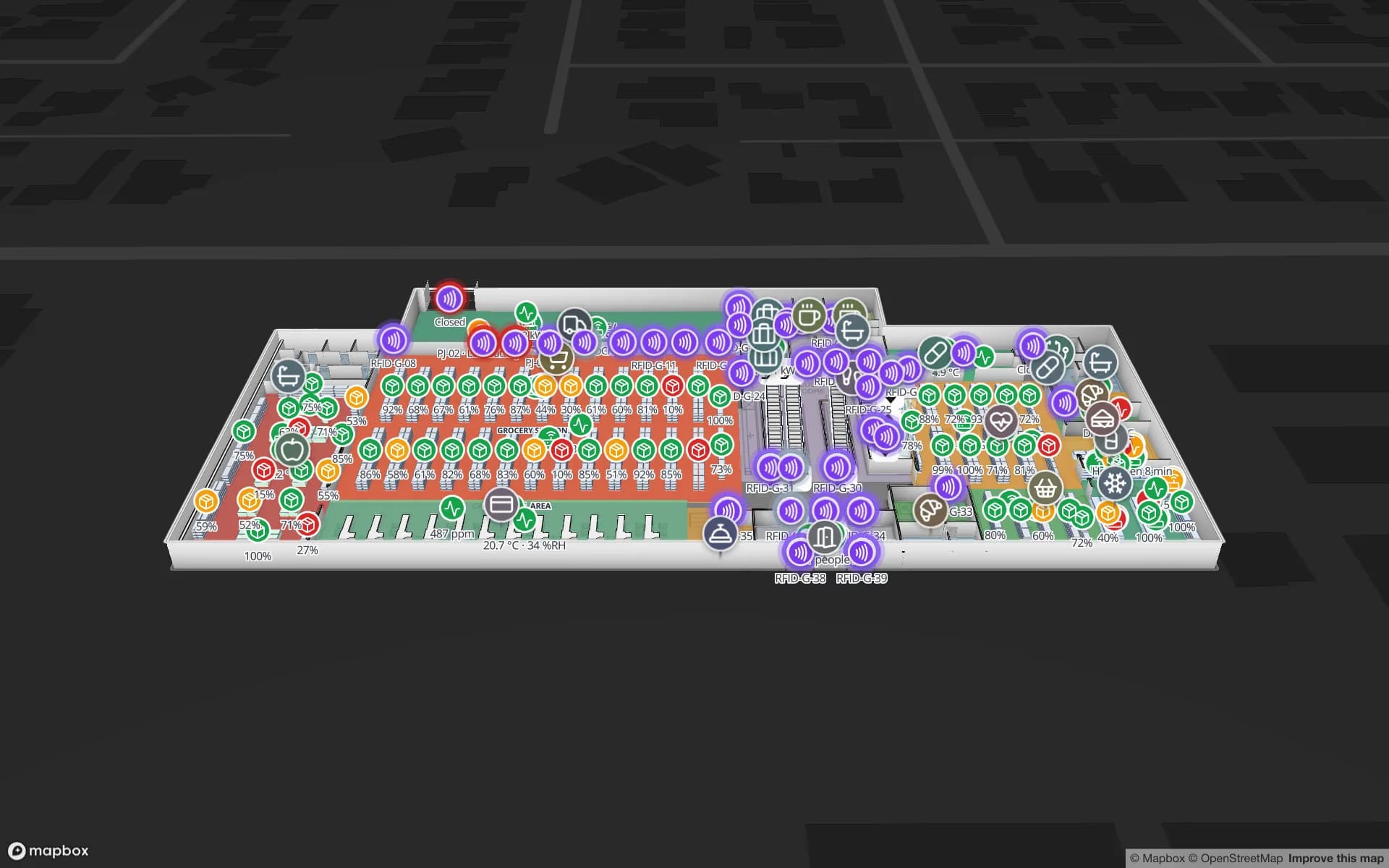
The UAE has some of the largest malls in the world, and stores in them face shrink at escalator landings, lift lobbies and back-of-house corridors as well as the front door. The Retail Mart demo shows 85 readers across three floors with offline readers in red, next to shelf stock. For a retailer with stores in several malls, each store becomes a facility grouped into one solution, and the area manager gets one read-only link across all of them.

How Spatial Map does it

How a UAE RFID project lands on the map

  1. 01

    Map the site

    Import the warehouse, terminal or store plan from PDF or DWG and trace docks, cages, racks and zones.

  2. 02

    Place every read point

    Portals, cage gates, bag-drop belts and exits become markers or zones, named as your middleware names them.

  3. 03

    Connect the reads

    Middleware posts batched reads to a table over HTTPS, or Spatial Map polls its REST endpoint on a schedule.

  4. 04

    Colour, replay, report

    Colour stock by consignee or status, replay a unit’s path, and export reports for clients and auditors.

RFID use cases in the Emirates

Free-zone re-export warehouses

Pallets by consignee and status on rack locations, docks and staging lanes.

Secure cages for high-value stock

Units followed through cage gates with access events alongside, and a replayable trail.

Airport baggage

Bag-tag reads from bag drop to carousel on a multi-floor terminal map.

Air cargo and cross-dock

Pallets by door and lane before cut-off, with gate and yard activity on the same site map.

Mall retail chains

Exit and escalator reads per store, offline readers in red, all stores grouped in one solution.

See it on real demo facilities

Fictional names, real floor plans, live sensors, RFID, BLE tags and gateways — open any of them in the browser.

All 13 demo facilities

RFID in the UAE — questions we get

Yes, if that field is in your data. A style rule colours rack locations or pallets by its value, and filters narrow the view. Spatial Map does not file declarations or connect to customs systems; it shows what your reads and WMS report.

No. It shows bag-tag reads at bag drop, make-up and carousels on a terminal map. Your airline and airport systems remain the record for baggage tracking.

Yes. Every change to a table row is kept, and a data link set to Historical movement adds a History player that replays the unit’s reads reader by reader. Access events posted to another table can sit on the same map.

Whichever fixed portals, gates or handhelds your supplier provides type-approved for the UAE. Spatial Map has no reader drivers; your middleware or a small relay sends reads to a table, or exposes a REST endpoint we poll.

Yes. Each store is a facility; group them into one solution and share a read-only link that covers them, or give the manager a Viewer role in the workspace.

Put your free-zone, airport or store reads on a map.

Start a free trial and open the Northgate and Silverbay demos, or send us a floor plan and a sample of your reads through the contact form.