USA · BLE for venues, campuses and warehouses

BLE asset tracking for US stadiums, campuses and warehouses

On an event day, a corporate move or a peak shift, the question is the same: where is the equipment and where are the crews. Spatial Map shows what your BLE gateways report — by concourse, hall, floor or aisle — on a live 3D map of the venue, campus or warehouse, in the browser on any laptop, tablet or phone.

No credit card. Runs in the browser. Pro is $60/month for up to 4 facilities. Book a demo

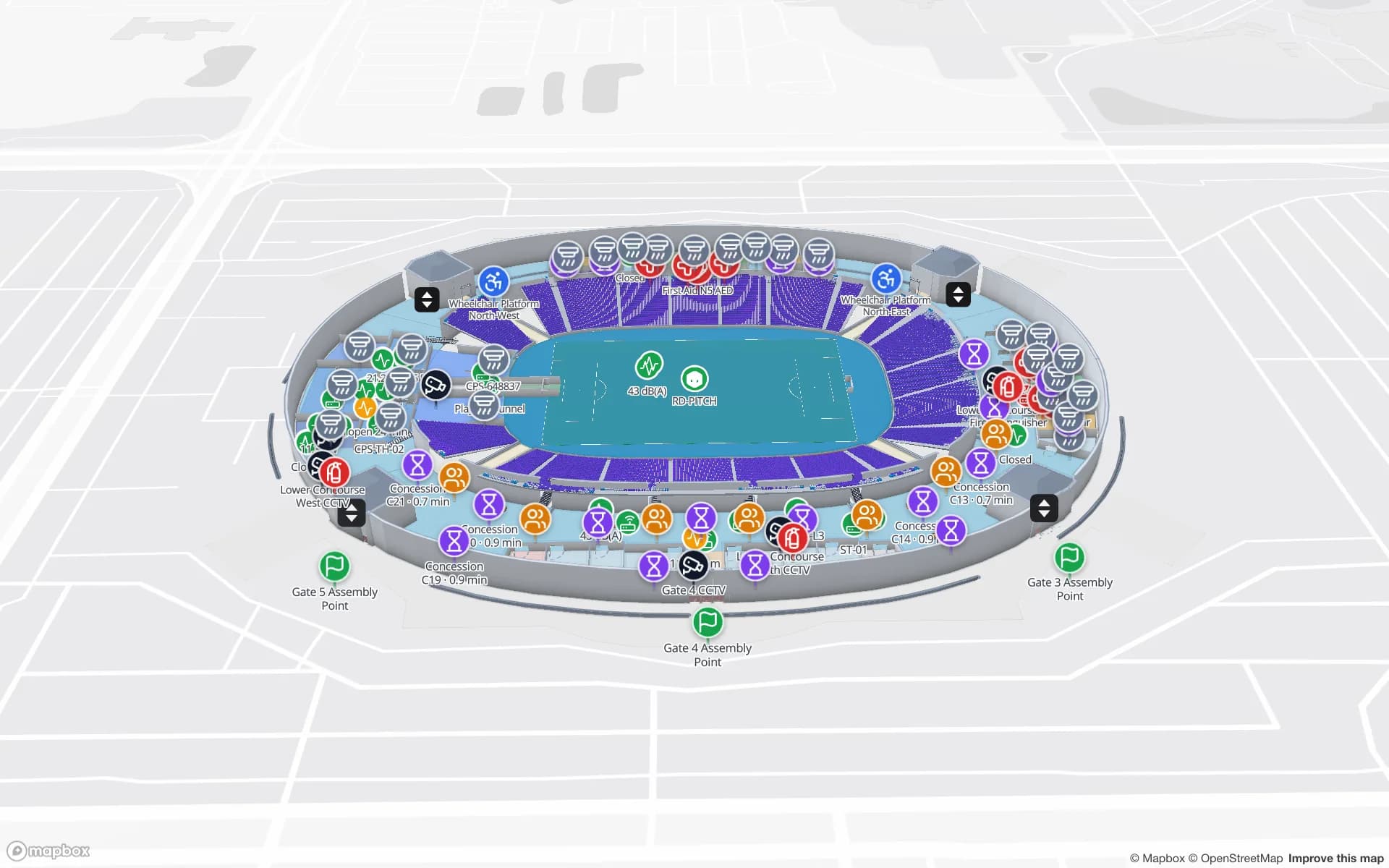
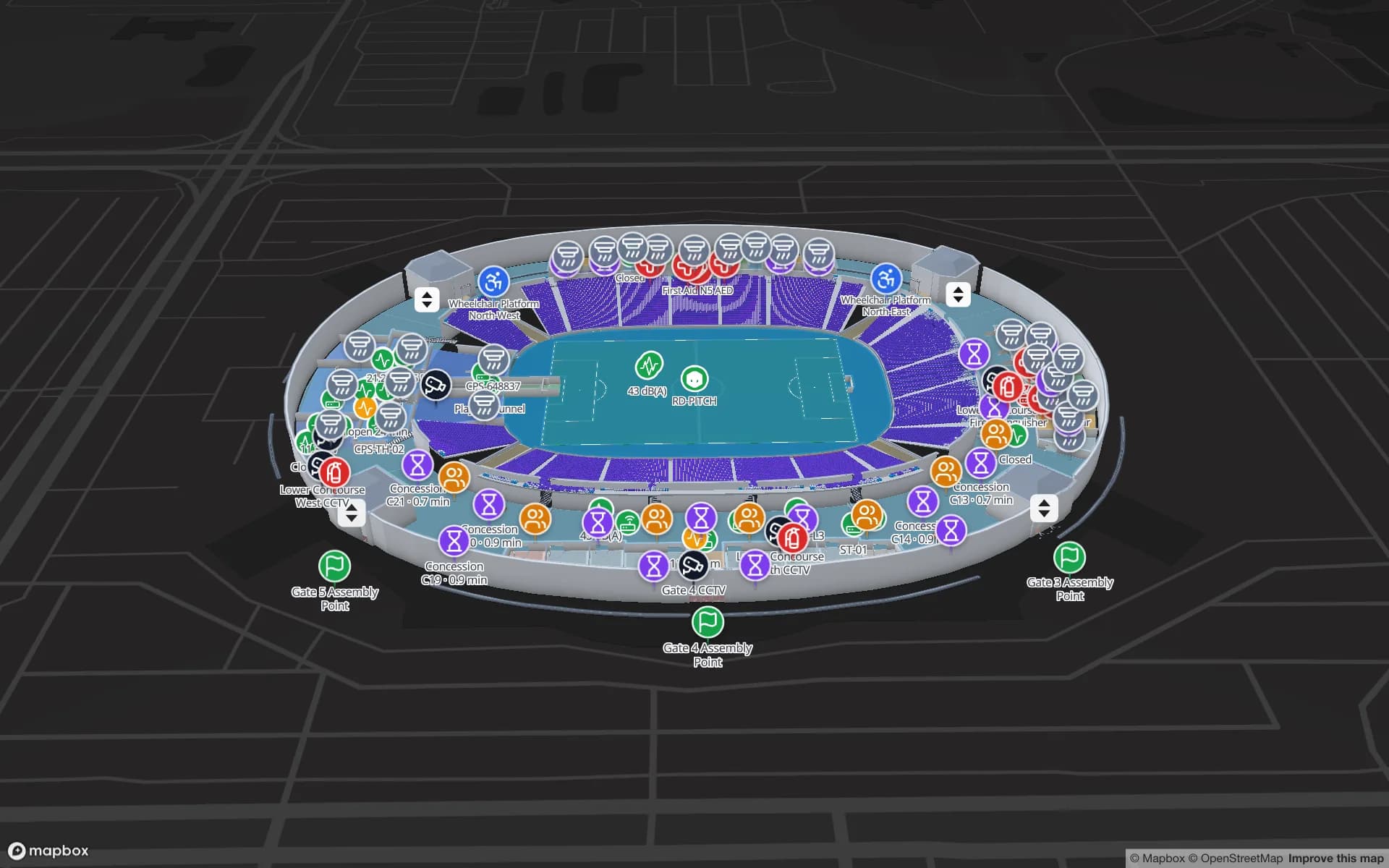
Crown Park Stadium, a stadium demo, in the Spatial Map 3D viewer with live device markers
Crown Park Stadium
Crown Park Stadium, a demo venue: 30,513 seats on two concourses, with staff and equipment located by concourse alongside turnstiles and crowd counters.
Seats in the Crown Park stadium demo
30,513
Demo facilities with live BLE, RFID and sensor data
13
Apps to install — runs in the browser
0
Free trial, no credit card
7 days

Stadiums, arenas and convention centers

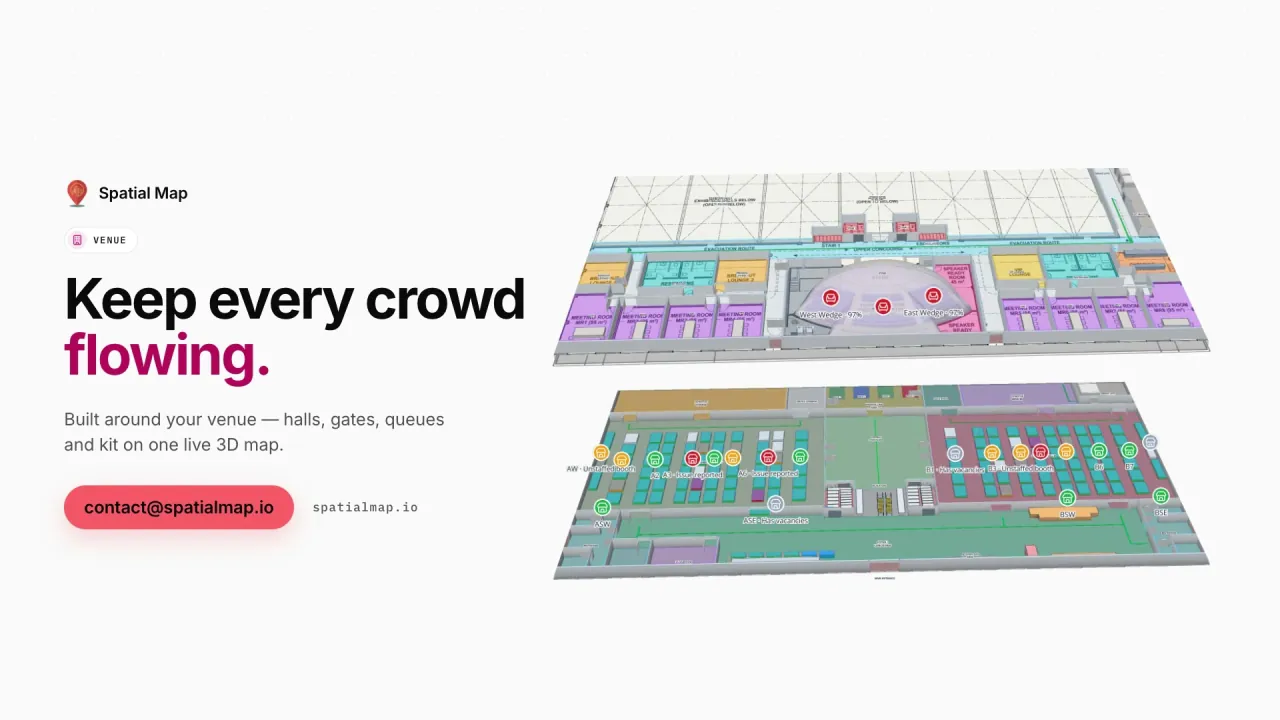
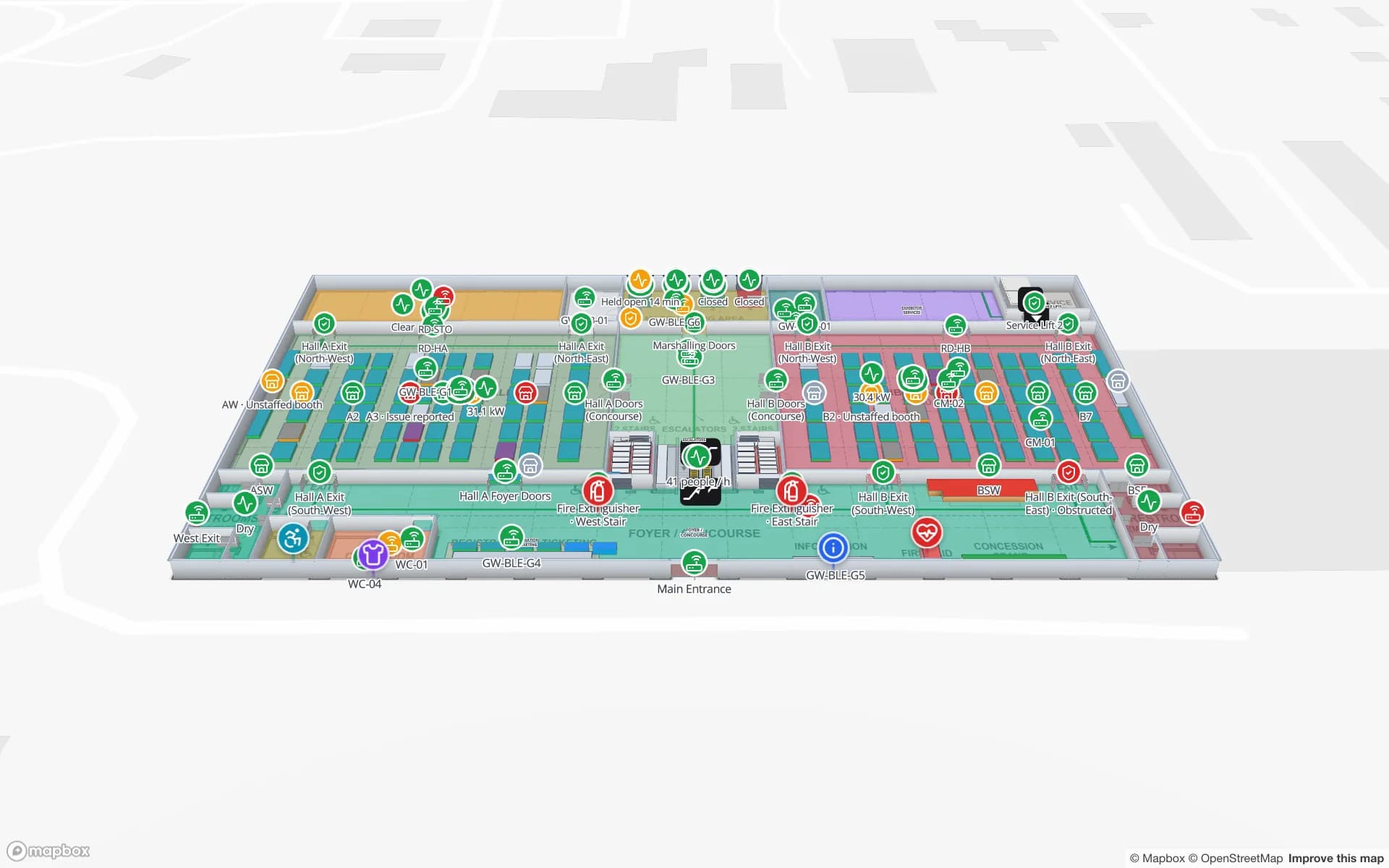
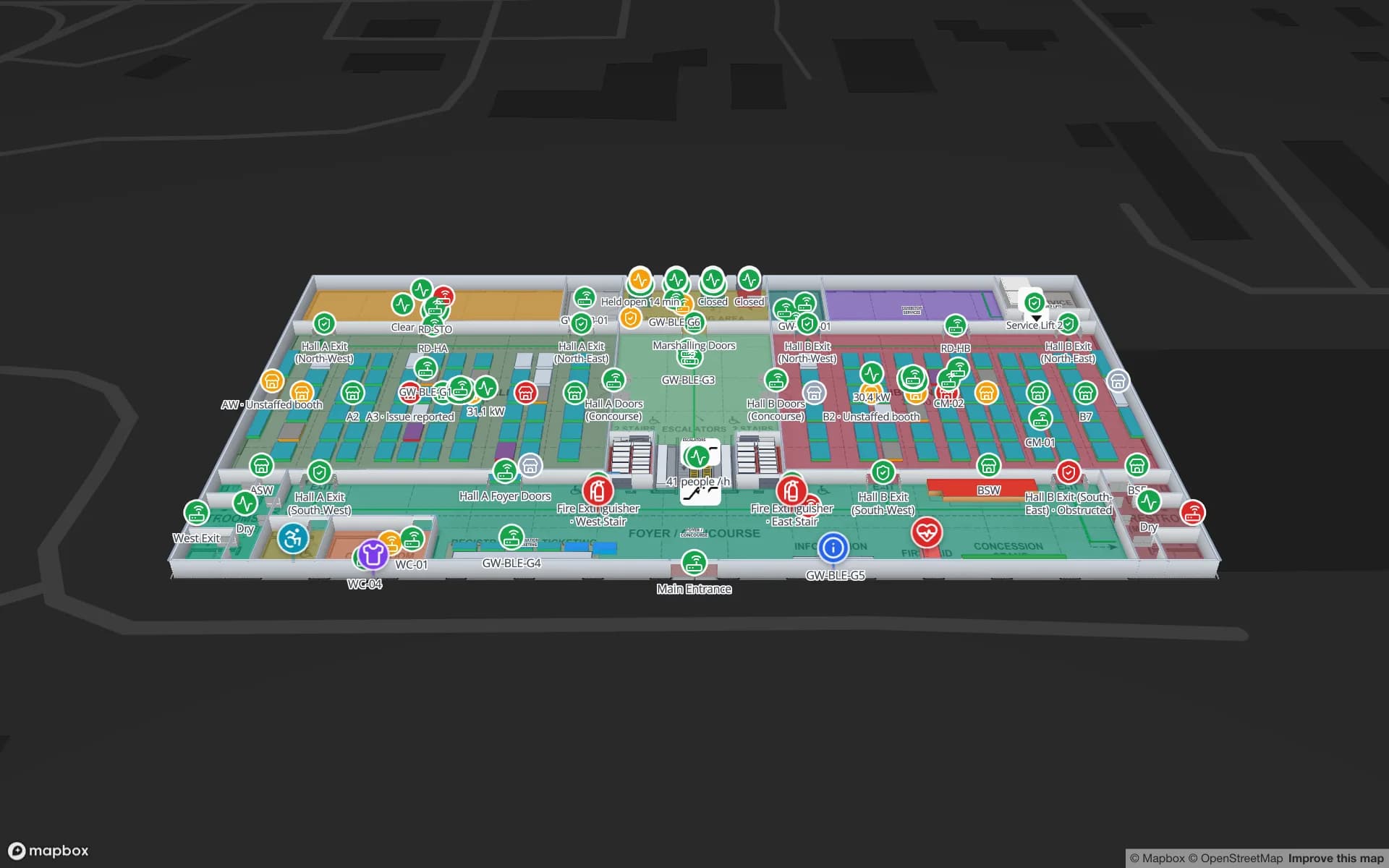
US venues move a lot of portable kit in a short time: radios, medical and safety kits, cleaning carts, ticket scanners, portable POS, barricades and the crews that go with them. Convention centers add show freight, AV equipment and pallet jacks moving from the loading dock to the halls. BLE tags on that equipment and gateways in the concourses, halls and back-of-house corridors let your RTLS platform report where everything is; Spatial Map puts it on the venue map next to turnstile scans, crowd counters and room occupancy.

Airports and large venues also lend out wheelchairs to guests who need them. Tagging loan wheelchairs and showing which gate area or concourse they were last seen in helps staff send the nearest one instead of searching the building. The Silverbay Airport demo tracks loan wheelchairs this way, and Lakeside Convention Center shows staff and equipment by hall.
Corporate campuses and universities

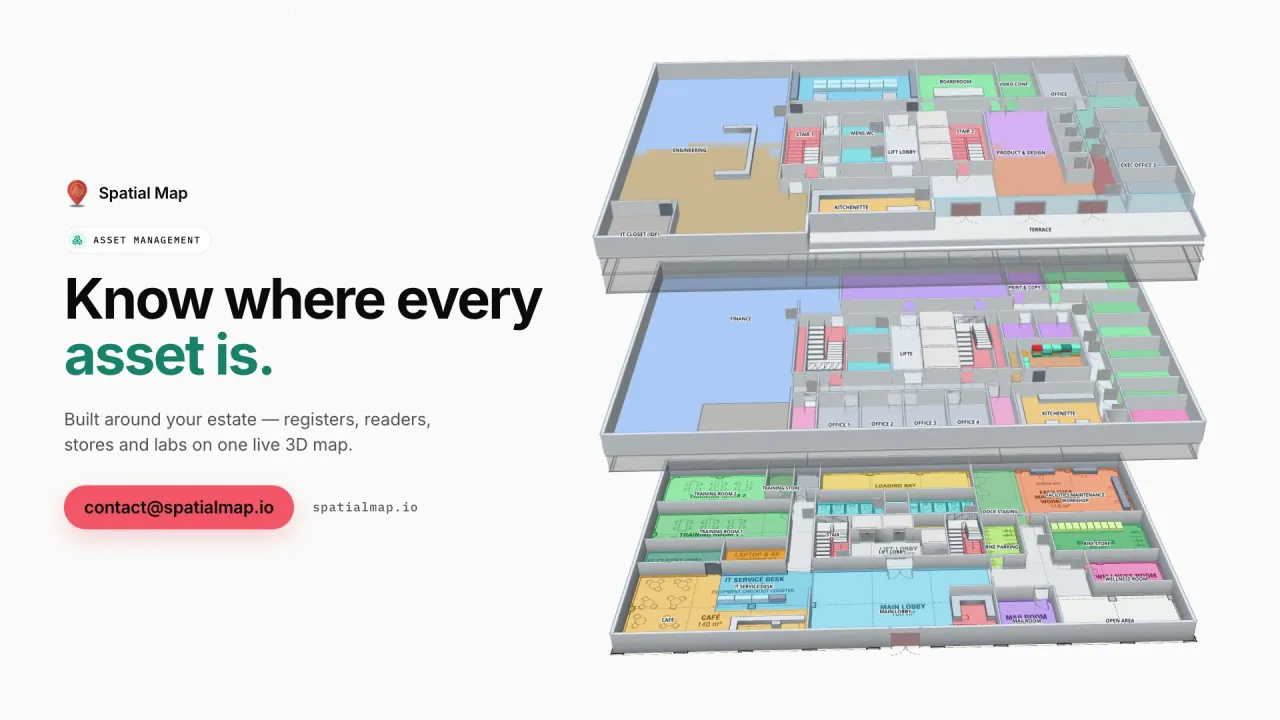
On a corporate campus, BLE pays off for shared and loan equipment — laptops, AV carts, projectors, spares — across many floors and buildings, and for the facilities team that has to find it before an audit or a move. Universities add research labs, where instruments are expensive and calibration matters, and teaching labs where equipment is shared between groups. Spatial Map shows tagged assets room by room, with your own check-in/check-out or calibration data in the tooltip and detail drawer.

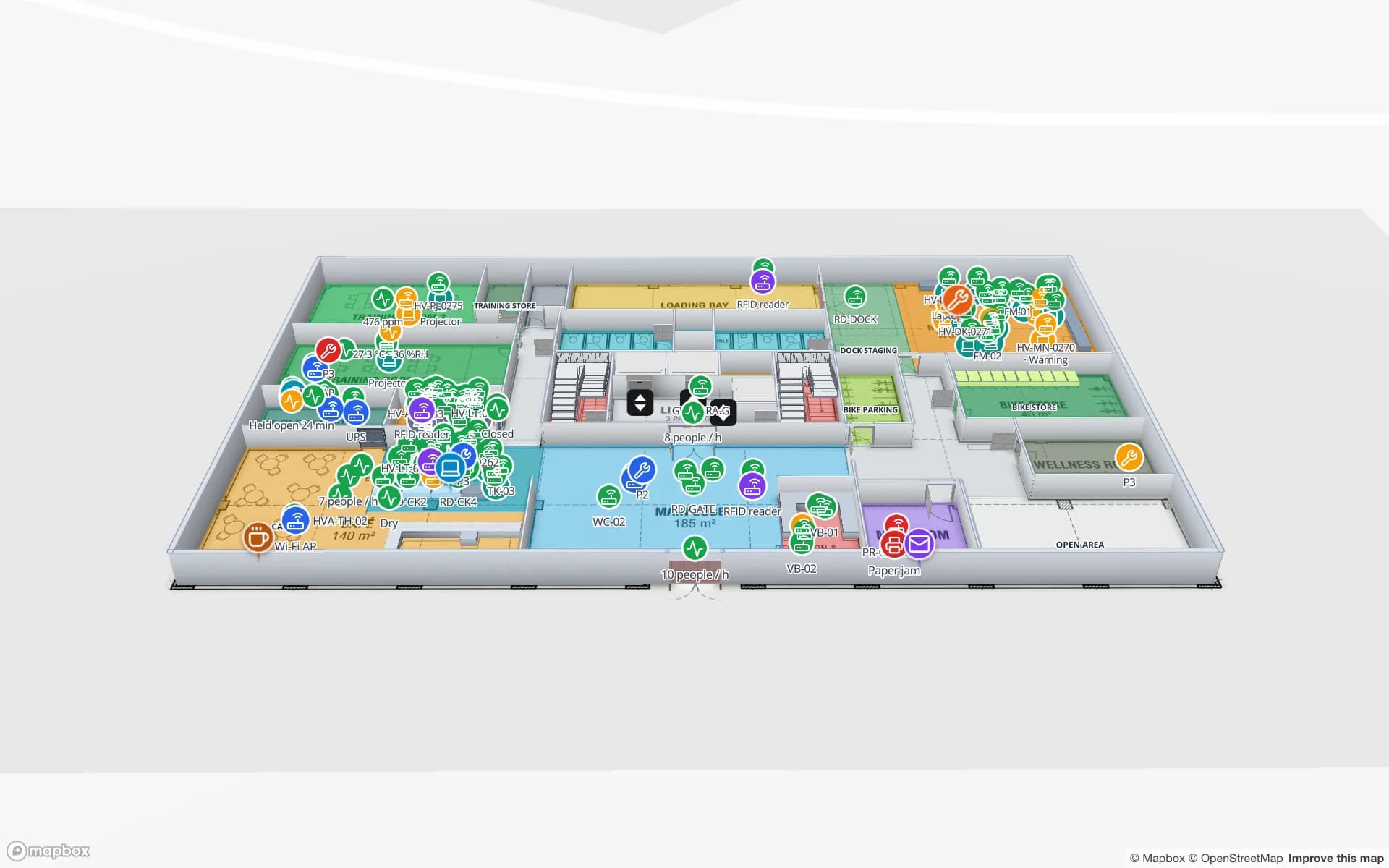
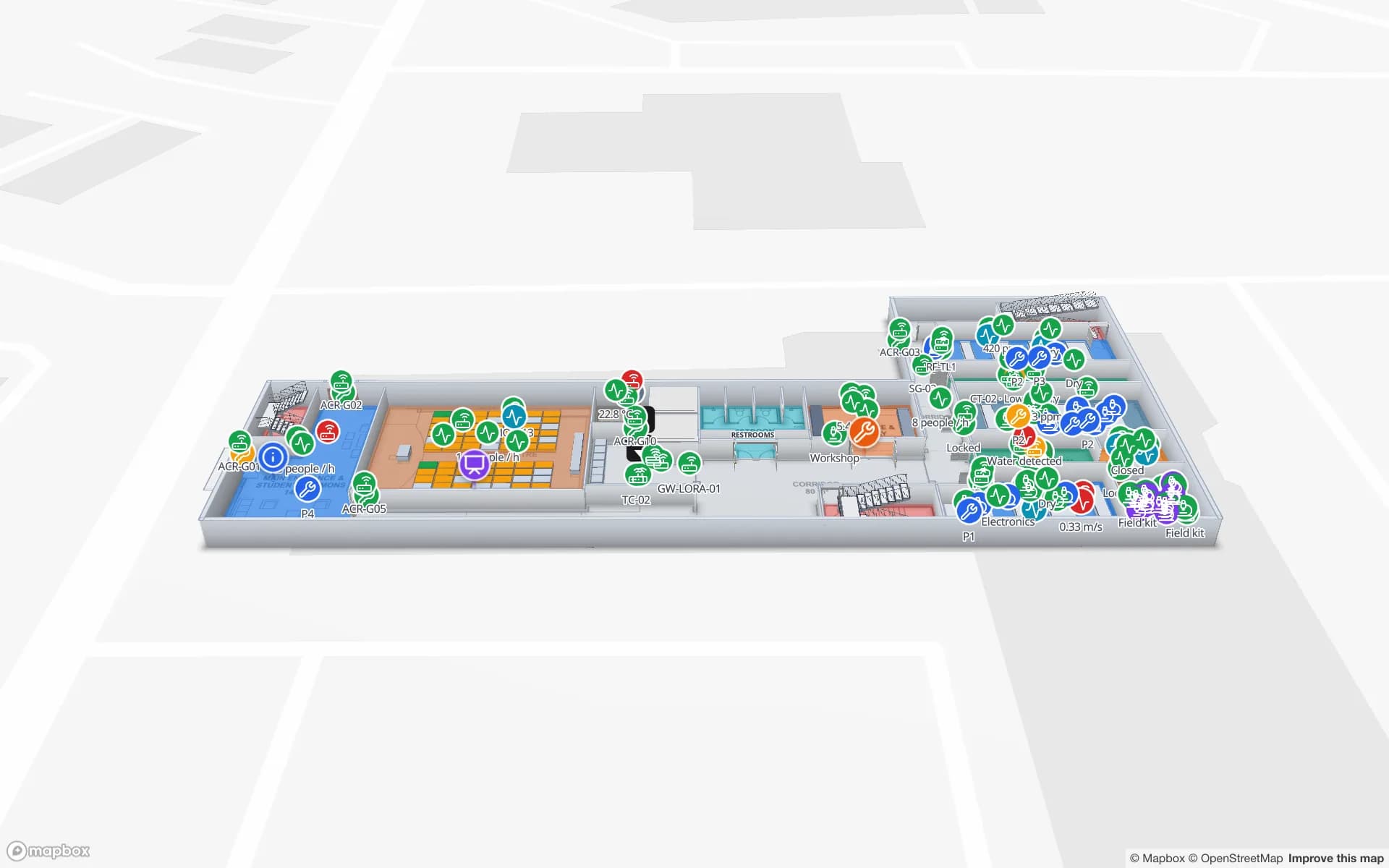
See Harborview Campus for a three-floor corporate office and Westbrook University for a science building with labs and instruments.

Warehouses: forklifts, carts and pickers

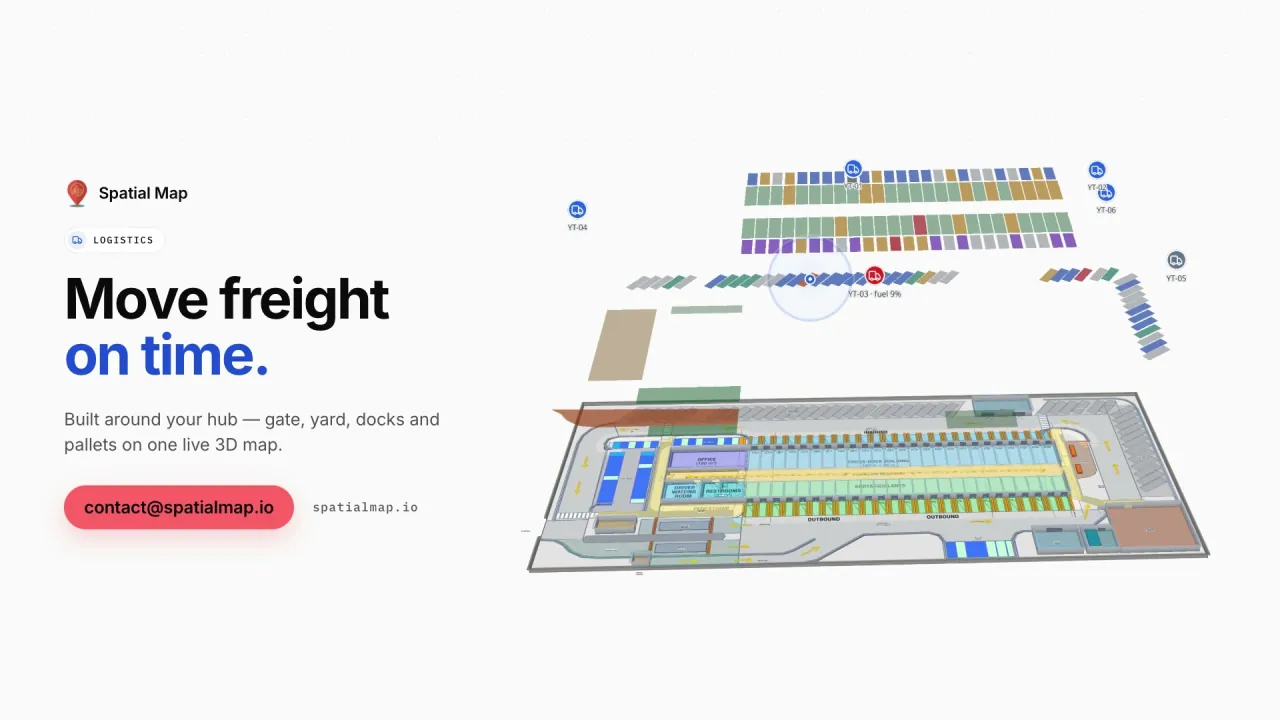
In US distribution centers, BLE and other RTLS tags usually go on forklifts, reach trucks and carts first. Seeing which aisle or zone each vehicle is in, which ones are parked at charging and which have been idle helps supervisors balance a shift. Spatial Map shows the positions or zones your RTLS reports as live markers on the warehouse map, and the History player replays a shift from row history.

What Spatial Map does — and what your BLE platform does

Spatial Map does not compute positions from signal strength. Your BLE gateways’ software or RTLS engine works out the zone or coordinates, then posts rows to a Spatial Map table with the table write API or exposes a REST endpoint that Spatial Map polls. A gateway reporting a zone name that matches a room or area on the map puts the tag in that room; coordinates become a live marker. Spatial Map does not send notifications — it shows state on the map and in reports, and style rules color stale or low-battery tags. If you track staff badges, check your own privacy policies and applicable state laws first, and collect only what you need.

How Spatial Map does it

BLE on a venue or campus map in four steps

  1. 01

    Map the venue

    Import PDF or DWG plans and draw concourses, halls, rooms, stairs, lifts and escalators across floors.

  2. 02

    Match the zones

    Name rooms and areas exactly like the zones your gateways report.

  3. 03

    Connect the RTLS

    Your gateway software posts zone or position rows to a table, or exposes a REST endpoint.

  4. 04

    Run the event

    Find equipment from the viewer, replay the day and share a read-only view with the crew leads.

BLE use cases for US operators

Stadium crews and kit

Staff and equipment by concourse next to turnstiles, crowd counters and concessions.

Convention center operations

Staff and equipment by hall, from the loading docks to booth blocks and session rooms.

Loan wheelchairs and guest equipment

Loan wheelchairs and passenger equipment located by terminal area.

Corporate campus assets

Shared and loan equipment across office floors with check-in and check-out data.

University labs

Lab instruments and equipment located by room, with calibration records alongside.

Forklifts and carts

Pickers, carts and forklifts by zone across a fulfillment floor.

See it on real demo facilities

Fictional names, real floor plans, live sensors, RFID, BLE tags and gateways — open any of them in the browser.

All 13 demo facilities

BLE tracking in the USA — frequently asked questions

Any whose software can report a zone or a position as a row. Spatial Map is hardware-agnostic: your gateway software or RTLS platform posts rows to a table, or Spatial Map polls a REST endpoint it exposes.

Yes. Every floor is modeled in 3D with stairs, lifts and escalators, and each tag appears on the floor and in the room or concourse your RTLS reports.

No. Your RTLS engine or gateway software computes the zone or coordinates; Spatial Map displays them as a tag in a matching room or as a live marker.

Yes. A read-only share link opens in any browser, shows only the layers and floors you choose, and can expire or be revoked after the event.

A 7-day free trial covers up to 5 facilities with no credit card. Pro is $60 a month or $600 a year for up to 4 facilities. Larger venue portfolios and done-for-you setup are quoted as custom services.

See your equipment on the venue map.

Start a free trial and open the stadium, convention and campus demos, or send us your plans and a sample of your gateway data.