UAE · BLE asset tracking

BLE asset tracking for UAE exhibition venues, airports and hotels

Dubai and Abu Dhabi run a calendar of large trade shows, a constant flow of air passengers and some of the busiest hotels in the region. All of them depend on shared equipment that is always somewhere else. BLE tags and gateways can say which hall, gate or room it is in; Spatial Map shows that on a 3D map of the building so the person who needs it can find it.

No credit card. Runs in the browser. Pro is $60/month for up to 4 facilities. Book a demo

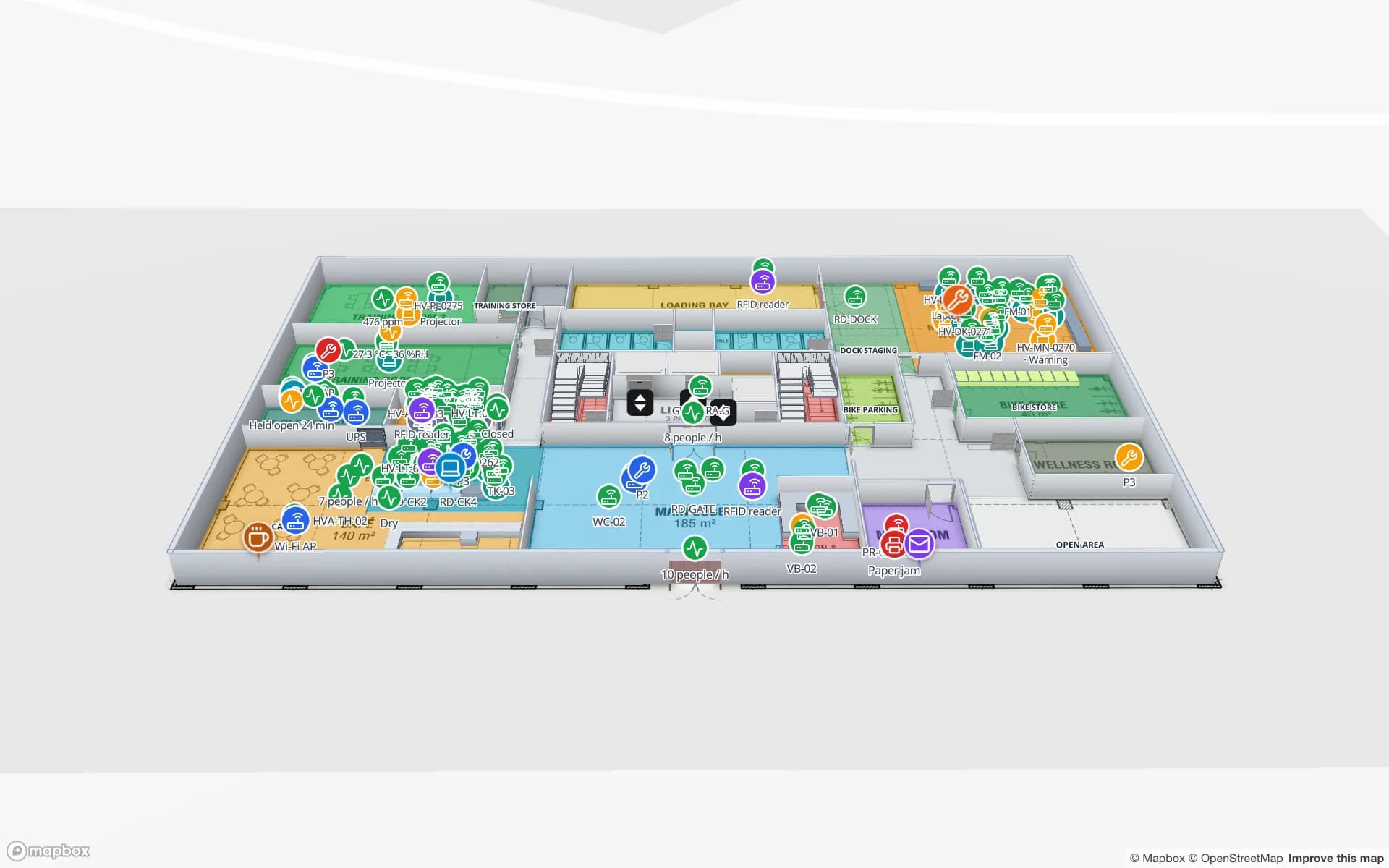
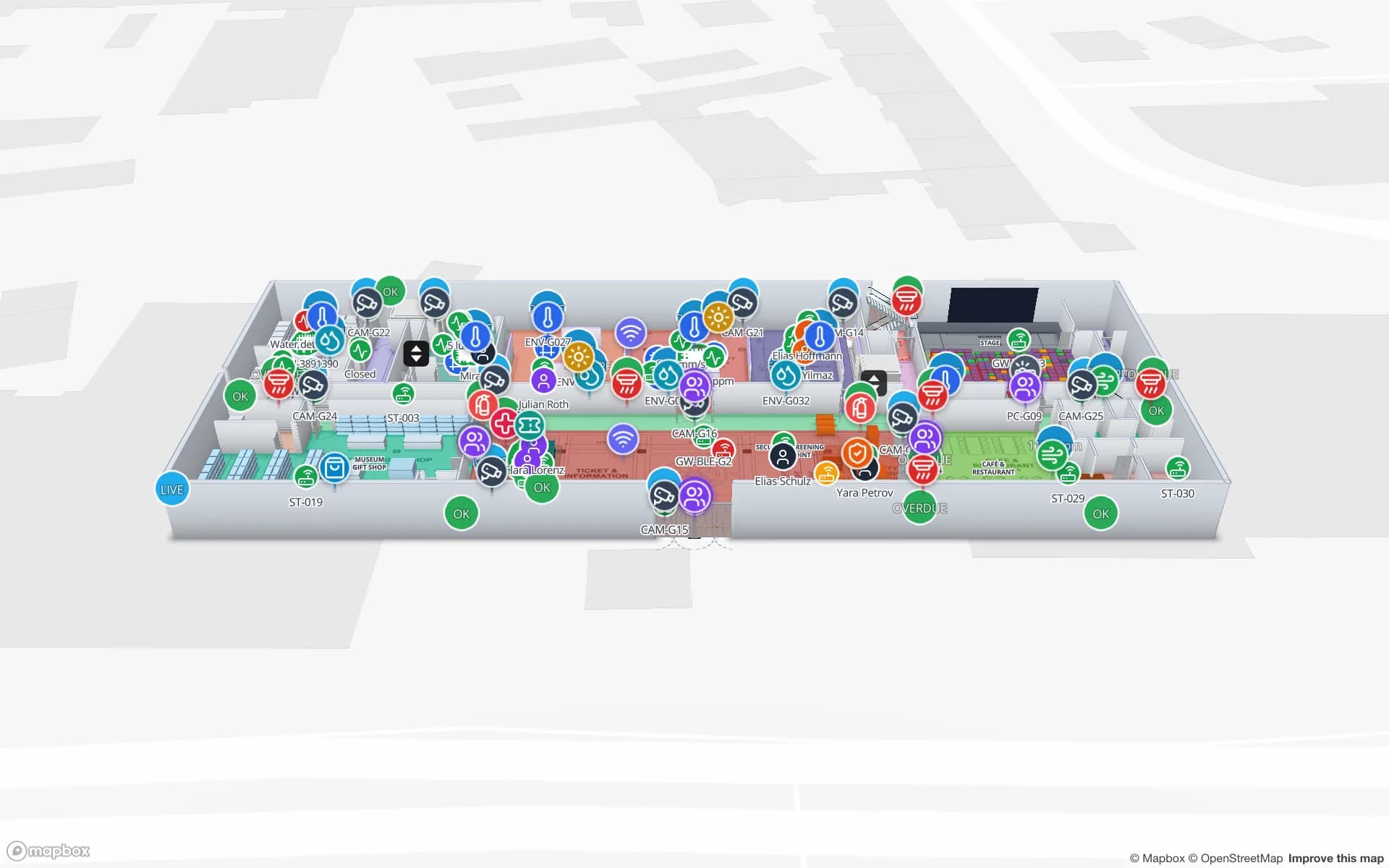
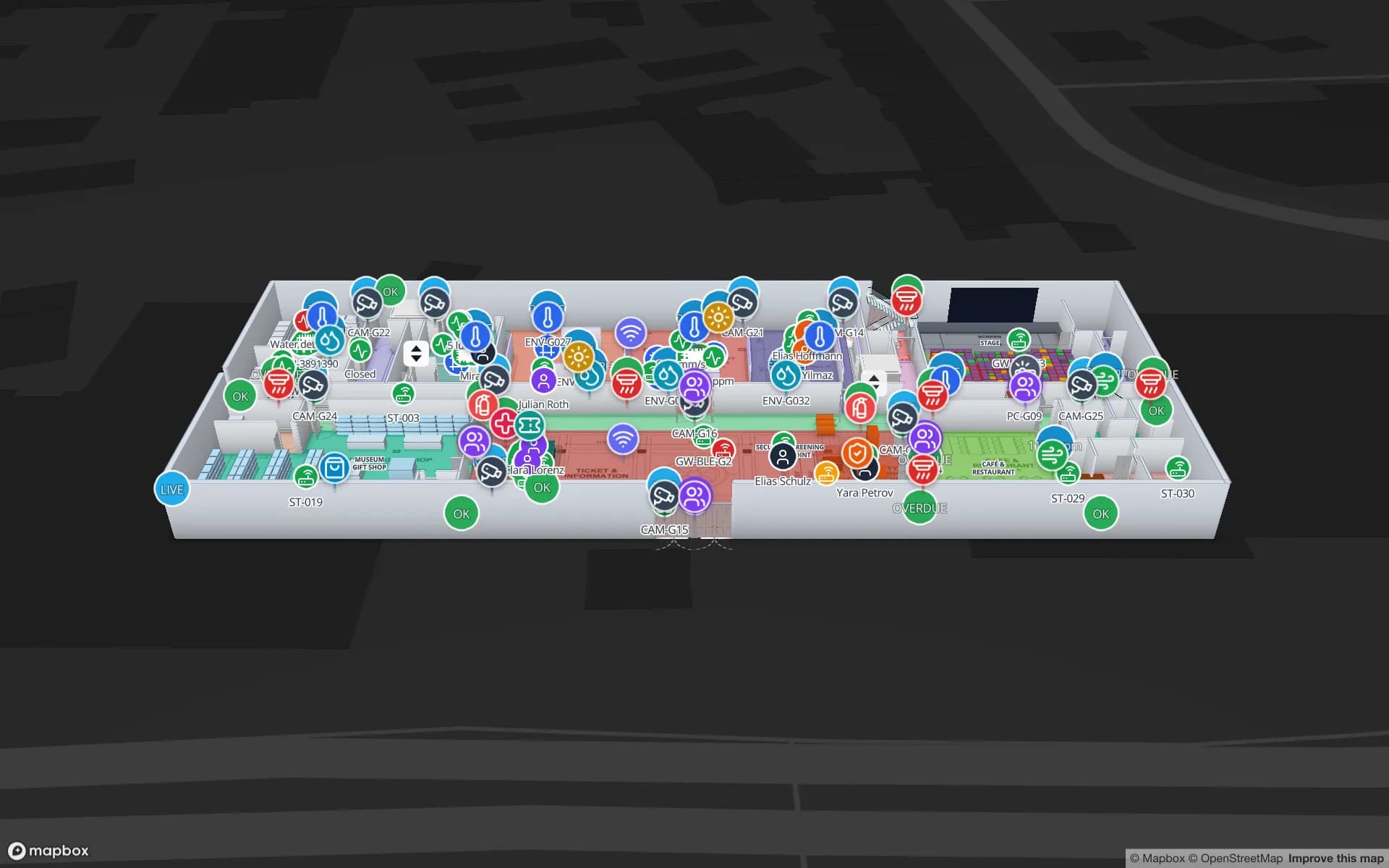
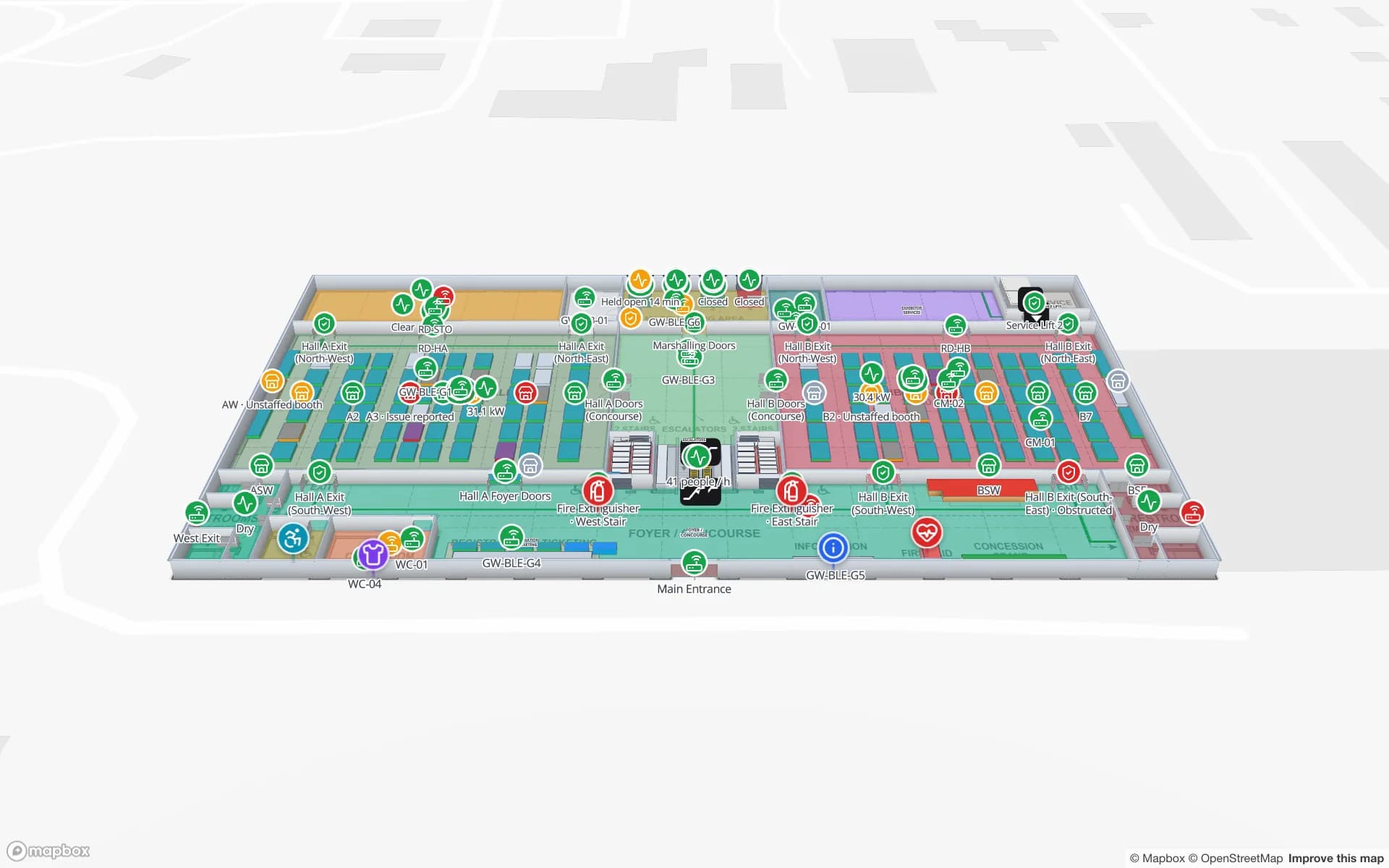
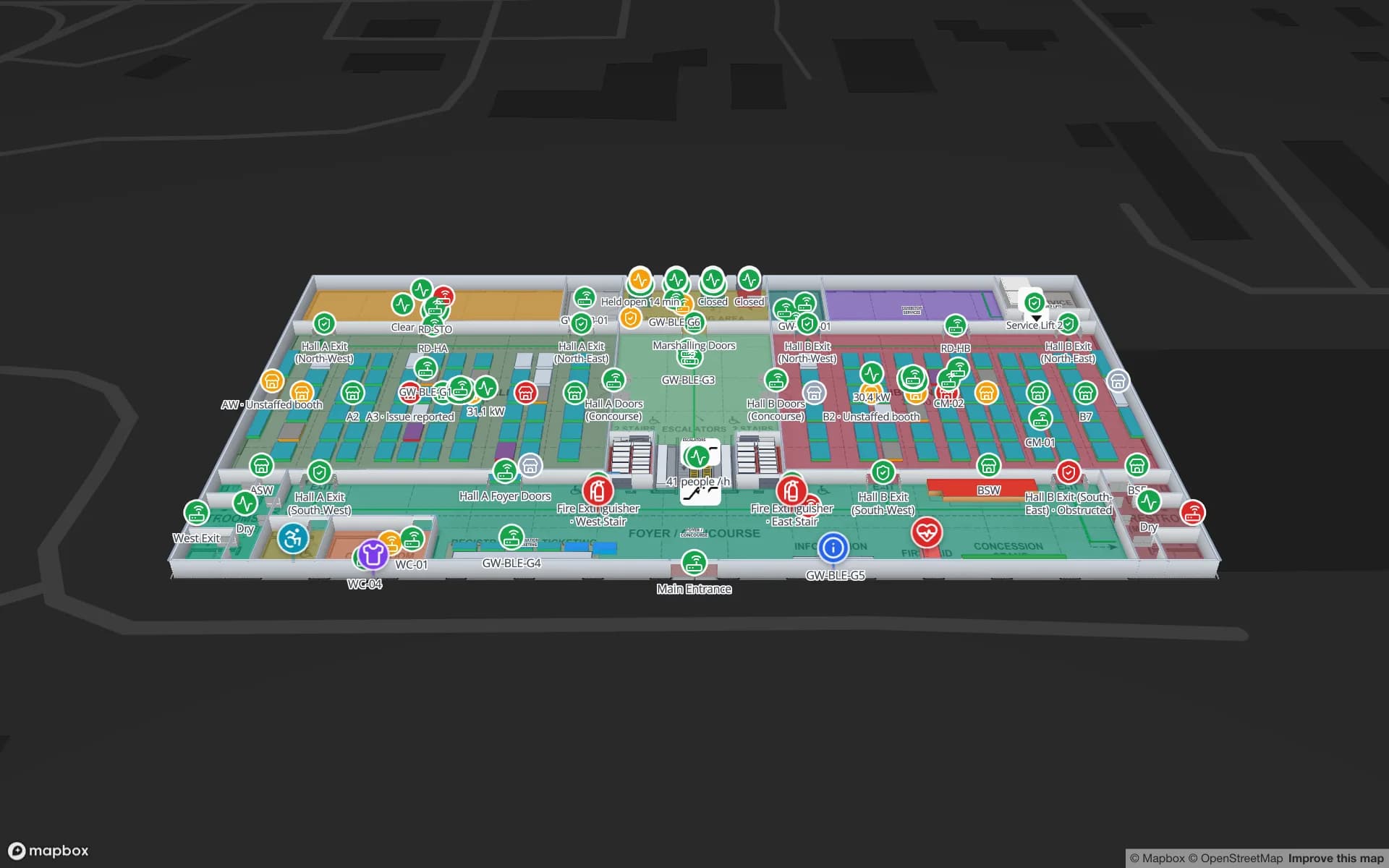
Lakeside Convention Center, a convention center demo, in the Spatial Map 3D viewer with live device markers
Lakeside Convention Center
Lakeside Convention Center, a two-floor demo venue: BLE-tagged staff and equipment by hall, with booths, session rooms and freight docks.
Demo facilities with live BLE, RFID and sensor data
13
Floors in the Lakeside convention and Silverbay airport demos
2
Apps to install — runs in the browser
0
Free trial, no credit card
7 days

Shows, flights and guests: equipment that moves

The Emirates host some of the region’s largest trade shows and exhibitions — technology, food, aviation, energy — in purpose-built exhibition centres in Dubai and Abu Dhabi. Build-up and breakdown windows are short, and forklifts, lifting platforms, AV kits, furniture and signage move between halls and docks all day. Airports and hotels have the same problem at a different pace: wheelchairs, loan equipment and banquet kit that are needed now and were last seen somewhere else.

For how BLE tags, gateways and positioning engines work in general, see our BLE page. This page covers the UAE venues where BLE earns its keep.
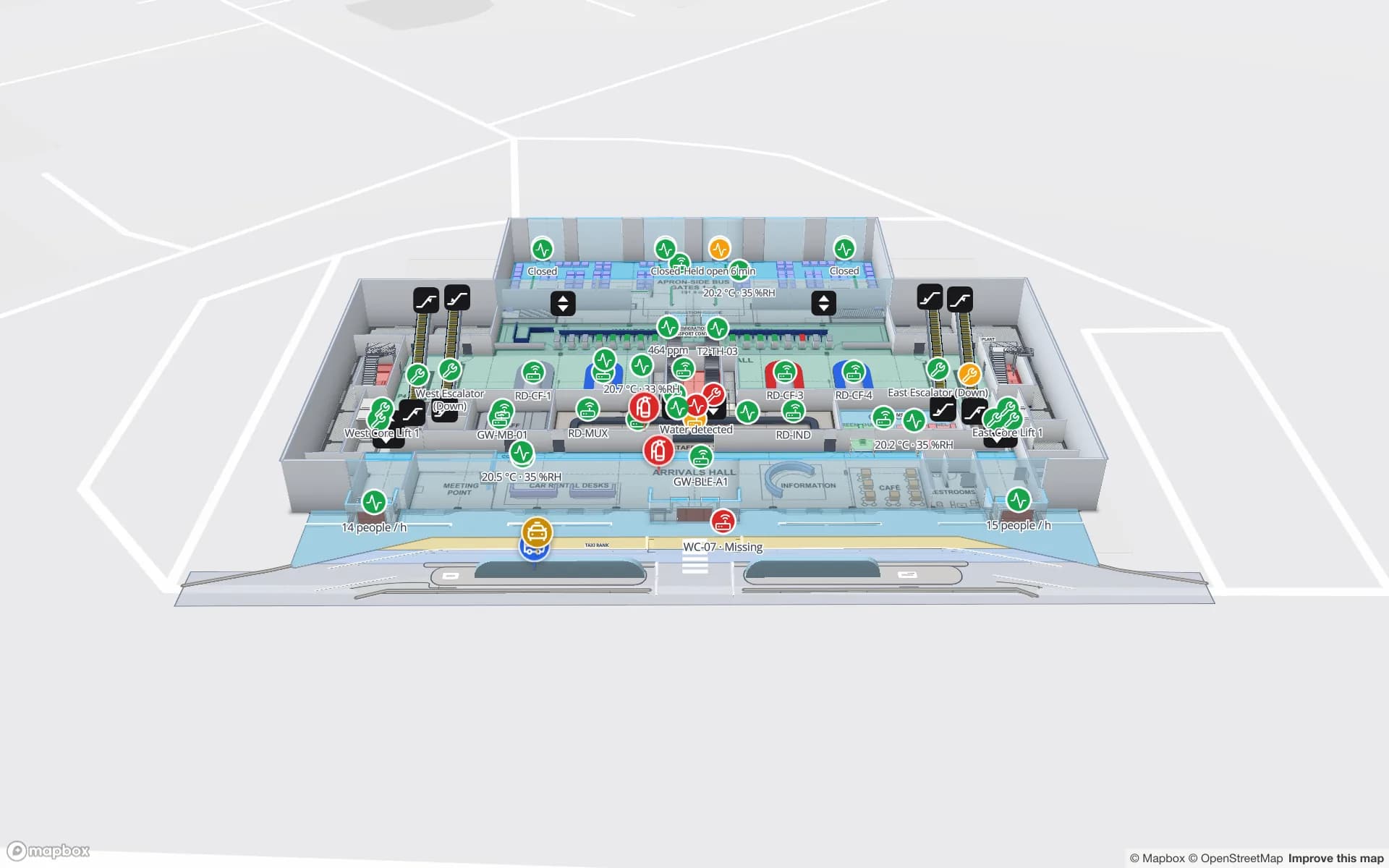
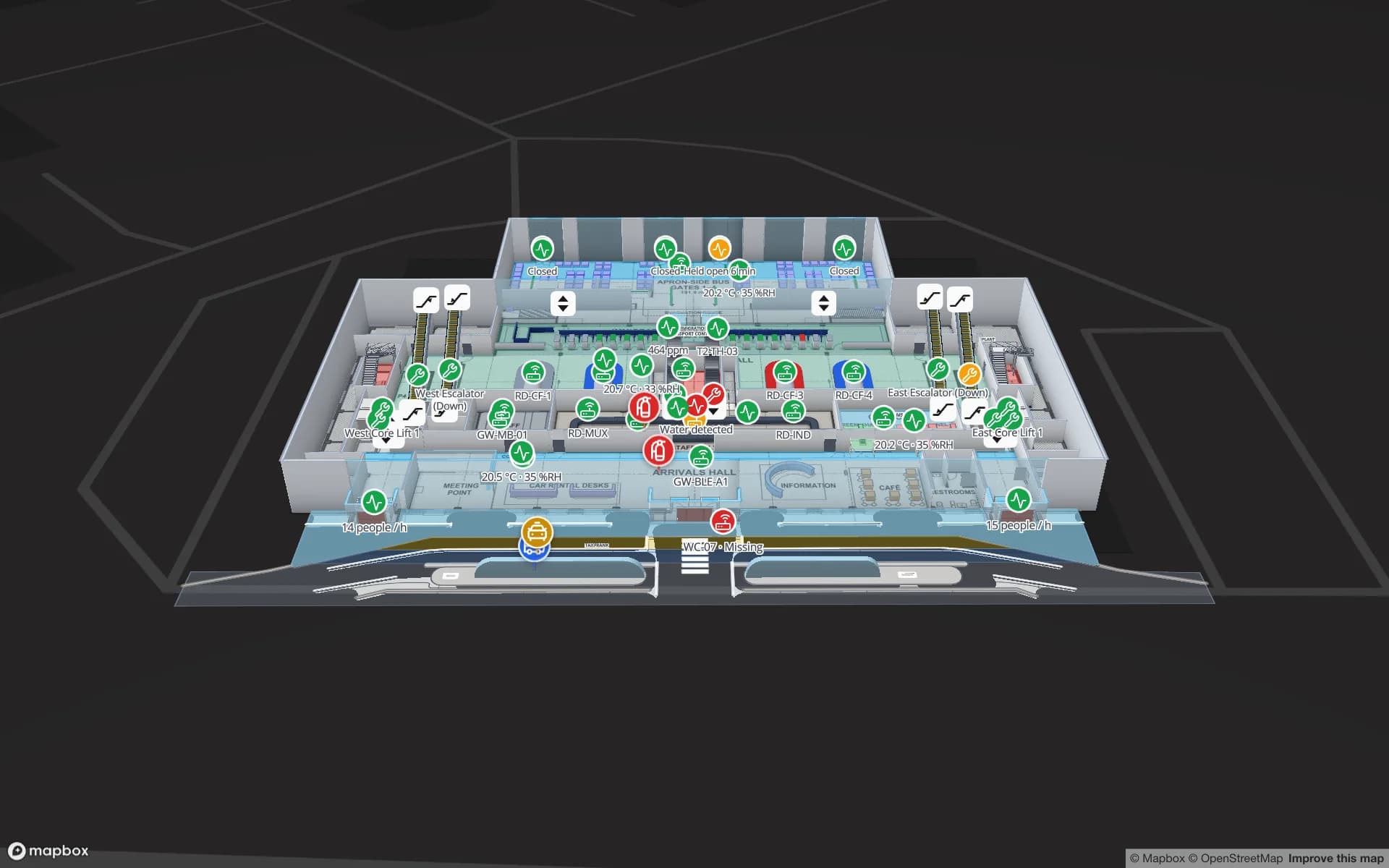
Exhibition and event venues

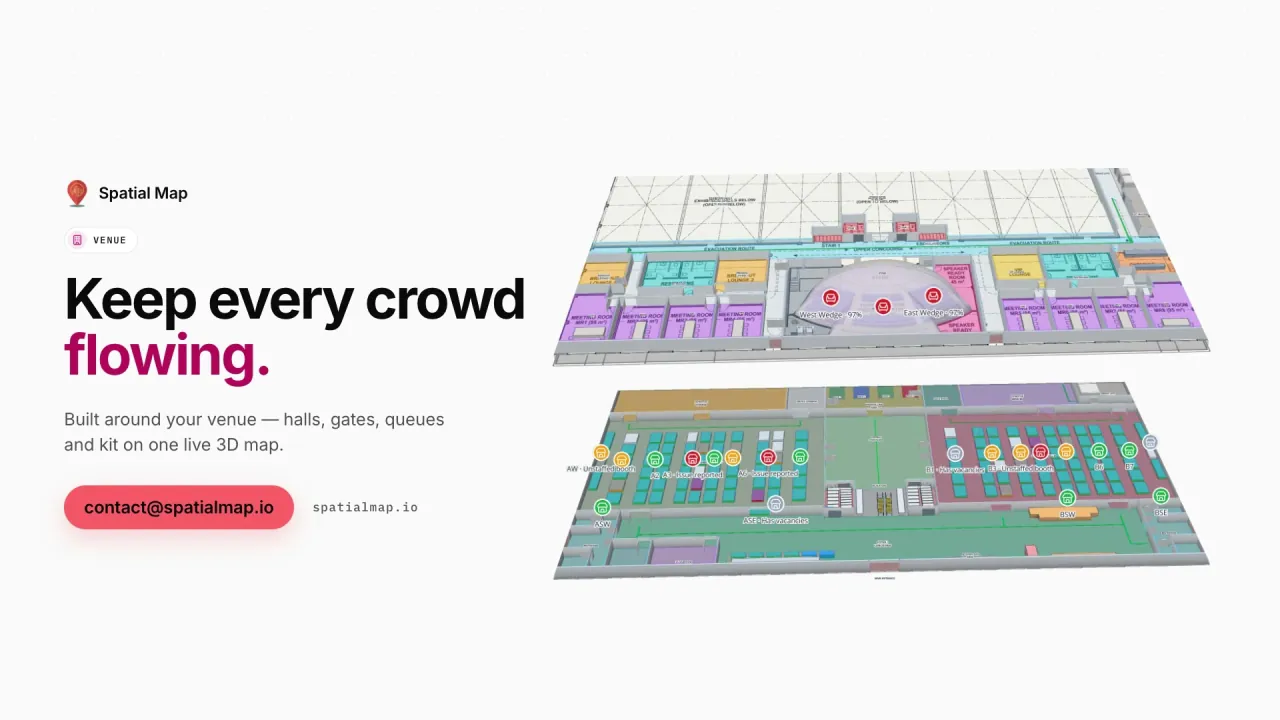
During build-up, crews and equipment pools are spread across halls, marshalling areas and loading docks. With gateways covering each hall and dock, your BLE engine reports which zone each tag is in, and Spatial Map shows it there. The Lakeside Convention Center demo has staff and equipment by hall alongside booth bookings, badge scans, hall occupancy and freight bookings at the docks.

An organiser or a large exhibitor can get a read-only share link for the duration of the show — chosen floors and layers, an expiry date and a view cap — and it simply stops working afterwards.

Airports: wheelchairs and loan equipment

Assistance teams in large terminals spend real time finding the next available wheelchair. With BLE tags on wheelchairs and loan equipment and a status field from your system (available, in use, in service), the map shows every chair by gate area or zone, coloured by status, across both floors. The Silverbay Terminal 2 demo locates passenger equipment and staff in the terminal next to check-in, security and gates.

Spatial Map shows where things are and what state they are in; it does not dispatch staff or send notifications. Your assistance or task system keeps doing that.

Hotels and offices

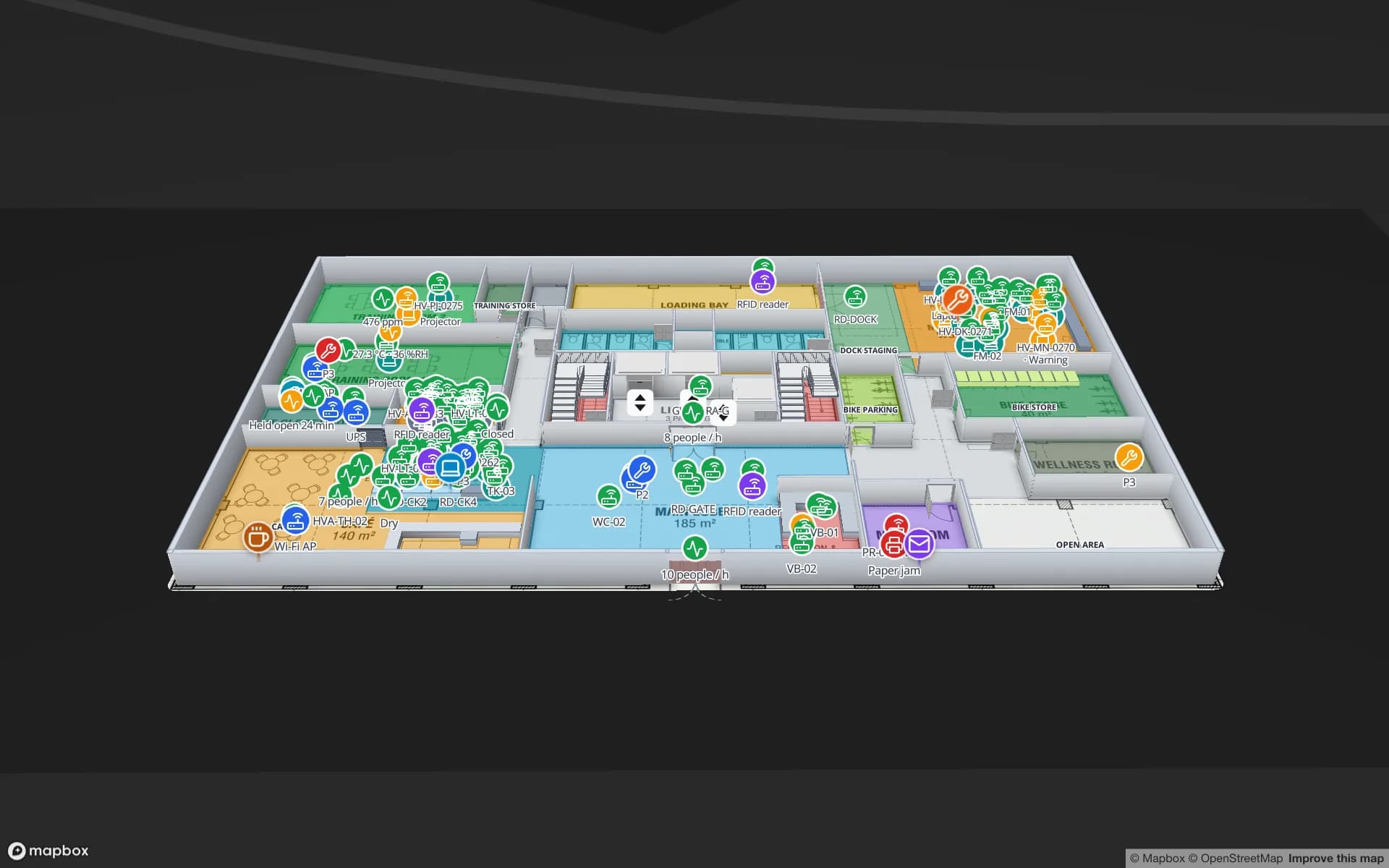
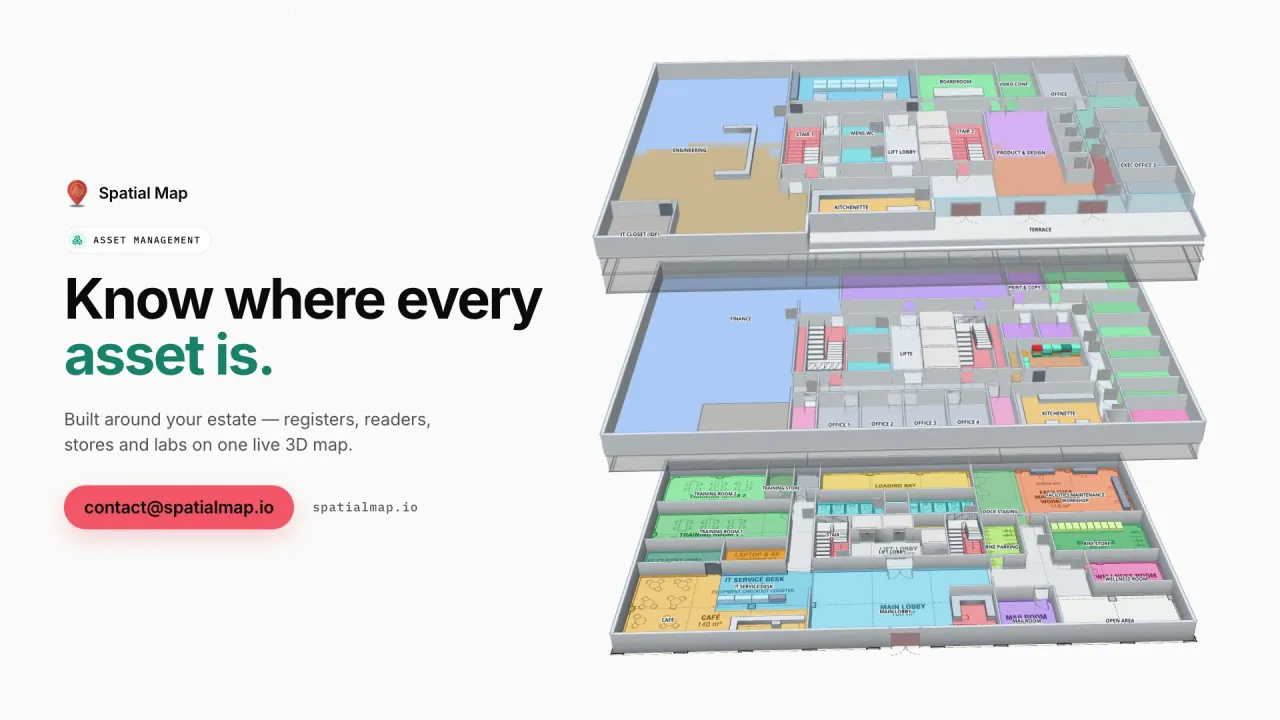
Large hotels move banquet furniture, AV kits, rollaway beds and housekeeping trolleys between ballrooms, floors and back-of-house stores. Office towers and smart buildings share laptops, projectors and meeting-room kit between departments. Both follow the same pattern as the Harborview demo: tagged assets on three floors, equipment checked in and out, and meeting rooms coloured by occupancy. There is no hotel demo; Harborview shows the pattern a hotel would use.

Smart-building platforms that already collect BLE and sensor data can expose it as a REST endpoint for Spatial Map to poll, so the map sits on top of what the building already has.

Staff and visitor privacy

Locating equipment is uncontroversial; locating people is not. The UAE’s federal personal data protection law applies to personal data such as a named employee’s location, and DIFC and ADGM have their own data protection regimes. Agree a policy first, then configure to match it.

  • Prefer zone-level presence and badge or role IDs over exact positions and names.
  • Keep the people layer to specific workspace roles and out of share links.
  • A data processing agreement is available; see the security page for workspace isolation.
How Spatial Map does it

Setting up BLE in a UAE venue

  1. 01

    Map halls, gates or floors

    Import the venue plan from PDF or DWG and trace halls, docks, gates and back-of-house rooms.

  2. 02

    Match zones to gateways

    Name each area exactly as your BLE engine names the zone its gateways cover.

  3. 03

    Send tag rows

    Your RTLS engine or smart-building platform posts batched rows to a table, or exposes a REST endpoint we poll.

  4. 04

    Colour by status and share

    Style rules colour equipment by available or in use; share expiring read-only links with organisers.

BLE use cases in the Emirates

Exhibition build-up and breakdown

Crews and equipment by hall, dock and marshalling area during tight show windows.

Airport wheelchairs and loan equipment

Every chair by gate area, coloured by available, in use or in service.

Arena and stadium crews

Staff and equipment by concourse on event days, next to turnstiles and counters.

Museum audio guides and kit

Audio guides and equipment located by gallery across three floors.

Hotel banquet and AV equipment

Furniture, AV kits and trolleys between ballrooms, floors and stores.

Offices and smart buildings

Shared laptops, projectors and room kit checked in and out by department.

See it on real demo facilities

Fictional names, real floor plans, live sensors, RFID, BLE tags and gateways — open any of them in the browser.

All 13 demo facilities

BLE tracking in the UAE — questions we get

Yes, if your system reports a status for each chair. Spatial Map places each chair at its last reported zone and colours it by status, and the viewer can filter to available chairs. It does not dispatch staff.

Yes. Send a read-only share link limited to the floors and layers they need, with an expiry after breakdown and an optional view cap. No account is needed, and you can revoke it at any time.

Any whose RTLS engine or gateway software can produce rows with a tag ID and a position or zone name. That software computes location; Spatial Map displays it. Rows arrive via the table write API, REST polling or file upload.

It is possible, but follow a written policy and UAE data protection law, including DIFC or ADGM rules if they apply. Zone-level presence with badge IDs and a restricted people layer is the common choice.

No. The Harborview office demo shows the same check-in, check-out and room-by-room pattern a hotel would use for banquet and AV equipment, and the Lakeside demo covers ballroom-style halls and docks.

Find your venue’s equipment on a map, not by radio.

Start a free trial and open the Lakeside and Silverbay demos, or send us your venue plan and a sample of your BLE data through the contact form.