
UHF vs HF vs NFC RFID for inventory: which one to use
UHF vs HF vs NFC RFID for inventory: frequencies, standards, typical read ranges, metal and liquids, tag cost and phones, plus a five-question checklist.
The answer first
For counting and tracking inventory — items, cartons, pallets, returnable containers, IT assets — the default choice is passive UHF RFID (also called RAIN RFID): it reads several metres away and hundreds of tags at once. HF wins where reads must be short-range and controlled, or around liquids. NFC is HF made for phones: one tag at a time, a tap away, ideal for people interacting with a product rather than for counting stock.
UHF vs HF vs NFC at a glance
| UHF (RAIN) | HF | NFC | |
|---|---|---|---|
| Frequency | 860–960 MHz (regional bands, e.g. 865–868 MHz in Europe, 902–928 MHz in the US) | 13.56 MHz | 13.56 MHz |
| Main standards | EPC Gen2 / ISO/IEC 18000-63 | ISO/IEC 15693 (vicinity), ISO/IEC 14443 (proximity) | NFC Forum tag types (built on ISO 14443 / 15693 / FeliCa) |
| Typical passive read range | Up to a few metres with handhelds; often 5–10 m+ with fixed readers in good conditions | A few cm to about 1 m (large antennas, ISO 15693) | A few cm |
| Tags read at once | Hundreds per second | Dozens, slower | One |
| Near metal | Needs on-metal tags | Needs ferrite-backed tags | Needs on-metal tags |
| Near water / liquids | Weakened; tag placement matters | Copes better | Copes better |
| Read by phones | No (needs a sled or dedicated reader) | Only NFC-compatible types | Yes |
| Tag cost at volume | Lowest (a few cents for paper inlays) | Higher | Higher |
When UHF is the right call
- Item-level retail — apparel, footwear, accessories; fast store counts and exit reads.
- Cartons and pallets — dock-door portals, conveyors, staging lanes.
- IT assets and equipment — handheld audits of rooms and racks.
- Returnable containers — crates, roll cages and kegs through gates.
UHF readers come in handheld, fixed and gate form; see RFID handheld vs fixed reader vs gate. One practical point: UHF bands differ by country, so readers ship in regional variants and must be configured for where they operate.
When HF is better
- Controlled, short-range reads — smart shelves, tool cabinets and drawers where you only want the tags in that bin.
- Liquids and vials — pharmacy, lab samples, blood bags.
- Libraries and documents — a long-established HF use case with its own standards.
- Tags people also tap — an HF/NFC tag can serve a shelf reader and a phone.
When NFC is enough
NFC is the right tool when a person, not a reader, starts the interaction: checking a product is genuine, opening a maintenance record by tapping a machine, onboarding a device. Because every modern phone reads NFC, there is no hardware to buy for users — but there is no counting either: one tag, a few centimetres away.
A five-question checklist
- 1How far away will the reader be?
Metres → UHF. Centimetres → HF/NFC.
- 2How many tags at once?
A shelf, carton or pallet at a time → UHF.
- 3What is the product made of?
Metal or liquid → test on-metal UHF tags or HF; never assume.
- 4Who reads it?
Staff with readers → UHF/HF. Customers with phones → NFC.
- 5How many tags per year?
Millions of disposable labels push you to UHF inlays on cost.
Whatever the frequency, the reads end up on a map
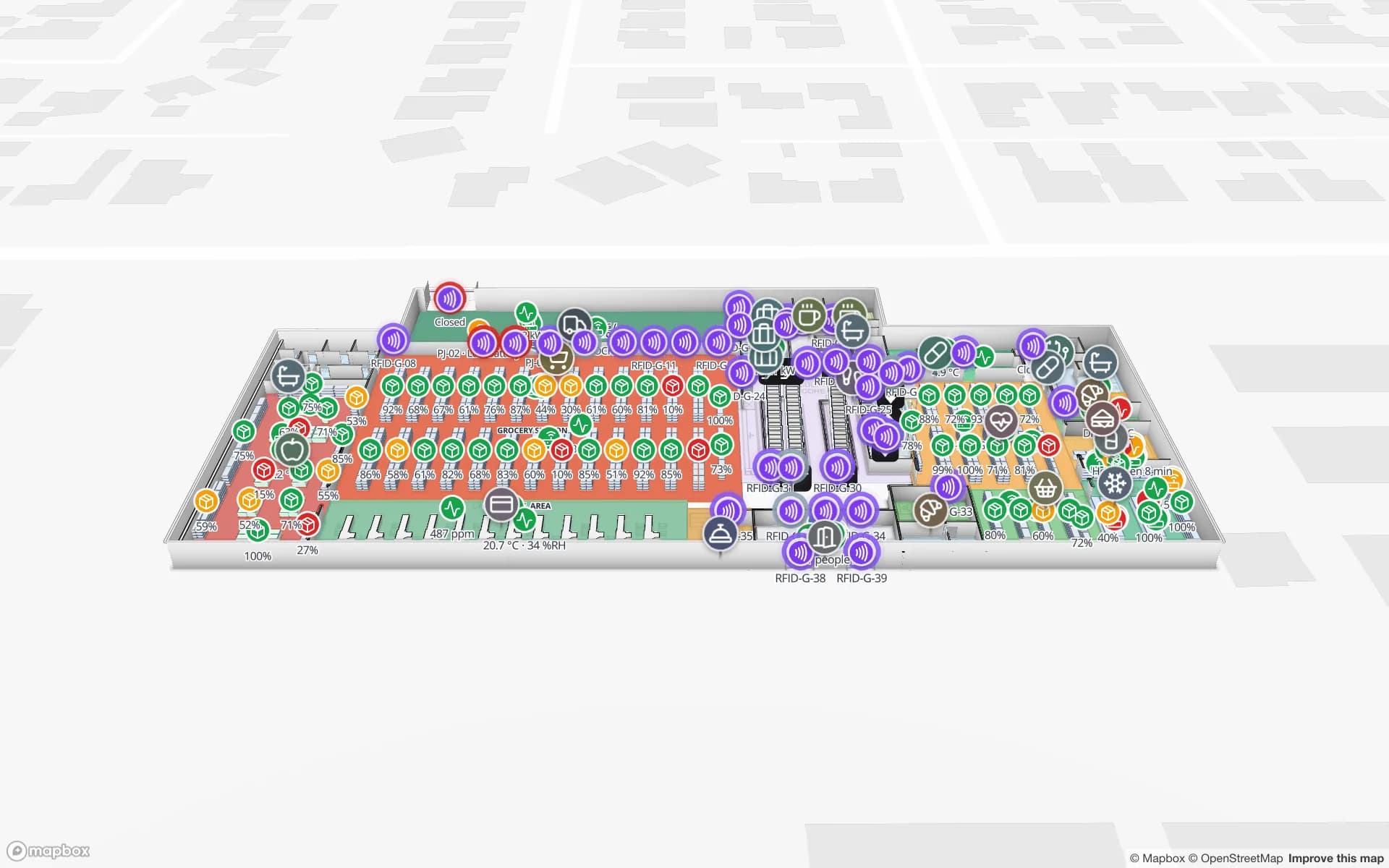
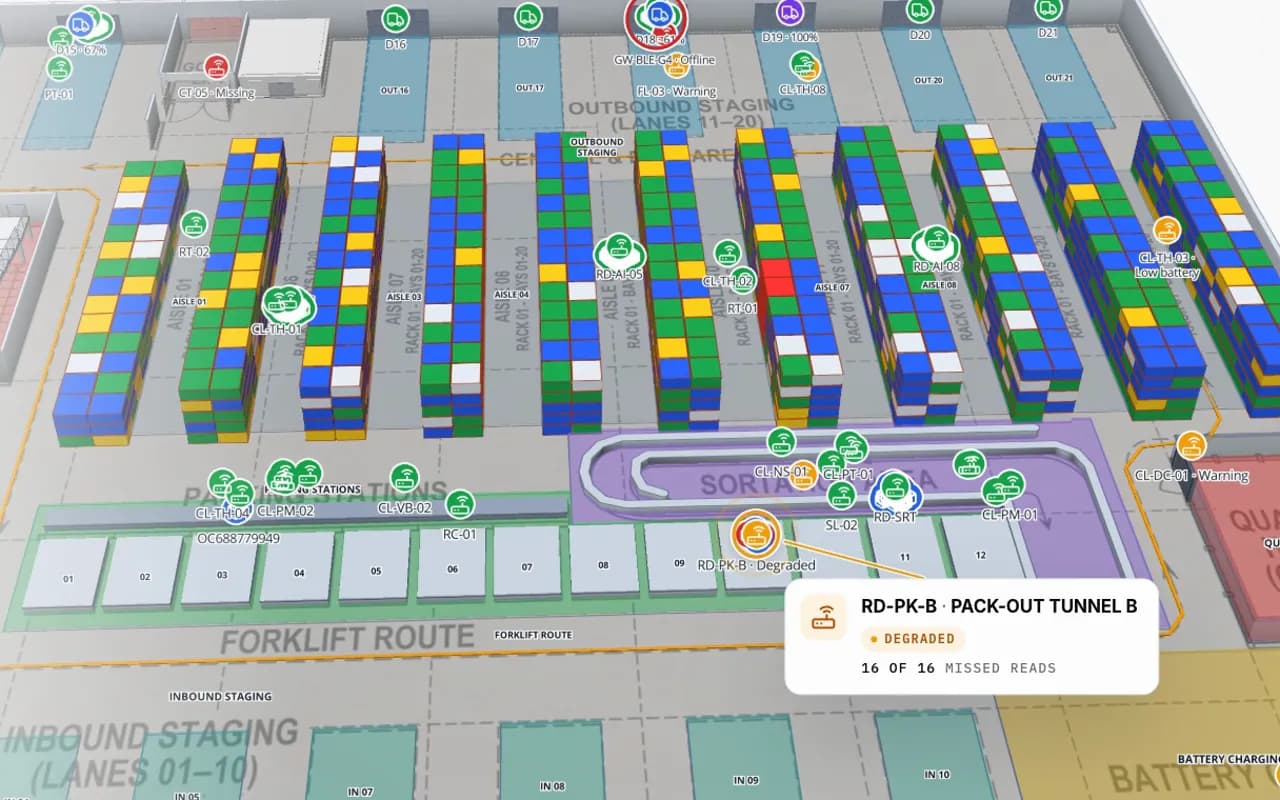
Spatial Map does not care which frequency produced a read: UHF portal events, HF shelf reads and NFC taps all arrive as rows with a location, and the map shows them where they happened. See the RFID inventory management system page, the hardware we work with — e.g. readers from Zebra, Chainway, SATO or Sanray (trademarks of their owners) — and RFID asset tracking software.
Try the platform your data belongs on.
Spatial Map turns spreadsheets, sensor streams, and CAD drawings into one live 3D facility view — nothing to install, seven-day free trial.
Keep reading
- ComparisonIndoor maps vs floor plans vs BIM: what’s the difference?Floor plans are pictures, BIM is a design model, an indoor map is just enough model for operations. How they differ, and which one fits which job.
- ComparisonRFID handheld vs fixed reader vs gate: which do you need?Handhelds go to the tags, fixed readers watch an area, gates watch a passage. What each one answers, where each struggles, and how to combine them.
- ComparisonHow to choose digital twin software: a 2026 buyer’s checklistEvery vendor demo looks good on its own sample data. This checklist covers the 15 questions that separate a live operational twin from a pretty floor plan, and how to prove the answers in a two-week pilot.